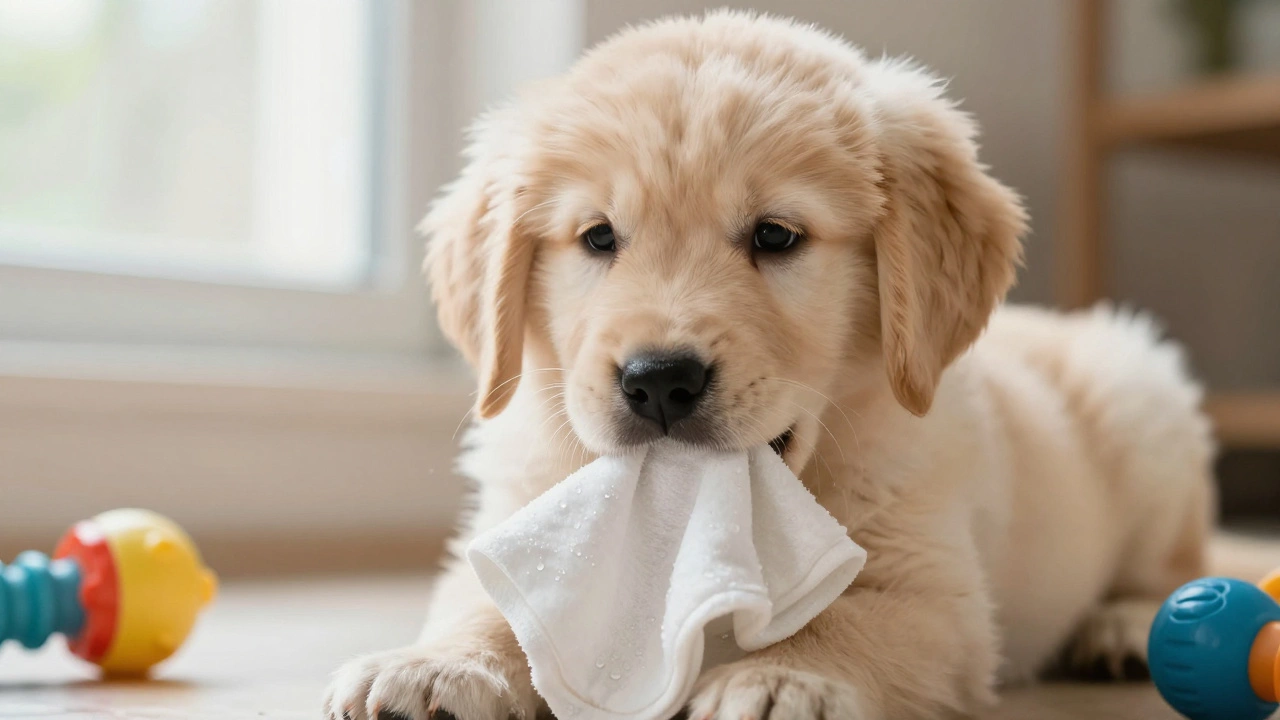
At eight weeks old, your puppy is in the middle of a wild phase-teething. Their baby teeth are falling out, and adult teeth are pushing through, which means they’re chewing on everything: shoes, couch legs, remote controls, and your favorite houseplants. It’s not mischief. It’s biology. A puppy’s gums hurt, and chewing is the only way to relieve the pressure. But not everything they grab is safe. So what can an 8-week-old puppy chew on?
Why Puppies Chew at 8 Weeks
By eight weeks, most puppies have all 28 of their baby teeth. Around this time, those teeth start loosening to make room for 42 adult teeth. That process can last until they’re six months old. During this window, their gums feel swollen, itchy, and sore. Chewing gives them relief. It’s also how they explore the world-just like babies put everything in their mouths. If you don’t give them something safe to chew, they’ll find something dangerous.
Safe Chew Options for an 8-Week-Old Puppy
Not all chew toys are created equal. At this age, your puppy’s jaws are still weak, and their teeth are tiny. You need soft, flexible, and non-breakable items. Here’s what actually works:
- Soft rubber chew toys-Look for toys labeled "puppy-safe" or "for teething." Brands like KONG Puppy, Nylabone Puppy Teething Ring, and Outward Hound’s Fun Feeder are designed to be gentle on baby teeth. They’re flexible enough to bend but tough enough to last.
- Cold, damp washcloths-Dampen a clean cotton washcloth, tie it in a knot, and freeze it for 30 minutes. The cold numbs the gums and the texture feels good. Puppies love this. It’s cheap, safe, and you probably already have the materials.
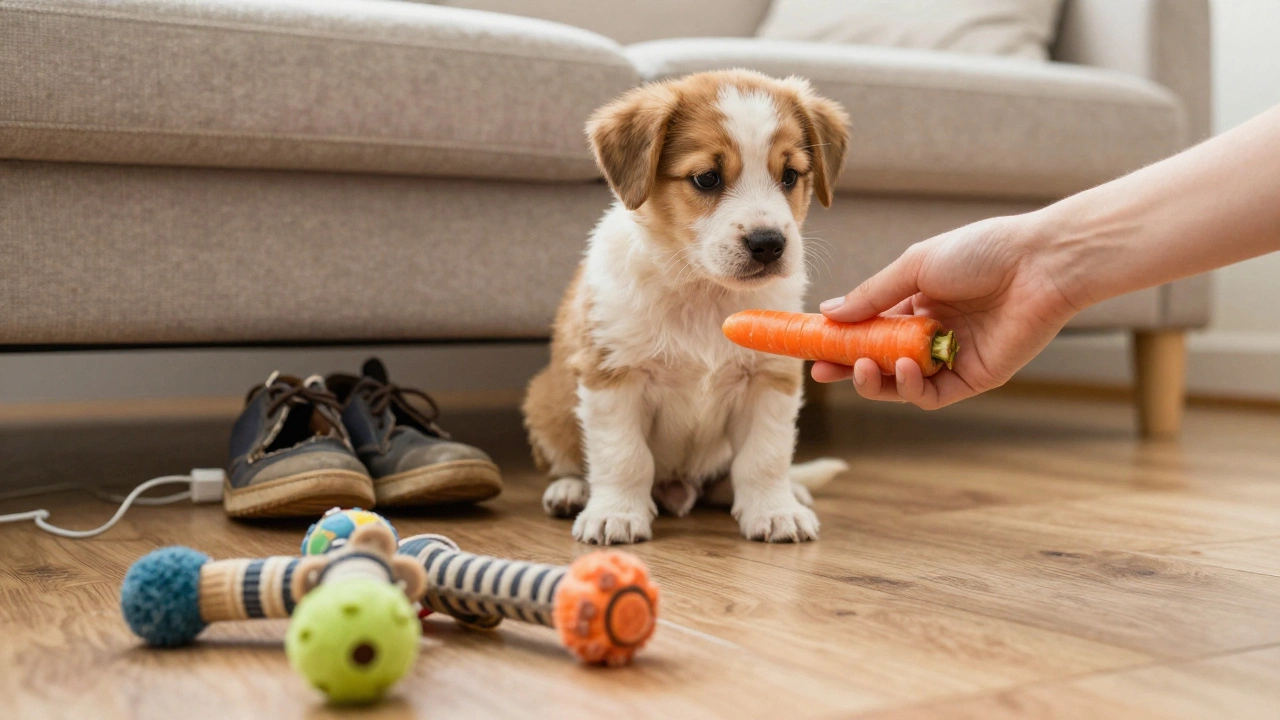
- Frozen carrots-A whole, peeled carrot, frozen for an hour, makes a great chew. It’s natural, low-calorie, and helps clean teeth. Just supervise to make sure they don’t bite off a chunk they could choke on.
- Soft rope toys-Choose ones with tightly woven fibers and no loose threads. These help massage gums and satisfy the urge to tug. Avoid toys with small bells or plastic parts that can snap off.
- Puppy-specific dental chews-Some brands make soft, digestible chews for puppies under 12 weeks. Look for ones labeled "for teething" and under 1 inch long. Hill’s Science Diet Dental Chews for Puppies and Greenies Dental Treats (Puppy formula) are vet-recommended.
What to Never Let Your Puppy Chew On
Some things seem harmless but can be dangerous-or even deadly-for a young pup. Keep these away:
- Hard plastic toys-Toys meant for adult dogs are too rigid. They can crack baby teeth or cause jaw injuries.
- Rawhide-Even "soft" rawhide can swell in the stomach and cause blockages. Many vets advise against it entirely for puppies under 12 weeks.
- Sticks and wood-Splinters can cut gums or puncture the throat. Wood can also carry bacteria or pesticides.
- Shoes, socks, and household items-If you don’t want it chewed, don’t leave it on the floor. Puppies don’t know the difference between your sneaker and a toy.
- Electrical cords-Chewing wires can cause electrocution. Use cord covers or tuck them behind furniture.
- Small objects-Balls, buttons, coins, and Lego pieces can be swallowed. At eight weeks, a puppy’s throat is only about the width of a pencil.
How to Train Your Puppy to Chew the Right Things
Teaching your puppy what’s okay to chew is just as important as giving them the right toys. Here’s how:
- Supervise constantly-When they’re not in a crate or playpen, keep them in sight. If they grab something they shouldn’t, calmly say "no" and redirect them to their toy.
- Rotate toys-Puppies get bored fast. Keep five to seven chew toys on rotation. Put one away for a week, then bring it back. Freshness keeps them interested.
- Use positive reinforcement-When they chew the right thing, praise them with a treat or a belly rub. Say "good chew!" and make it a happy moment.
- Make bad things unappealing-Use bitter apple spray on furniture legs or shoes. It’s safe, non-toxic, and most puppies hate the taste.
- Provide mental stimulation-A bored puppy chews out of frustration. Try stuffing a Kong with wet dog food and freezing it. It keeps them busy for 20 minutes.
Signs Your Puppy Needs More Help
Most puppies chew through this phase without problems. But if you notice any of these, talk to your vet:
- Excessive drooling or blood in saliva
- Refusing to eat or drink
- Swelling on the jaw or face
- Chewing only one side of the mouth
- Still chewing on everything at 12 weeks with no improvement
These could mean a tooth is stuck, an infection is forming, or there’s a developmental issue. Early intervention prevents bigger problems later.
What to Expect Next
By 12 weeks, most of the baby teeth are gone. By 16 weeks, adult teeth are starting to show. By six months, your puppy will have a full set of adult teeth. The chewing won’t stop completely-it just changes. They’ll shift from teething to chewing for fun, boredom, or anxiety. That’s why building good habits now matters more than ever.
Keep the cold washcloths handy. Keep the soft toys within reach. And remember-this phase is temporary. In a few months, they’ll be chewing on their favorite blanket instead of your couch. For now, patience and the right options are everything.
Can I give my 8-week-old puppy a bully stick?
No. Bully sticks are too hard and dense for an 8-week-old puppy. They can chip baby teeth or cause choking if they break into sharp pieces. Wait until your puppy is at least 6 months old before introducing harder chews.
How long should a puppy chew on a frozen washcloth?
About 5 to 10 minutes at a time. Longer than that can make their gums too numb, which might cause them to bite harder than they should. Always supervise, and take it away if they start to drool excessively or seem uncomfortable.
Is it normal for my puppy to swallow small pieces of chew toys?
No. If your puppy is swallowing pieces, the toy is too small or too soft. Stop using it immediately. Look for toys labeled "indestructible" or "for heavy chewers," even if your puppy seems gentle now. Their jaws grow fast, and so does their chewing power.
How many chew toys should I have out at once?
Three to five at a time. Too many toys overwhelm a puppy. Rotate them every few days so they feel new each time. Keep one cold chew (like a frozen washcloth) always available when they’re restless.
Do I need to buy expensive chew toys?
Not at all. The best chew for an 8-week-old puppy is often the cheapest: a frozen wet washcloth. You don’t need branded toys to keep them safe. What matters is texture, safety, and supervision-not price tags.