Nighttime Dog Care: Sleep, Collars, Beds, and What Really Matters
When it comes to nighttime dog care, the routines and choices you make after dark directly impact your dog’s health, safety, and emotional well-being. Also known as evening dog routines, it’s not just about tucking them in—it’s about making smart calls on collars, beds, sleep schedules, and emotional security. Too many owners assume their dog’s nighttime habits are harmless, but small mistakes—like leaving a collar on all night or skipping a wind-down routine—can add up to real problems.
Dog collar at night, a common practice out of habit, can actually be risky. If your dog is prone to scratching, rolling, or getting tangled, that collar might cause neck irritation or even strangulation. Microchips are the real safety net here—not collars. And if you’re using a breakaway collar for safety, you might be missing the point: those can pop open too easily. Better options? A well-fitted harness for walks, or no collar at all if your dog’s safe indoors. Your dog doesn’t need to wear their ID tag while sleeping—they just need to be identifiable if they ever get out. Then there’s the dog bed, the foundation of their rest. A sagging, smelly, or worn-out bed isn’t just uncomfortable—it can lead to joint pain, skin infections, or even mold exposure. You wouldn’t sleep on a mattress that’s crumbling underneath you, so why expect your dog to? Replace it when the foam flattens, the fabric frays, or the smell won’t wash out. And don’t forget the dog bedtime, a consistent routine that signals it’s time to wind down. Dogs thrive on predictability. If you toss them in bed at 10 PM one night and 1 AM the next, their internal clock gets confused. A calm 15-minute routine—quiet time, a potty break, a gentle massage—tells them it’s safe to relax. And what about letting them sleep in your bed? That doesn’t cause separation anxiety in dogs, a condition rooted in fear of being left alone, not where they sleep. The real issue? If your dog panics when you leave the room, it’s not because they’re used to your bed—it’s because they haven’t learned to feel secure on their own.
Nighttime dog care isn’t about perfection. It’s about paying attention. Is your dog restless? Do they chew their paws before bed? Do they wake up with a red neck? These aren’t quirks—they’re signals. The posts below give you clear, no-fluff answers on what to do next: whether to remove that collar, when to replace that bed, how to set a sleep schedule that works, and what’s really behind those nighttime whimpers. You’ll find real advice from real experiences—not guesses or myths. What your dog needs tonight isn’t fancy—it’s thoughtful.
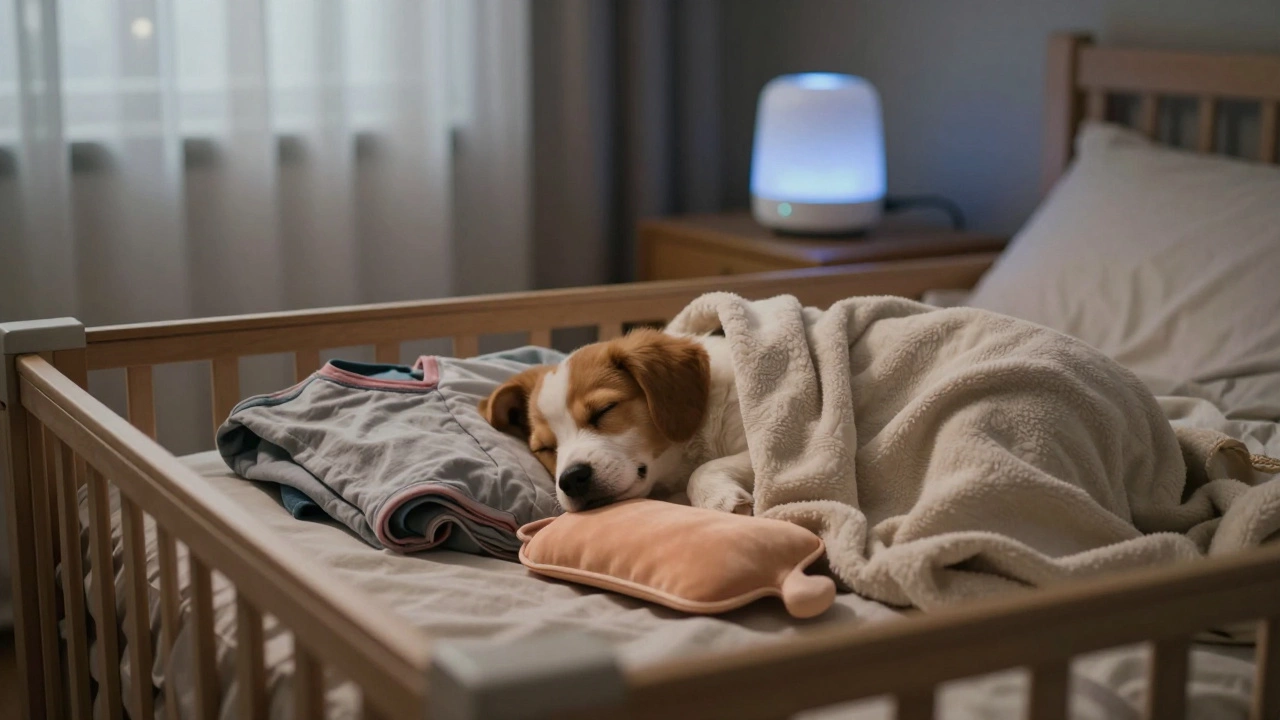
Should I Leave the TV On at Night for My Puppy?
Leaving the TV on at night won't calm your puppy-it might make anxiety worse. Learn what actually helps puppies sleep peacefully and how to build lasting confidence without relying on screens.
View more