Puppy Sleep Comfort Checker
How to Create a Calming Sleep Environment
This tool helps you assess whether your current puppy sleep setup is helping or causing stress. Based on your inputs, you'll receive personalized recommendations to replace TV with more effective calming solutions.
Leaving the TV on at night for your puppy seems like a simple fix-background noise to keep them calm, right? But it’s not that straightforward. Many new puppy owners think the hum of a TV will soothe their pup through the lonely hours. The truth? It might help… or it might make things worse. What your puppy really needs isn’t noise-it’s security. And that comes from how you set up their space, not what’s playing on screen.
Why People Think TV Helps Puppies Sleep
It’s easy to see why this idea took off. Humans fall asleep with the TV on all the time. The sound becomes white noise-something familiar, rhythmic, comforting. So when your puppy whines at 2 a.m., it’s natural to turn on the TV and hope for the same effect. You’re not wrong to want to help. But dogs don’t process sound the way we do.
TV audio is full of sudden changes-laughter, explosions, loud commercials, rapid dialogue. These aren’t soothing. They’re jarring. A dog’s hearing is four times more sensitive than a human’s. What feels like background noise to you might sound like a fight happening right next to their bed. Studies from the University of Edinburgh show that dogs exposed to unpredictable sounds at night had higher cortisol levels, meaning more stress, not less.
What Puppies Actually Need at Night
Most nighttime puppy problems come down to one thing: separation anxiety. Puppies are social animals. They spent their first eight weeks cuddled with their mom and littermates. Being alone in a quiet room after all that closeness? It’s terrifying. The crying, pacing, chewing, or accidents aren’t defiance-they’re panic.
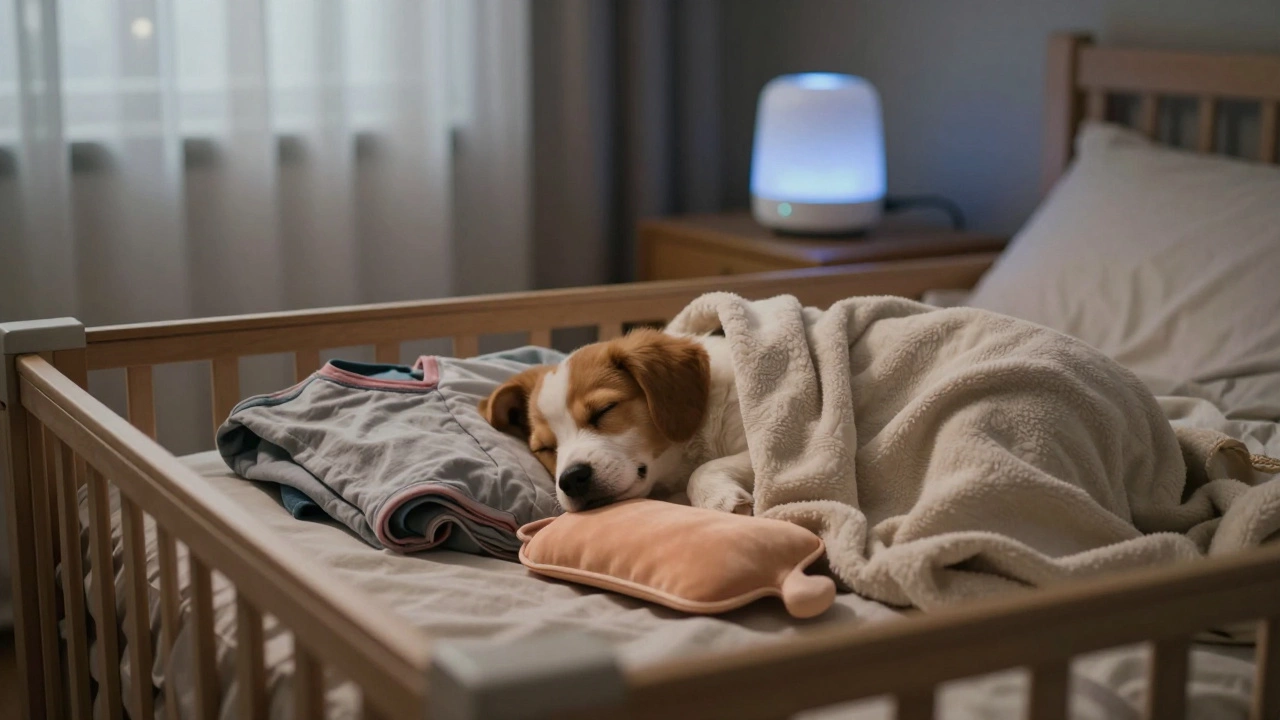
What works better than TV? A consistent routine and a safe space. Start by setting up their sleeping area near you, at least for the first few weeks. A crate with a soft blanket, a piece of your old shirt (with your scent), and a warm water bottle wrapped in a towel can mimic the warmth and comfort of their littermates. This isn’t coddling-it’s building confidence.
Also, make sure your puppy has had enough exercise and potty breaks before bedtime. A tired puppy is a quiet puppy. A full bladder? That’s a recipe for accidents and stress. Walk them, play fetch, do a short training session-15 minutes of mental and physical activity makes a huge difference.
When TV Might Actually Help
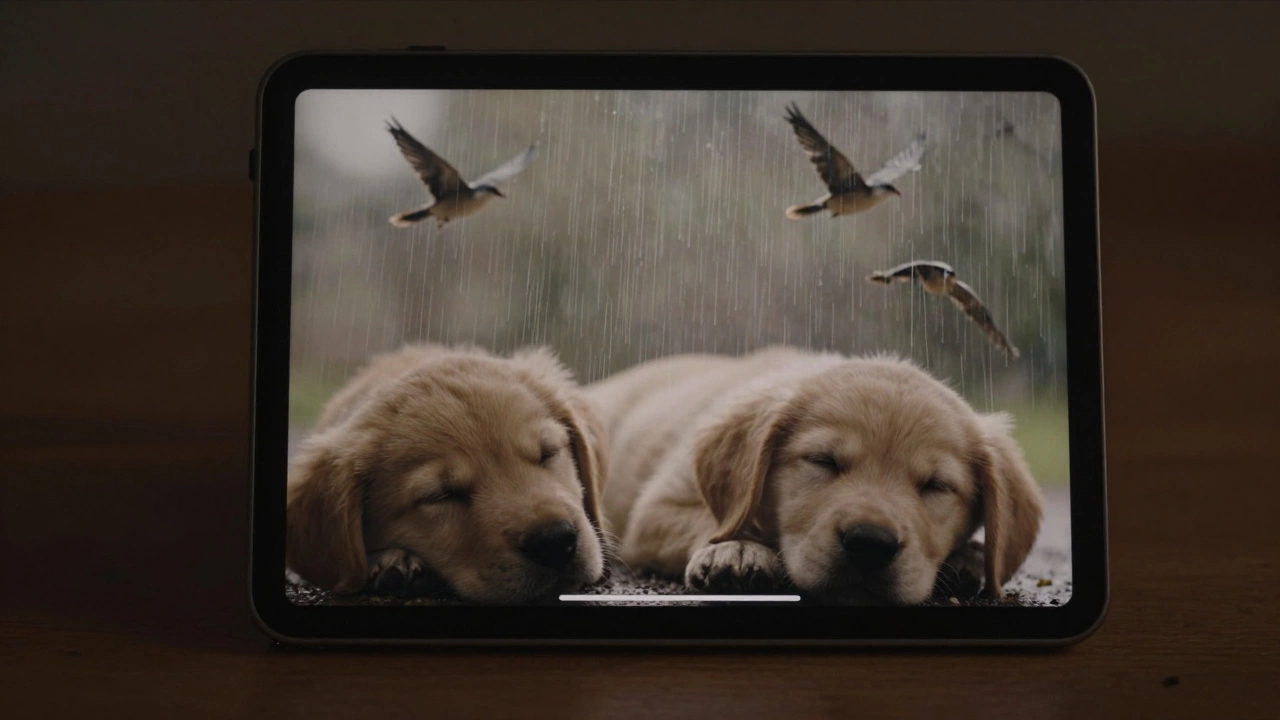
There’s one exception: if you use a dog-specific audio or video designed for calming. Not the news. Not sitcoms. Not reality TV. Something like Through a Dog’s Ear, a scientifically developed music playlist with low frequencies and slow tempos proven to reduce canine stress. Or apps like DogTV, which use colors and motion patterns dogs actually respond to-slow-moving scenes, high-contrast visuals, and sounds that mimic natural environments like birds chirping or gentle rain.
Even then, volume matters. Keep it low. Think of it like a lullaby, not a movie night. Play it on a timer so it turns off after 30-60 minutes. Constant noise can prevent deep sleep cycles, which puppies need just as much as humans do to grow and learn.
What Happens If You Leave the TV On All Night?
Leaving regular TV on all night doesn’t just fail to help-it can train your puppy to expect noise to fall asleep. That means when you’re away on vacation or if the power goes out, your puppy will panic. They’ll associate silence with danger. This creates a dependency that’s hard to break later.
Plus, the light from the screen can disrupt their circadian rhythm. Dogs, like humans, need darkness to produce melatonin-the hormone that helps them sleep deeply. A flickering screen, even at low brightness, can delay that process. Your puppy might sleep less, wake more often, and seem restless or irritable during the day.
Alternatives That Actually Work
Here’s what works better than TV, backed by behaviorists and vet clinics:
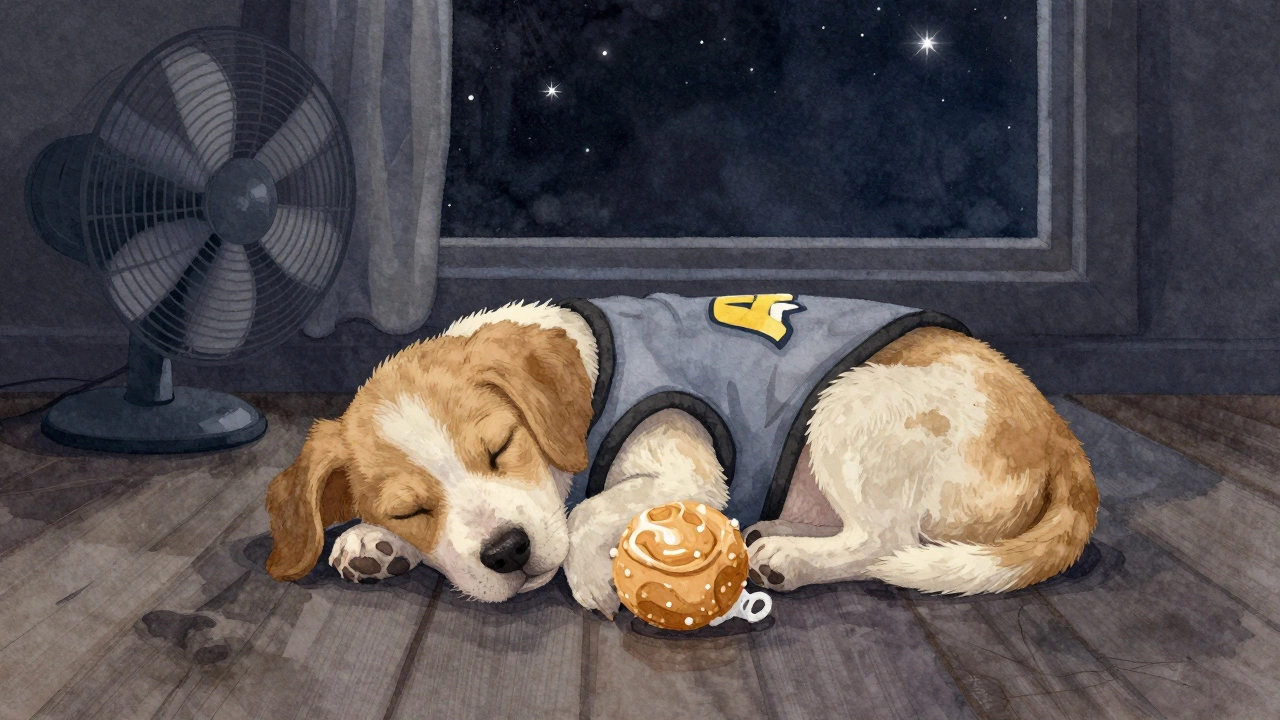
- White noise machine: A steady, low hum (like a fan or a dedicated pet sound machine) is far more calming than TV audio. It masks sudden noises without startling them.
- Calming wraps: Products like the ThunderShirt apply gentle pressure that mimics being hugged, which can reduce anxiety in up to 80% of dogs, according to a 2023 study in the Journal of Veterinary Behavior.
- Gradual desensitization: Practice leaving your puppy alone for short periods during the day. Start with 2 minutes, then 5, then 10. Reward calm behavior. This builds their confidence that you always come back.
- Interactive toys: A Kong stuffed with peanut butter (xylitol-free!) and frozen can keep them busy and distracted for 20-30 minutes while they work to get the treat out.
When to Worry
If your puppy cries for more than 15-20 minutes after you leave the room, or if they’re destroying things, having accidents, or panting heavily, that’s not normal puppy behavior-it’s anxiety. Don’t wait for it to get worse. Talk to a certified dog behaviorist or your vet. There are safe, non-medical solutions, and sometimes short-term calming aids (like pheromone diffusers) can help while you work on long-term habits.
Medication should be a last resort. Most puppies outgrow separation anxiety with the right training. But ignoring it? That just makes it harder to fix later.
Final Answer: Should You Leave the TV On?
No, don’t leave the TV on at night for your puppy-not unless it’s a calming, dog-specific audio track playing quietly for a short time. Regular TV? It’s more likely to stress them out than comfort them.
Focus on what really matters: a consistent bedtime routine, a cozy and secure sleeping space, plenty of exercise, and patience. Your puppy isn’t being stubborn. They’re scared. And with the right support, they’ll learn to feel safe-without needing the TV to fall asleep.
Is it okay to leave the TV on all night for my puppy?
No, it’s not recommended. Regular TV noise and light can overstimulate your puppy, disrupt their sleep cycle, and create a dependency on background noise. Dogs need quiet, dark environments to get deep, restorative sleep. If you want sound, use a white noise machine or a dog-specific calming audio track at low volume for a limited time.
Why does my puppy cry when I turn off the TV?
Your puppy has learned to associate the sound of the TV with comfort and safety. When it turns off, the sudden silence feels unfamiliar and scary. This isn’t a sign they’re spoiled-it’s a learned behavior. The solution is to gradually reduce TV use and replace it with more reliable comfort tools, like a scent item or white noise.
Can TV help with separation anxiety in puppies?
Regular TV doesn’t help with separation anxiety. In fact, it can make it worse by creating an unreliable comfort cue. True separation anxiety requires behavior training, not noise. Use calming music designed for dogs, desensitization exercises, and a secure sleeping space instead. If anxiety is severe, consult a vet or certified behaviorist.
What’s better than TV for a sleeping puppy?
A warm, quiet, dark space with a familiar scent is best. Try placing a piece of your clothing in their crate, using a white noise machine, or adding a heartbeat sound app. A ThunderShirt or a frozen Kong toy can also help them relax. The goal is to create safety without dependence on electronics.
Should I let my puppy sleep in my room at night?
Yes, especially in the first few weeks. Sleeping near you helps your puppy feel secure and reduces nighttime crying. Once they’re calm and sleeping through the night, you can slowly move their bed farther away. The goal isn’t to keep them in your room forever-it’s to build confidence so they can sleep peacefully anywhere.
Next Steps
Start tonight: turn off the TV. Replace it with a white noise machine or a fan. Put your old T-shirt in their crate. Take your puppy for a short walk before bed. Do this for three nights. Watch how their behavior changes. You’ll likely see less crying, fewer accidents, and deeper sleep.
If you’re still struggling after a week, don’t guess. Reach out to a professional. Puppy anxiety doesn’t fix itself with time-it fixes itself with the right tools and patience. You’re not failing. You’re learning. And your puppy is lucky to have you trying so hard.