Dog Sleep Routine: What Works, What Doesn't, and How to Get It Right
Every dog needs a dog sleep routine, a consistent daily pattern of rest that supports physical recovery, emotional balance, and healthy brain function. It's not just about when they lie down—it's about how their whole day leads to that moment. Dogs don't sleep like humans. They cycle through light and deep sleep faster, and they need more total rest—especially puppies, seniors, and large breeds. A good dog sleep schedule, a predictable timing of rest periods tied to your household rhythm helps them feel secure. Without it, they get anxious, restless, or even destructive. You might think they're just being stubborn when they won't settle, but more often, it's because their body doesn't know when it's time to shut down.
What affects their sleep? A lot. Their dog bedtime, the specific time they’re settled for the night should match your family’s rhythm—not your work schedule. If you come home at midnight and crash on the couch, your dog will too. If you wake up at 5 a.m., they’ll be nudging you by 4:45. dog sleep patterns, the natural cycles of activity and rest a dog follows daily are shaped by light, meals, walks, and even the TV noise in the next room. A dog bed that’s too flat or too old? That’s not just uncomfortable—it’s a health risk. And leaving the TV on at night? That might be making their anxiety worse, not better. Their brain doesn’t turn off just because the screen is on.
Some dogs sleep through the night without issue. Others wake up every hour. Why? It’s rarely about discipline. It’s about pain, hunger, anxiety, or a lack of wind-down time. A 12-hour car ride the day before? A new vet visit? A change in your work hours? All of it shows up in their rest. That’s why the best dog bed routine, a set of calming actions leading up to sleep, like a quiet walk, gentle petting, or a treat matters more than the time on the clock. It tells their body: it’s safe. It’s time.
What you’ll find here aren’t just tips. These are real stories from dog owners who fixed their pup’s sleep problems—not by buying a new bed, but by changing the rhythm. You’ll see what actually works for anxious puppies, aging Labs, and high-energy herding breeds. No fluff. No guesswork. Just what helps dogs sleep deeper, longer, and calmer—so you can too.
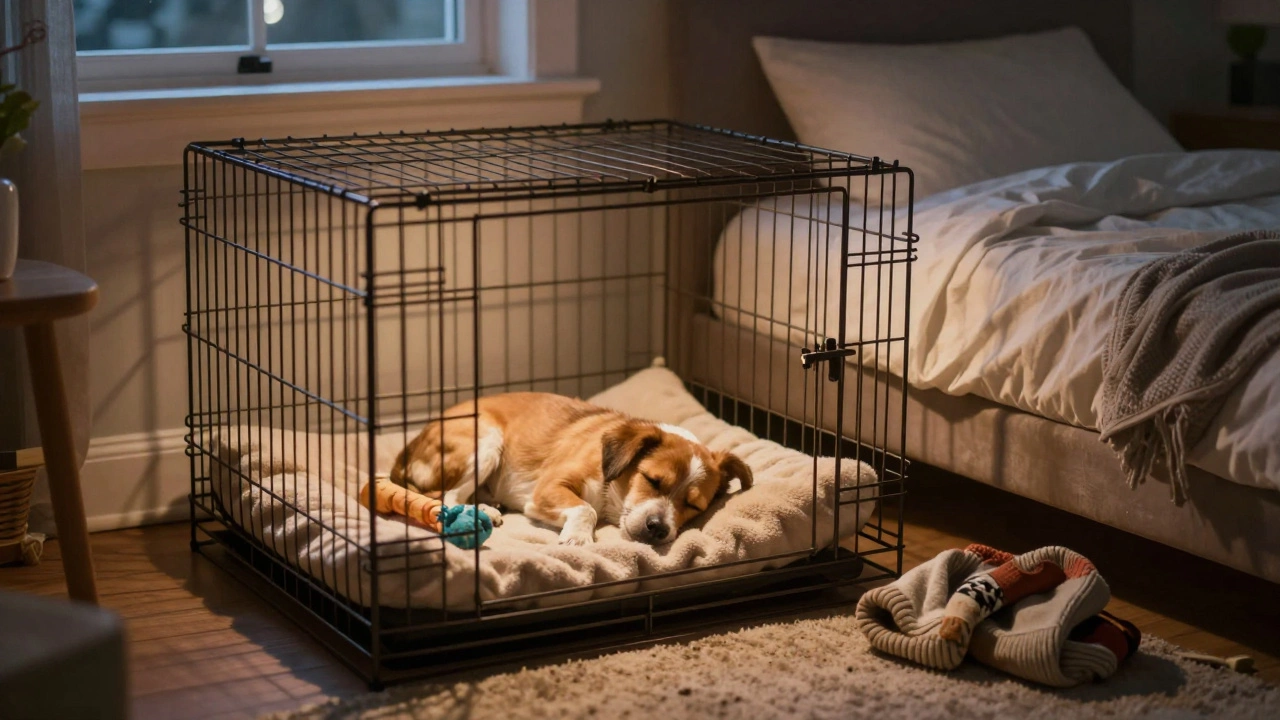
Should I Put My Dog in a Crate at Night? Here’s What Actually Works
Should you crate your dog at night? It depends on their age, behavior, and how you introduce the crate. Learn when it helps, when it hurts, and how to make it a safe, peaceful space for your dog.
View more