Crate Time Estimator
Dog Crate Calculator
Get personalized crate time recommendations based on your dog's specific needs
Key Guidelines
Max Crate Time: Never exceed your dog's natural bladder control. Puppies need 1 hour per month of age (max 4-5 hours).
Never Force: If your dog panics, whines excessively, or tries to escape, the crate is not appropriate. Try a safe room instead.
Placement Matters: Keep crate in your bedroom if possible. Isolation increases anxiety.
Crate Time Recommendations
Enter your dog's details to see results
Is your dog howling, pacing, or chewing on the couch when you turn off the lights? You’re not alone. Thousands of dog owners in Auckland and beyond ask the same question: should I put my dog in a crate at night? The answer isn’t yes or no-it’s about your dog’s age, temperament, and how you set up the crate. Done right, a crate can be a safe, comforting space. Done wrong, it can become a source of stress or even fear.
What a Crate Really Does for Your Dog
A crate isn’t a prison. It’s a den. Dogs are den animals by nature. In the wild, they seek out small, enclosed spaces to rest safely. A properly introduced crate taps into that instinct. It gives your dog a place to retreat, feel secure, and sleep without distractions. But here’s the catch: if you shove your dog into a crate for the first time at 10 p.m. after a long day, they’ll panic. Crates work when they’re introduced slowly, with positive experiences, and never used as punishment.When a Nighttime Crate Makes Sense
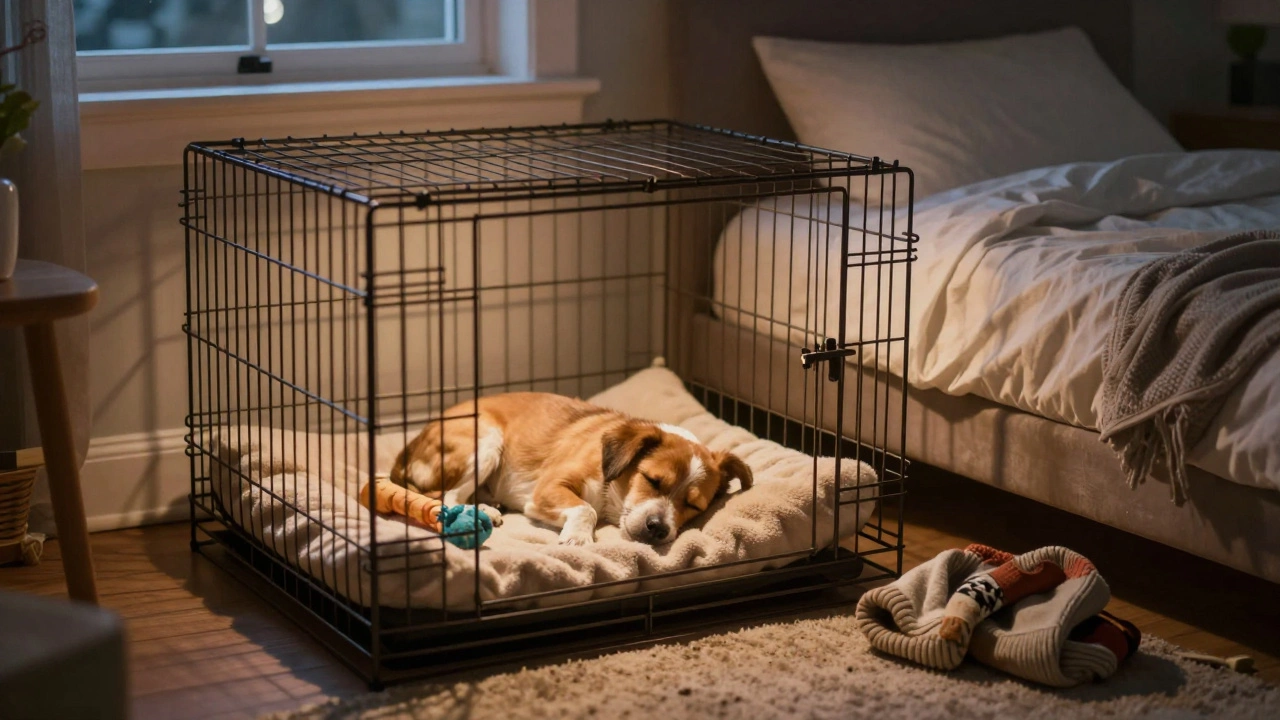
There are clear situations where crating your dog at night is a smart move:- Puppies under 6 months-they can’t hold their bladder for more than 4-5 hours. A crate helps prevent accidents and keeps them from chewing up your shoes or pillows.
- Young adult dogs with separation anxiety-a crate can reduce destructive behavior when left alone. Studies from the University of Edinburgh show that dogs with anxiety who are crate-trained have 40% fewer episodes of destructive chewing.
- Dogs recovering from surgery or injury-crating prevents overexertion during healing.
- Households with kids or busy schedules-a crate ensures your dog isn’t accidentally stepped on or startled during the night.
When You Should Avoid Crating at Night
Not every dog needs or benefits from a crate. Here’s when to skip it:- Older dogs with arthritis or joint pain-getting in and out of a crate can be painful. A low-profile dog bed on the floor might be kinder.
- Dogs with severe anxiety or trauma-if your dog has been abandoned, abused, or spent time in a shelter, a crate might trigger panic. Look into safe room confinement instead.
- Dogs who’ve learned to hate the crate-if they whine, scratch, or try to escape every time you close the door, forcing them at night will only make it worse.
How to Make the Crate a Happy Place
The key to nighttime success is association. You want your dog to see the crate as their favorite spot-not a punishment zone. Start during the day. Toss in a favorite toy or a stuffed Kong with peanut butter. Feed meals inside the crate with the door open. Let them nap in it while you’re home. Use a command like “kennel up” and reward them every time they go in willingly. Once they’re comfortable, close the door for short periods-just a few minutes at first. Gradually increase the time. Never rush this step. If they whine, wait until they’re quiet before opening the door. That teaches them silence gets results, not screaming. At night, place the crate in your bedroom if you can. Dogs are social animals. Hearing your breathing, your footsteps, even your snoring, helps them feel safe. A crate in the garage or basement? That’s isolation. That’s not a den. That’s abandonment.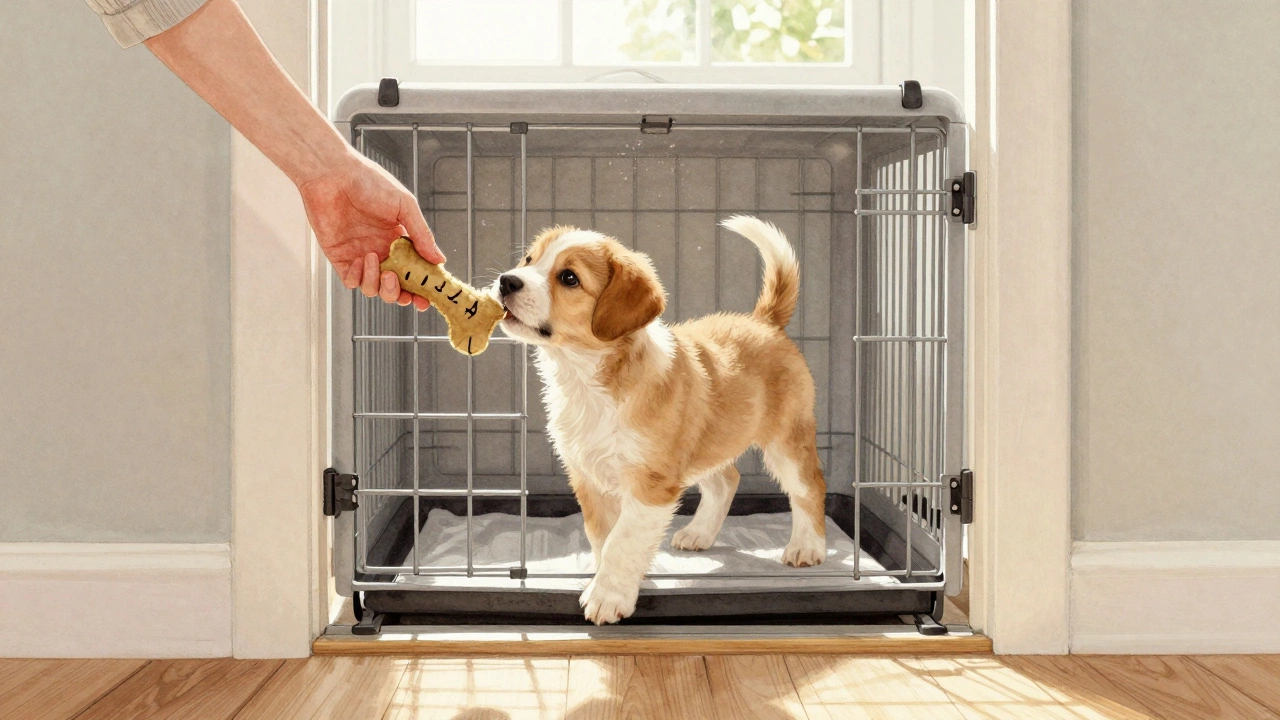
Size Matters
A crate that’s too big turns into a bathroom. A crate that’s too small turns into a torture chamber. Your dog should be able to stand up, turn around, and lie down fully stretched out. For growing puppies, get a crate with a divider. That way, you can adjust the space as they grow. A 20-pound puppy doesn’t need a 50-pound crate. Give them just enough room to be comfortable, not to play soccer in.What to Put Inside
Keep it simple. A soft, washable bed or blanket. One or two safe chew toys. No pillows or fluffy bedding that can be shredded and swallowed. Avoid anything with strings or small parts. Some owners use a piece of clothing with their scent on it. That’s a great trick. Dogs find comfort in familiar smells. Just make sure it’s not something you’ll miss.How Long Can a Dog Stay in a Crate at Night?
Puppies: 1 hour per month of age, up to 4-5 hours max. A 4-month-old puppy can hold it for about 4 hours. That means if you sleep from 11 p.m. to 7 a.m., you’ll need to let them out around midnight or 3 a.m. Adult dogs: Most can sleep 7-8 hours without issue, especially if they’ve had a long walk or play session before bedtime. But if your adult dog starts whining, pacing, or scratching at the door after 5 hours, they might need a bathroom break. Don’t assume they’re just being stubborn. Senior dogs: Their needs change. They may need to go out more often due to incontinence or weakened bladder control. Adjust accordingly.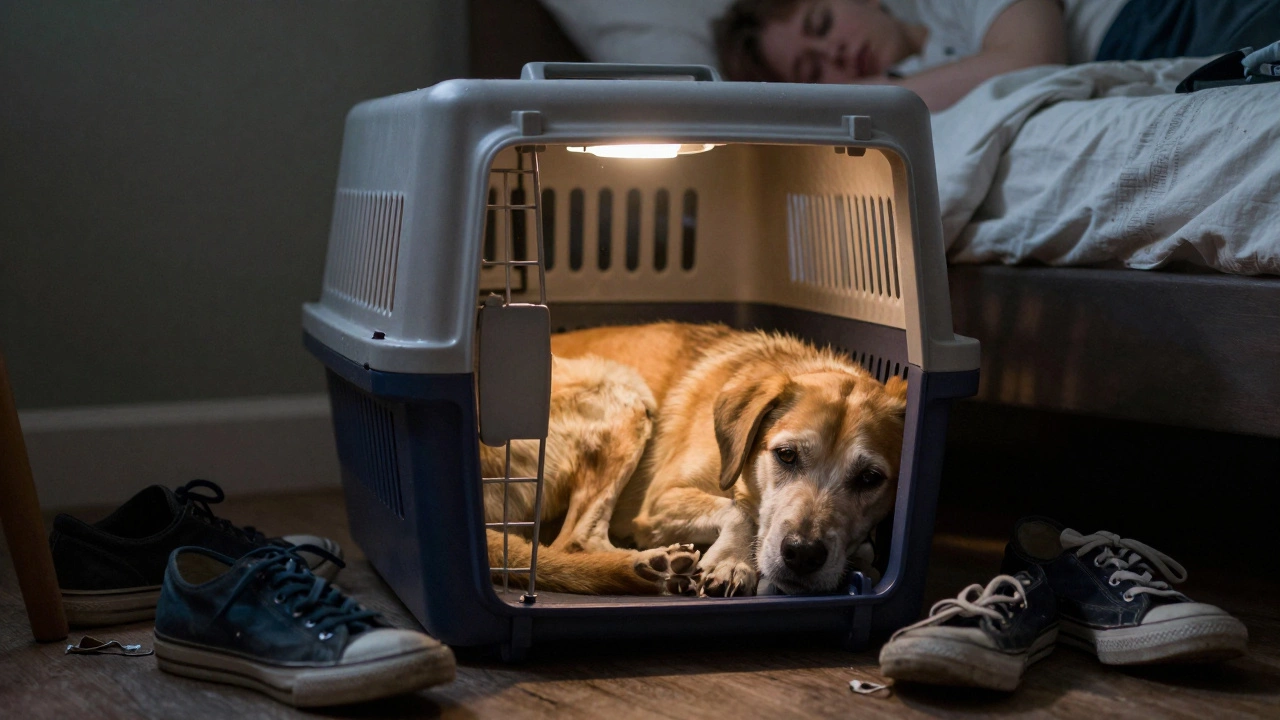
What If My Dog Hates the Crate?
If your dog panics, barks nonstop, or tries to break out, don’t force it. You’re not failing-they’re scared. Try this instead:- Open the crate door and leave it in the room. Let them explore on their own.
- Feed them meals right next to the crate, then move the bowl inside.
- Use treats and praise every time they walk near or into the crate.
- Try a different type of crate-wire, plastic, or soft-sided. Some dogs prefer the openness of wire. Others feel safer in enclosed plastic carriers.
What About Dogs Who Sleep Just Fine Without a Crate?
Then don’t crate them. Not every dog needs one. If your dog curls up quietly beside your bed, sleeps through the night, and doesn’t chew on anything, you’ve already won. There’s no rule that says all dogs must be crated. The goal isn’t to crate your dog-it’s to give them a safe, peaceful night’s sleep.Real-Life Example: My Neighbor’s Dog, Baxter
Baxter, a 1-year-old rescue mix, used to scream for hours after bedtime. He’d scratch at the bedroom door, knock over trash cans, and chew through two pairs of sneakers. His owner tried everything-treats, calming music, even a thunder shirt. Then they started crate training. Not by force. By choice. They left the crate door open for two weeks. They fed him inside. They played fetch near it. They praised him every time he went in. By week three, Baxter walked in on his own. By week four, he was sleeping through the night. Now, when they travel, Baxter hops in the crate without a second thought. He doesn’t see it as a cage. He sees it as his spot.Final Thought: It’s Not About Control. It’s About Comfort.
Crating isn’t about keeping your dog from ruining your furniture. It’s about giving them a quiet, safe place to rest. If your dog relaxes in the crate, sleeps soundly, and wakes up happy-you’ve done it right. If they’re terrified, stressed, or constantly trying to escape? Stop. Reassess. Try something else. Your dog doesn’t need to be crated. They need to feel safe. The crate is just one tool to get there-not the only one, and not always the best one.Is it cruel to crate a dog at night?
No, it’s not cruel if done correctly. A crate becomes a safe, comforting space when introduced positively and used appropriately. Cruelty happens when dogs are left in crates for too long, punished in them, or crated without proper training. Used as a den-not a punishment-it’s a tool for security, not control.
How long can a dog stay in a crate overnight?
Adult dogs can usually stay in a crate for 7-8 hours if they’ve had exercise and a bathroom break before bedtime. Puppies need shorter periods-about one hour per month of age. A 3-month-old puppy can only hold it for 3 hours, so you may need to let them out once during the night. Never force a dog to hold it longer than their body allows.
Should I put my puppy in a crate at night?
Yes, for most puppies under 6 months. It helps with house training, prevents destructive chewing, and gives them a secure place to sleep. But start slow-leave the door open at first, feed meals inside, and use treats to build positive associations. Never lock them in for the first time at night.
Where should I place the crate at night?
Place it in your bedroom if possible. Dogs are pack animals and feel safer near their people. Hearing your breathing or footsteps helps them relax. Avoid putting it in the garage, basement, or another room where they’re completely isolated. That can increase anxiety, not reduce it.
What if my dog cries in the crate at night?
First, rule out physical needs-do they need to go outside? If it’s been less than their age-in-months in hours, they might. If they’ve had a bathroom break and still cry, wait until they’re quiet before opening the door. Never reward screaming with attention. If they cry nonstop for more than 20 minutes, check for signs of distress. If they’re panicked, they may need a different approach, like a gated room instead.