Dog Crate at Night: Safe Sleep, Comfort, and What Experts Really Say
When you think about a dog crate at night, a secure, enclosed space designed to give your dog a sense of safety and routine during sleep. Also known as dog kennel, it’s not just a tool for training—it’s often the quietest, most peaceful place your dog can rest after a long day. Many owners worry that crating their dog overnight is cruel, but for most dogs, it’s the opposite. A properly introduced crate becomes their den—a place where they feel protected, calm, and in control. This isn’t about confinement; it’s about giving your dog a consistent, comforting routine that matches their natural instincts.
Related to this is puppy crate time, the amount of time a young dog spends safely contained in a crate during sleep or rest periods. Puppies under six months shouldn’t be crated for more than 4-5 hours at a stretch, even overnight, because their bladders aren’t fully developed. But as they grow, their ability to hold it improves, and so should their crate routine. The key isn’t how long they’re in there—it’s how they feel when they’re in there. A dog who whines, paws at the door, or tries to escape might be scared, not disobedient. On the other hand, a dog who settles in quietly, curls up, and sleeps deeply? That’s a dog who trusts their space.
dog crate safety, the practice of ensuring a crate is the right size, well-ventilated, and free of hazards like loose bedding or sharp edges matters just as much as the routine. A crate that’s too big lets your dog use one end as a bathroom. One that’s too small crushes their comfort. Always measure your dog from nose to tail and add a few inches. No wire crates with gaps wide enough for paws to get stuck. No plastic crates with poor airflow. And never, ever leave a collar on your dog inside the crate—dog collar safety, the practice of removing collars during unsupervised rest to prevent choking or entanglement is a simple step that saves lives.
Then there’s the bigger picture: dog sleep schedule, a consistent daily rhythm of activity, rest, and sleep that helps dogs feel secure and well-adjusted. Dogs thrive on predictability. If you feed them at 7, walk them at 7:30, and put them in their crate at 9 every night, their body learns to relax at that time. No more last-minute zoomies. No more pacing. Just quiet, deep sleep. That’s the goal. And it’s not just about stopping bad habits—it’s about building trust, reducing anxiety, and giving your dog the rest they need to be happy, healthy, and well-behaved during the day.
You’ll find posts here that break down exactly how long puppies can stay crated, what signs tell you your dog is stressed in their crate, how to pick the right size, and even what to do if your dog hates the crate. We’ve got real advice from owners who’ve been there, and vet-backed tips that actually work. No fluff. No myths. Just what helps your dog sleep better—and how you can make it happen tonight.
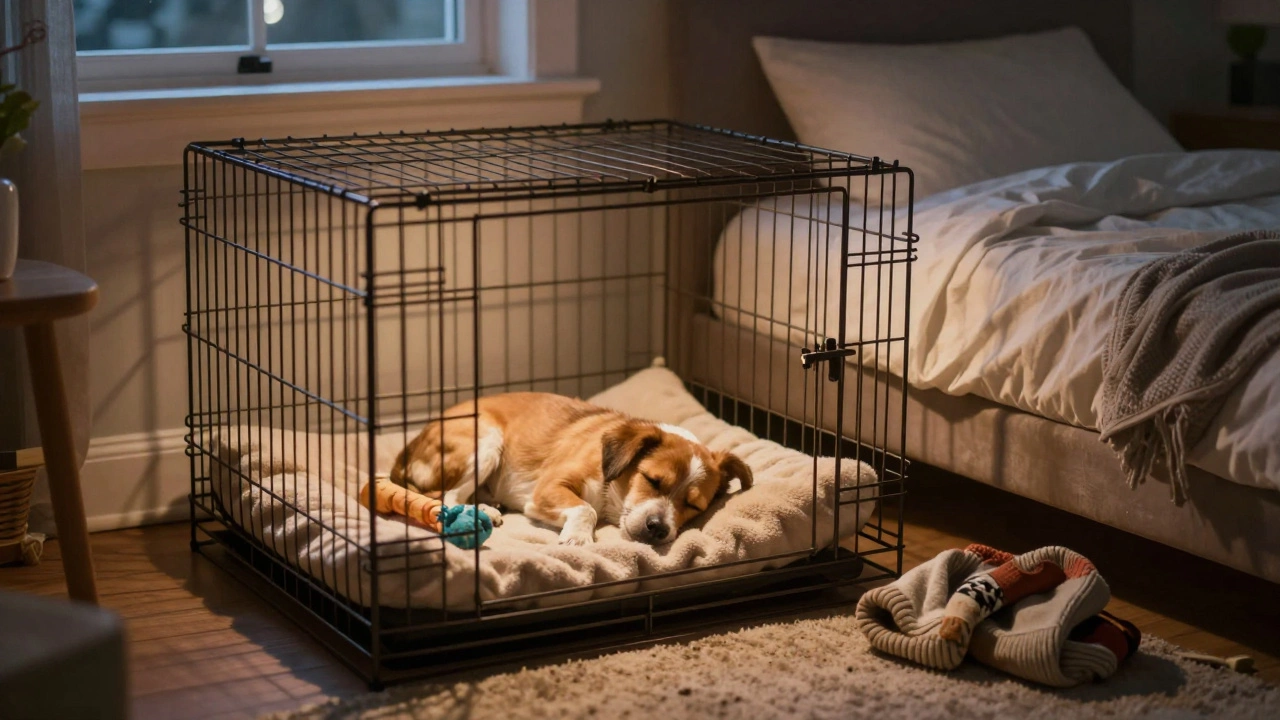
Should I Put My Dog in a Crate at Night? Here’s What Actually Works
Should you crate your dog at night? It depends on their age, behavior, and how you introduce the crate. Learn when it helps, when it hurts, and how to make it a safe, peaceful space for your dog.
View more