Crate Training Dogs: Safe Limits, Signs of Stress, and What Actually Works
When you start crate training dogs, a method used to teach dogs to feel safe and calm in a confined space, often for travel, safety, or house training. Also known as dog crate conditioning, it’s not about locking your pup away—it’s about giving them a den they choose to relax in. Too many owners think crating means hours of silence while they’re out. But real success comes from matching the crate time to your dog’s age, breed, and emotional needs—not your schedule.
One big mistake? Leaving a puppy in a crate for eight hours straight. That’s not training—that’s cruelty. Puppy crate time, the daily amount of time a young dog spends in a crate during training should never exceed 3-4 hours for puppies under six months. Even adult dogs shouldn’t be crated more than 6-8 hours total in a day, with breaks for potty, water, and movement. The dog crate guidelines, standard recommendations for safe and humane crate use based on age, size, and behavior exist for a reason: dogs aren’t meant to sit still for long stretches. Over-crating leads to anxiety, accidents, and even self-harm like chewing paws or barking nonstop.
Good crate training isn’t about force. It’s about association. If your dog whines the second you close the door, they’re not being stubborn—they’re scared. Signs of stress? Panting when it’s cool, pacing, trying to escape, or refusing food even when hungry. These aren’t "bad dog" behaviors—they’re cries for help. The right crate should be big enough for your dog to stand, turn, and stretch, but not so big they use one end as a bathroom. A soft bed, a favorite toy, and a consistent routine make all the difference. And never use the crate as punishment. If your dog sees it as a safe spot, they’ll walk in on their own.
What works better than yelling or ignoring? Short, positive sessions. Start with five minutes while you sit nearby. Gradually increase time. Leave the door open. Feed meals inside. Make it the coziest corner of the house. If your dog sleeps through the night in their crate, that’s a win—not because you locked them in, but because they learned to feel safe there.
Below, you’ll find real advice from dog owners and vets who’ve been there. From how long is too long to crate a puppy, to what to do when your dog hates the crate, to the best ways to build trust instead of fear—you’ll find practical answers that actually work. No fluff. No theory. Just what helps dogs—and their people—get through this step without breaking bonds.
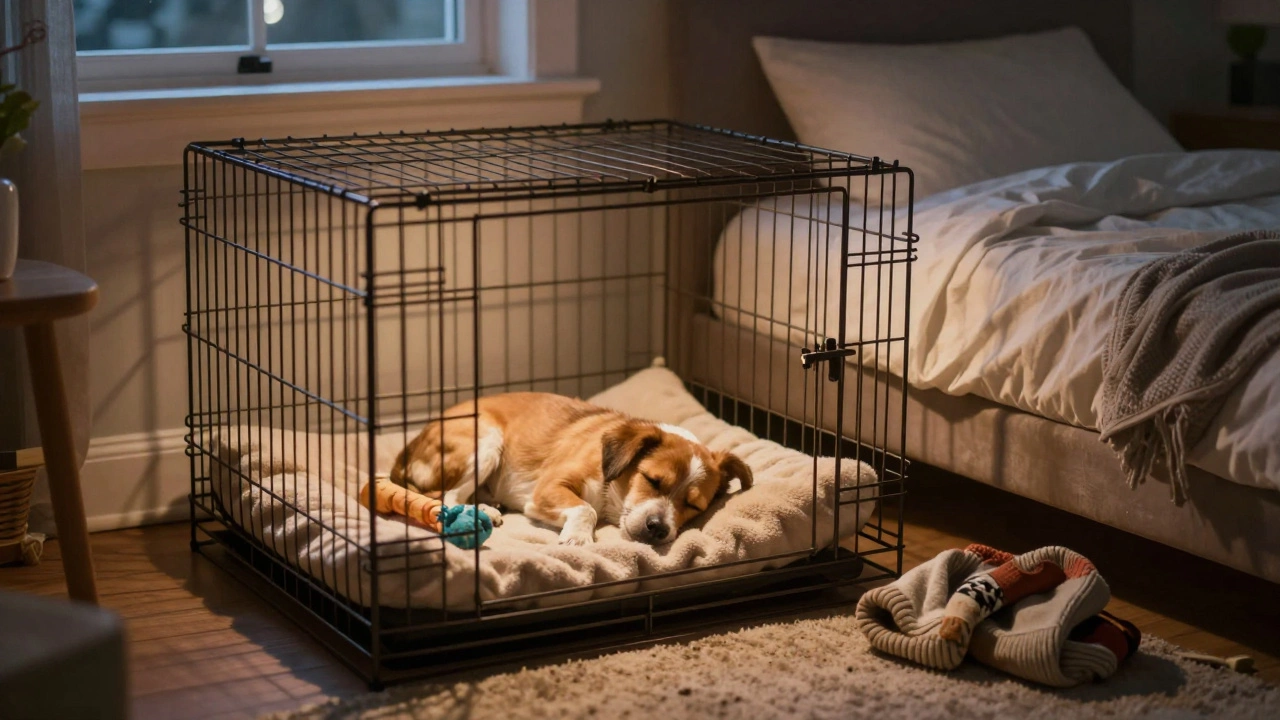
Should I Put My Dog in a Crate at Night? Here’s What Actually Works
Should you crate your dog at night? It depends on their age, behavior, and how you introduce the crate. Learn when it helps, when it hurts, and how to make it a safe, peaceful space for your dog.
View more