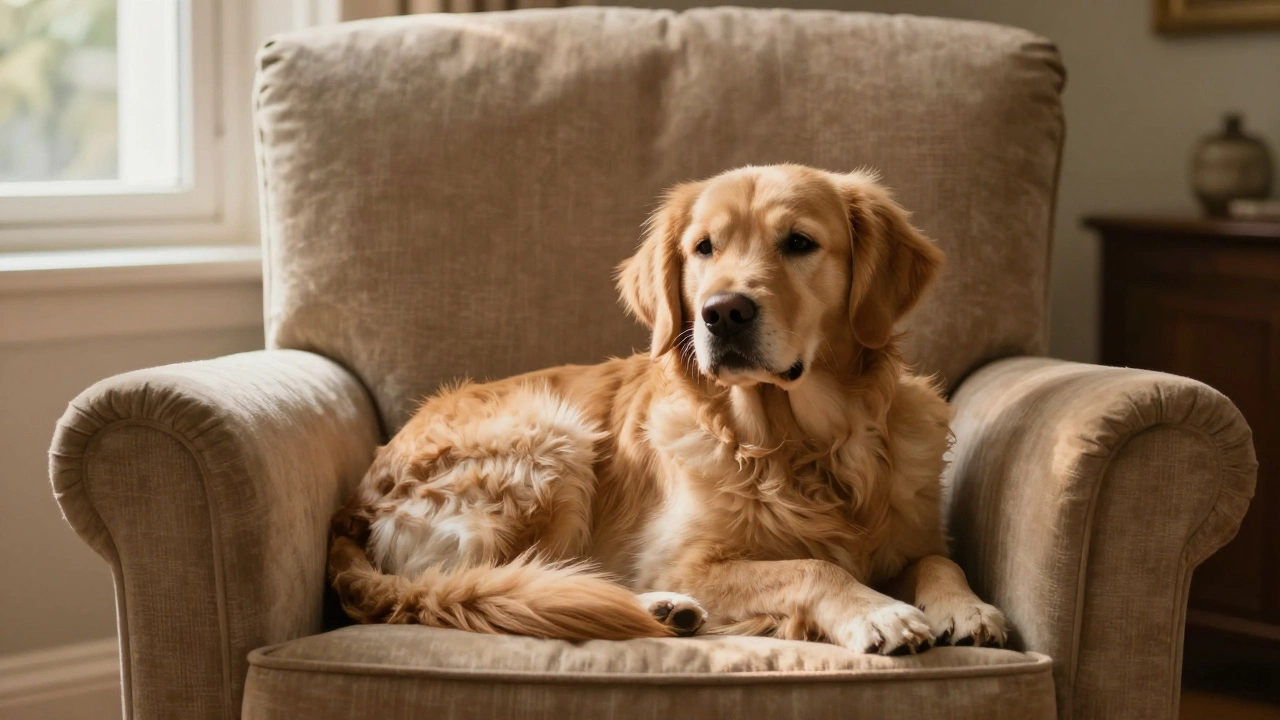
Dog Comfort & Scent Attraction Estimator
Ever wonder why your dog chooses your chair over their expensive bed? Use this tool to estimate the "Scent & Comfort Score" of your favorite spot!
The Great Seat Steal
You stand up for two seconds to grab a glass of water, and by the time you turn around, your dog has claimed your side of the couch like they've owned the deed for years. It's a classic move. You might think they're just being cheeky or trying to annoy you, but the truth is far more heartwarming. Your dog isn't trying to kick you out; they're actually trying to get closer to you in the most literal way possible.
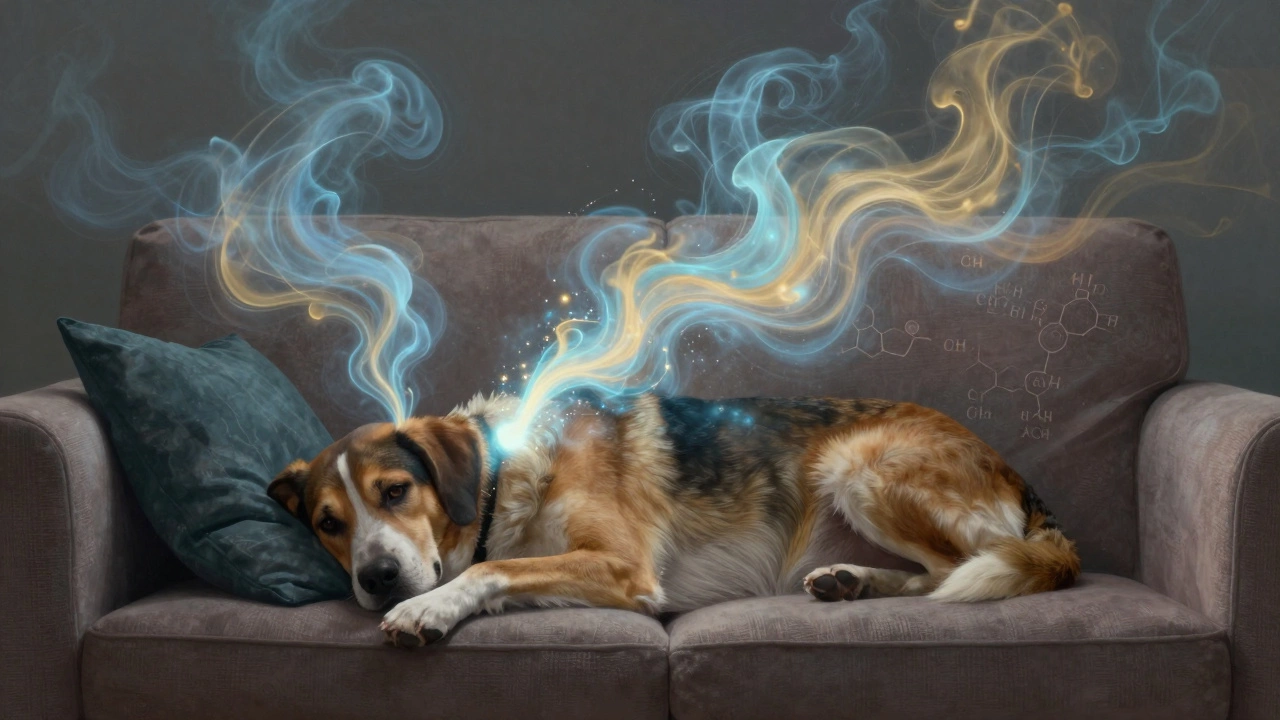
For a dog, your spot isn't just a piece of fabric or a cushion. It's a concentrated hub of your unique chemical signature. When you sit in a chair or lie on a bed, you leave behind oils, skin cells, and pheromones. To us, it's just a seat; to them, it's a high-definition map of who you are. By sitting exactly where you were, they are surrounding themselves with your scent, which acts as a powerful security blanket.
The Power of the Olfactory System
To understand this, we have to look at how dogs perceive the world. While we rely on our eyes, dogs live through their noses. A dog behavior is deeply tied to the Olfactory System, which is the sensory system used to detect and process smells. Their brains dedicate a massive amount of space to processing scents-roughly 40 times more than humans do.
When you vacate a spot, you leave behind a "scent ghost." For a dog, smelling you while they relax triggers a release of oxytocin, the same "love hormone" that humans feel during a hug. This is why they don't just sit *near* you; they sit *where you were*. It's an emotional shortcut to feeling safe and connected, especially if you've been gone for a few hours or if they have a bit of separation anxiety.
Comfort, Warmth, and the Human Heat Map
Beyond the emotional connection, there's a very practical reason for this behavior: thermodynamics. Your body heat lingers in the fabric of a sofa or bed long after you've left. Dogs have a higher basal body temperature than humans, but they are incredibly efficient at seeking out external heat sources to maintain that balance without burning their own energy.
Think about the last time you felt the warmth of a heating pad or a sun-drenched patch of carpet. That's exactly what your dog feels. Your spot is essentially a pre-heated bed. If you've been sitting there for an hour, you've created a perfect, warm nest. Why would they go back to their own cold bed when there's a perfectly toasted human-shaped hole waiting for them?
The Social Hierarchy and Safe Spaces
In the wild, Canines are social animals that organize themselves into packs. In a pack, the most secure and comfortable spots are usually reserved for the leaders. By occupying your spot, your dog might be subconsciously acknowledging your status as the "alpha" or leader of the household. They aren't trying to replace you; they are associating your position with safety and authority.
This behavior also relates to Scent Marking, which is the act of leaving pheromones to identify territory or social bonds. When they sit in your spot, they are mixing their scent with yours. This creates a "communal scent," which strengthens the pack bond. It's their way of saying, "We belong together," using a chemical language we can't even perceive.
When Their Bed Isn't Enough
You might be wondering, "I bought them a fancy bed, so why are they still on my chair?" The problem is that most dog beds are designed for support and cushioning, but they lack the one thing your spot has: your identity. A brand-new memory foam bed is comfortable, but it smells like a factory, not like their favorite person.
| Feature | Your Favorite Chair | Standard Dog Bed |
|---|---|---|
| Scent Profile | High (Your pheromones) | Low (New fabric/foam) |
| Temperature | Warm (Residual body heat) | Ambient/Cool |
| Emotional Value | High (Bonding/Security) | Moderate (Comfort/Sleep) |
| Ownership | Shared Territory | Individual Territory |
If your dog is constantly ignoring their bed to steal yours, they are likely prioritizing emotional security over physical luxury. To fix this, you can try "scent-loading" their bed. Take an old t-shirt you've worn for a day and tuck it into their bedding. This gives them the scent they crave without them needing to hijack your seat every time you get up for a snack.
Does This Mean They Have Separation Anxiety?
Not necessarily. Most dogs do this because they love you, not because they are distressed. However, if this behavior is paired with other signs-like chewing the furniture when you're gone, pacing, or excessive whining-it could be a sign of Separation Anxiety. In these cases, the need to be in your scent-saturated spot becomes a coping mechanism to manage stress.
For a typical, happy dog, stealing your spot is just a sign of a strong bond. It shows they trust you and feel an intense attraction to your presence. It's an act of affection disguised as a territorial takeover. Instead of fighting for your spot, try seeing it as a compliment-your dog thinks you're the best-smelling thing in the house.
Practical Tips for a Happy Compromise
If you're tired of the "musical chairs" game, there are a few ways to handle this without hurting your dog's feelings. First, consider the placement of their bed. If their bed is in a far corner of the room, they'll naturally gravitate toward the center of the action-which is where you are. Moving their bed closer to your favorite lounging area can help.
Second, try a training command. Use a "go to your bed" command and reward them with a high-value treat when they choose their own spot over yours. This teaches them that while your spot is great, their spot is where the rewards happen. But remember, the drive to be near your scent is powerful, so be patient.
Is it bad if my dog refuses to sleep in their own bed?
Not at all. Many dogs prefer sleeping with or near their owners because it provides a sense of security and warmth. As long as they aren't showing signs of extreme anxiety, it's just a preference for companionship.
Can I stop my dog from taking my spot without being mean?
Yes. The most effective way is to make their bed more attractive by adding an old piece of your clothing. This satisfies their need for your scent while encouraging them to stay in their own designated space.
Do all dogs do this, or is it a specific breed trait?
This is a general canine trait rather than a breed-specific one. Whether you have a Golden Retriever or a Chihuahua, the drive to seek out the pack leader's scent and warmth is hardwired into their biology.
What if my dog takes the spot and then growls when I try to sit back down?
This is different from scent-seeking; this is resource guarding. If your dog growls, they are claiming the spot as their own property. In this case, you should consult a professional trainer to address the guarding behavior safely.
Does the type of fabric on my chair affect this?
Yes, porous fabrics like cotton, wool, or velvet hold scents and heat much better than leather or plastic. If you have a fabric sofa, your scent lingers longer, making it a more attractive target for your dog.
Next Steps for Pet Parents
If you want to improve your dog's relationship with their own sleeping area, start by assessing where their bed is located. Is it in a drafty hallway or a quiet corner where they feel isolated? Moving it to the living room, right next to your favorite chair, often solves the problem. You can also try rotating their bedding-wash the bed but add a "scented" item like a worn sock or shirt to keep them anchored to their own space.
For those dealing with a dog that has actual separation anxiety, look into anxiety-reducing aids like pheromone diffusers or calming treats. However, for the vast majority of us, this "spot stealing" is just a daily reminder of how much our dogs adore us. So, next time you find your dog in your seat, just give them a pat and remember that you're essentially a giant, walking scent-dispenser that they can't get enough of.