
Co-Sleeping Risk & Hygiene Calculator
Answer these questions to assess the potential impact on your health and sleep quality.
Your Co-Sleeping Report
Please enter your details and click Calculate to see your personalized assessment.
0/30
Recommended Alternatives:
It’s a common scene in households around the world. You’re tired after a long day, your dog is cuddly and warm, and inviting them into bed seems like the ultimate act of bonding. But while that cozy moment feels good in the short term, sharing your mattress with a dog can have significant downsides for your health, your sleep quality, and even your relationship with your pet.
As someone who has spent years observing pet behaviors and consulting with veterinary professionals here in Auckland, I’ve seen firsthand how this habit affects both owners and dogs. The decision isn’t just about personal preference; it’s about understanding the biological and behavioral implications of co-sleeping with animals. If you’ve ever woken up feeling unrested or noticed an increase in sneezing since letting your dog join you, you’re not alone. Let’s look at why keeping your dog out of your bed might be the best choice for everyone involved.
The Hidden Health Risks of Co-Sleeping
Dogs are loyal companions, but they are also outdoor explorers. Even if your dog never leaves the house, they still carry bacteria, parasites, and allergens from their environment. When they jump onto your clean sheets, they bring these elements directly to where you spend eight hours a night.
Parasites are one of the most immediate concerns. Fleas, ticks, and mites can hitch a ride on your dog’s fur and transfer to your bedding. While modern flea treatments are effective, no product is 100% foolproof. A single tick hidden in your dog’s ears or paws can end up on your pillowcase. In New Zealand, we deal with specific local pests, but globally, diseases like Lyme disease or Bartonella (cat scratch fever, which can sometimes involve dogs) are real risks associated with close contact with infested animals.Beyond parasites, there’s the issue of bacterial transmission. Dogs walk on streets, sniff garbage bins, and roll in grass. Their paws and fur collect E. coli, Salmonella, and Campylobacter. These bacteria don’t cause problems in healthy adults often, but they can lead to gastrointestinal issues, especially for children, elderly individuals, or those with compromised immune systems. Sharing a bed increases the surface area of exposure significantly compared to just having a dog in the same room.
Allergies are another major factor. Dog dander-tiny flakes of skin-is a potent allergen for many people. It sticks to fabric, including mattresses and pillows, where it accumulates over time. For someone with mild allergies, this constant nighttime exposure can worsen symptoms, leading to chronic congestion, itchy eyes, and poor sleep. Even if you don’t consider yourself allergic, prolonged exposure can sensitize your immune system over time.
How Dogs Disrupt Your Sleep Cycle
Sleep is not just about resting; it’s a complex process involving different stages, including deep sleep and REM (Rapid Eye Movement). High-quality sleep requires consistency and minimal interruptions. Dogs, by nature, are light sleepers and move frequently during the night.
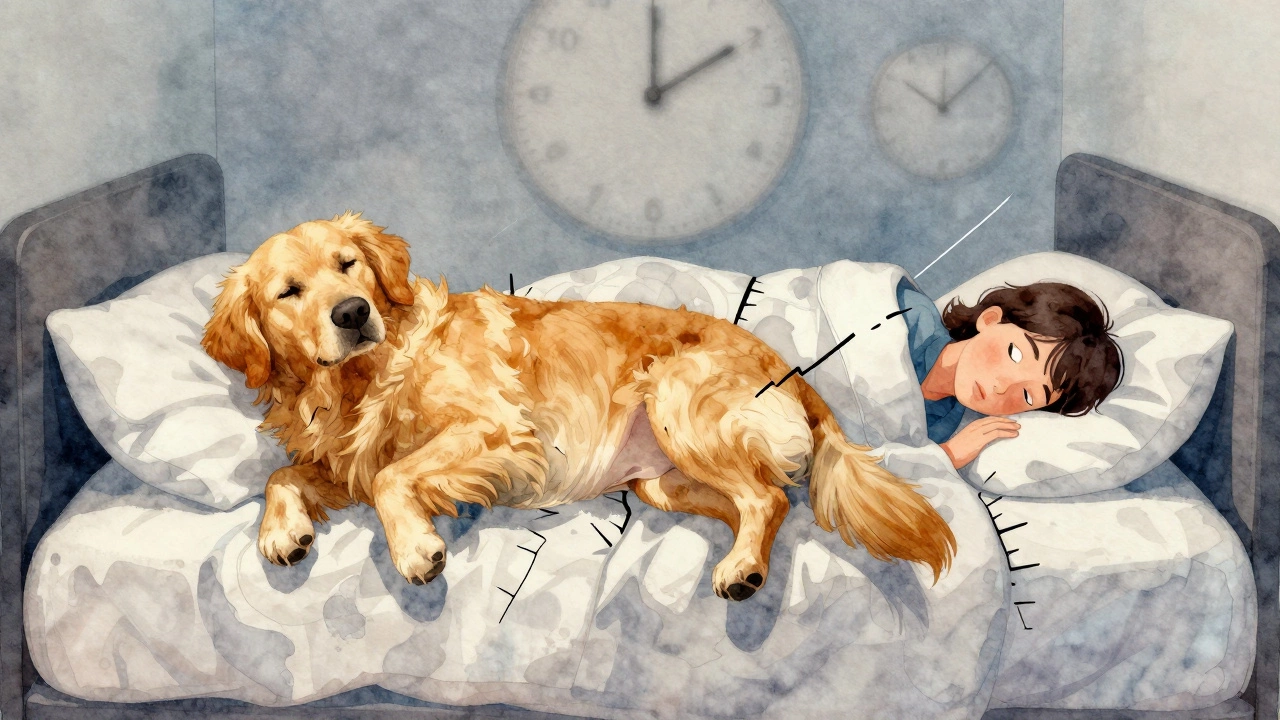
A study published in the journal Sleep Medicine found that while some dog owners reported feeling safer with their pets in bed, many experienced significant sleep disturbances. Dogs snore, twitch, kick, and shift positions. A large breed like a Golden Retriever or a Labrador can take up half the bed, forcing you into awkward positions that strain your back and neck. This physical crowding prevents you from achieving restorative deep sleep.
Furthermore, dogs have different circadian rhythms than humans. They may need to go outside to relieve themselves, get water, or investigate a noise. Every time your dog gets up, moves around, or barks, it fragments your sleep cycle. Fragmented sleep leads to daytime fatigue, reduced cognitive function, and increased stress levels. You might think you’re getting enough hours of sleep, but the quality is compromised.
Behavioral Consequences for Your Dog
Allowing your dog to sleep in your bed can inadvertently reinforce certain behaviors that are difficult to manage later. Dogs are pack animals, and they look to their human family members for leadership and structure. When you share your bed, you blur the lines between leader and equal.
This can lead to Separation Anxiety. Dogs who are accustomed to sleeping with their owners may become distressed when left alone. If your dog expects to be next to you every night, being separated-even for a few hours-can trigger anxiety, destructive chewing, excessive barking, or pacing. Establishing a separate sleeping space helps your dog develop independence and confidence.
Additionally, co-sleeping can contribute to resource guarding. Some dogs may view the bed as their territory, leading to growling or snapping if you try to move them or if other family members approach. This is particularly concerning in households with children or multiple pets. Setting clear boundaries early on prevents these aggressive tendencies from developing.
Hallucinations and Parasomnias
Have you ever woken up suddenly because your dog was dreaming? Dogs experience REM sleep just like humans, which means they dream. During this stage, they may bark, whine, or run in their sleep. While cute in small doses, these movements can startle you awake. More seriously, some dogs exhibit parasomnias-abnormal behaviors during sleep such as vocalizing, thrashing, or even biting. Being in close proximity increases the risk of accidental injury to yourself or your dog.
Hygiene and Allergen Control
Maintaining a hygienic sleeping environment is crucial for overall health. Bedsheets should be washed regularly, but adding a dog to the mix complicates this routine. Dog hair, dirt, and saliva accumulate quickly, requiring more frequent washing. For those with sensitive skin, this can lead to rashes or irritation.
If you choose to keep your dog out of bed, investing in a high-quality Dog Bed placed nearby can offer a compromise. Look for beds with orthopedic support, washable covers, and durable materials. This ensures your dog still feels close to you without compromising your sleep hygiene.
| Aspect | Pros | Cons |
|---|---|---|
| Emotional Bonding | Increased closeness and comfort | Potential dependency and separation anxiety |
| Sleep Quality | Some feel safer | Frequent disruptions, less deep sleep |
| Hygiene | N/A | Transfer of parasites, bacteria, and allergens |
| Behavior | N/A | Risk of resource guarding and lack of boundaries |
| Health | N/A | Exacerbation of allergies and respiratory issues |

Alternatives to Co-Sleeping
You don’t have to choose between total isolation and sharing your bed. There are several middle-ground options that promote bonding while maintaining healthy boundaries.
- Bedside Dog Crate: Place a crate next to your bed so your dog is nearby but contained. This works well for puppies or anxious dogs.
- Orthopedic Dog Bed: Invest in a comfortable bed placed at the foot of your bed or in the same room. Many dogs prefer their own space if it’s supportive and familiar.
- Training Independence: Gradually train your dog to sleep in their designated spot using positive reinforcement. Reward calm behavior and ignore demands for attention at night.
- Pre-Bed Routine: Engage your dog in exercise and play before bedtime to ensure they are tired and ready to rest independently.
Special Considerations for Vulnerable Groups
Certain groups should avoid co-sleeping with dogs entirely. Infants and young children are at higher risk for SIDS (Sudden Infant Death Syndrome) and accidental suffocation if a dog shares the bed. The American Academy of Pediatrics recommends against co-sleeping with pets for infants under one year old.
Individuals with weakened immune systems, such as those undergoing chemotherapy or living with HIV/AIDS, are more susceptible to infections transmitted by pets. Similarly, people with severe asthma or allergies should minimize exposure to pet dander in their sleeping environment.
Is it safe for my dog to sleep in my bed if they are vaccinated?
Vaccinations protect against specific diseases like rabies and distemper, but they do not eliminate all health risks. Vaccinated dogs can still carry fleas, ticks, and bacteria like E. coli or Salmonella. Therefore, while vaccination reduces some risks, it does not make co-sleeping completely safe from a hygiene perspective.
Can dogs transmit heartworm to humans through sleeping together?
No, dogs cannot transmit heartworm directly to humans. Heartworm is a parasite that affects the hearts and lungs of dogs and cats, transmitted by mosquitoes. However, dogs can carry other parasites like giardia or hookworms, which can be zoonotic (transmissible to humans), though this is rare through casual contact.
My dog has separation anxiety. Will sleeping separately make it worse?
Initially, your dog may protest, but long-term, allowing them to sleep in bed can exacerbate separation anxiety by creating dependency. Instead, use gradual desensitization techniques. Start by having your dog sleep in a crate near your bed, then slowly move the crate further away over weeks. Positive reinforcement helps build confidence.
How often should I wash my dog’s bed to maintain hygiene?
Ideally, wash your dog’s bed cover once a week. If your dog has skin issues or allergies, consider washing it twice a week. Use hypoallergenic detergent and ensure the bed is completely dry before putting it back to prevent mold growth.
Are there any breeds that are better suited for co-sleeping?
Smaller, calmer breeds like Cavalier King Charles Spaniels or Greyhounds are often quieter and take up less space. However, size and breed do not eliminate the risks of parasites, allergens, or sleep disruption. Individual temperament matters more than breed when considering co-sleeping.