Ever dropped off your dog at the groomer and walked out thinking, It’s only been 20 minutes-how long could this possibly take? Then you come back three hours later to find your pup looking like a new dog-and you’re left wondering, why are dogs at groomers for so long?
It’s Not Just a Bath and a Brush
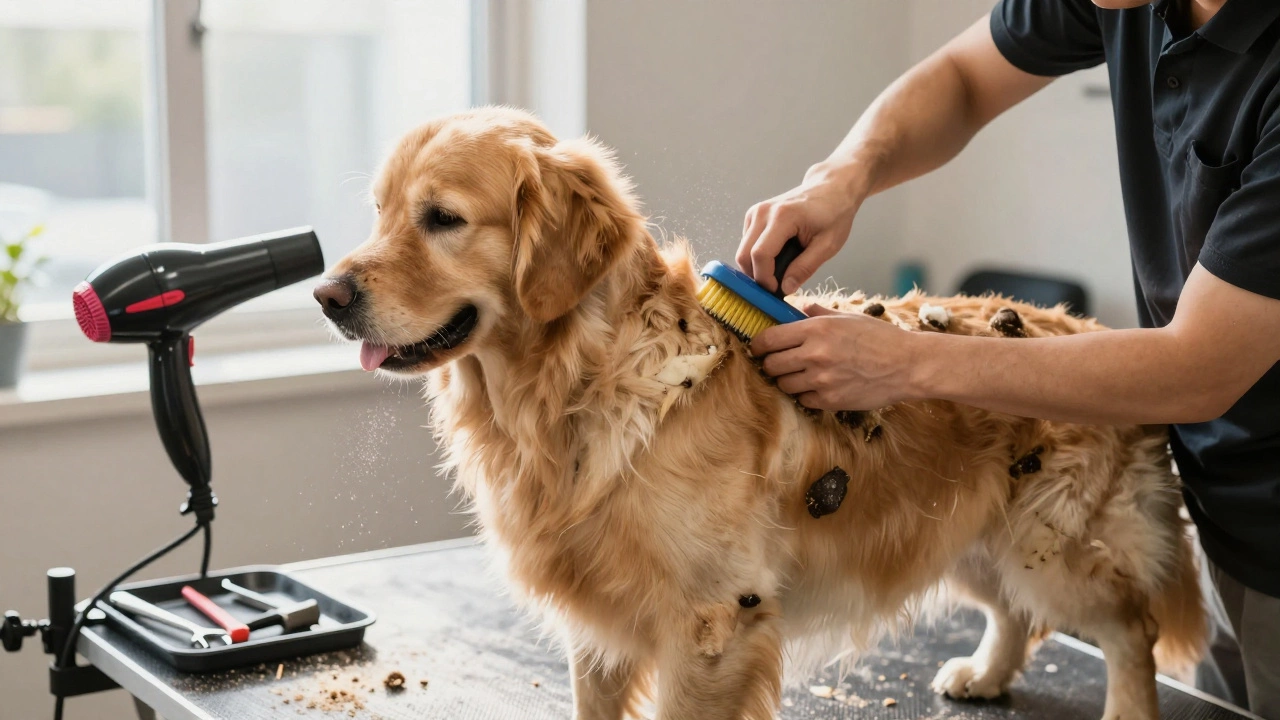
Most people think dog grooming means a quick bath, a blow-dry, and a trim. But that’s only the surface. A full professional groom is a multi-step process that’s as detailed as a spa day for humans-and just as time-consuming. A typical full-service groom includes: a health check, brushing out mats, bathing, drying, clipping, trimming, nail filing, ear cleaning, and anal gland expression. Each step has to be done carefully, especially if your dog has thick fur, tangles, or sensitive skin.Think about it: if your dog has a double coat like a Golden Retriever or a Shih Tzu with hair that grows fast, the prep alone can take 30 to 45 minutes just to get the tangles out. Brushing isn’t just about looks-it’s essential for skin health. Mats trap moisture, dirt, and bacteria. If you skip this step, you risk hot spots, infections, or even painful skin tears when clipping.
Dry Time Isn’t Optional
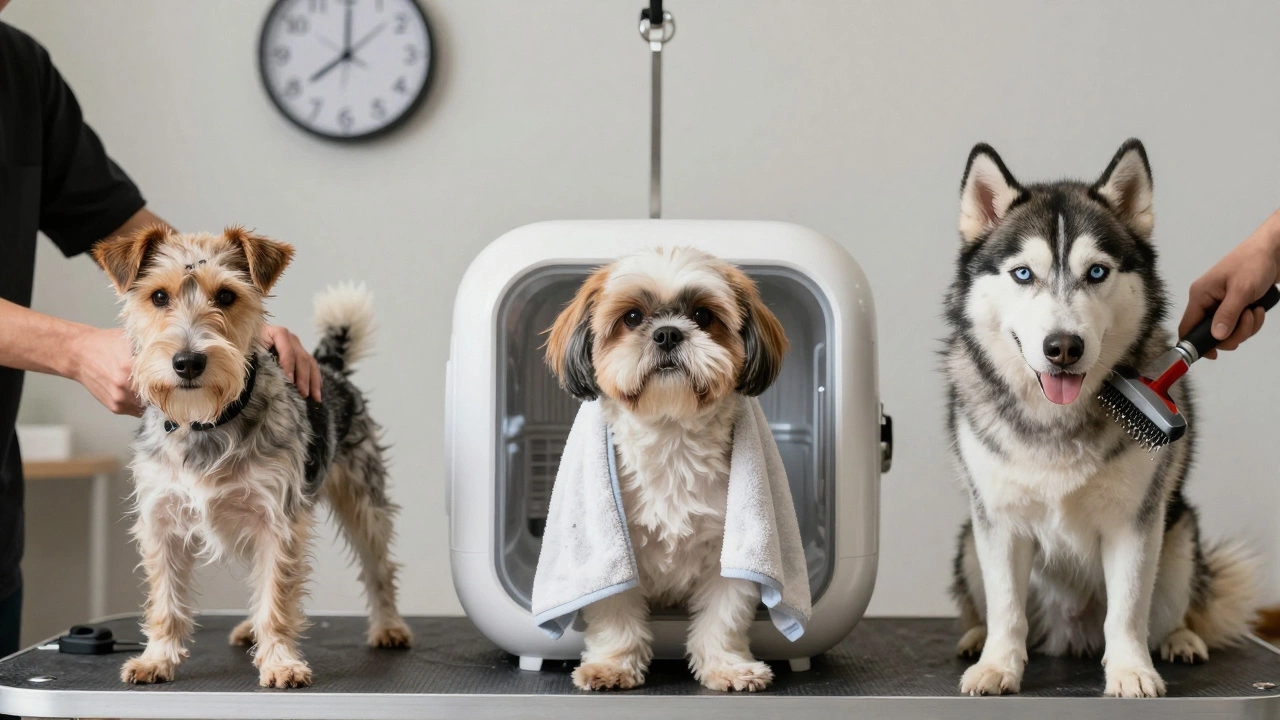
One of the biggest time sinks? Drying. You can’t just slap a dog under a dryer and call it done. Wet fur, especially from breeds like Poodles, Bichons, or Cocker Spaniels, can hold a lot of water. A proper dry means using a high-velocity dryer to remove bulk moisture, then a stationary dryer to fluff and shape the coat. This can take anywhere from 20 minutes for a small dog to over an hour for a large, fluffy one.And here’s the catch: if you rush drying, you get damp spots under the coat. That leads to skin irritation, odor, and even fungal growth. Groomers don’t cut corners here. They dry until the skin is completely dry-no exceptions. That’s why some dogs sit under dryers with a towel over them, quietly waiting while the groomer moves on to another task.
Every Dog Is Different-And Some Are Harder Than Others
Not all dogs are the same. A well-behaved, calm Labrador might zip through a groom in 90 minutes. But a nervous terrier with matted fur, or a senior dog with arthritis, can take double the time.Shedding breeds like Huskies need special attention. Their undercoats are dense and prone to matting. A full de-shedding treatment involves multiple brushings, raking, and sometimes even a special detangling spray. That’s not a 10-minute job-it’s a 45-minute labor of patience.
Then there’s behavior. Dogs that are anxious, fearful, or reactive need breaks. A groomer might spend 10 minutes gently handling a dog’s paw before attempting a nail trim. Or pause for five minutes while the dog catches its breath after a loud hairdryer. It’s not about slowing down-it’s about safety. A single nip or cut from a startled dog can mean a trip to the vet, and no groomer wants that.
Tools and Techniques Take Time
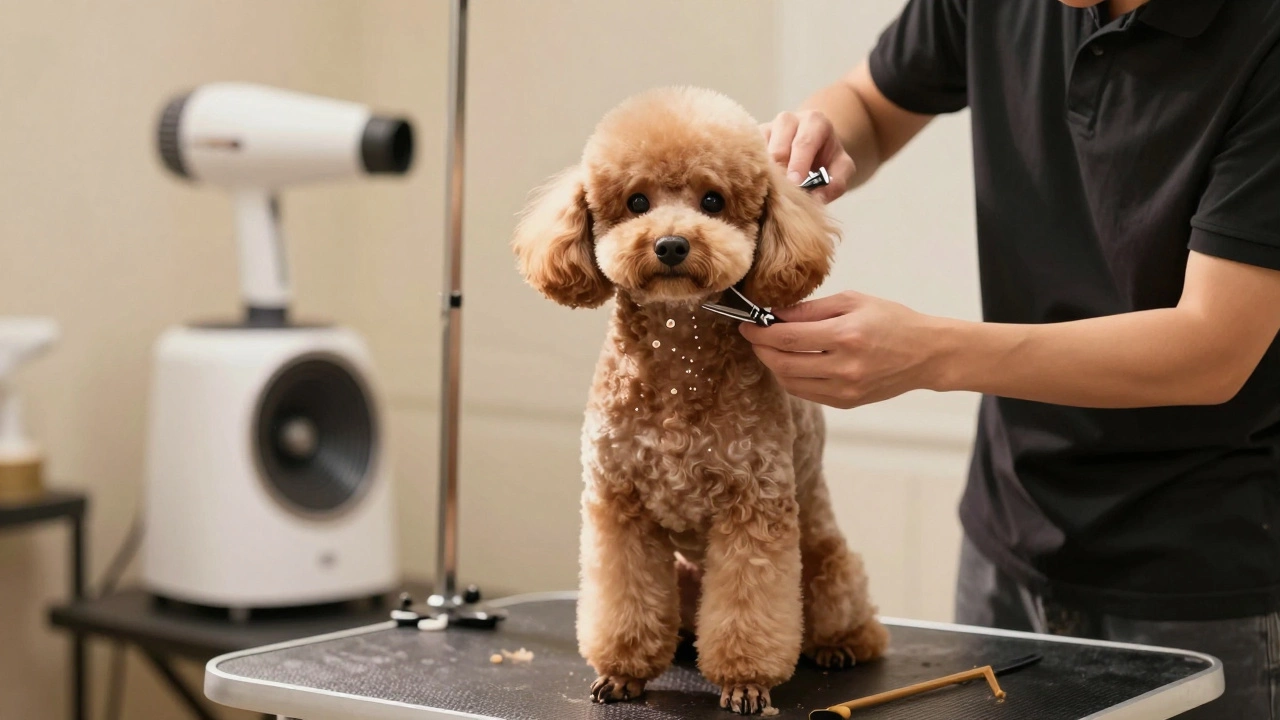
Professional groomers don’t use one-size-fits-all tools. They switch between clippers, scissors, thinning shears, and electric razors depending on the breed standard and coat type. A Poodle’s teddy bear cut? That’s hand-scissored, not clipped. Each curve, each roundness, is shaped by hand. It’s art. And art takes time.Even something as simple as trimming around the eyes or paws requires precision. A tiny slip can mean an irritated eye or a cut on the pad. Groomers work slowly here. They’ll often use a comb to lift the hair, then snip just the tip. That’s five minutes per paw. Multiply that by four.
There’s a Line of Dogs Waiting
Many groomers run small shops with one or two staff. They don’t have a conveyor belt system. One dog finishes, then the next goes in. If your dog is scheduled for 2 p.m., and the dog before yours took 3 hours because of severe matting? You’re going to wait.Some groomers overbook because they know some jobs will be fast. But when things go long-like a dog that needs a full de-matting session, or one that gets scared and freezes-it throws off the whole day. That’s why you might hear, “We’ll be done by 5,” and then it’s 6:30. It’s not incompetence. It’s real-life unpredictability.
What You Can Do to Speed Things Up
You can’t rush a groomer, but you can help them work faster:- Brush your dog at home 2-3 times a week. Even 5 minutes helps. Mats are the #1 reason for long grooms.
- Don’t wait until your dog looks like a mop. Regular grooming every 4-6 weeks prevents buildup.
- Let the groomer know if your dog has anxiety, allergies, or past trauma. They’ll adjust their approach.
- Don’t bring treats or toys unless asked. Distractions can make the dog more excited-and harder to handle.
- Ask if they offer express service. Some shops have a quick trim option for well-maintained dogs.
What Happens If You Skip Regular Grooming?
Skipping grooming doesn’t just make your dog look messy. It causes real health problems:- Mats pull on the skin, causing pain and sores.
- Ear infections are common in floppy-eared breeds if wax and hair aren’t cleaned out.
- Overgrown nails can change your dog’s posture, leading to joint pain.
- Skin infections hide under thick coats and go unnoticed until they’re serious.
A 2023 survey of 800 dog owners in New Zealand found that dogs groomed every 6 weeks had 62% fewer skin issues than those groomed every 3 months or less. That’s not a coincidence-it’s prevention.
So, Why So Long?
Dogs are at groomers for so long because grooming isn’t just about looks. It’s health care. It’s safety. It’s precision. It’s patience. A groomer isn’t just cutting hair-they’re checking for lumps, cleaning ears, filing nails, and making sure your dog leaves feeling comfortable and healthy.Next time you’re waiting, remember: your dog isn’t just getting a trim. They’re getting a full wellness check. And that takes time.
Is it normal for dog grooming to take 4 hours?
Yes, especially for dogs with severe matting, thick double coats, or behavioral issues. A full de-matting session, thorough drying, and careful trimming can easily take 3-4 hours. Groomers prioritize safety over speed, so if your dog needs extra care, longer times are normal.
Can I stay with my dog during grooming?
Most professional groomers don’t allow owners to stay. Your presence can distract your dog and make them more anxious or excited, which increases the risk of injury. Groomers are trained to handle dogs calmly and efficiently-even if they’re scared. Trust their expertise.
How often should I groom my dog?
It depends on the breed. Dogs with curly or fast-growing hair (Poodles, Shih Tzus) need grooming every 4-6 weeks. Dogs with short coats (Labradors, Beagles) can go 8-12 weeks. But brushing at home 2-3 times a week is key for all breeds to prevent mats and reduce grooming time.
Do groomers sedate dogs?
No, reputable groomers never sedate dogs. Sedation requires a vet and is only used in extreme medical cases. If a groomer offers sedation, it’s a red flag. Instead, they use calming techniques, breaks, and positive reinforcement to keep dogs comfortable.
Why do groomers charge more for long-haired dogs?
Long-haired dogs take more time, more tools, and more skill. Brushing out mats, drying thick coats, and hand-scissoring takes hours longer than a simple trim. Groomers charge based on labor, not just the haircut. It’s not a premium-it’s fair pricing for extra work.