Puppy Bladder Control Calculator
How Long Can Your Puppy Hold It?
Calculate your puppy's bladder control based on age. The article states: "one hour per month of age."
Enter your puppy's age to see how long they can hold it overnight.
Bringing home a new puppy is exciting-but that first night can feel overwhelming. You’ve got the food, the toys, the leash-but where should your untrained puppy sleep? It’s not just about comfort. Where your puppy sleeps affects their safety, your sleep, and even how fast they learn house rules. Get it wrong, and you might end up with a dog who won’t sleep alone, chews everything in sight, or has accidents all over the house. Get it right, and you set the foundation for a calm, well-behaved adult dog.
Why the sleeping spot matters more than you think
Untrained puppies don’t understand boundaries. They’re not being stubborn when they chew your shoes or pee on the rug-they’re following instincts. In the wild, puppies sleep with their littermates for warmth and safety. Left alone in a big, quiet house, they feel exposed. That’s why they cry, pace, or try to sneak into your bed. Their brain isn’t broken. It’s just scared.
The place they sleep becomes their safe zone. If you let them sleep wherever they want-on the couch, in the kitchen, next to your feet-they’ll assume that’s normal. And when you try to move them later, they’ll fight it. You’re not being cruel by setting limits. You’re giving them structure. Dogs thrive on predictability.
The best place: a crate in your bedroom
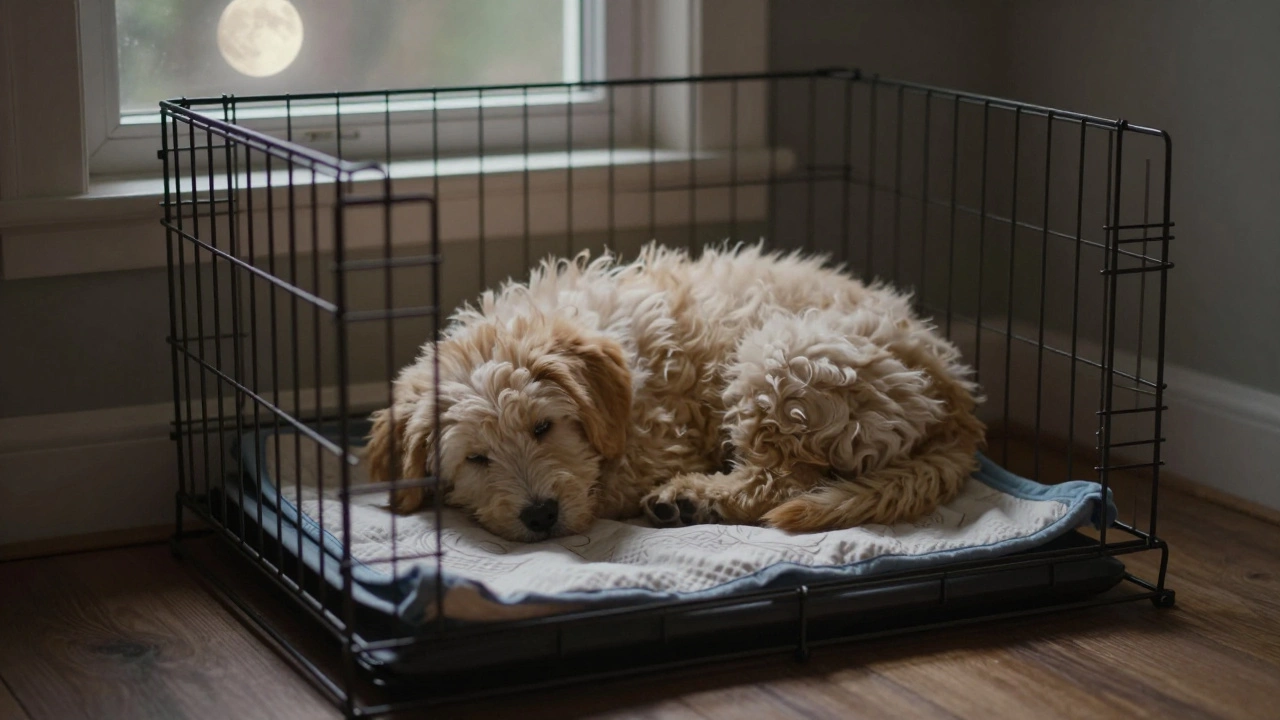
For the first few weeks, the safest and most effective spot is a crate in your bedroom. Not the basement. Not the guest room. Right next to your bed.
Why? Because puppies need to feel secure. At night, they’re still learning to hold their bladder. A 10-week-old puppy can’t go more than 3-4 hours without peeing. If they’re in another room, they’ll have to cry to get your attention. That means you’ll be woken up every few hours. And if you don’t hear them? They’ll have an accident.
Keeping the crate in your room lets you hear every little whimper. You can respond quickly, take them out, and help them learn that going outside = reward. Over time, they’ll start holding it longer. Most puppies can sleep through the night by 12-16 weeks-if you start right.
Choose a crate that’s just big enough for them to stand, turn around, and lie down. Too big, and they’ll use one corner as a bathroom. Use a divider if needed. Line it with a soft blanket, but skip the toys at night-they’ll chew them and swallow pieces.
What NOT to do
Letting your puppy sleep in your bed seems kind. It feels like love. But it creates problems.
- It teaches them they can choose where to sleep. Later, when you want them out of the bed, they’ll resist. You’re fighting their learned behavior.
- It increases separation anxiety. If they’re always with you, they’ll panic when you leave the room-even briefly.
- It’s unsafe. You might roll over. A small puppy can get crushed or trapped under blankets.
Same goes for letting them sleep on the couch or in the kitchen. Those areas are high-traffic. They’re loud. They’re full of temptation. Your puppy will learn to associate sleep with chaos, not calm.
How to set up the crate for success
It’s not just about placement. You need to make the crate feel like home.
- Place it near your bed, but not under the covers. Keep it in a quiet corner where the air circulates.
- Use a washable, soft pad-not a thick bed. Too much cushion can make it hard for them to settle.
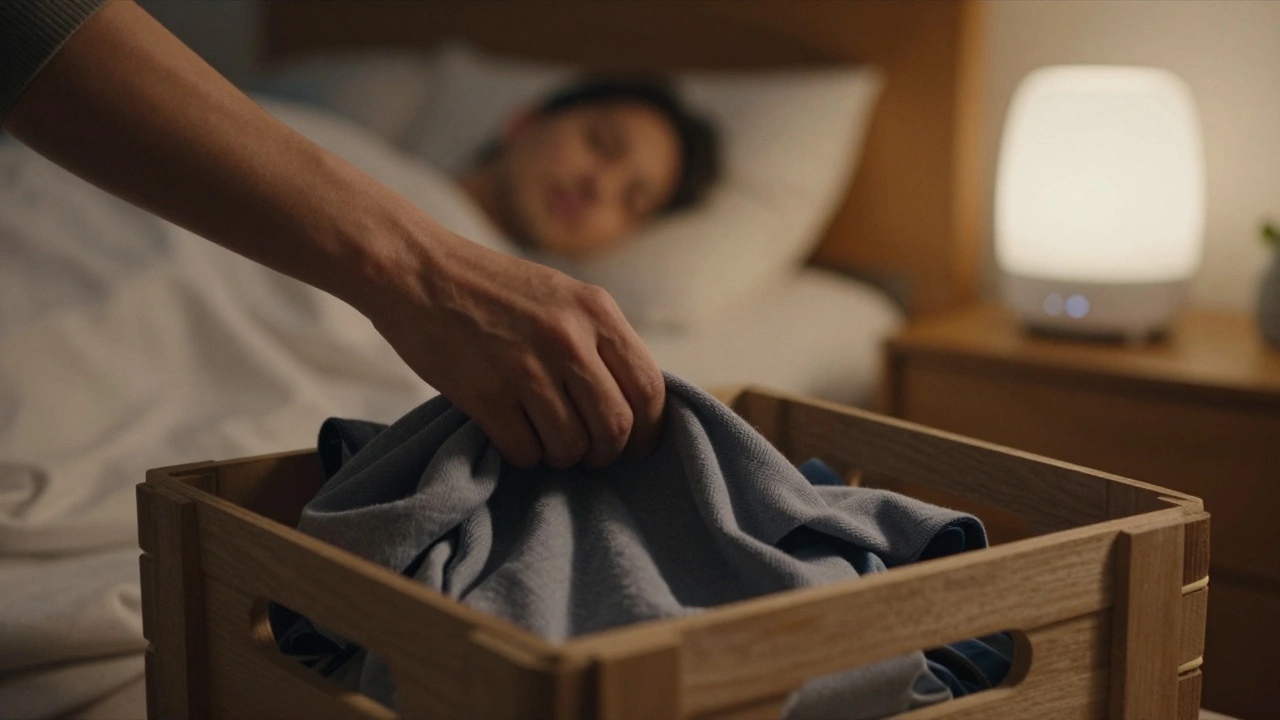
- Leave a piece of your clothing inside. Your scent helps them feel safe.
- Don’t leave food or water in there overnight. It increases accidents and creates messes.
- Use a white noise machine or play soft music. It masks sudden sounds that might scare them.
On the first night, expect crying. It’s normal. Don’t rush in the moment they cry. Wait 5-10 minutes. If they’re just testing boundaries, they’ll settle. If they’re panicked or wetting themselves, take them out quietly. Praise them when they go outside. Then put them back in. No hugs. No play. Just business.
When to move the crate out of your room
You don’t have to keep it in your bedroom forever. But don’t rush it.
Wait until your puppy can sleep 6-7 hours straight without needing to go out. That usually happens between 12 and 16 weeks. If they’re still having accidents after 4 months, go back to the bedroom setup. You might have moved too soon.
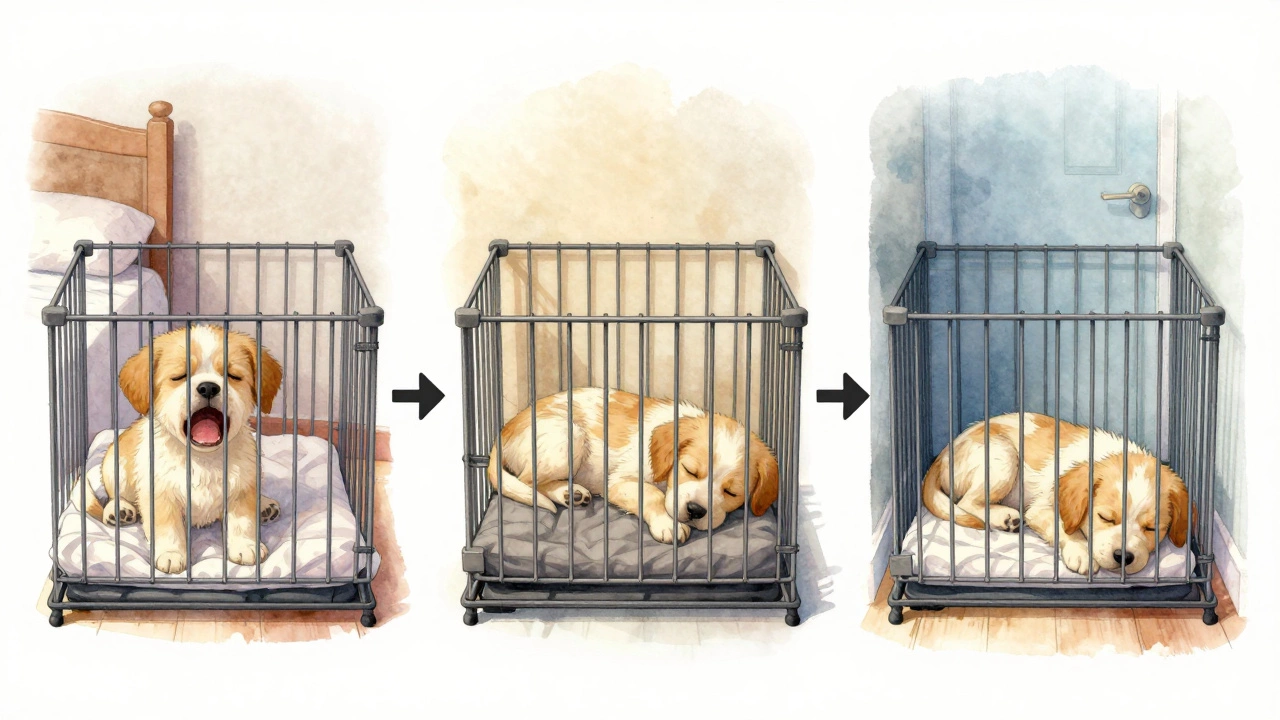
When you’re ready to move the crate, do it slowly. First, move it to the doorway of your room. Then to the hallway. Then to the living room. Each step takes a week. Watch for signs of stress: whining, pacing, loss of appetite. If they happen, go back one step.
Some owners move their puppy to a different room too early because they think it’s "training them to be independent." But independence isn’t about distance. It’s about confidence. And confidence comes from trust-not isolation.
What if you don’t have a crate?
You don’t need a fancy crate. A playpen, a baby gate around a small area, or even a fenced-off corner of the laundry room can work. The key is control.
Use a pen with a soft bed, a water bowl (removed at night), and a potty pad if you’re worried about accidents. But remember: the goal is to teach them to hold it, not to use a pad forever. Pads can confuse them. They’re fine for emergencies, but not for daily use.
If you’re using a pen, keep it in your bedroom. Same rules apply. No toys. No food. Just quiet, safety, and routine.
What to expect in the first week
Don’t expect perfection. The first few nights will be rough.
- Night 1-2: Constant crying. You’ll want to give in. Don’t.
- Night 3-4: Less crying, but more pacing. They’re adjusting.
- Night 5-7: Quiet. They’re starting to relax.
By day 7, most puppies will sleep for 5-6 hours straight. That’s progress. Don’t compare your puppy to others. Every dog is different. Some take 10 days. Others take 3 weeks. That’s okay.
Keep a simple log: note the time they cry, how long it lasts, and whether they had an accident. You’ll see patterns. Maybe they always wake up at 2 a.m. That’s your cue to take them out at 1:30 a.m. for a few nights-then gradually push it later.
Long-term benefits of getting this right
Where your puppy sleeps today shapes their behavior for life.
If you start with a calm, consistent routine, your dog will grow up:
- More confident
- Less anxious
- More reliable with house training
- Easier to manage when you travel or need to leave them alone
And you? You’ll sleep better. Not because they’re quiet-but because you know they’re safe, and you’ve built a relationship based on trust, not chaos.
It’s not about being strict. It’s about being thoughtful. Your puppy doesn’t need a palace. They need a quiet corner, a familiar scent, and the quiet certainty that you’ll be there when they need you.
Should I let my puppy sleep with me on the first night?
It’s not recommended. While it might seem comforting, letting your puppy sleep in your bed early on makes it harder to establish boundaries later. It increases the risk of separation anxiety, accidental injury, and reinforces the idea that they can choose where to sleep. A crate in your bedroom gives them safety without the long-term problems.
How long can a puppy hold their bladder at night?
A general rule is one hour per month of age. So a 10-week-old puppy (about 2.5 months) can hold it for about 2.5 to 3 hours. By 4 months, most can sleep 6-7 hours without needing to go out. Always take them out right before bed and as soon as they wake up.
Is it okay to use a puppy pad at night?
It’s okay as a temporary safety net, especially if you’re worried about accidents. But don’t make it a habit. Pads can confuse puppies by teaching them it’s okay to eliminate indoors. The goal is to train them to hold it until they’re outside. Use pads only if you’re unable to wake up during the night-then phase them out as soon as your puppy can hold it longer.
What if my puppy cries all night?
Crying is normal in the first few nights. Don’t rush in immediately. Wait 5-10 minutes. If they’re just testing, they’ll stop. If they’re in distress-wet, shivering, or screaming-take them out quietly to potty. Then put them back. Never reward crying with attention, play, or treats. Consistency is what teaches them to settle.
Can I use a dog bed instead of a crate?
Only if you can fully supervise and control their environment. A dog bed in the middle of the living room won’t work for an untrained puppy. They’ll wander, chew, and have accidents. A crate or enclosed space gives them structure. Once they’re fully house-trained and can be trusted alone, a dog bed is fine. But not yet.
Next steps: what to do tomorrow
Don’t wait until tomorrow to fix this. Start tonight.
- Set up the crate in your bedroom before bedtime.
- Put a piece of your shirt inside for comfort.
- Take your puppy out to potty right before you go to bed.
- Turn off the lights and stay quiet. Don’t engage if they cry.
- Write down the time they cry and how long it lasts.
That’s it. No magic. No expensive gear. Just consistency. Your puppy isn’t asking for perfection. They’re asking for safety. Give them that-and you’ll both sleep better than you ever thought possible.