Dog Bed Health Checker
Check the conditions below to see if your dog's bed needs replacement. This tool uses the criteria from the article "When to Throw Out a Dog Bed" to help you determine if it's time for a new bed.
Is the bed flattened, with visible frame/foam underneath? Does it not bounce back when pressed?
Are there holes larger than a coin or significant fraying?
Does it still smell like mildew, urine, or dog after multiple washes?
Is your dog sleeping on the floor, couch, or other surfaces instead?
Are there dark spots, fuzzy patches, or insect debris?
Is the bed older than 24 months?
Result
Check the conditions above to get your score
Key Tips from the Article
• Bed should support joints, especially for senior dogs
• Look for orthopedic foam and machine-washable covers
• Replace if bed is older than 24 months even if it looks okay
• Never keep a bed with mold or pests
• If your dog avoids the bed, it's a sign of discomfort
• Always check the base for mold after water spills
Most dog owners don’t think about their dog’s bed until it starts smelling bad or looks like it’s falling apart. But a worn-out bed isn’t just unpleasant-it can hurt your dog’s health. If your dog sleeps on a bed that’s lost its support, harbors bacteria, or has sharp edges, they could end up with joint pain, skin infections, or even injuries. So when should you actually throw out a dog bed? It’s not just about how old it is. It’s about what’s happening inside and underneath the fabric.
Your dog’s bed is losing its shape
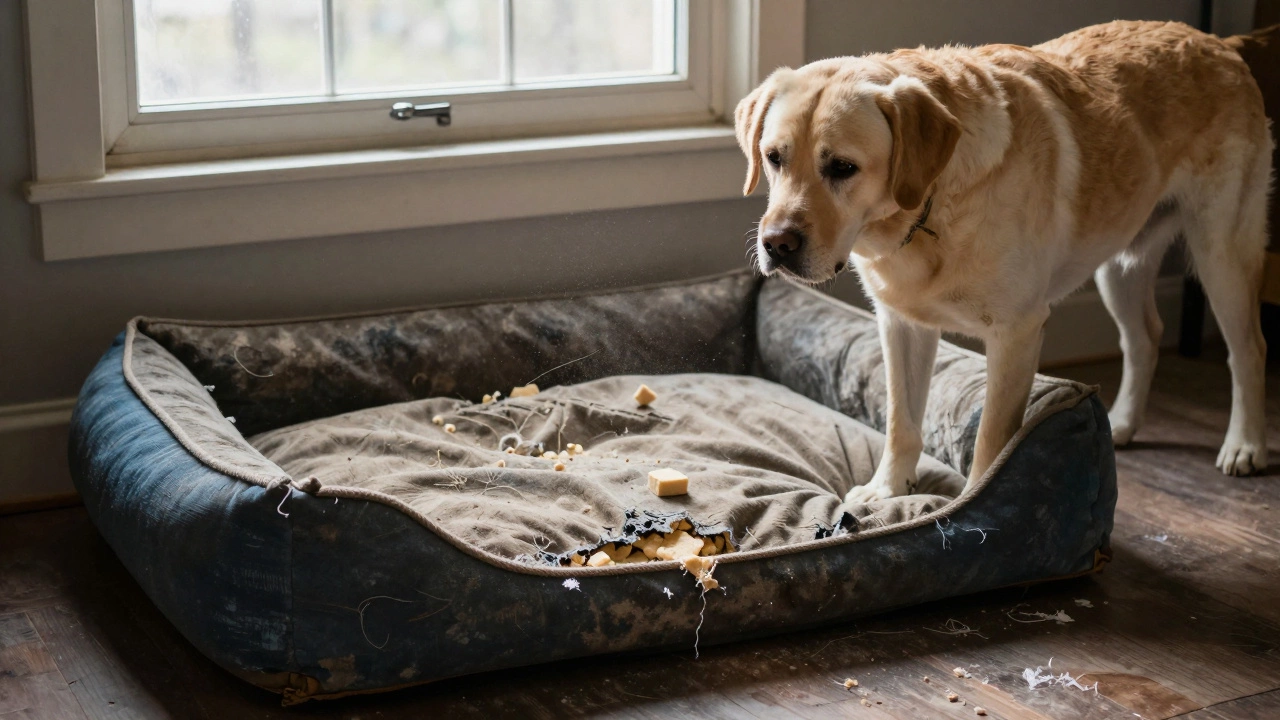
A good dog bed should cushion your dog’s joints, especially if they’re older or have arthritis. If your dog’s bed has flattened out so much that you can see the frame or foam underneath, it’s no longer doing its job. Dogs that sleep on hard surfaces for long periods develop pressure sores, hip pain, or worsened arthritis. One owner in Wellington noticed her 11-year-old Labrador started groaning when she got up-switching from a flat, compressed bed to a new orthopedic one cut her discomfort in half within days. If the bed doesn’t bounce back when you press on it, it’s time to replace it. Memory foam, high-density polyurethane, and egg-crate foam are the best materials for support. Cheap polyester fiberfill compresses fast and offers zero long-term benefit.The fabric is torn, frayed, or has holes
Dogs don’t just sit on their beds-they scratch, dig, roll, and sometimes chew. A small tear might seem harmless, but it quickly becomes a problem. Loose threads can get caught in your dog’s claws or between their toes. Fabric holes let out stuffing, which your dog might swallow. One vet in Auckland treated a 3-year-old Border Collie for a bowel obstruction caused by swallowing foam bits from a shredded bed. If you see more than a few loose threads or a hole bigger than a coin, replace the bed. Look for beds with double-stitched seams and ripstop fabric-they last longer and are safer.It smells even after washing
Dogs sweat through their paws and shed oils that soak into fabric. If you’ve washed the bed with pet-safe detergent, dried it completely, and it still smells like wet dog, mildew, or urine, the odor is trapped in the padding. Bacteria and fungi grow deep in the foam and fibers, especially in humid climates like Auckland’s. That smell isn’t just annoying-it’s a health risk. Dogs with sensitive skin can develop rashes or hot spots from prolonged contact with dirty bedding. A bed that won’t come clean after two or three thorough washes has absorbed too much to ever be truly hygienic. Don’t keep it just because your dog loves it. Their health comes first.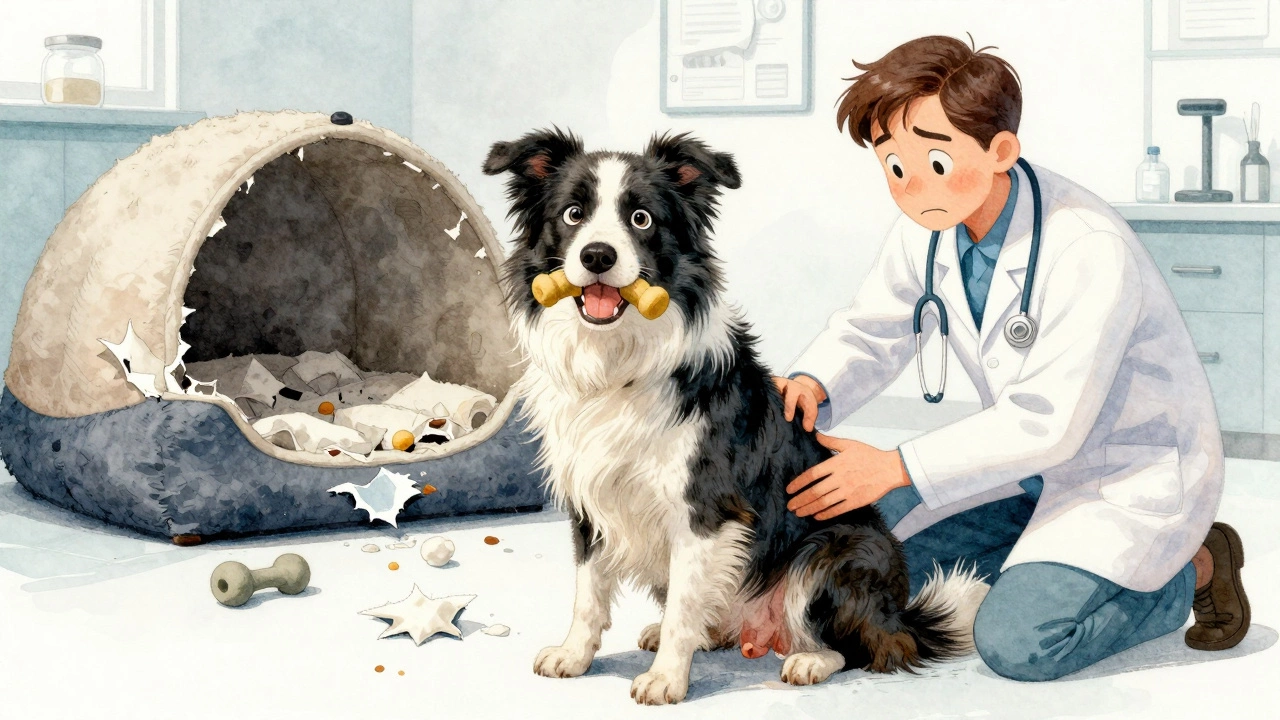
Your dog won’t sleep on it anymore
Dogs are creatures of habit. If your dog suddenly avoids their bed-choosing the floor, your couch, or even the tile in the laundry-it’s a clear signal something’s wrong. They might be avoiding it because it’s too hot, too cold, too hard, or it smells off. Sometimes, they’re just being picky. But if they’ve been avoiding it for more than a week, and you’ve ruled out changes in temperature or noise, the bed is likely the issue. One dog owner in Christchurch switched beds after her 8-year-old Beagle started sleeping on the bathroom floor. The new bed had a removable, machine-washable cover and a cooling gel layer. Within two nights, the dog was back on it, sleeping soundly. If your dog’s behavior changes around their bed, listen to them.It’s been more than two years
Even if your dog’s bed looks fine, it’s probably past its prime. Most dog beds, even high-quality ones, start to degrade after 18 to 24 months of daily use. The foam breaks down, zippers weaken, and fabric thins from constant friction. A 2023 study from the University of Sydney tracked 200 dog beds over two years and found that 78% lost more than 40% of their original cushioning by the 24-month mark. That’s not just wear and tear-it’s a safety issue. If your bed is older than two years and you can’t remember the last time you replaced it, it’s time to buy a new one. Don’t wait for it to fall apart. Proactive replacement prevents pain and illness.There’s mold, mildew, or pest infestation
If you see dark spots, fuzzy patches, or a musty smell that lingers even after drying, you’ve got mold or mildew. These fungi grow fast in damp, warm environments-and dog beds are perfect for them. Mold spores can trigger allergies, respiratory issues, and skin irritation in dogs. If you’ve had a leaky window, a flooded basement, or just left the bed in a damp garage, check it closely. Same goes for pests. Fleas, ticks, or bed bugs can hide in seams and stuffing. If you find live bugs, eggs, or tiny black specks (feces), toss the bed immediately. Washing won’t kill them all. You need to replace it and treat your home to stop the spread.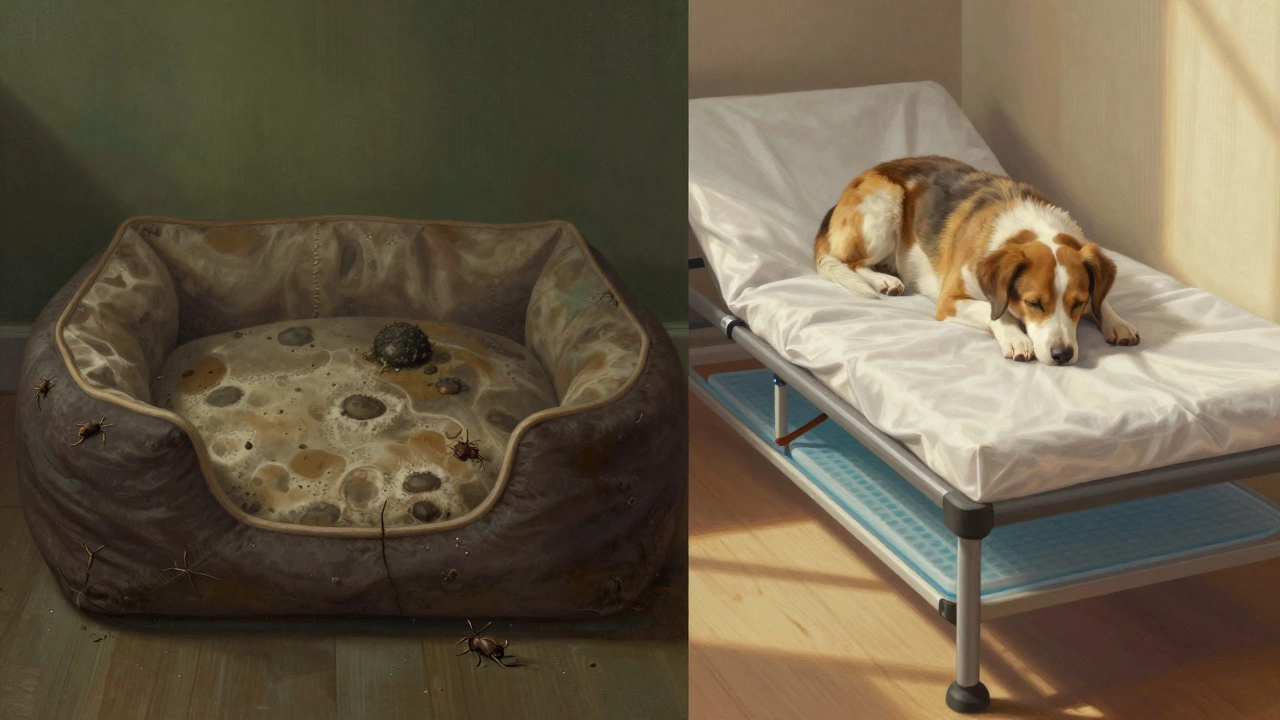
How to choose a replacement
When you’re ready to buy a new bed, look for these features:- Removable, machine-washable cover-easier to clean, lasts longer
- Orthopedic foam-supports joints, especially for senior or large breeds
- Water-resistant bottom-stops moisture from seeping into floors
- Non-slip base-prevents sliding on hardwood or tiles
- Size matters-your dog should be able to stretch out fully without hanging off
Avoid beds made with cheap polyester fill or flimsy zippers. Read reviews from other dog owners in similar climates. Look for brands that offer a 1-year warranty-shows they stand behind their product.
What to do with the old bed
Don’t just throw it in the trash. If it’s still structurally sound but just dirty, consider donating it to a shelter. Many rescue groups accept gently used beds-just make sure they’re clean and free of pests. If it’s torn, smelly, or moldy, cut it up and dispose of it in the general waste. Don’t put foam or stuffing in recycling bins-they’re not accepted. Some cities have special drop-offs for pet waste and bedding; check your local council’s guidelines.Can I just wash my dog’s bed instead of replacing it?
Washing helps, but it won’t fix everything. If the foam is flattened, the fabric is torn, or the smell won’t come out, washing won’t restore the bed’s function or safety. Wash your dog’s bed every 1-2 weeks to keep it clean, but replace it when it’s physically broken down-not just dirty.
How often should I wash my dog’s bed?
Wash it every 1 to 2 weeks if your dog sleeps on it daily. If they go outside often, shed heavily, or have allergies, wash it weekly. Use a pet-safe detergent and dry it completely on high heat to kill bacteria and mites.
Are expensive dog beds worth it?
Yes, if they’re built to last. A $120 orthopedic bed with a washable cover and 2-year warranty will outperform a $30 bed that flattens in 6 months. Think of it like a mattress-you wouldn’t buy a cheap one for yourself, so why for your dog? The right bed reduces vet bills from joint pain and skin issues.
What if my dog chews their bed?
If your dog chews their bed, don’t just replace it with another one. Address the behavior first. Boredom, anxiety, or teething can cause chewing. Try durable chew-proof beds made with ballistic nylon or Kevlar-reinforced fabric. Also, increase mental stimulation and exercise. If chewing continues, consult a trainer or vet.
Can I use a human mattress topper for my dog?
Not recommended. Human mattress toppers are too soft, too thick, and often contain chemicals not safe for pets. They can overheat your dog, trap moisture, and lack non-slip bases. Stick with dog-specific beds designed for their body shape and habits.