Dog Food Ingredient Checker
Check Your Dog Food's Top Ingredients
Enter the top 3 ingredients of your dog food to see if they meet quality standards. This tool helps you verify if your dog's food contains the essential nutrients needed for optimal health.
Results
Not all dog food is created equal. Walk into any pet store, and you’ll see dozens of bags with flashy claims: "premium," "grain-free," "vet-recommended." But here’s the truth-what’s actually in the bag matters more than the marketing. If you want your dog to thrive, not just survive, you need to know what the top three ingredients should be in their food. And no, it’s not "chicken" or "brown rice" alone. It’s about quality, order, and purpose.
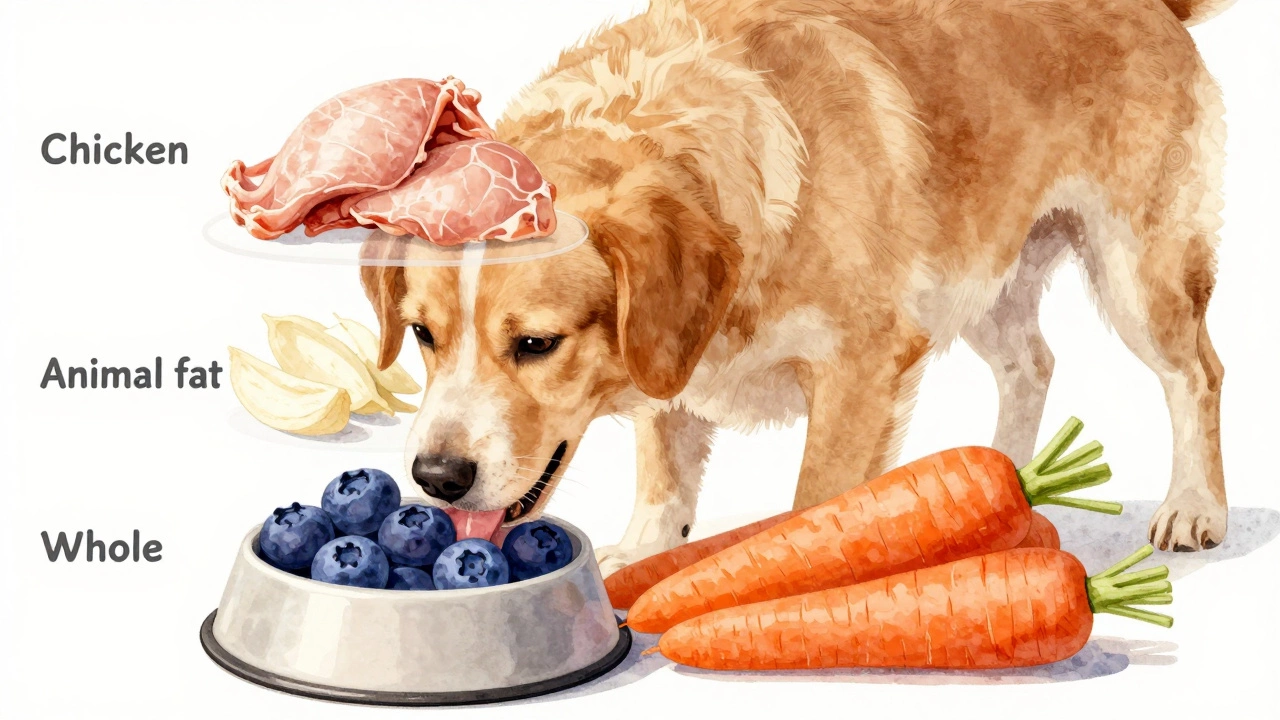
Ingredient #1: Named Animal Protein as the First Ingredient
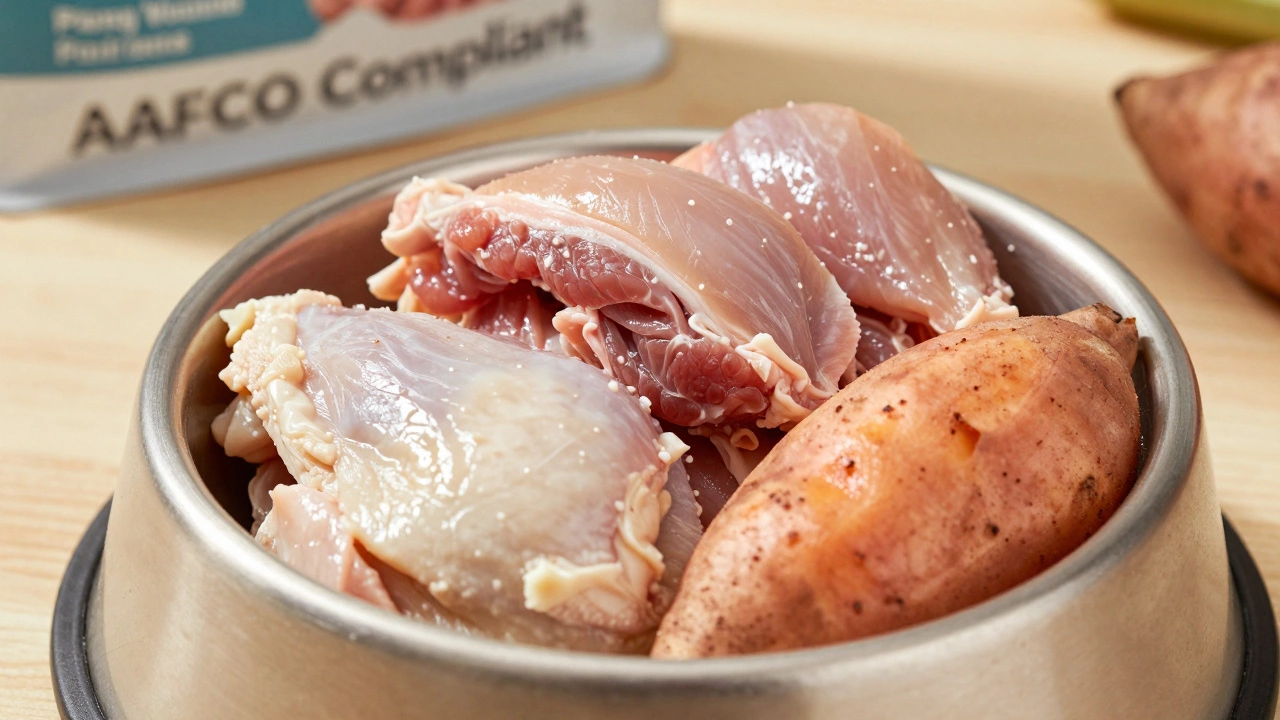
The very first ingredient on the label is the most important. It tells you what makes up the largest portion of the food. Look for something like "chicken," "beef," "salmon," or "lamb"-not "meat meal," "poultry," or "animal by-products."
Why? Because "chicken" means actual muscle meat, clean and identifiable. "Poultry meal"? That’s a ground-up mix of feathers, beaks, and bones from unknown birds. It’s cheaper, less digestible, and lacks the amino acid profile your dog actually needs.
Real-world example: A bag that lists "chicken" as the first ingredient and "chicken meal" as the third? That’s a good sign. The chicken provides fresh protein; the meal adds concentrated protein after moisture is removed. But if "chicken meal" is first? You’re getting mostly dried, processed protein with less moisture control-and often lower quality sources.
According to the AAFCO (Association of American Feed Control Officials), dogs need at least 18% crude protein for adult maintenance. But high-quality protein from named animal sources delivers more usable amino acids than plant-based or mystery meat. A 2023 study from the University of Illinois found that dogs fed diets with chicken or salmon as the primary protein source had 22% better nutrient absorption than those fed corn or soy-based proteins.
Ingredient #2: Animal Fat (Specifically from a Named Source)
Fat isn’t the enemy. It’s essential. It gives energy, supports skin and coat health, and helps absorb vitamins like A, D, E, and K. But not all fats are equal.
Look for "chicken fat," "salmon oil," or "duck fat" listed as the second or third ingredient. These are clean, digestible fats from the same animal as the protein. They’re rich in omega-6 and omega-3 fatty acids, which reduce inflammation and keep your dog’s coat shiny.
Avoid vague terms like "animal fat," "vegetable oil," or "tallow." These can come from rendered slaughterhouse waste or cheap vegetable oils like soybean or corn oil. These oils are high in inflammatory omega-6s and lack the anti-inflammatory benefits of animal-based fats.
Here’s a quick test: If the fat source isn’t named, ask yourself-why hide it? A good brand doesn’t need to disguise its ingredients. Brands like Orijen and Acana make it clear: their fats come from the same animals as their proteins. That’s transparency. That’s quality.
Ingredient #3: Whole Vegetables or Fruits (Not Powdered Fillers)
Dogs aren’t wolves. They’ve evolved to digest some plant matter. But that doesn’t mean they need corn, wheat, or soy as fillers. What they need are whole, recognizable vegetables and fruits-like sweet potatoes, peas, carrots, blueberries, or apples.
These provide fiber, antioxidants, and vitamins naturally. Sweet potatoes, for example, offer complex carbs that release energy slowly, avoiding blood sugar spikes. Blueberries deliver anthocyanins that support brain health. Carrots add beta-carotene for eye function.
Watch out for "vegetable broth," "pea starch," or "lentil meal." These are often used to bulk up protein percentages on paper, not to nourish your dog. A 2024 analysis by the Pet Nutrition Alliance found that dog foods using whole vegetables had 30% higher antioxidant levels and better stool quality than those relying on processed vegetable powders.
Also, avoid grain-based fillers like corn, wheat, or soy unless your dog has a specific need for them. Most dogs don’t need grains. And if they do, whole grains like brown rice or oatmeal are far better than refined flours.
What’s Missing? The Hidden Red Flags
Even if the top three ingredients look great, scan the rest of the list. Here’s what to avoid:
- Artificial preservatives like BHA, BHT, or ethoxyquin-these are linked to long-term health risks.
- Artificial colors like red 40 or yellow 5-dogs don’t care about color, but these can trigger allergies.
- By-products-unless specified as "chicken liver" or "beef spleen," they’re vague and low-quality.
- Gluten or corn gluten meal-often used to inflate protein numbers on paper, but hard for dogs to digest.
Also, watch out for ingredient splitting. A brand might list "corn," "corn gluten," and "corn bran" separately to make it look like corn isn’t a major ingredient. But combined, it’s 60% of the formula. Smart brands don’t split ingredients-they’re upfront.
Real Labels, Real Examples
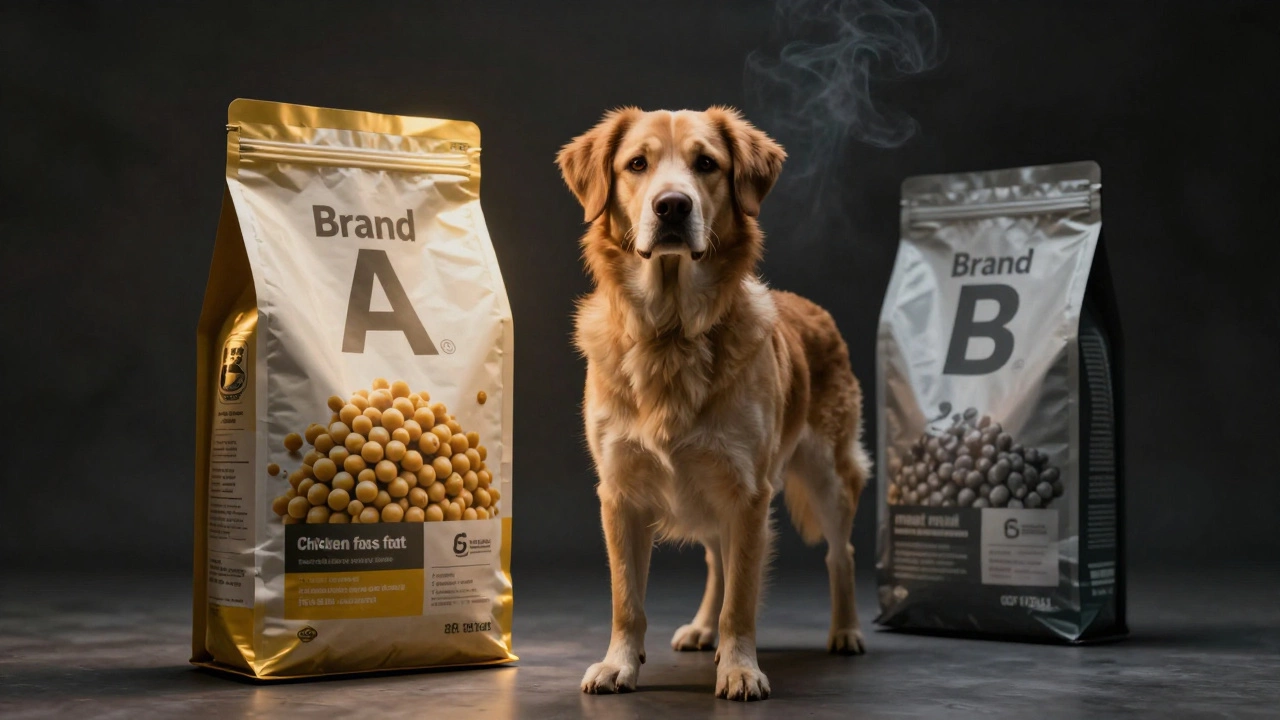
Let’s compare two actual labels from popular brands:
| Brand | First Ingredient | Second Ingredient | Third Ingredient | Red Flags |
|---|---|---|---|---|
| Brand A | Chicken | Chicken Meal | Barley | Chicken fat, blueberries, peas |
| Brand B | Meat Meal | Ground Corn | Chicken By-Product Meal | BHA, corn gluten meal, artificial colors |
Brand A? Solid. Named meat first, animal fat second, whole grains and real produce following. Brand B? Red flags everywhere. "Meat meal" is vague. Corn is a cheap filler. Chicken by-product meal? That’s beaks, feet, and feathers. And BHA? That’s a preservative banned in human food in the EU.
What About Grain-Free?
Grain-free isn’t automatically better. In fact, the FDA has flagged a potential link between grain-free diets and dilated cardiomyopathy (DCM) in dogs-especially those high in peas, lentils, and potatoes. The issue isn’t the absence of grains; it’s the imbalance of nutrients when legumes replace grains entirely.
Focus on balance, not trends. A diet with whole grains like oats or brown rice can be perfectly healthy if the protein and fat sources are high quality. Many dogs do better with a mix of animal protein, healthy fats, and digestible carbs from whole foods.
How to Check Your Dog’s Food Right Now
Here’s a simple checklist you can use the next time you pick up a bag:
- Is the first ingredient a named animal protein (e.g., chicken, beef, salmon)?
- Is the second ingredient a named animal fat (e.g., chicken fat, salmon oil)?
- Are the next few ingredients whole vegetables or fruits (e.g., sweet potato, blueberry, carrot)?
- Is there no BHA, BHT, ethoxyquin, or artificial colors?
- Are there no vague terms like "meat meal," "animal by-products," or "poultry"?
If you answered yes to all five, you’re on the right track. If not, it’s time to switch.
Final Thought: Quality Over Marketing
Your dog doesn’t care about the color of the bag or the slogan on the front. They care about how they feel after eating. Do they have energy? Is their coat glossy? Do they have soft stools and no itching? Those are the real indicators.
Don’t let fancy packaging fool you. The best dog food isn’t the most expensive-it’s the one with clear, simple, high-quality ingredients. Stick to the top three: named protein, named fat, whole produce. Everything else is noise.
Is chicken meal okay in dog food?
Yes, chicken meal is fine-it’s actually a concentrated source of protein. It’s made by removing moisture and fat from chicken, leaving behind a high-protein powder. But it should never be the first ingredient unless it’s paired with fresh chicken. The best formulas use fresh chicken first, then chicken meal as a second protein source to boost overall protein content without adding too much water weight.
Should I avoid dog food with peas or lentils?
Not necessarily. Peas and lentils are fine in moderation as part of a balanced diet. The problem arises when they’re used as the main protein source in grain-free formulas, replacing meat entirely. The FDA has raised concerns about these diets potentially contributing to heart issues in some dogs. Stick to formulas where animal protein is the star, and legumes are a minor, supporting ingredient.
Are raw diets better than kibble?
Raw diets can work for some dogs, but they’re not inherently better. They require careful balancing to avoid nutritional gaps and carry risks like bacterial contamination. If you’re considering raw, consult a veterinary nutritionist. For most pet owners, a high-quality kibble with the right top three ingredients is safer, more convenient, and just as nutritious.
How do I know if my dog’s food is digestible?
Look at their stool. Firm, small, and odorless stools usually mean good digestion. Loose, smelly, or frequent stools? The food isn’t being absorbed well. Also, watch for a dull coat, excessive shedding, or skin irritation-these can signal poor nutrient absorption. If you notice these signs, switch to a food with named animal proteins and fats.
Can I trust "vet-recommended" on the label?
Not always. Many brands pay veterinary clinics to recommend their products, but that doesn’t mean the food is nutritionally superior. Always check the ingredient list yourself. A vet-recommended food with corn as the first ingredient and BHA as a preservative isn’t better than a non-recommended one with chicken, chicken fat, and sweet potatoes.