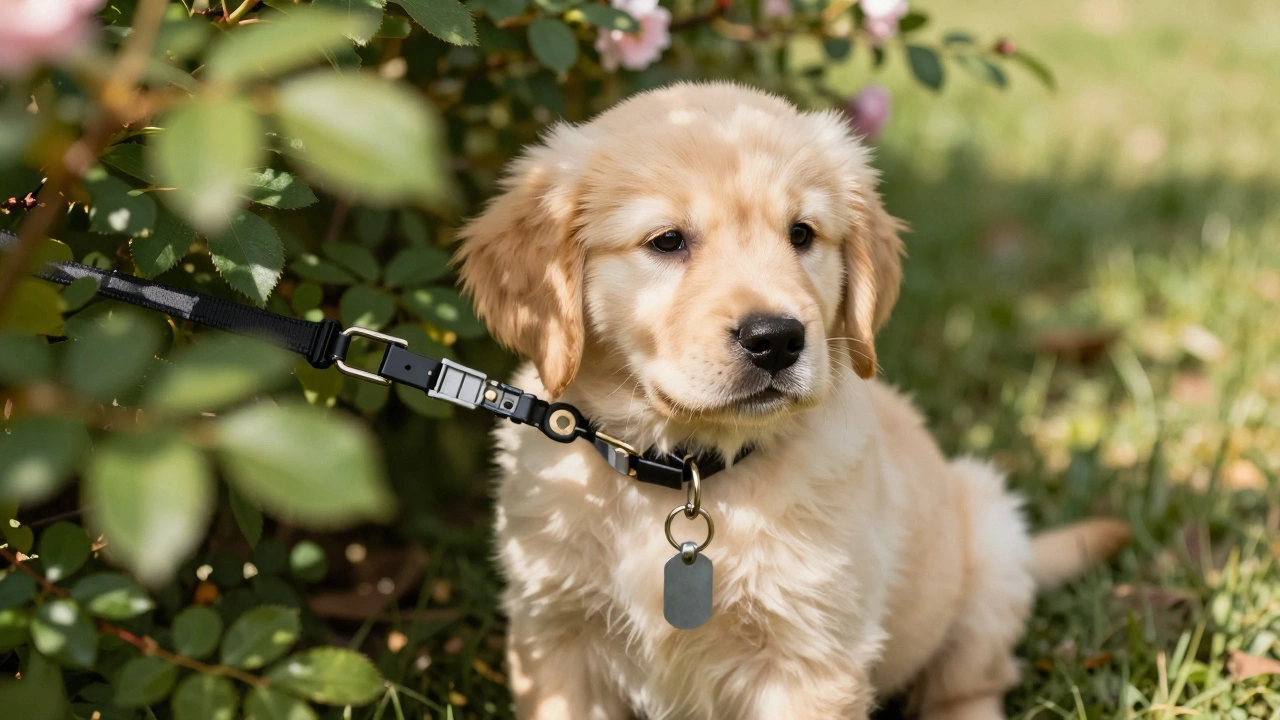
Choosing the right collar for your dog isn’t just about style-it’s about safety. Two types of collars often confuse pet owners: the breakaway collar and the quick release collar. They both sound like safety features, but they work in very different ways. Knowing the difference could prevent a serious accident-or even save your dog’s life.
What Is a Breakaway Dog Collar?
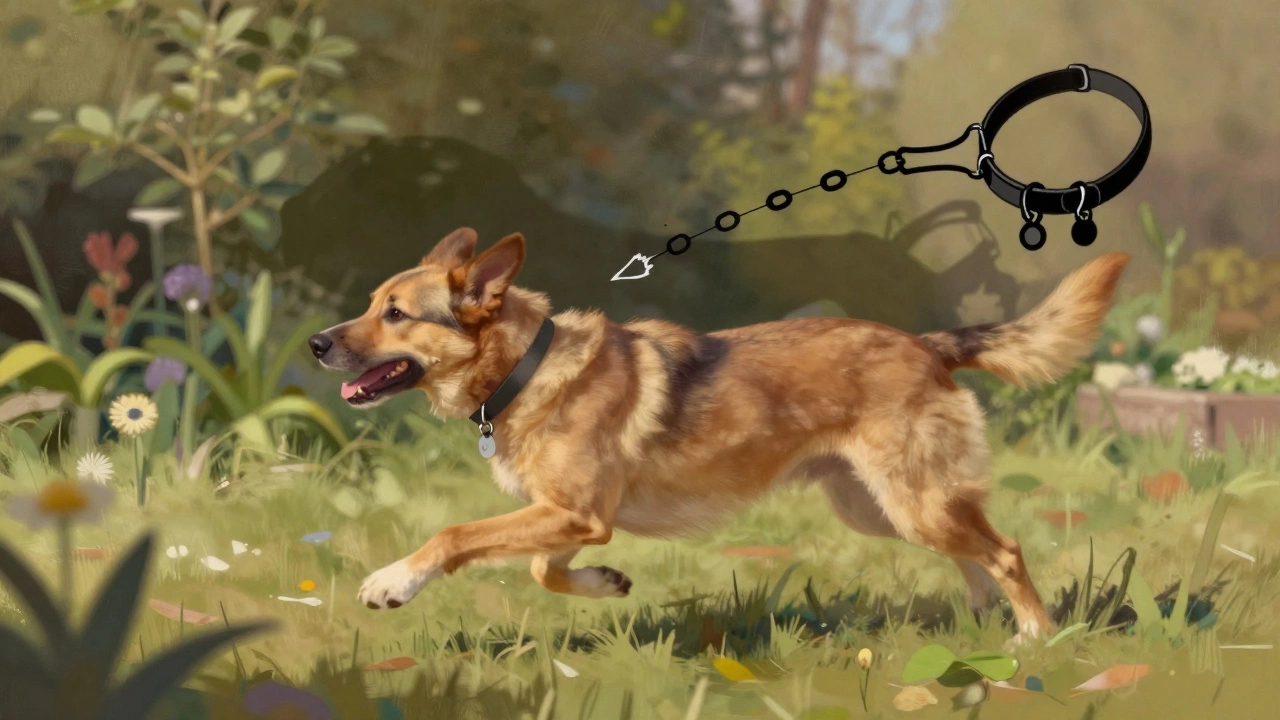
A breakaway collar is designed to snap open under pressure. Think of it like a safety belt that lets go when too much force is applied. These collars have a plastic or metal clasp that’s engineered to release when your dog gets caught on something-like a tree branch, fence, or playground equipment. It’s not meant to come off during normal play or walking. But if your dog gets tangled, the collar breaks before the pressure turns into a choking hazard.
Breakaway collars are especially common for cats, but they’re just as vital for small dogs, puppies, or dogs that spend time in yards with dense shrubs or outdoor furniture. In New Zealand, where many homes have fenced backyards and bushy gardens, breakaway collars are a smart choice. A 2023 study by the New Zealand Veterinary Association found that 18% of collar-related injuries in dogs were caused by entanglement, and nearly all of those could have been prevented with a breakaway design.
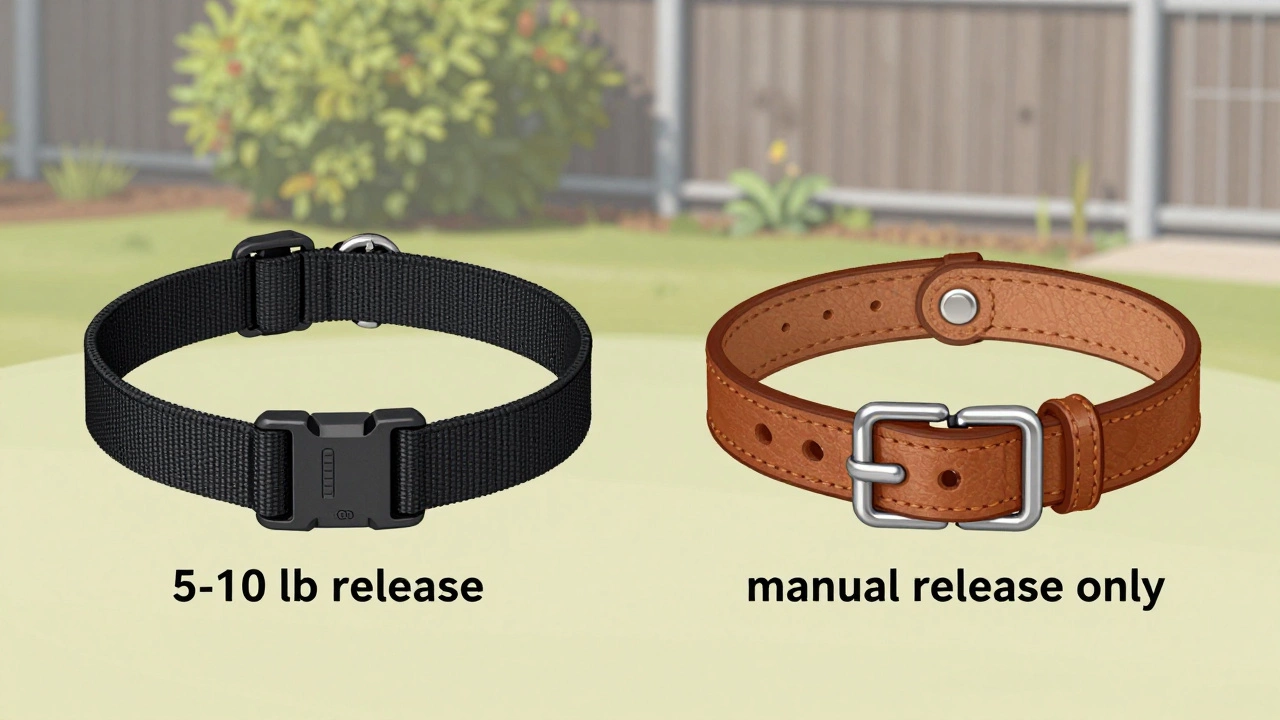
The clasp on a breakaway collar usually has a weak point-a small plastic hook or a thin metal ring-that gives way when pulled with about 5 to 10 pounds of force. That’s enough to hold up a collar during daily wear but not enough to hold a dog in danger.
What Is a Quick Release Dog Collar?
A quick release collar, on the other hand, is designed for convenience, not safety. It has a buckle that you manually open and close, like a belt. You press a button or pull a tab, and it releases instantly. It’s great for putting the collar on and taking it off quickly-especially useful if you’re in a hurry, grooming your dog, or need to remove it for a bath.
But here’s the catch: quick release collars don’t break under pressure. If your dog gets caught on something, the collar stays on. That’s fine if you’re walking on a leash in a controlled area. But if your dog runs through tall grass or jumps over a fence and gets snagged, the collar won’t let go. That’s when things get dangerous.
Many quick release collars are made of nylon or leather with a sturdy plastic or metal buckle. They’re durable, stylish, and often come with name tags already attached. That’s why they’re popular for everyday use. But they’re not safety collars.
Key Differences at a Glance
| Feature | Breakaway Collar | Quick Release Collar |
|---|---|---|
| How it opens | Automatically under pressure | Manually with a button or tab |
| Primary purpose | Safety | Convenience |
| Best for | Puppies, small dogs, outdoor explorers | Indoor dogs, leash walking, daily wear |
| Strength | 5-10 lbs of force triggers release | Designed to hold up to 50+ lbs |
| Common materials | Nylon with plastic clasp | Nylon, leather, metal buckle |
| Risk if snagged | Low-collar releases | High-collar stays on |
When to Use Each Type
If your dog is a curious pup who loves to dig under fences, chase squirrels, or explore thick vegetation, a breakaway collar is non-negotiable. Even if your dog is small, they can still get tangled. A 7-pound Shih Tzu caught on a rose bush can’t pull hard enough to free itself. That’s when the breakaway saves them.
On the other hand, if your dog is mostly indoors or walks on a leash in a quiet neighborhood, a quick release collar makes sense. It’s easier to put on, stays secure during walks, and looks nicer. Many owners use a quick release collar for daily wear and switch to a breakaway collar when their dog goes to the dog park, hiking trail, or stays at a friend’s house with a backyard.
Some pet owners use both: a breakaway collar for everyday wear and a quick release collar for walks. But that’s not always practical. The better solution? Use a breakaway collar with a separate ID tag attached via a lightweight ring. That way, the collar still breaks if needed, and your dog’s info stays with them.
Common Mistakes to Avoid
One of the biggest mistakes is assuming all collars are safe. A quick release collar might look like a breakaway because it has a snap, but it doesn’t release under pressure. Always check the manufacturer’s label. If it says “safety release” or “breakaway,” it’s designed to let go. If it just says “quick release,” it’s not.
Another mistake is using a breakaway collar with a heavy tag. If you attach a large metal ID tag or a bell, it can weigh down the clasp and cause it to open too easily-even during normal movement. That’s why breakaway collars often come with lightweight tags or have a separate ring for ID tags. Keep it light.
Also, don’t assume your dog won’t get caught. Dogs are sneaky. They’ll squeeze through gaps you didn’t think they could, jump over low fences, or chase a bird into a thicket. It happens faster than you think.
What About Smart Collars or Harnesses?
Many owners now use harnesses instead of collars for walks. That’s a smart move-harnesses reduce neck strain and are safer for pulling. But harnesses don’t replace collars for ID tags. You still need a collar with an ID tag for everyday wear.
Smart collars with GPS trackers are popular, but most of them use quick release buckles. That means if your dog gets caught, the collar won’t break. Always check the specs. Some newer models now include a breakaway feature, but they’re still rare. If safety is your priority, stick with a simple breakaway collar and attach the tracker to the harness.
Final Advice
For most dogs, especially those with access to outdoor spaces, a breakaway collar is the safest choice. It’s inexpensive, easy to find, and doesn’t compromise on comfort. You can find them at most pet stores in New Zealand for under $15. Look for ones labeled “safety breakaway” or “pet safety collar.”
Quick release collars are fine for controlled environments-but never use them as your dog’s only collar if they’re ever unsupervised outdoors. If you’re unsure, go with the breakaway. It’s a small change that could make a huge difference.
Remember: a collar’s job isn’t just to hold an ID tag. It’s to keep your dog safe. Choose wisely.
Can a breakaway collar come off during normal play?
No, a properly designed breakaway collar won’t come off during normal play or walking. It’s built to release only under significant pressure-usually 5 to 10 pounds of force. That’s far more than a dog’s normal movements create. It’s meant to save them if they get caught, not to fall off during a game of fetch.
Is a quick release collar safe for puppies?
Not as a primary collar. Puppies are curious, fast, and often explore by chewing or squeezing into tight spaces. A quick release collar won’t break if they get stuck, which can lead to choking or injury. Always use a breakaway collar for puppies under 6 months, even if they’re indoors.
Do breakaway collars work for large dogs?
Yes, but only if they’re designed for larger sizes. Breakaway collars come in different strength ratings. For dogs over 40 pounds, look for collars labeled “heavy-duty breakaway” or “XL breakaway.” These use stronger materials but still release under enough pressure to prevent choking. Don’t assume a regular breakaway collar will work for a big dog.
Can I attach a GPS tracker to a breakaway collar?
It’s not recommended. GPS trackers are often heavy and can interfere with the breakaway mechanism. If the clasp is weighed down, it might open too easily or not open at all. Use a harness for the tracker and keep the breakaway collar for ID tags only.
How often should I check my dog’s collar?
Check it weekly. Look for fraying fabric, loose stitching, or signs of wear on the clasp. Breakaway collars can weaken over time, especially if they’re exposed to dirt, moisture, or chewing. Replace them every 6 to 12 months-or sooner if you notice damage. A worn collar is no longer safe.