Grooming Order Checker
The order of grooming steps matters! Follow the correct sequence to prevent injuries, skin problems, and make the process enjoyable for your dog. Test your knowledge below.
Why Order Matters
"Do it backward, and you're fighting against nature, not helping your pet."
"Each step prepares the dog for the next. Get the order wrong, and you create more work—or worse, health problems."
Your Grooming Sequence
Available Steps
Most people think dog grooming is just brushing and a bath. But if you skip the order, you risk hurting your dog, making the job harder, or even creating long-term skin and coat problems. There’s a right way to do it-and it’s not random. The sequence matters because each step prepares the dog for the next. Do it backward, and you’re fighting against nature, not helping your pet.
Start with brushing before anything else
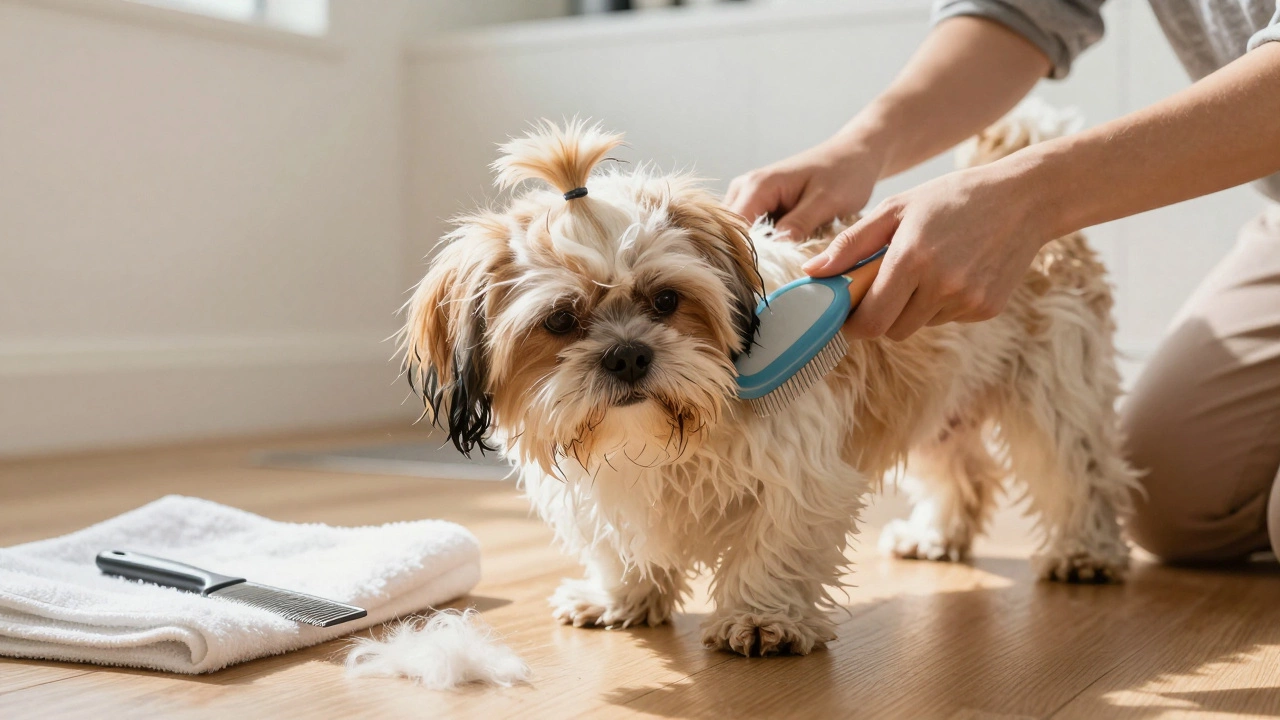
Never jump straight into a bath. Wet matted fur turns into a tangled mess that’s nearly impossible to fix. Start by brushing your dog’s coat thoroughly, working from head to tail. Use the right brush for their coat type: a slicker brush for long-haired breeds like Shih Tzus, a bristle brush for short-haired dogs like Beagles, and a deshedding tool for heavy shedders like Huskies. Brush in the direction of hair growth, then gently against it to catch loose undercoat. Pay extra attention to areas that mat easily-behind the ears, under the armpits, around the tail base. If you find a knot, don’t pull. Use a metal comb to gently separate it, then work through with your fingers. A dog with a clean, tangle-free coat will dry faster, look better, and be more comfortable.
Trim the nails while the dog is calm
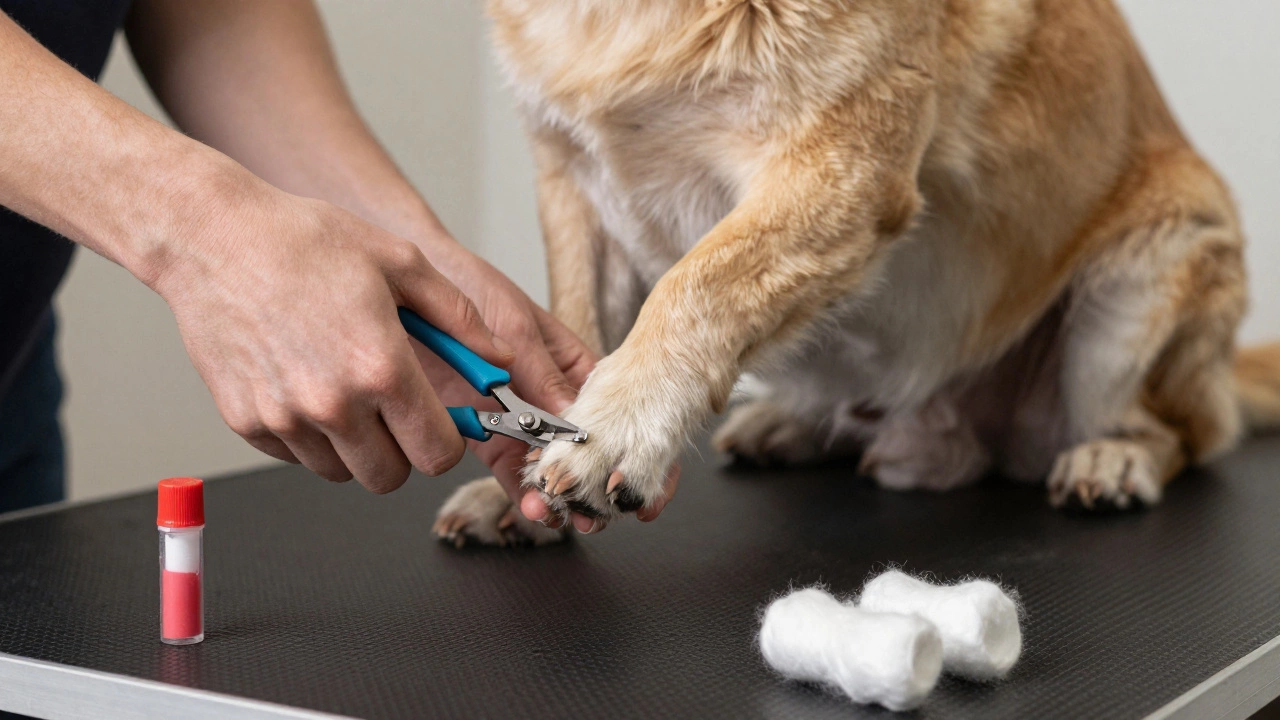
After brushing, move to the nails. This step often gets pushed to the end, but it’s smarter to do it now. Your dog is still relaxed from the brushing, and you haven’t used water yet-wet nails are slippery and harder to grip. Use a guillotine-style or grinder nail clipper. Only cut the tip, avoiding the quick-the pink part inside that holds blood vessels. If you’re unsure, trim small bits at a time. Keep styptic powder nearby in case you nick it. Dogs with dark nails make the quick harder to see, so go slow. A quick trim now prevents painful overgrowth and awkward walking later.
Clean the ears before the bath
Ear cleaning comes before water enters the picture. Water trapped in dirty ears leads to infections. Use a vet-approved ear cleaner and cotton balls (never Q-tips-they push debris deeper). Squeeze a few drops into the ear canal, then gently massage the base of the ear for 10-15 seconds. Let your dog shake its head-that’s normal. Wipe away debris from the outer ear with the cotton ball. Check for redness, odor, or discharge. If you see any, skip grooming and call your vet. Dogs with floppy ears (like Basset Hounds) or hairy ear canals (like Poodles) need this step weekly. Skip it, and you’re inviting yeast or bacteria to grow.
Bathe with the right products and water temperature
Now it’s time for the bath. Use a dog-specific shampoo-human shampoo strips natural oils and dries out their skin. Warm water is best-not hot, not cold. Test it on your wrist. Wet the coat thoroughly, then apply shampoo starting at the neck and working down. Avoid the eyes, ears, and nose. Lather gently, especially around the paws and underbelly, where dirt collects. Let the shampoo sit for a few minutes if it’s medicated. Rinse twice as long as you think you need to. Leftover shampoo causes itching and skin irritation. A thorough rinse means no residue, no odor, no problems.
Dry completely before trimming
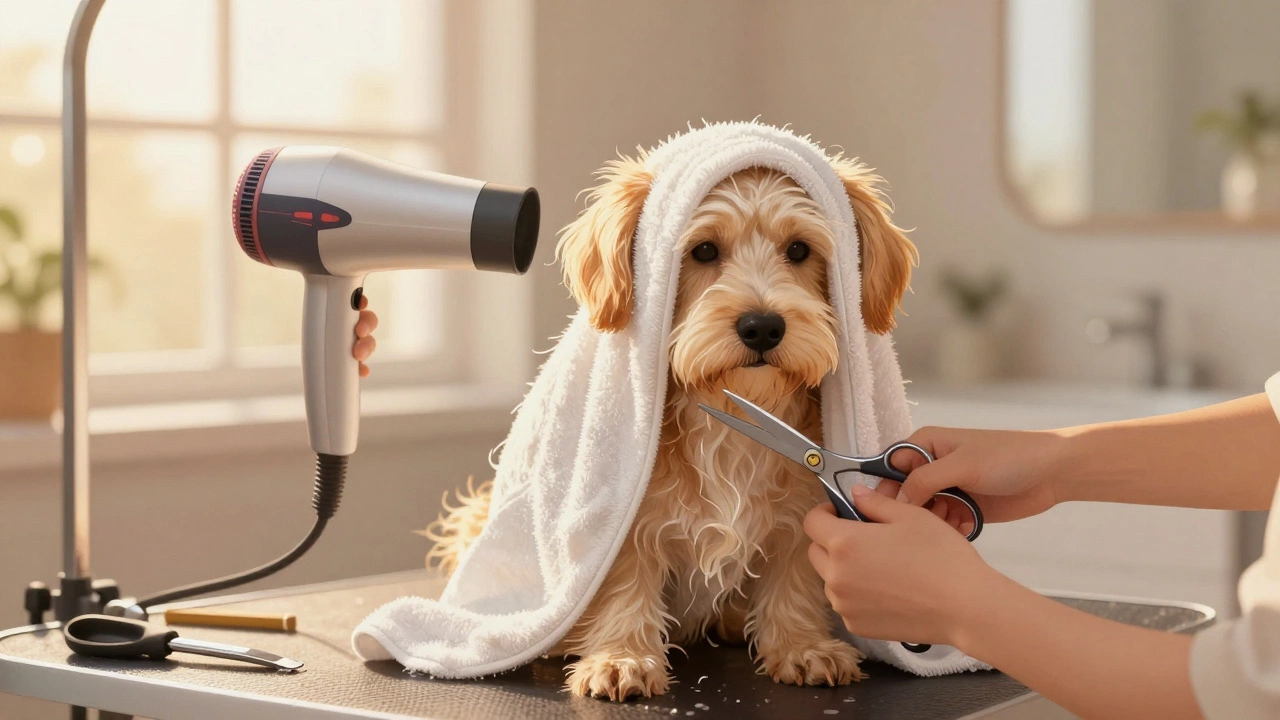
After the bath, dry your dog thoroughly. Use a towel first, then a blow dryer on low heat and low speed. Keep the dryer moving and at least six inches away from the skin. Never leave a dog damp-wet fur breeds bacteria and leads to hot spots. Once dry, check for any remaining tangles. Brush again lightly to fluff the coat. Only now should you move to hair trimming. Wet or damp fur stretches, making cuts uneven. Dry hair gives you accurate control. Use blunt-tipped scissors for around the face and paws. For body trimming, use clippers with the right guard comb-usually #10 for short cuts, #7 for medium. Go slowly. If your dog moves, stop. Don’t force it. A calm, dry dog is a safe dog.
Final touches: teeth, anal glands, and a reward
Finish with the little things. Brush your dog’s teeth with a dog toothbrush and enzymatic toothpaste. Do this weekly to prevent tartar and bad breath. If your dog has anal glands that need expressing, this is the time. Most dogs don’t need it regularly, but if they scoot or lick their rear often, it’s worth checking. If you’re unsure, ask your vet to show you once. Then, give your dog a treat and some praise. Grooming should feel like a positive ritual, not a chore. Over time, your dog will learn to expect it-and even enjoy it.
What if your dog hates grooming?
Many dogs resist grooming because it’s unfamiliar or uncomfortable. If your dog tenses up, start slow. Brush for one minute a day, then stop. Gradually add one step at a time. Always pair grooming with treats and calm praise. Never yell or force. If your dog panics, stop and try again later. Some breeds-like terriers or herding dogs-are naturally more sensitive. Consider professional help if fear is extreme. A good groomer can help build trust, and you can learn from them.
How often should you groom your dog?
It depends on the breed. Long-haired dogs like Maltese or Afghan Hounds need brushing every day and a full groom every 4-6 weeks. Short-haired dogs like Labs or Boxers can get by with brushing twice a week and a bath every 6-8 weeks. Double-coated breeds like Golden Retrievers shed heavily twice a year-they need daily brushing during shedding season. Always check your dog’s skin and coat weekly. If you see flakes, redness, or odor, it’s time to adjust your routine.
What tools do you actually need?
You don’t need a full salon. Start with these basics:
- Slicker brush (for long or curly coats)
- Wide-tooth comb (for detangling)
- Deshedding tool (for heavy shedders)
- Dog-specific shampoo and conditioner
- Nail clippers or grinder
- Ear cleaner and cotton balls
- Blow dryer (with cool and warm settings)
- Blunt-tipped scissors
- Styptic powder (for nail accidents)
That’s it. You don’t need electric clippers unless you’re trimming a Poodle or Schnauzer regularly. Most owners can manage everything with hand tools and patience.
Why does order matter so much?
Think of grooming like building a house. You don’t paint before laying the foundation. You don’t install windows before framing the walls. Same with grooming. Brushing clears the path for a clean bath. Cleaning ears before water prevents infection. Trimming after drying ensures precision. Each step sets up the next. Get the order wrong, and you create more work-or worse, health problems. A proper routine keeps your dog healthy, comfortable, and looking great. It also strengthens your bond. Your dog learns to trust you when you do things the right way.
Can I groom my dog in the bathtub?
Yes, but make sure the tub has a non-slip mat. Dogs can slip and panic. Use warm water, not hot. Keep the water level low-just enough to wet the coat. Avoid getting water in the ears or eyes. Rinse thoroughly. A handheld showerhead makes it easier to control the flow.
How do I prevent my dog from shaking during grooming?
Shaking is normal, especially after brushing or bathing. Let your dog shake-it’s natural. But if they’re shaking from fear, take breaks. Offer treats, speak softly, and keep sessions short. Never punish shaking. Build trust over time by making each step calm and predictable.
Is it okay to groom my dog after a walk?
Yes, but brush off loose dirt and leaves first. If your dog rolled in mud or got sprayed by a skunk, bathe them right away. Otherwise, wait until they’ve dried off and cooled down. Grooming a hot, sweaty dog can irritate their skin. Let them rest for 20-30 minutes after a walk before starting.
Should I groom my dog before or after a vet visit?
Groom before the visit if your dog is matted or dirty-it helps the vet examine skin and coat properly. But don’t trim nails or clean ears right before if the vet might need to check for infections. Let the vet do those checks first, then groom after if needed.
What if my dog has sensitive skin?
Use a hypoallergenic, fragrance-free shampoo. Brush gently with a soft-bristle brush. Avoid frequent baths-once every 6-8 weeks is enough unless they get dirty. Watch for redness, flaking, or itching after grooming. If it happens, switch products and talk to your vet. Some dogs need oatmeal-based or medicated shampoos.