Dog Bedtime Calculator
How to Use This Tool
Enter your household routine and dog details to get a personalized bedtime recommendation. The tool considers your schedule, dog's age, and breed characteristics to determine the best time.
Enter your information to see your dog's recommended bedtime
Why This Matters
Consistent sleep schedules improve your dog's health, behavior, and mood. The article explains how dogs need 12-14 hours of sleep daily, and poor sleep can increase stress hormones and anxiety.
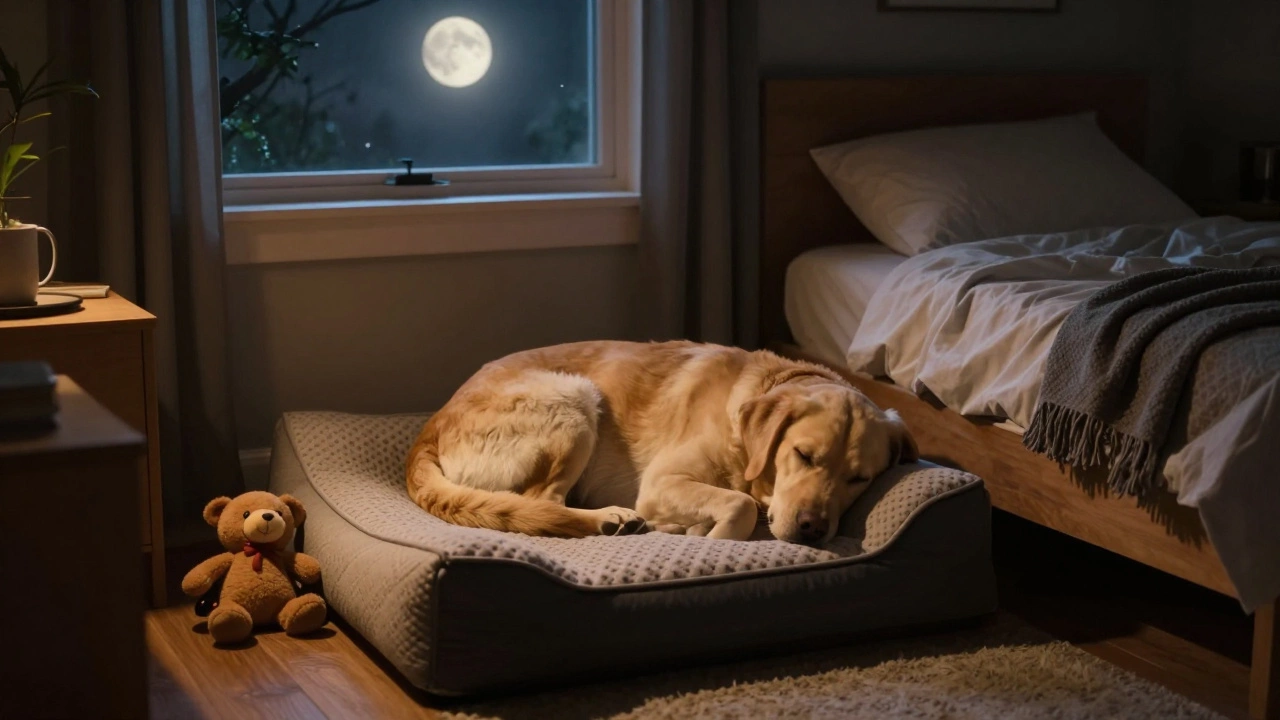
Most dog owners don’t think about when to put their dog to bed-until the dog starts pacing at 2 a.m. or barks at the neighbor’s cat. But sleep isn’t just about comfort. It’s about health, behavior, and how well your dog functions during the day. The best time to put a dog to bed isn’t fixed by the clock. It’s tied to your household rhythm, your dog’s age, and even their breed.
Why Dog Sleep Matters More Than You Think
Dogs sleep 12 to 14 hours a day on average. Puppies and older dogs can sleep up to 18 to 20 hours. That’s not laziness-it’s biology. Their bodies repair muscles, process memories, and regulate hormones during sleep. If a dog doesn’t get enough rest, they become irritable, anxious, or even hyperactive. You might think your dog is being ‘bad’ when they chew shoes or bark nonstop. But often, it’s just exhaustion catching up.
Studies from the University of Lincoln show that dogs with inconsistent sleep schedules have higher cortisol levels-the stress hormone. That means poor sleep doesn’t just make them tired. It makes them more reactive to loud noises, strangers, or even a change in the weather.
Match Your Dog’s Bedtime to Your Routine
Your dog doesn’t live by the clock. They live by your habits. If you’re up at 6 a.m. and out the door by 7, your dog learns to wake up with you. If you work late and get home at 9 p.m., your dog waits. That’s why the best time to put your dog to bed is usually 30 to 60 minutes after you settle down for the night.
Here’s how it works in real life:
- You watch TV at 9 p.m. → your dog curls up beside you → you turn off the lights at 10:30 p.m. → your dog settles into their bed by 11 p.m.
- You eat dinner at 6 p.m. → take a walk at 7 p.m. → quiet time starts at 8 p.m. → lights out at 9 p.m. → dog asleep by 9:15 p.m.
Consistency is the key. Dogs thrive on routine. If you let them sleep on the couch one night and in their bed the next, they’ll test the rules. Pick a time and stick to it-even on weekends.
Age Changes Everything
A 3-month-old puppy doesn’t need the same bedtime as a 7-year-old Labrador. Puppies have tiny bladders and short attention spans. They need to go out every 2 to 3 hours, even at night. That means bedtime might be 8 p.m., but you’ll still need to take them out at midnight and again at 4 a.m.
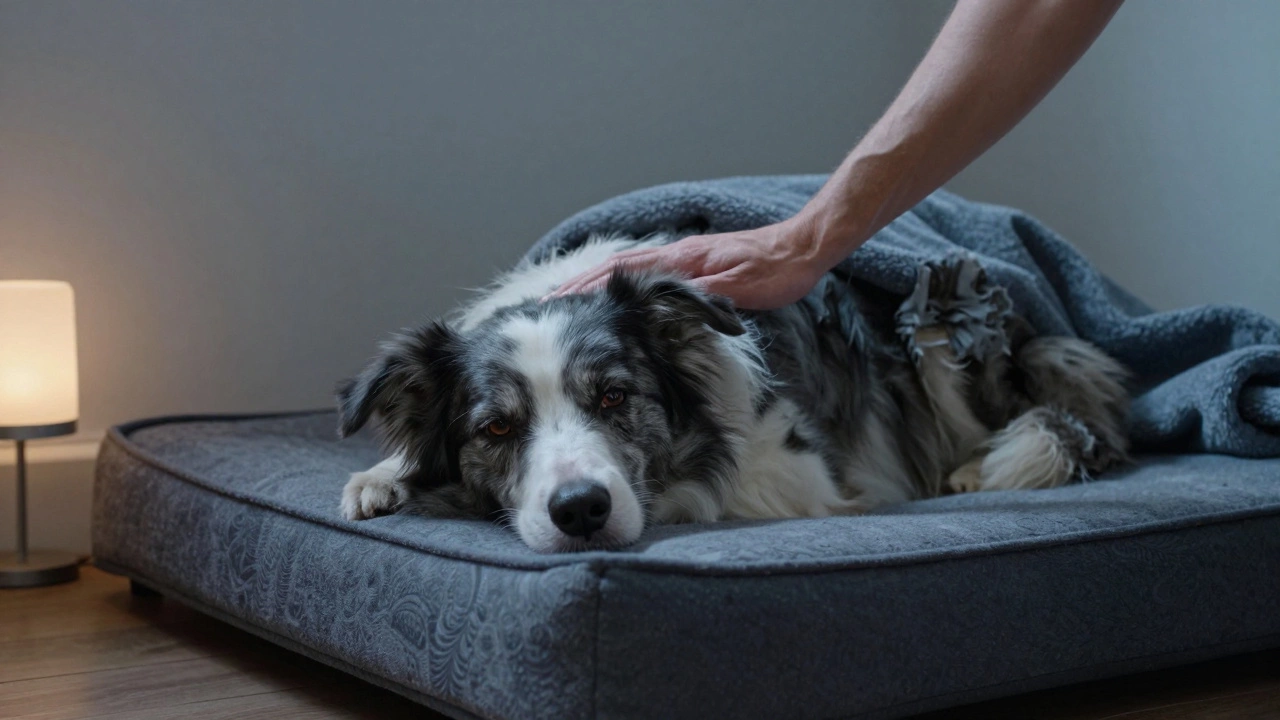
By 6 months, most puppies can hold it through the night. That’s when you can start shifting bedtime to match yours. Older dogs, especially those over 8, often sleep more during the day and wake up more at night. Arthritis, cognitive decline, or medications can disrupt their sleep. If your senior dog is restless after midnight, it’s not defiance-it’s discomfort.
For senior dogs, try:
- Putting their bed in a warmer spot (away from drafts)
- Using a raised orthopedic bed to ease joint pressure
- Taking a short, gentle walk before bed to help them relax
Breed Matters Too
Not all dogs are built the same. A Border Collie needs more mental stimulation before bed than a Bulldog. High-energy breeds like Australian Shepherds or Jack Russell Terriers need a solid wind-down routine. If you toss a ball at 10 p.m., don’t expect them to sleep by 10:15. Instead, try:
- 10 minutes of calm obedience training
- A slow sniffing game with a treat-dispensing toy
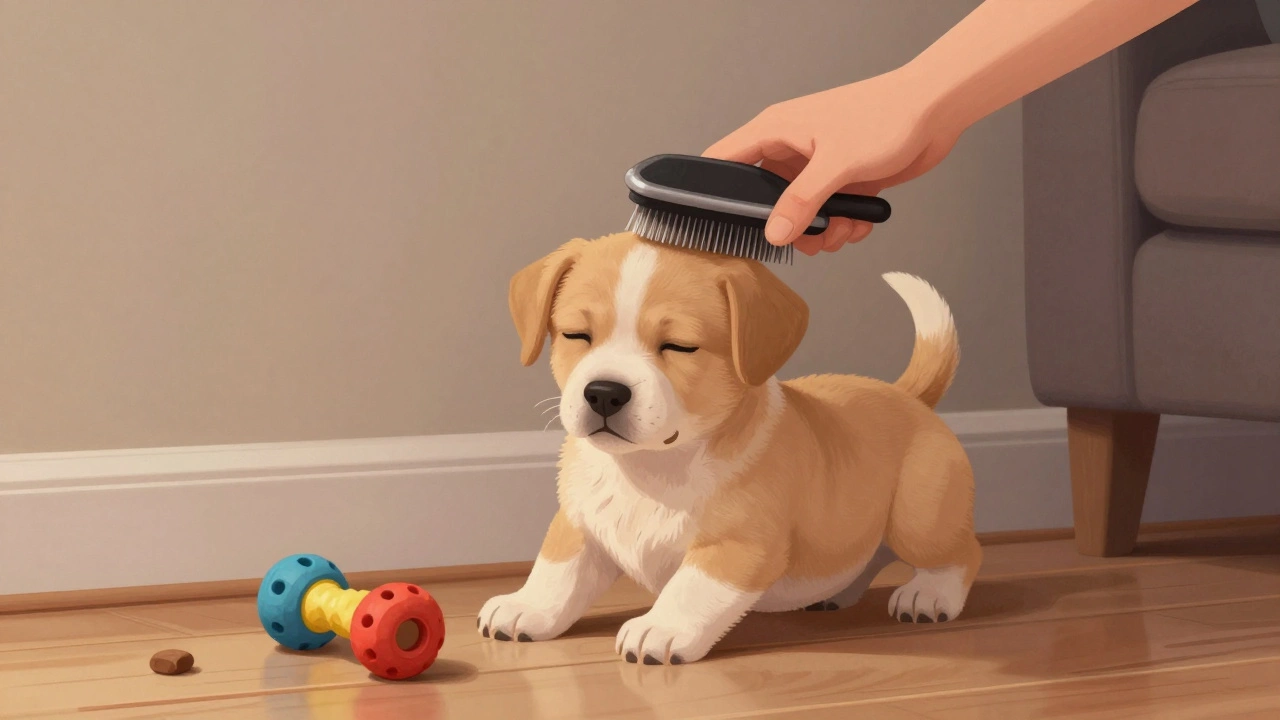
- Light massage or brushing
Brachycephalic breeds-like Pugs or Shih Tzus-have trouble breathing when they’re overly tired. If they snore loudly or gasp after playtime, cut evening activity short. Let them rest before they hit exhaustion.
The 30-Minute Wind-Down Rule
Just like kids, dogs need a transition from active to quiet. Don’t go from running around the yard to turning off the lights. That’s too abrupt. Start a 30-minute wind-down routine 30 minutes before bedtime. This signals their brain: It’s time to shut down.
Here’s a simple wind-down sequence:
- 10 minutes: Final potty break
- 10 minutes: Gentle petting or brushing
- 10 minutes: Quiet time in their bed with a stuffed toy or soft blanket
Do this every night, and your dog will start heading to their bed on their own. No commands needed. That’s when you know the routine has stuck.
Where You Put Them to Bed Matters
It’s not just when you put your dog to bed-it’s where. A dog bed should be:
- Quiet: Away from the TV, front door, or laundry machine
- Comfortable: Firm enough to support joints, soft enough to feel cozy
- Consistent: Always in the same spot
Many people let their dogs sleep in the bedroom. That’s fine-if your dog doesn’t wake you up. But if they bark at shadows or shift around every 20 minutes, consider moving their bed to a quiet corner of the living room or a spare room. Use a baby gate if needed. A quiet space means better sleep for both of you.
Invest in a bed that fits their size and needs. A small dog needs a raised edge for head support. A large dog needs space to stretch. Memory foam works well for older dogs. Washable covers are a must-especially if your dog drools or sheds.
What If Your Dog Won’t Sleep?
If your dog still won’t settle at night, check these common issues:
- Too much food late → Dinner should be 2 to 3 hours before bedtime
- Not enough daytime exercise → A 20-minute walk isn’t enough for most breeds. Aim for 45 minutes of active play or walking
- Too much stimulation before bed → No games, no new toys, no loud music
- Medical pain → If your dog whimpers, licks paws, or can’t get comfortable, see a vet
One owner in Auckland noticed her 5-year-old Beagle was waking up at 3 a.m. every night. She thought it was anxiety. Turns out, he had a mild bladder infection. Once treated, he slept through the night.
Final Rule: Sleep Is a Team Effort
Putting your dog to bed isn’t about control. It’s about care. When your dog sleeps well, they’re calmer, healthier, and happier. And so are you.
Start tonight. Pick a time. Stick to it. Make their bed inviting. Wind down together. In a week, you’ll notice the difference-not just in your dog, but in your own nights too.
Should I let my dog sleep in my bed?
It’s fine if both you and your dog sleep well. But if your dog moves around, barks, or takes up too much space, it’s better to give them their own bed. Dogs need their own space to feel secure, and you need uninterrupted sleep. A dog bed next to your bed is often the best compromise.
Is it bad to put my dog to bed too early?
Not at all. Puppies and older dogs often need more sleep and benefit from earlier bedtimes. Even adult dogs can sleep well if they’ve had enough activity during the day. The goal isn’t to match your bedtime exactly-it’s to give them enough rest after a full day.
How do I train my dog to go to their bed on command?
Start by placing a treat on their bed and saying "bed". When they go to it, give the treat and praise. Repeat this 5 to 10 times a day for a week. Then add a hand gesture-like pointing to the bed. Soon, they’ll go on their own, even without a treat. Use this command during your wind-down routine to make bedtime smoother.
What if my dog wakes up too early?
If your dog wakes up before you and starts barking or scratching, don’t respond right away. Wait 5 to 10 minutes. If they’re quiet, reward them. If they’re still restless, take them out quietly without play or attention. Over time, they’ll learn that early waking doesn’t get them what they want.
Do dogs dream? Should I wake them up if they’re twitching?
Yes, dogs dream. You’ll see them twitch, whine, or paddle their legs during REM sleep. That’s normal. Don’t wake them. Interrupting sleep can confuse or startle them. Let them sleep through it. If they’re screaming or thrashing violently, consult a vet-it could signal a seizure or pain.