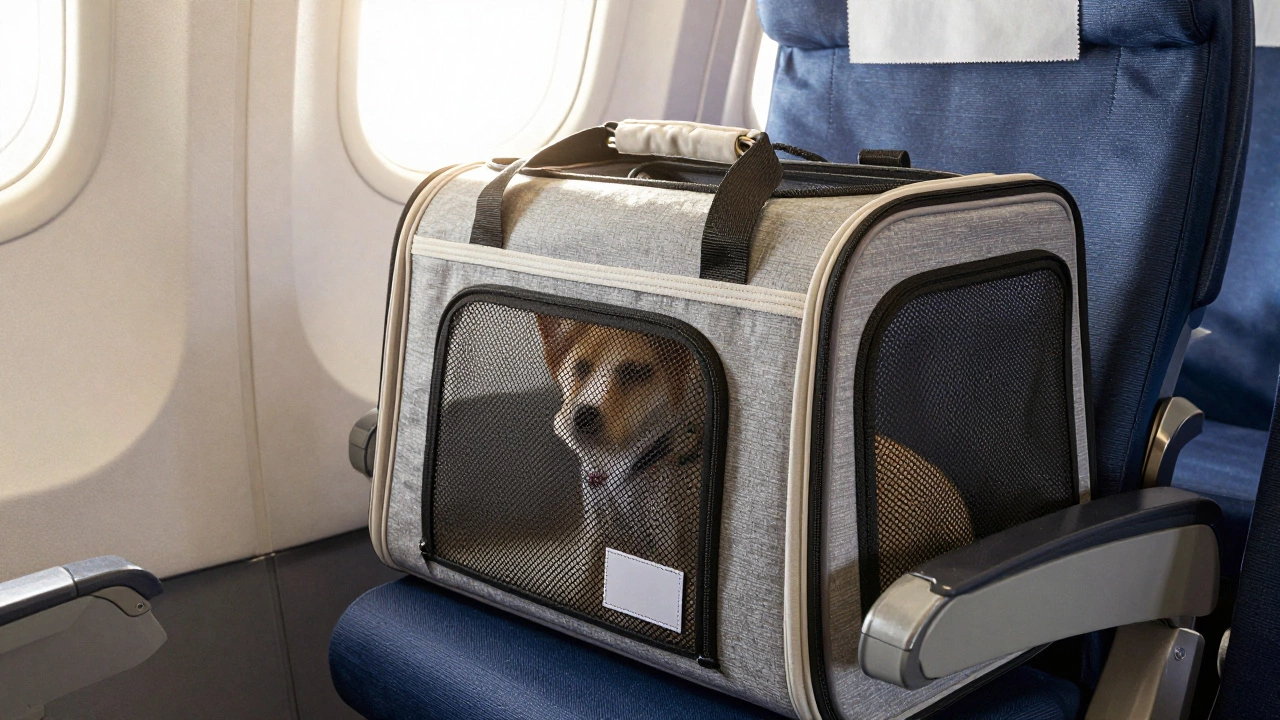
If you’ve ever tried to fly with your dog or cat, you know the panic that sets in when you realize your pet’s carrier might not be allowed on the plane. It’s not just about size-it’s about TSA approved pet carrier standards. And no, just because it’s labeled ‘airline approved’ doesn’t mean it meets the real rules. The Transportation Security Administration (TSA) doesn’t actually approve carriers themselves. That’s a myth. What they do is enforce the rules set by airlines, which follow guidelines from the International Air Transport Association (IATA). So when someone says ‘TSA approved,’ they really mean ‘meets airline requirements for in-cabin travel.’
Why TSA Approved Matters
You won’t find a TSA logo on any pet carrier. The TSA doesn’t certify, test, or approve pet carriers. Their job is to screen passengers and baggage at security checkpoints. If your carrier is too big, too rigid, or looks like a threat, they’ll flag it. But the real gatekeepers are the airlines. Each one has its own rules for size, weight, and design. If your carrier doesn’t fit under the seat in front of you, you’ll be turned away at the gate-even if you paid extra for it.
Most airlines allow one small pet carrier per passenger, and it must fit entirely under the seat in front of you. That’s usually about 17 inches long, 10 inches wide, and 7 inches high. But some airlines like Alaska Airlines allow slightly larger carriers. Others, like JetBlue, require the carrier to be soft-sided. If you show up with a hard plastic crate that looks like a suitcase, you’re out of luck.
What Makes a Carrier ‘TSA Approved’?
There’s no official list. But there are clear, consistent standards across airlines. A carrier that passes security and gets on the plane usually has these features:
- Soft-sided material (no hard plastic or metal frames)
- Water-resistant bottom to prevent leaks
- Secure zipper or latch that won’t pop open mid-flight
- Top and side access for quick checks at security
- Proper ventilation on at least three sides
- No wheels, handles, or protruding parts that could block aisles
Carriers with wheels are a common mistake. Even if you can carry it like a suitcase, the wheels are a safety hazard in the cabin. TSA agents and flight crews will ask you to remove them or check the carrier. Same with hard-sided carriers-those are for checked baggage only. Soft-sided carriers are easier to squeeze under seats, and they’re less likely to be damaged during security screening.
Size Matters-More Than You Think
Measure your carrier before you buy. Don’t trust the label. Many carriers claim ‘airline friendly’ but are 1 inch too tall. Here’s how to test it: grab a ruler and measure the internal dimensions. Then, imagine it under your seat. Can your feet move? Can the person next to you lean back? If the answer is no, it’s too big.
Most airlines require the carrier to fit under the seat with the pet inside. That means you can’t just measure the carrier empty. Add 1-2 inches for padding, your pet’s posture, and the carrier’s shape. A 16-inch carrier might work for a 10-pound cat, but a 15-pound dog will need more room to sit comfortably. Overcrowding isn’t just uncomfortable-it’s dangerous. Pets can overheat or panic if they can’t turn around.
Soft-Sided vs. Hard-Sided: The Real Difference
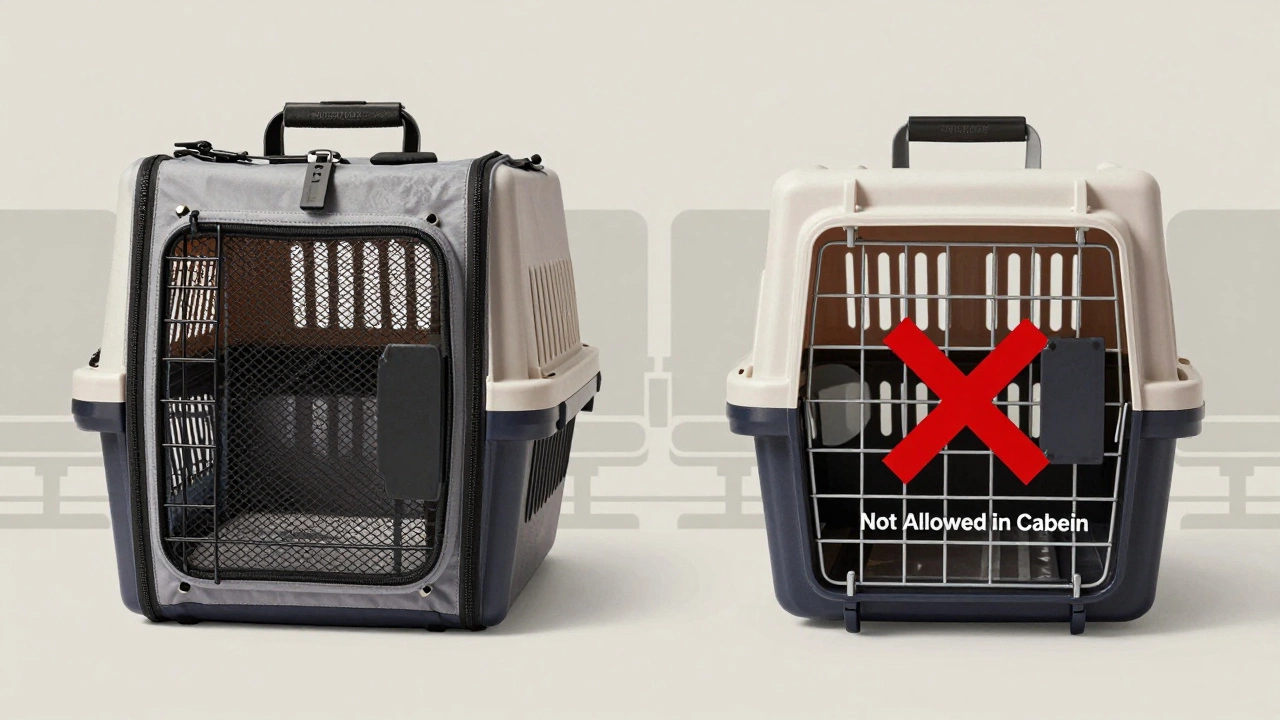
Hard-sided carriers look sturdy. They’re great for road trips or vet visits. But they’re almost never allowed in the cabin. Why? They’re bulky, rigid, and can’t be squeezed under a seat. Airlines like Delta, United, and American Airlines explicitly ban hard-sided crates for in-cabin pets.
Soft-sided carriers are the only option for most travelers. They’re flexible, lightweight, and collapse when not in use. Look for ones with a reinforced bottom and mesh panels. Some even have removable padding for cleaning. Brands like Sherpa, Petmate, and Sleepypod are popular because they’re designed for airline compliance and have been tested by thousands of travelers.
Pro tip: Avoid carriers with metal frames or wire mesh on the sides. Even if they’re labeled ‘airline approved,’ they can trigger alarms at security. TSA agents have seen carriers with hidden metal parts that look like weapons on X-ray machines. A soft-sided carrier with a plastic zipper and no metal hardware is your safest bet.
What About Service Animals?
If you’re traveling with a service dog, the rules are different. Service animals don’t need to be in carriers. They can walk beside you, sit at your feet, or lie on the floor. But they still have to be under control at all times. Airlines can ask for documentation about the animal’s training and purpose, but they can’t charge extra fees. Emotional support animals (ESAs) are no longer recognized under U.S. federal law as service animals. Most airlines now treat them like regular pets, meaning they must be in a carrier and count toward your pet limit.
How to Pick the Right Carrier
Here’s a simple checklist to use before you buy:
- Check your airline’s pet policy online. Don’t rely on third-party sites or past experience-rules change.
- Measure your pet’s height (standing) and length (nose to tail). Add 3 inches for comfort.
- Find a carrier that’s 1 inch smaller than the airline’s maximum under-seat dimensions.
- Look for top and front access. This makes security checks faster and less stressful for your pet.
- Test the zipper. It should be sturdy, not flimsy. Pull it open and closed 10 times.
- Check for ventilation. You should be able to see airflow through the mesh on at least three sides.
- Make sure it’s washable. Accidents happen. Look for removable, machine-washable liners.
Don’t buy on impulse. A $30 carrier from a discount store might look fine, but if the zipper breaks mid-flight, you’re stuck. Spend $70-$120 on a well-reviewed carrier from a brand known for airline compliance. You’ll thank yourself when you walk through security without a single question.
What Happens at Security?
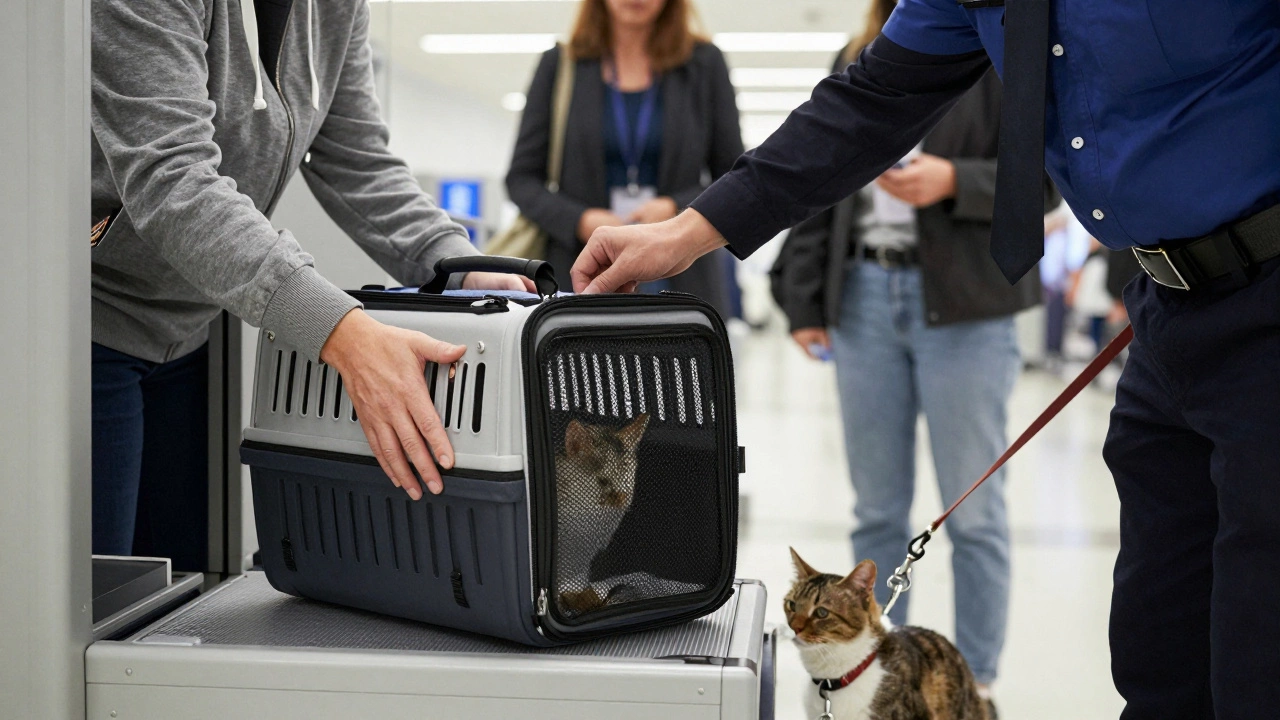
At the checkpoint, TSA agents will ask you to remove your pet from the carrier. They don’t want the carrier scanned with the pet inside. That’s for safety and clarity. Have a leash or harness ready. Some travelers use a pet carrier with a built-in leash clip-this keeps your pet secure while you take off the carrier.
Put your pet in a quiet, calm space while you go through the metal detector. Don’t rush. If your pet is nervous, talk to them softly. Some airports have pet relief areas near security. Ask a TSA agent-they’ll point you in the right direction.
Once you’re through, put your pet back in the carrier. Make sure the zipper is fully closed. Double-check that the carrier is still under the size limit. If it’s slightly too big, some agents will let you check it for free. Others won’t. Always be polite. A calm attitude goes a long way.
Common Mistakes to Avoid
- Buying a carrier that’s too big because ‘it might fit’-it won’t.
- Using a carrier with wheels, handles, or hard sides-these are automatic rejects.
- Forgetting to check your airline’s policy the week before your flight-rules change often.
- Bringing a carrier that’s dirty or smells strongly-TSA agents can refuse it.
- Not practicing with your pet beforehand-train them to be calm in the carrier for at least 30 minutes a day for a week before flying.
One traveler from Seattle flew with her 12-pound rescue dog in a carrier that looked perfect-until she got to the gate. The airline said it was 1.5 inches too tall. She had to pay $150 to check it as baggage. Her dog was stressed for days. She learned the hard way: measure twice, buy once.
Final Tips for Stress-Free Travel
Book your flight early. Most airlines limit the number of pets per flight. Some only allow two per cabin. Call the airline directly to reserve your pet’s spot. Don’t assume online booking includes it.
Label your carrier clearly. Put your name, phone number, and destination on the outside. Use a durable tag, not a paper one. Include a recent photo of your pet inside the carrier.
Bring water, a collapsible bowl, and a small towel. Some airlines let you bring a water bottle on board for your pet. Others don’t. Ask ahead.
And never sedate your pet. The FAA and most airlines ban sedatives. They can cause breathing problems at high altitudes. Instead, use calming sprays or pheromone wipes designed for travel. Many vets recommend ThunderEase or Adaptil.
Flying with your pet doesn’t have to be a nightmare. With the right carrier, the right prep, and a little patience, you and your animal can make it through security and onto the plane without a single headache.
Is there an official TSA-approved list of pet carriers?
No, the TSA does not maintain or approve any list of pet carriers. The term ‘TSA approved’ is a marketing phrase used by retailers. What matters are the airline’s specific rules for in-cabin pet carriers. Always check your airline’s website for size, material, and design requirements before buying.
Can I use a hard-sided carrier for my pet on a plane?
Hard-sided carriers are almost never allowed in the cabin. They’re too bulky and rigid to fit under seats. Airlines like Delta, American, and United require soft-sided carriers for in-cabin pets. Hard-sided crates are only permitted as checked baggage-and even then, they must meet IATA standards for strength and ventilation.
Do I need to remove my pet from the carrier at security?
Yes. TSA agents will ask you to remove your pet from the carrier before scanning. The carrier goes through the X-ray machine alone. Your pet walks through the metal detector with you, or is hand-wanded if they’re too nervous. Always have a leash or harness ready to keep your pet under control.
What if my pet carrier is slightly too big?
If your carrier is just 1-2 inches over the limit, some airlines will let you check it for free as a courtesy. Others will charge you a checked baggage fee. Always call your airline ahead of time. If you’re unsure, bring a collapsible bag to transfer your pet into a smaller, compliant carrier at the airport.
Can I bring food or water for my pet on the plane?
Yes. Solid food is allowed in your carry-on. Liquid food or water must follow the 3-1-1 rule (3.4 oz or less in a clear bag). Many travelers bring collapsible bowls and freeze water in small containers to melt during the flight. Always check with your airline-they may have specific rules about feeding pets mid-flight.