Puppy Crating Schedule Calculator
Puppy Details
Quick Safety Check
The "Plus One" Rule:
Recommended Alarms
Crying Management
Wait Time: 30 seconds of silence.
If you hear crying, wait for a brief pause. Intervening immediately teaches that noise equals freedom.

Success Tip
Make releasing the puppy "boring." Low energy, no eye contact, treat release as business, not playtime.The Straight Answer on Crating Your Puppy
You probably want a simple yes or no. If you are asking whether it is safe to crash your puppy in a crate overnight, the answer is generally yes, but with important conditions. It depends on the size of the space, how long they stay there, and what you put inside that space. As someone living here in Auckland, I see many owners debating this. Some think crates are cruel prisons, while others swear they save their carpets. The truth lies somewhere in the middle. A crate provides security when introduced correctly.
Crate training is not about punishment. It is about giving your pup a safe haven. Think back to nature; wild canines dig dens for sleeping. They seek enclosed spaces where predators cannot reach them. When you buy a sturdy wire dog crate, you are mimicking that instinctive need. However, leaving a three-month-old dog alone for eight hours straight is a recipe for disaster. We need to look at the specifics of their physical development.
Why Puppies Need Boundaries
New owners often struggle with the chaos of a roaming puppy. Without boundaries, a curious four-legged explorer will chew wires, eat trash, and wake up in the middle of the night needing to eliminate. A crate defines their territory. It signals to the dog that this spot is for resting, eating, and sleeping, not for playing wildly or destroying things. This distinction helps with housebreaking significantly.
Dogs typically avoid soiling their sleeping area. If the crate is the right size-just large enough to stand, turn, and lie down-the puppy holds their bladder until let out. Once they are outside, they relieve themselves immediately. Over time, this creates a predictable rhythm for both you and the pet. It is not magic, but it is biological logic applied to modern home environments.
This is also where safety comes in. While you are asleep, you cannot monitor every action of your dog. Chewing on electrical cords or ingesting toxic cleaning supplies left under the sink are real risks. Containment prevents accidents before you even notice them happening. It acts as a guard rail for their health while you rest.
Setting Up the Perfect Sleep Station
If you decide to use a crate, how you set it up determines whether your dog loves it or hates it. The first step is choosing the location. Do not isolate the crate in a basement or garage. Place it in a family room or bedroom where people move about. Dogs are pack animals; isolation causes stress. Seeing you walk by occasionally reassures them they are not abandoned.
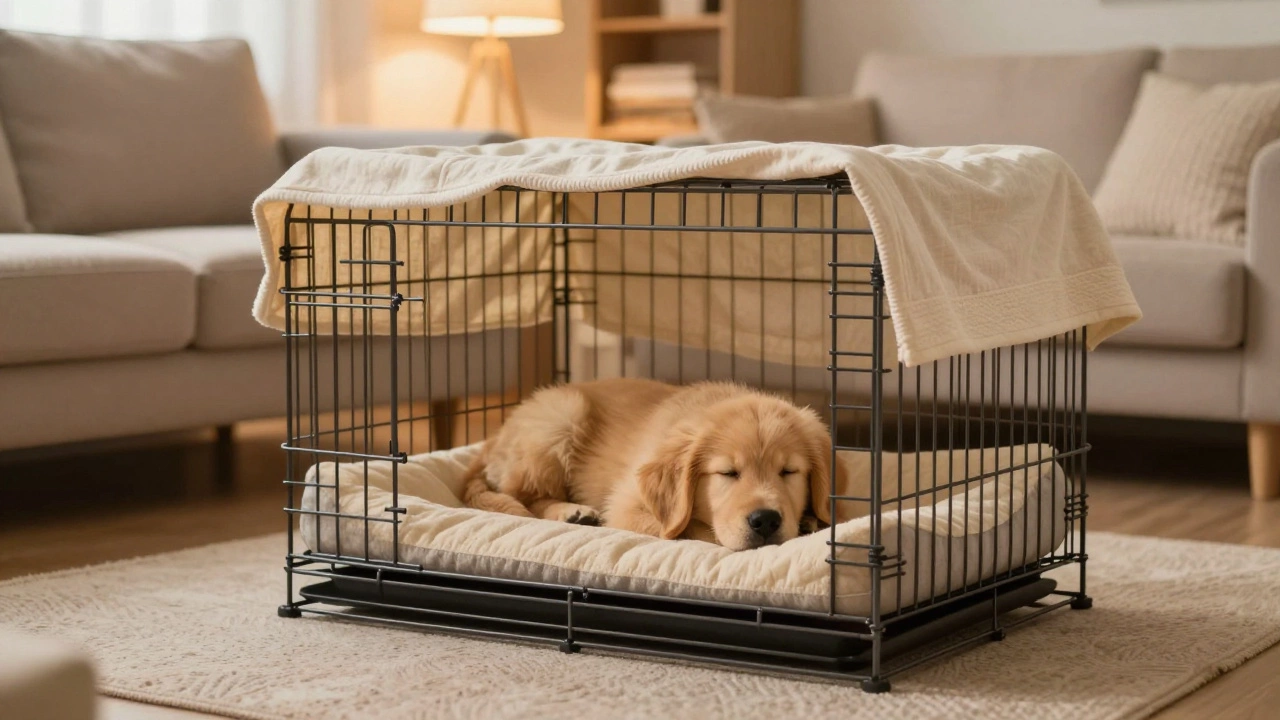
Comfort matters immensely. You cannot just throw them in a cold metal box. Line the bottom with a thick pad or a blanket designed for machine washing. In New Zealand, our winters can get cool, especially here on the east coast, so warmth is crucial. For the top of the cage, covering it partially with a breathable sheet creates that "den" effect. It blocks harsh light and reduces visual stimuli that might trigger barking.
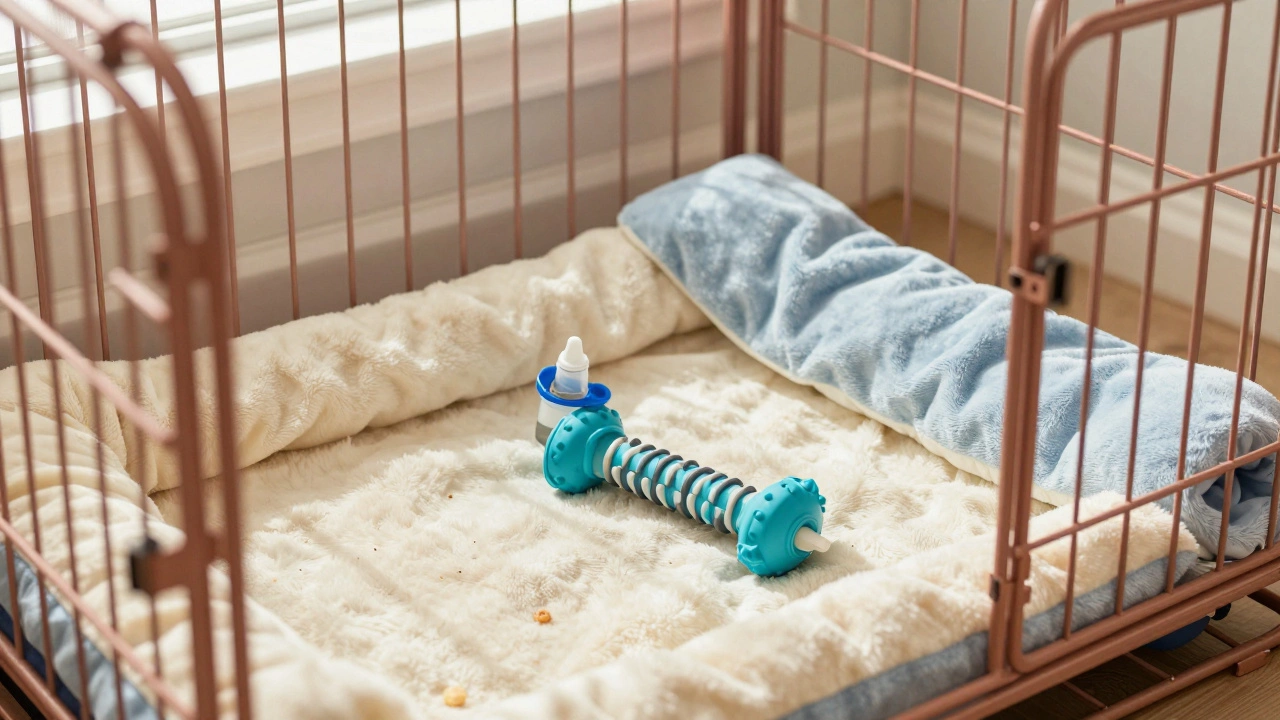
We need to talk about what goes inside. Many people leave a rubber ball or rawhide bone. That’s risky for unsupervised play at night. Instead, choose calming chews like a durable Kong stuffed with frozen peanut butter. Freeze the paste beforehand. This distraction keeps them occupied when you first tuck them in. It also helps tire them out. A tired puppy sleeps better than an energetic one. Just remember, never leave small squeaky toys unsupervised; popped squeakers can lead to ingestion or choking hazards during the night.
| Item | Purpose | Safety Tip |
|---|---|---|
| Orthopedic Bedding | Joint support and warmth | Washable fabric only |
| Covered Blanket | Creates a dark den environment | Leave air gaps open |
| Heavy-duty Chew Toy | Calms chewing urges | No squeakers or loose parts |
| Bottle Cap | Portable water access | Lids that flip open easily |
Timing and Duration Rules
This is where most mistakes happen. You cannot lock a puppy away all day starting tomorrow. It takes weeks to condition the dog to feel comfortable inside. Start with short intervals while you are awake. Feed meals in the crate. Then extend the time. Before you attempt a full night, test their limit over the weekend. Can they nap in there while you watch TV? If they panic, scale back.
When it comes to actual sleep, we follow a rule of thumb based on age. Add one to their months to get the maximum hours they should hold their bladder. A two-month-old pup has a capacity of roughly three hours max. A three-month-old gets four hours. Beyond that, they likely cannot physically hold it. If they cry for longer periods, it is usually a signal to take a quick bathroom break. Ignoring this destroys the housebreaking progress and causes them to fear elimination in their bed.
As they grow older, tolerance increases. By six months, they can usually manage seven or eight hours. By one year, they have adult control. Until then, plan for a middle-of-the-night potty run. Set an alarm if needed. The goal is waking up together to go outside quickly, then returning to sleep. This balances their physical limitations with your sleep needs.
Handling the Crying
The first few nights will involve noise. You will hear whining, scratching, and whimpering. Your heart will ache. The instinct is to let them out immediately to stop the noise. However, if you do this the moment they cry, you teach them that crying equals freedom. Instead, wait for a pause. If they scream for thirty seconds and then stop, go to them calmly. Speak quietly through the bars. Let them know you are there but that staying calm is the key.
Avoid eye contact initially. Keep movements low energy. If you engage in a big conversation or excitement when opening the door, they learn that noise is a party starter. Treat the release as boring business. Eventually, silence becomes their strategy for getting attention. Patience here is the single biggest factor in success.
If the distress seems severe, check their state. Is the crate too hot? Cold? Are they wet? Sometimes puppies associate the smell of ammonia (urine) with discomfort. Clean any accidents thoroughly with enzymatic cleaners. Scent removal resets the memory, so they don’t mark the same spot again due to residual odors.
Alternatives to Wire Crates
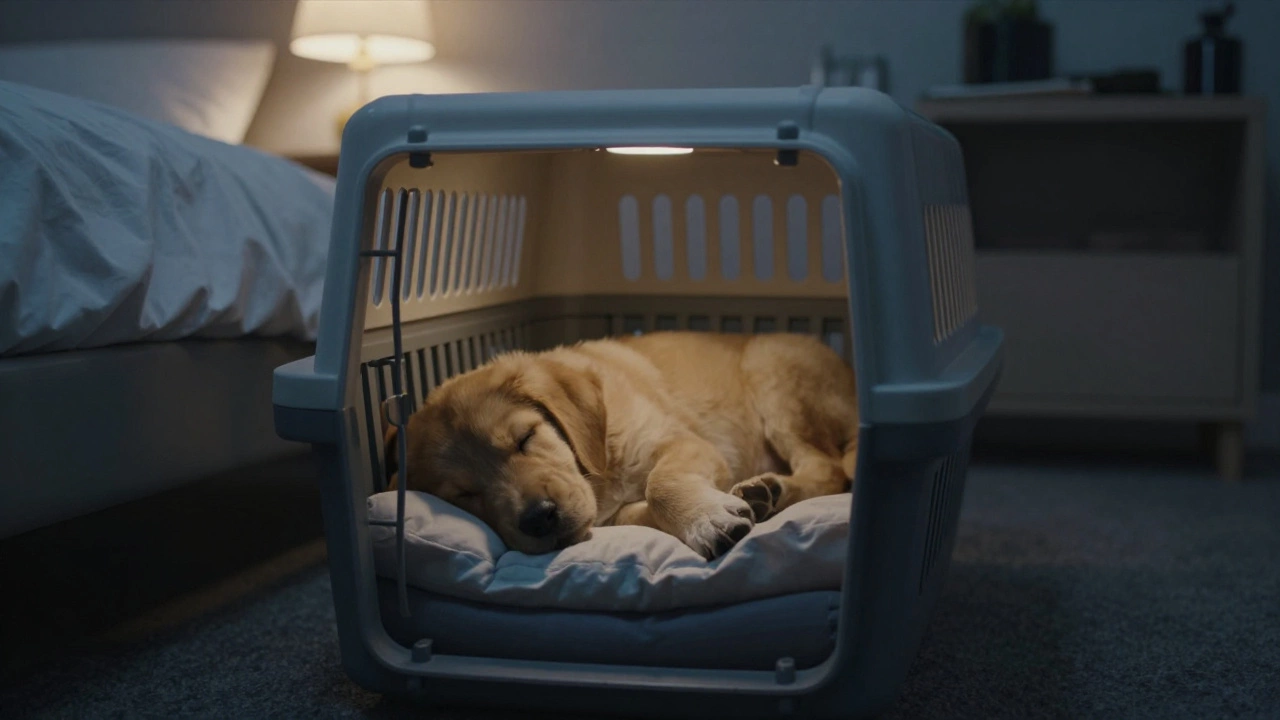
Not everyone likes the wire cage aesthetic. There are other options that function similarly. A plastic airline-style kennel offers a darker, more enclosed feel, acting almost like a portable igloo. These tend to be warmer in winter but can feel stuffy in summer heat. Ensure ventilation is good.
An alternative is the playpen. An exercise pen creates a larger designated area. This works well once the puppy is mostly housebroken. They have room to stretch and turn around fully without being restricted to a tight box. However, playpens lack the security of a closed-off space. If the puppy escapes, the damage potential is higher because the accessible area is bigger.
Ultimately, the choice depends on your specific situation. Do you need to travel often? A portable carrier crate is better. Do you prefer them visible in the room? A mesh fence is great. But for deep sleep conditioning, the traditional crate remains the gold standard for many trainers and veterinarians alike.
Is it safe to lock a puppy in a crate overnight?
It is safe if done correctly. The crate should be sized properly (only large enough to stand and turn). The puppy must not stay in it longer than they can physically hold their bladder. Always provide fresh air, water access, and a comfortable bedding layer. Monitor the temperature to ensure they aren't overheating or freezing.
How long can a 2-month-old puppy stay crated?
A two-month-old puppy should only stay in a crate for about 3 hours at a time, including sleep. They need regular bathroom breaks throughout the night. Using the formula of "months of age plus one" helps estimate their bladder capacity safely.
Can I leave a toy in the crate at night?
Only durable chew toys meant for containment are safe. Avoid plush toys, squeaky toys, or anything with small parts that can be swallowed. A rubber toy stuffed with treats is the best option for calming distractions without risk.
What should I do if my puppy cries in the crate?
Wait for a brief period of silence before intervening. If you go in immediately after screaming starts, they learn that crying releases them. Speak calmly, check needs (bathroom/hunger/water), but do not make it a social event. Consistency stops the cycle.
Do I need to cover the crate?
Covering the crate is highly recommended. It mimics a natural den, reducing visual stress and helping the puppy settle. Just ensure adequate airflow so the animal does not overheat, especially during warmer months.