Crate Safety Risk Analyzer
Select a scenario below to analyze potential risks based on equipment type and crate conditions.
Safety Assessment
Select a scenario to view analysis
The Short Answer: No, Take It Off
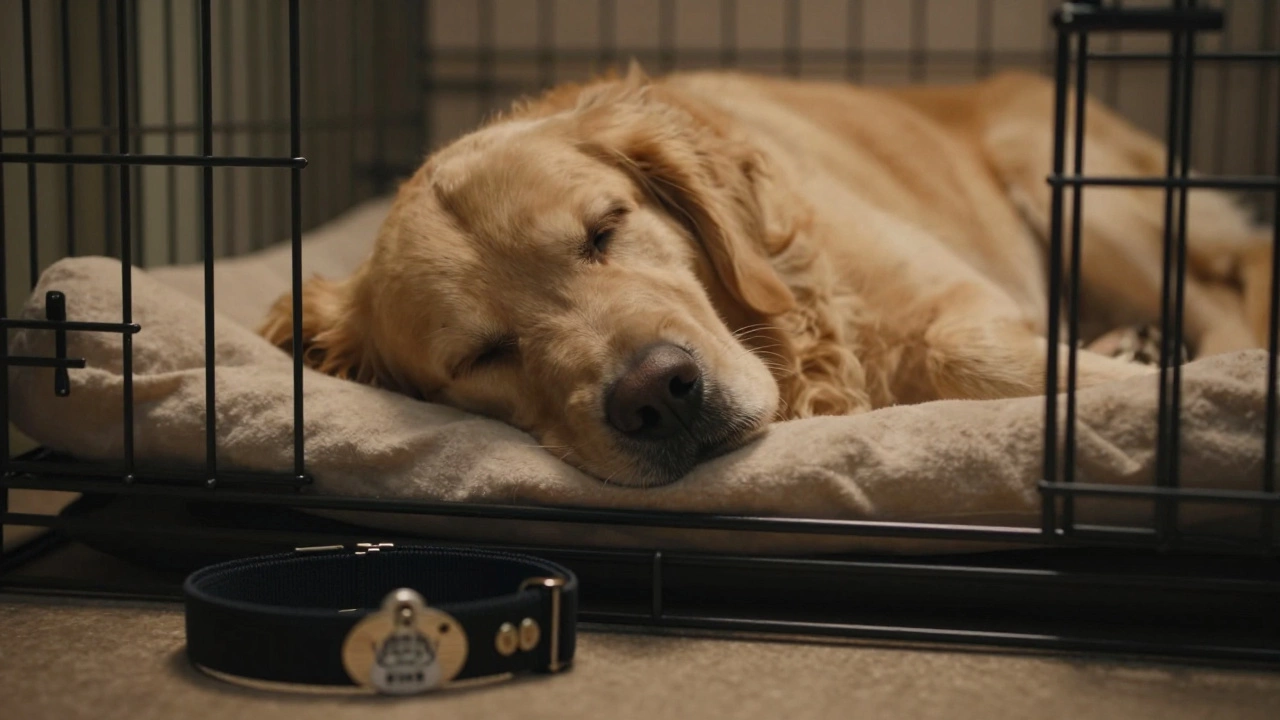
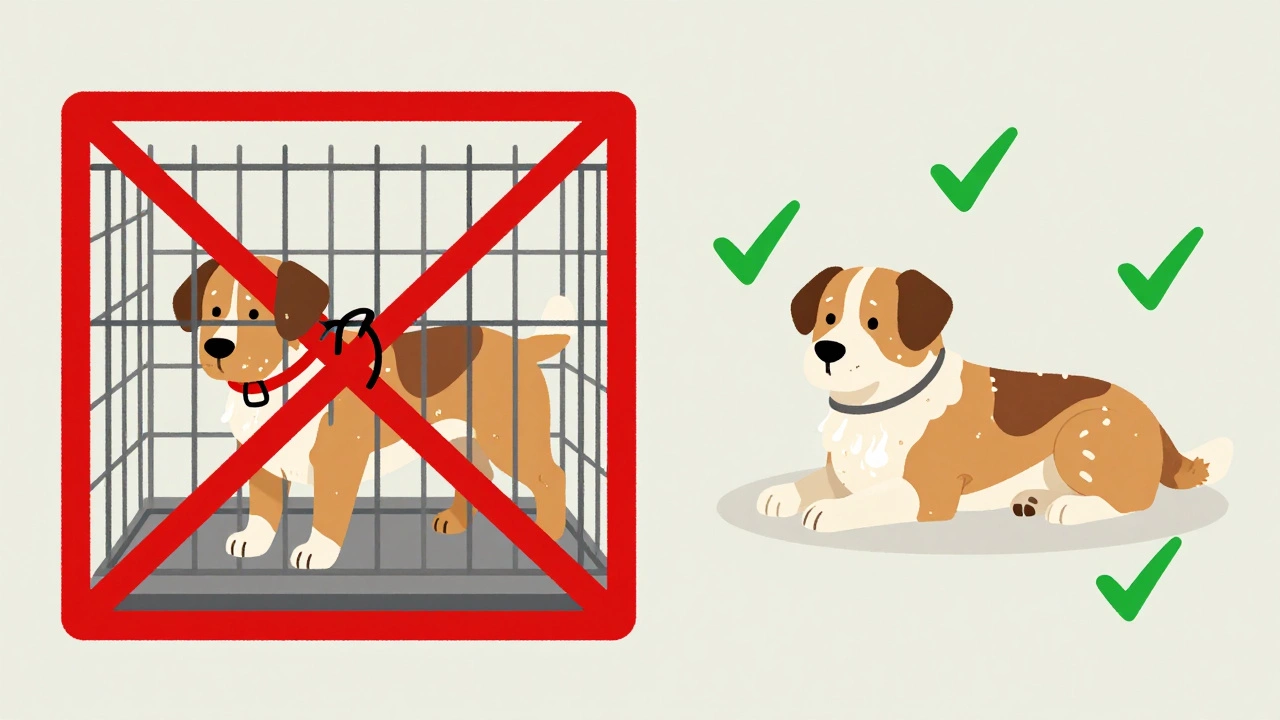
If you are wondering whether to leave your dog's collar on while they sleep or rest in a crate, the answer is almost always no. The primary reason is simple physics and panic behavior. When a dog feels trapped or anxious, their instinct is often to pull backward with significant force. A standard flat collar can easily snag on the metal bars of a wire crate, the latch mechanism, or even a raised bed inside the enclosure. This creates an immediate strangulation hazard that can result in severe injury or death within seconds.
This isn't just theoretical fear-mongering. Veterinary emergency rooms see these incidents regularly. A collar caught on a crate bar acts as a noose. As the dog struggles, the fabric or nylon tightens around the neck, cutting off airflow and blood flow to the brain. Even if the dog doesn't die, they can suffer from laryngeal damage, tracheal collapse, or permanent nerve damage. The risk simply outweighs any perceived benefit of keeping identification tags on during crating time.
Why Panic Makes Collars Dangerous
To understand why removing the collar is necessary, you have to look at how dogs behave under stress. Crate training is generally positive, but there are moments when a dog might feel overwhelmed. Maybe a loud noise startled them, perhaps they had an accident and feel shame, or maybe they are trying to escape because they need to relieve themselves. In these moments, rational thought goes out the window.
- The Backward Pull: Unlike humans who might try to push forward, dogs often brace their front paws and pull back with their hind legs. This generates immense torque on the neck.
- The Snag Point: Wire crates have vertical and horizontal bars. A buckle, a D-ring for leash attachment, or even a loose tag can catch on these intersections.
- The Tightening Loop: Most collars are not designed to release under tension. They are designed to stay on. Once caught, the loop shrinks rapidly.
Imagine wearing a necklace made of rope and running into a fence with holes in it. Now imagine that rope gets stuck and tightens every time you thrash. That is the reality for a panicked dog. The speed at which this happens is terrifyingly fast. You might be in the next room, and by the time you hear the frantic barking or scratching, the damage may already be done.
What About Breakaway Collars?
You might have heard of breakaway collars. These are special collars designed to pop open when a certain amount of pressure is applied. They are excellent for walks in crowded areas where a dog might get stepped on or tangled in debris. However, even breakaway collars are not foolproof in a crate setting.
While a breakaway collar reduces the risk of hanging, it does not eliminate the risk of entanglement. The collar could still get twisted around the dog's neck or caught in the crate hardware, causing discomfort or minor injuries. Furthermore, if the release mechanism fails due to dirt, wear, or manufacturing defect, you are left with the same dangerous scenario as a standard collar. For the confined space of a crate, the safest option is zero collar.
Identification Tags and Microchips
A common concern owners have is: "If I take the collar off, what happens if my dog escapes?" This is a valid worry, but it highlights a misunderstanding of how identification should work. Relying solely on a collar tag is risky because collars can break, slip off, or be removed by other animals.
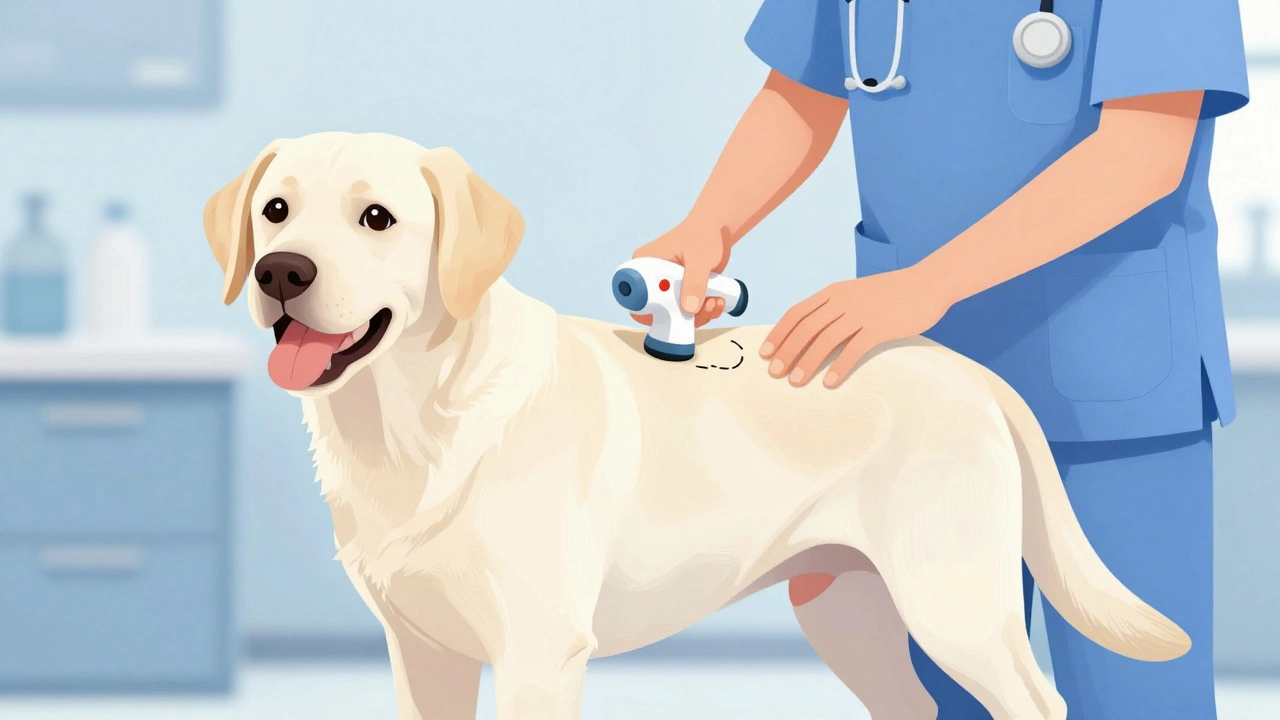
The gold standard for pet identification is a microchip. A microchip is implanted under the skin between the shoulder blades. It cannot be lost, stolen, or accidentally removed. If your dog somehow escapes the crate (which should be rare if the crate is properly sized and secured) and ends up outside, a veterinarian or shelter scanner can find the chip. Ensure your microchip registration information is up to date. This includes your current phone number and address. This single step provides far more security than a plastic tag on a nylon strap.
If you still want the peace of mind of a visible ID, consider a tattoo. While less common now, tattoos are permanent and visible without special equipment. However, microchipping remains the most reliable method globally recognized by shelters and veterinary clinics.
Alternatives to Traditional Collars
If you feel compelled to have something on your dog's neck for medical reasons or specific training cues, there are safer alternatives, though removal is still preferred.
| Item | Strangulation Risk | Snag Potential | Verdict for Crating |
|---|---|---|---|
| Standard Flat Collar | High | High | Remove Always |
| Breakaway Collar | Medium | Medium | Risky; Remove Preferred |
| Harness | Low | High | Remove to prevent tangling |
| No Collar | None | None | Safest Option |
Note that harnesses are also not safe for unsupervised crating. While they don't strangle the neck, the straps can twist around the dog's body or limbs, leading to restricted circulation or panic-induced bruising. The goal is a clean, unobstructed environment.
Crate Training Best Practices
Removing the collar is part of a broader strategy to make the crate a safe haven. Here is how to manage the transition safely:
- Establish a Routine: Put the collar on right before you open the crate door for exercise or play. Take it off immediately before closing the door. This creates a mental association: Collar = Adventure, No Collar = Rest.
- Check the Hardware: Ensure your crate latches securely. Double-latch systems are ideal. Check for sharp edges or protruding screws inside the crate that could injure your dog even without a collar.
- Size Matters: The crate should be large enough for the dog to stand, turn around, and lie down comfortably, but not so large that they can use one end as a bathroom and the other as a sleeping area. Proper sizing reduces anxiety.
- Positive Association: Feed meals in the crate. Toss high-value treats inside. Never use the crate as punishment. A dog that loves their crate will rarely panic, further reducing any residual risk.
Special Cases: Medical Collars and Cones
Some dogs require Elizabethan collars (cones) or soft recovery suits after surgery. These present different challenges. A hard plastic cone can get caught on crate bars, potentially injuring the dog's face or the crate itself. Soft cones are generally safer but can still cause distress if the dog bumps into walls repeatedly.
If your dog must wear a medical device, supervision is key. Do not leave a post-surgical dog alone in a crate with a cone for extended periods unless you have tested the setup thoroughly and ensured there are no snag points. Many vets recommend using a larger exercise pen or a puppy-proofed room instead of a crate for recovery patients to allow more movement and reduce the chance of getting stuck.
Frequently Asked Questions
Can I leave my dog's collar on overnight in the crate?
No, you should not leave your dog's collar on overnight. The risk of the collar snagging on the crate bars while the dog sleeps or moves restlessly is too high. Strangulation can occur silently in the dark. Remove the collar before closing the crate door every night.
Is a breakaway collar safe for crate use?
While breakaway collars are safer than standard collars because they release under pressure, they are not recommended for unsupervised crate time. They can still tangle around the dog's neck or get caught in the hardware, causing injury or panic. The safest choice is no collar at all.
How do I identify my dog if the collar is off?
The best way to identify your dog without a collar is through a microchip. Ensure your microchip registration details are current. You can also use a tattoo, though this is less common. Microchips are permanent and cannot be lost or removed accidentally.
What if my dog tries to bite the crate bars?
If your dog bites the bars, it is a sign of anxiety or frustration. Removing the collar prevents neck injury, but you should address the underlying behavior. Cover the crate with a blanket to reduce visual stimuli, ensure they have gone to the bathroom recently, and consult a trainer if the behavior persists. Never leave a collar on as a deterrent, as it poses a lethal risk.
Are harnesses safer than collars in crates?
Harnesses are not safer for unsupervised crate time. While they avoid neck strangulation, the straps can wrap around the dog's body, limbs, or head, leading to circulation issues or entanglement. Both collars and harnesses should be removed when the dog is crated alone.