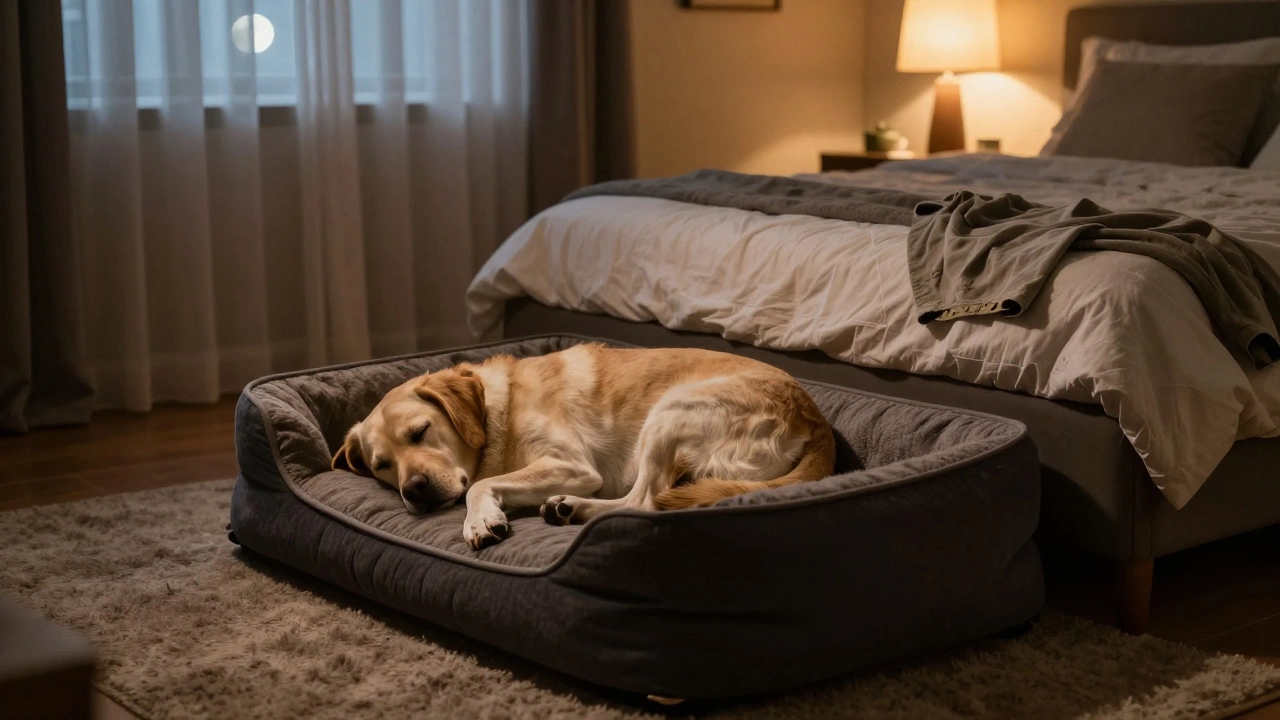
Where you place your dog’s bed isn’t just about space-it’s about trust, routine, and how your dog experiences the world. If you’re debating whether the dog bed belongs in the living room or the bedroom, you’re not alone. Most pet owners feel this tug-of-war: do you want your dog close at night, or do you want them out of the way during the day? The answer isn’t one-size-fits-all. But there are clear, practical reasons why one spot often works better than the other-and why sometimes, both are fine.
Why Your Dog’s Location Matters
Dogs don’t sleep just to rest. They sleep to feel safe. In the wild, pack animals choose sleeping spots based on warmth, security, and proximity to their group. Your dog sees you as their pack. Where you sleep, they want to be near. That’s why so many dogs circle before lying down, sniffing around until they find the perfect spot. It’s not random. It’s instinct.Placing the bed in the living room might seem like the obvious choice-it’s the heart of the home, where you spend most of your waking hours. But if you’re gone most of the day and your dog is left alone on the couch or floor, they’re not getting the comfort they need. A bed in the living room can work, but only if your dog has consistent access to you and isn’t left isolated for long stretches.
The Bedroom Advantage
Putting the dog bed in the bedroom gives your dog something they can’t get anywhere else: your presence while you sleep. Studies from the American Kennel Club show that dogs who sleep near their owners have lower stress levels and show fewer signs of separation anxiety. That’s not just anecdotal. It’s measurable. Dogs with access to their owner’s bedroom at night have lower cortisol levels-your body’s main stress hormone-compared to those kept in another room.Think about it: when you’re asleep, you’re still there. Your breathing, your heartbeat, your warmth-they’re all cues that say, “You’re safe.” For anxious dogs, rescue dogs, or older dogs with joint pain, that constant presence can make a huge difference. A dog bed next to your bed, even if it’s just a few feet away, gives them security without the mess of sharing your sheets.
Why the Living Room Isn’t Always the Best Fit
The living room might feel like the most logical spot. It’s open, it’s warm, and you’re usually there. But here’s the catch: most living rooms are high-traffic zones. Kids run through, the TV blares, the doorbell rings. For a dog with anxiety, noise sensitivity, or arthritis, that constant activity can be exhausting. They don’t need to be “part of the action.” They need quiet.Also, living rooms often have hard floors. Even the softest dog bed on tile or wood doesn’t compare to the cushioning of carpet or the warmth of a bedroom with closed doors. If your dog is older, has hip dysplasia, or just hates cold floors, the bedroom floor is a better surface. Plus, bedrooms are usually quieter at night. No footsteps, no vacuum cleaners, no guests dropping by.
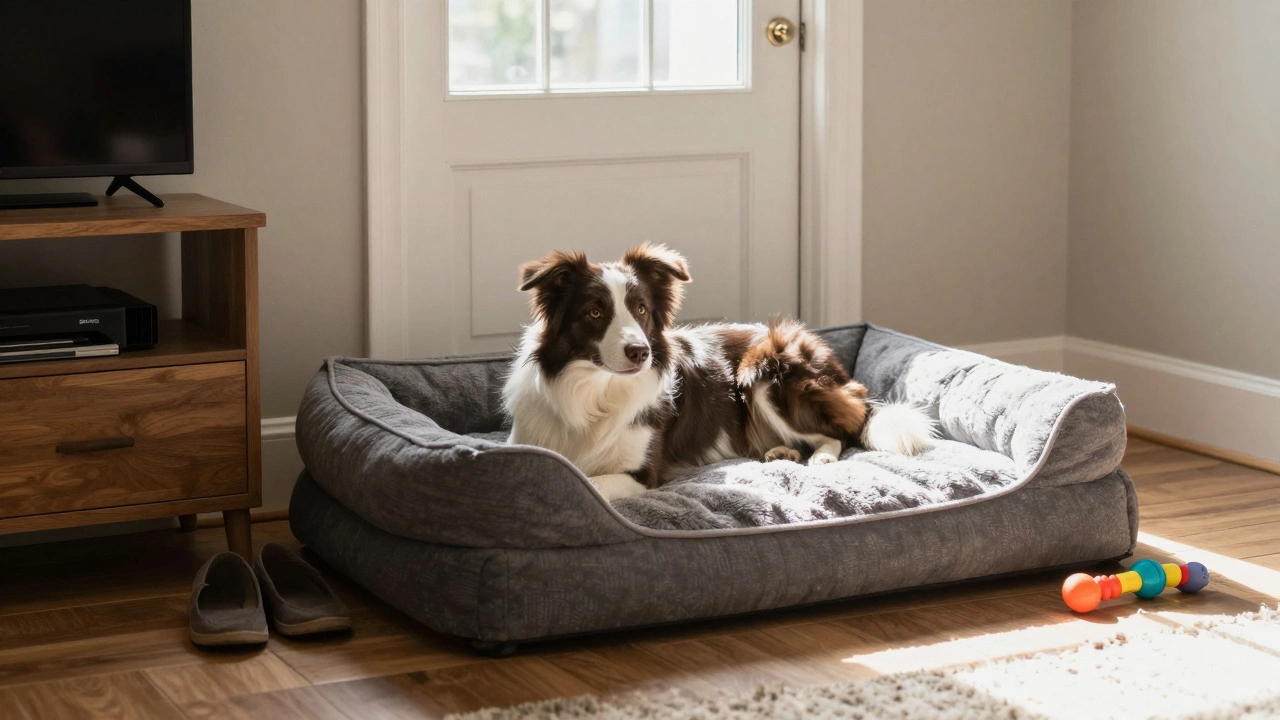
What About Dogs Who Like Both?
Some dogs do just fine with a bed in both places. That’s not a problem-it’s a bonus. Many owners keep a bed in the bedroom for nighttime and a second, smaller bed in the living room for daytime lounging. This gives your dog options. A dog who follows you from room to room will appreciate having a familiar spot wherever you are.Just make sure both beds are the same style and material. Dogs form attachments to texture and scent. If one bed is memory foam and the other is cheap polyester, they’ll notice. Stick to matching beds or even better, use the same bed and move it between rooms. That way, the scent stays consistent, and your dog doesn’t have to choose between two unfamiliar spots.
What If Your Dog Sleeps on the Floor?
Some dogs refuse beds altogether. They’d rather sleep on the tile, the rug, or right next to your leg. That’s normal. Dogs don’t always need a bed-they need a spot. If your dog chooses the floor in your bedroom, don’t force them onto a bed. Instead, put a washable mat or a low-profile pad where they already sleep. It’s easier to clean, keeps them off cold surfaces, and still gives them a defined space.Don’t assume your dog needs a fancy orthopedic bed just because you bought one. If they’re happy on the floor, that’s fine. But if they’re shifting positions every 20 minutes, whining, or avoiding their bed, that’s a sign they’re uncomfortable. Age, weight, and joint health all affect sleep quality. A dog with arthritis needs support. A young pup might just want to feel the floor.
How to Decide: A Simple Checklist
Ask yourself these five questions:- Does your dog get anxious when left alone? → Bedroom is better.
- Do they follow you everywhere, even to the bathroom? → They want to be near you. Bedroom wins.
- Is the living room loud, busy, or full of foot traffic? → Bedroom offers peace.
- Is your dog older, arthritic, or overweight? → A soft, supportive bed in a quiet room is essential.
- Do you sleep deeply and don’t want a dog on the bed? → A bed next to your bed, not on it, is the sweet spot.
If you answered yes to most of these, the bedroom is your best bet. If your dog is young, energetic, and loves being around people, a living room bed can work-but only if they’re not left alone for hours.

Common Mistakes to Avoid
Many owners make the same three errors:- Putting the bed in a drafty corner. Dogs need warmth. Avoid windows, doors, or near air vents.
- Choosing a bed that’s too big or too small. Your dog should be able to stretch out fully but not feel lost in it.
- Forgetting to wash the bed. Dog beds collect dander, dirt, and bacteria. Wash them every 1-2 weeks, especially if they’re in the bedroom where skin cells and hair build up.
Also, don’t assume your dog will love a bed just because you bought it. Let them explore it. Place a worn t-shirt with your scent on it. Toss a few treats inside. Be patient. It might take days for them to claim it as their own.
Real-Life Examples
I’ve seen a 14-year-old Labrador with hip arthritis sleep better after moving his bed from the living room to the bedroom. He used to wake up stiff and whine. After the change, he slept through the night. Another client had a rescue dog who cowered at night. She kept the bed in the living room, thinking it was more “normal.” The dog would hide under the couch. Once the bed moved to the bedroom, within three nights, she curled up beside the owner’s feet.It’s not about being possessive. It’s about giving your dog what their body and brain need: safety, warmth, and quiet.
Final Thought: It’s About Their Needs, Not Yours
You might prefer your dog out of the bedroom for cleanliness, allergies, or personal space. That’s valid. But if you’re choosing based on what’s easiest for you, not what’s best for them, you’re missing the point. Dogs don’t care about tidy rooms. They care about feeling secure.If you can’t have the bed in the bedroom, make the living room as calm as possible. Use a white noise machine. Block drafts. Choose a bed with high sides for comfort. Put it in a quiet corner, away from the TV and front door. Give them a routine: “Bedtime” means quiet time, not playtime.
Your dog’s bed isn’t furniture. It’s their sanctuary. Where you place it tells them: “You’re safe here.”
Can I put my dog’s bed on the couch?
It’s okay occasionally, but not as a permanent solution. Couches don’t provide the same support as a proper dog bed, and your dog may develop joint issues over time. Plus, fur and dirt build up quickly on fabric. If you let them on the couch, use a washable cover and clean it weekly. But for daily sleep, a dedicated bed on the floor is better.
What if I have multiple dogs?
Each dog should have their own bed, even if they sleep together. Dogs can be territorial about their space, even with siblings. Place beds at least a few feet apart to avoid conflict. If space is tight, put one in the bedroom and the other in a quiet corner of the living room. Make sure each bed is large enough for them to stretch out fully.
Is it bad if my dog sleeps in the kitchen?
The kitchen isn’t ideal. It’s often cold, noisy (appliances), and has food smells that can trigger begging or anxiety. If your dog prefers it, check if they’re avoiding other areas because they’re too drafty or loud. Move the bed to a warmer, quieter spot. If they’re sleeping in the kitchen because it’s the only quiet place, fix the issue elsewhere instead of letting them stay there.
How do I know if my dog’s bed is the right size?
Measure your dog from nose to tail while they’re lying down in their favorite sleeping position. Add 6-12 inches for stretching room. If they’re curled up tightly, the bed is too small. If they’re hanging off the edges, it’s too big. A good bed lets them lie flat, stretch out, and turn around easily without feeling cramped or lost.
Should I use a heated dog bed in winter?
Only if your dog is elderly, thin, or has health issues like arthritis. Healthy adult dogs regulate their body temperature fine. Heated beds can be dangerous if they overheat or if your dog chews the wires. If you use one, choose a low-wattage, chew-resistant model and never leave it on unattended. Most dogs prefer a thick, insulated bed over heat.