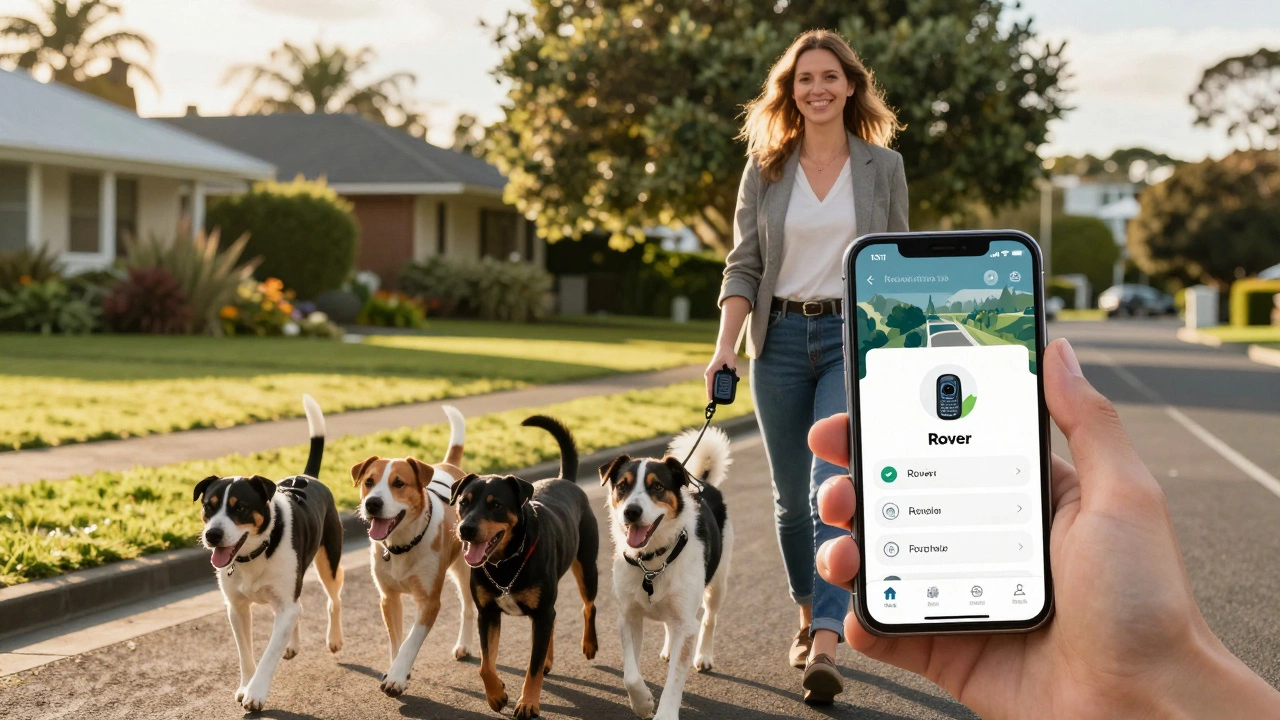
Dog Walking Earnings Calculator
Calculate Your Earnings
Results
Rover
30-min walks:
60-min walks:
Total:
Wag
30-min walks:
60-min walks:
Total:
Based on New Zealand rates:
Rover: $22 per 30-min walk, $30 per 60-min walk (after 20% fee)
Wag: $17 per 30-min walk, $25 per 60-min walk (after 40% fee)
If you’re thinking about becoming a dog walker, you’ve probably heard of Rover and Wag. Both apps connect pet owners with walkers in their area, but they’re not the same when it comes to pay, flexibility, or how they treat their walkers. So which one’s actually better to work for? It depends on what you need right now - money, control, or peace of mind.
Pay: Rover Pays More, Wag Pays Less - But With a Catch
Rover lets you set your own rates. You decide how much to charge per walk, based on your experience, location, and how long the walk is. In Auckland, most walkers charge between $18 and $25 for a 30-minute walk. Some experienced walkers with great reviews charge $30 or more. You keep 100% of what you earn, minus a 20% service fee.
Wag, on the other hand, pays fixed rates set by the company. In New Zealand, you’ll typically earn $17 for a 30-minute walk and $25 for a 60-minute walk. That’s it. No negotiation. No bonus for walking five dogs in a row. You get what Wag says you get - even if the owner leaves a $10 tip, you don’t see it. The company takes 40% of every booking.
Let’s say you walk three dogs for 30 minutes each in one afternoon. On Rover, you could make $75 total. On Wag, you’d make $51. That’s a $24 difference - just from pay structure alone.
Flexibility: Rover Gives You Control, Wag Gives You Schedules
Rover is built like a marketplace. You log in, see what walks are available in your area, and pick the ones you want. You can say no to a job if it’s too far, too early, or if the dog seems too energetic for you. You can take a day off without asking anyone. You control your calendar.
Wag works differently. You get push notifications when a walk is requested near you. If you don’t accept it within 10 seconds, it goes to someone else. There’s no preview of the dog, no chance to see the owner’s reviews before accepting. You’re basically racing against other walkers to grab the next job. And if you decline too many, the app might stop sending you requests.
One walker in Wellington told me she used to make $400 a week on Wag. Then she declined three walks in a row because they were too far apart. Two weeks later, she was getting zero requests. She switched to Rover and now books walks on her own terms.
Background Checks and Safety: Rover Is More Transparent
Both companies run background checks. But Rover shows you the owner’s profile before you accept a job. You can see their reviews, how many dogs they’ve walked, and if they’ve had any complaints. You can even message them to ask questions.
Wag doesn’t show you the owner’s profile until after you’ve accepted the walk. You might show up to a house and realize the dog has a history of aggression, or the owner has no fence, or the walk is in a sketchy neighborhood - and you’re already committed. There’s no way to opt out without losing your spot in the queue.
Also, Rover gives you a free GPS tracker with every booking. Wag charges you $10 a month for the same device. If you walk 15 dogs a week, that’s $40 a month just to track your route. Rover includes it. Wag makes you pay for it.

Support and Disputes: Rover Is Fairer
What happens if an owner says you didn’t walk their dog long enough? Or claims you didn’t clean up after them? On Rover, you get to see the owner’s message, your walk log with GPS time and distance, and your own notes. You can upload photos of the dog before and after. The dispute team reviews both sides and usually sides with the walker if there’s proof.
On Wag, the system automatically sides with the owner 80% of the time. Walkers report being charged for “no-shows” even when they were stuck in traffic. Or having payments withheld because the owner said the dog was “too tired.” There’s no way to appeal. You just lose the money.
One walker in Christchurch had $120 taken from her account after an owner complained she didn’t walk their poodle “long enough.” She had GPS logs showing 32 minutes of walking. Wag refused to refund her. She left the app after that.
Community and Growth: Rover Feels Like a Job, Wag Feels Like a Gig
Rover lets you build a profile. You can upload photos of your walks, write a bio, list your certifications (like pet first aid), and even offer pet sitting or dog boarding. Many walkers on Rover have turned it into a small business - they have repeat clients, referrals, and even a website linked to their profile.
Wag doesn’t let you do any of that. You’re just a number. You can’t message owners. You can’t build a reputation beyond your star rating. You’re replaceable. If you’re good, you might get more walks. But you’ll never own your client base.
One walker in Dunedin started on Wag. After six months, she had 15 regular clients. But she couldn’t contact them directly. So she created a Rover profile, posted her old clients’ contact info (with permission), and moved them over. Now she earns twice as much - and she owns the relationships.
Who Should Use Rover?
- You want to earn more per walk
- You like choosing your own schedule
- You want to build a reputation and repeat clients
- You care about safety and transparency
- You’re willing to put in a little effort to grow your business
Who Should Use Wag?
- You need walk requests to come to you automatically
- You don’t want to manage your own pricing or marketing
- You’re okay with lower pay and less control
- You’re looking for a side hustle, not a long-term income source
Wag might feel easier at first - you don’t have to think about pricing, profiles, or outreach. But if you walk dogs regularly, you’ll quickly realize you’re working harder for less. Rover takes more effort upfront, but it pays off.
Bottom Line: Rover Wins for Serious Walkers
If you’re serious about making money as a dog walker - not just earning a few extra bucks on weekends - Rover is the clear choice. You earn more, you control your time, you stay safer, and you build something that lasts.
Wag is fine if you just want to walk one dog a week for pocket money. But if you’re thinking about walking five or more dogs a week, or turning this into a steady income, Rover gives you the tools to grow. And in 2025, that’s what matters.
Can I use both Rover and Wag at the same time?
Yes, many walkers use both apps. But it’s not always smart. Wag’s push notifications can interfere with your schedule if you’re already booked on Rover. Also, if you’re walking the same dog on both apps, you risk getting flagged for double-booking. Most experienced walkers stick to one platform to avoid confusion and keep their ratings clean.
Do I need a license to walk dogs in New Zealand?
No, you don’t need a government license to walk dogs in New Zealand. But some cities, like Auckland and Wellington, require you to register as a pet service provider if you’re operating as a business. Check with your local council. Also, many dog owners prefer walkers with pet first aid certification - it’s not required, but it boosts your profile and trust level.
What if a dog I’m walking gets sick or injured?
Both Rover and Wag offer limited liability insurance. Rover covers up to $1 million in damages if a dog gets hurt while under your care. Wag’s insurance is similar but harder to claim. Always carry a pet first aid kit. Take photos of the dog before and after walks. And never hesitate to call the owner if something seems off - better safe than sorry.
How do I get more walks on Rover?
Start with your profile. Add clear photos of you with dogs. Write a friendly bio that mentions your experience. Get your first few walks done quickly - even if you offer a discount. Ask happy clients to leave reviews. After 5-10 reviews, your profile will start showing up higher in searches. Walk in high-demand areas like Ponsonby, Newmarket, or Takapuna. And always be on time - punctuality is the #1 thing owners notice.
Is dog walking worth it as a full-time job?
It can be. In Auckland, a full-time walker doing 5-7 walks a day, 5 days a week, can make $700-$900 a week on Rover. That’s $35,000-$45,000 a year before expenses. Add pet sitting or grooming services, and you can hit $60,000. It’s not easy - you’re on your feet all day, dealing with weather, difficult dogs, and last-minute cancellations. But if you’re organized and consistent, it’s a real job.