Dog Shock Collar Impact Assessment Tool
This assessment helps you recognize signs of fear or trauma in your dog from shock collar use. Answer the questions below to understand your dog's stress levels and get specific steps to rebuild trust and safety.
Your Dog's Stress Assessment
0 out of 6 signs detected
Recommended Next Steps
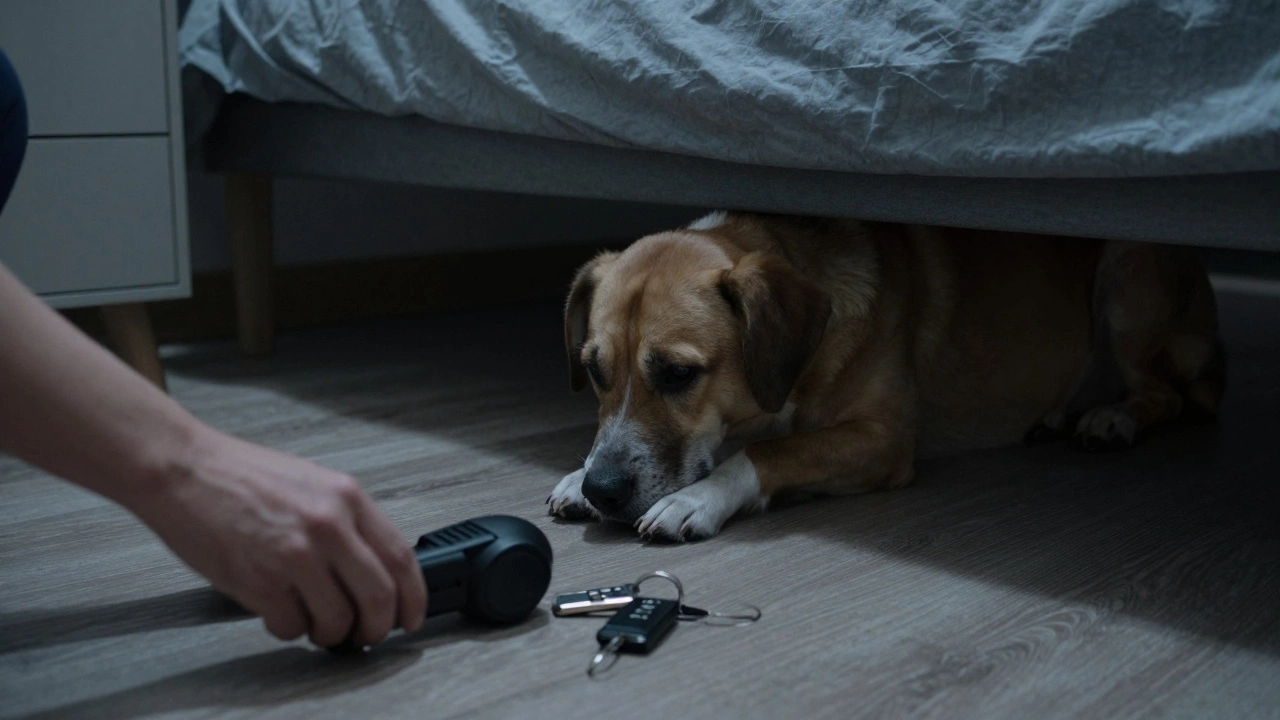
Using a shock collar on a dog isn’t just controversial-it’s a decision that can permanently change how your dog sees the world. You might think it’s a quick fix for barking, pulling, or not coming when called. But what happens when the shock stops being a warning and becomes a punishment? What happens when your dog starts flinching at the sound of a car door, or hides under the bed every time you reach for your keys? These aren’t hypotheticals. These are real reactions from dogs trained with shock collars, documented by veterinarians, behaviorists, and pet owners who later regretted the choice.
How Shock Collars Actually Work
Shock collars, also called electronic or e-collars, deliver an electric pulse to a dog’s neck through two metal contacts. The intensity can range from a mild tingle to a painful jolt. Some models have vibration or tone settings, but the shock function is what makes them dangerous. Manufacturers claim these devices work by "correcting" unwanted behavior. But behavior science doesn’t support that. What they’re really doing is creating fear.
When a dog gets shocked for pulling on the leash, it doesn’t learn to walk nicely. It learns that the leash equals pain. That’s why so many dogs who’ve worn shock collars become leash-reactive, aggressive toward other dogs, or even afraid of their own owners. The dog isn’t choosing better behavior-they’re choosing survival.
The Science Says It’s Harmful
In 2020, a major study published in the Journal of Veterinary Behavior compared dogs trained with shock collars to those trained with positive reinforcement. The dogs using shock collars showed significantly higher levels of stress hormones, panting, yawning, and lip-licking-all classic signs of anxiety. Even more telling: the dogs trained with shock collars were less likely to make eye contact with their owners after training. Eye contact is a sign of trust. When that disappears, the bond breaks.
A 2022 review by the British Veterinary Association looked at over 70 studies and concluded that electronic collars pose a clear risk to dog welfare. They found no evidence that shock collars are more effective than reward-based methods. In fact, they found the opposite: dogs trained with rewards learned faster, retained behaviors longer, and showed fewer signs of fear.
It’s Not Just About Pain-It’s About Trust
Think about how you’d feel if every time you made a mistake at work, someone gave you a sudden electric shock. Not a warning. Not a loud noise. A shock. Now imagine you don’t understand why it happened. That’s what your dog experiences. They don’t know that "barking at the mailman" is the trigger. They just know that every time they look toward the window, something painful happens. So they stop looking. They stop exploring. They stop being a dog.
Positive training doesn’t mean letting your dog run wild. It means teaching them what to do instead. If your dog pulls on the leash, you use a front-clip harness and reward them for walking beside you. If they bark at strangers, you teach them to look at you instead-and then give them a treat. It takes patience. But the results last. And your dog doesn’t live in fear.

What Happens When Shock Collars Don’t Work?
Shock collars often seem to work-at first. The dog stops barking. The dog stops running off. But that’s because they’re terrified. Once the collar comes off, the behavior often comes back. Worse, it can get worse. Dogs start associating the shock with people, places, or other animals. A dog shocked for barking at a delivery person might start growling at anyone in a uniform. A dog shocked for jumping might become anxious around children.
One dog owner in Wellington told me her Labrador, Max, stopped responding to her voice after three months of shock collar use. He’d sit perfectly still when she gave a command-if she was holding the remote. But if she called him without it, he’d ignore her. He didn’t trust her anymore. She switched to positive training. It took six weeks. But now Max comes running every time she calls-even when she’s not holding anything.
Legal and Ethical Standards Are Changing
Shock collars are banned in over 20 countries, including the UK, Germany, Sweden, Austria, and New Zealand. In New Zealand, the Animal Welfare Act 2015 makes it illegal to use an electronic collar that delivers a shock for training purposes. Fines can reach up to $15,000. Even in places where it’s still legal, veterinary associations and professional dog trainers overwhelmingly oppose them.
The RSPCA, the American Veterinary Society of Animal Behavior, and the Association of Professional Dog Trainers all agree: shock collars are not a first-line training tool. They’re a last-resort option for extreme cases-and even then, only under strict veterinary supervision. Most trainers never use them at all.
What Are the Alternatives?
There are better, safer, and more effective ways to train a dog:
- Front-clip harnesses redirect pulling without choking or shocking.
- Clicker training uses a small sound to mark good behavior, followed by a treat. It’s fast, precise, and builds confidence.
- Positive reinforcement rewards calm, desired behaviors. Dogs learn to repeat what gets them treats, praise, or play.
- Professional trainers who use force-free methods can help with stubborn behaviors like aggression, reactivity, or separation anxiety.
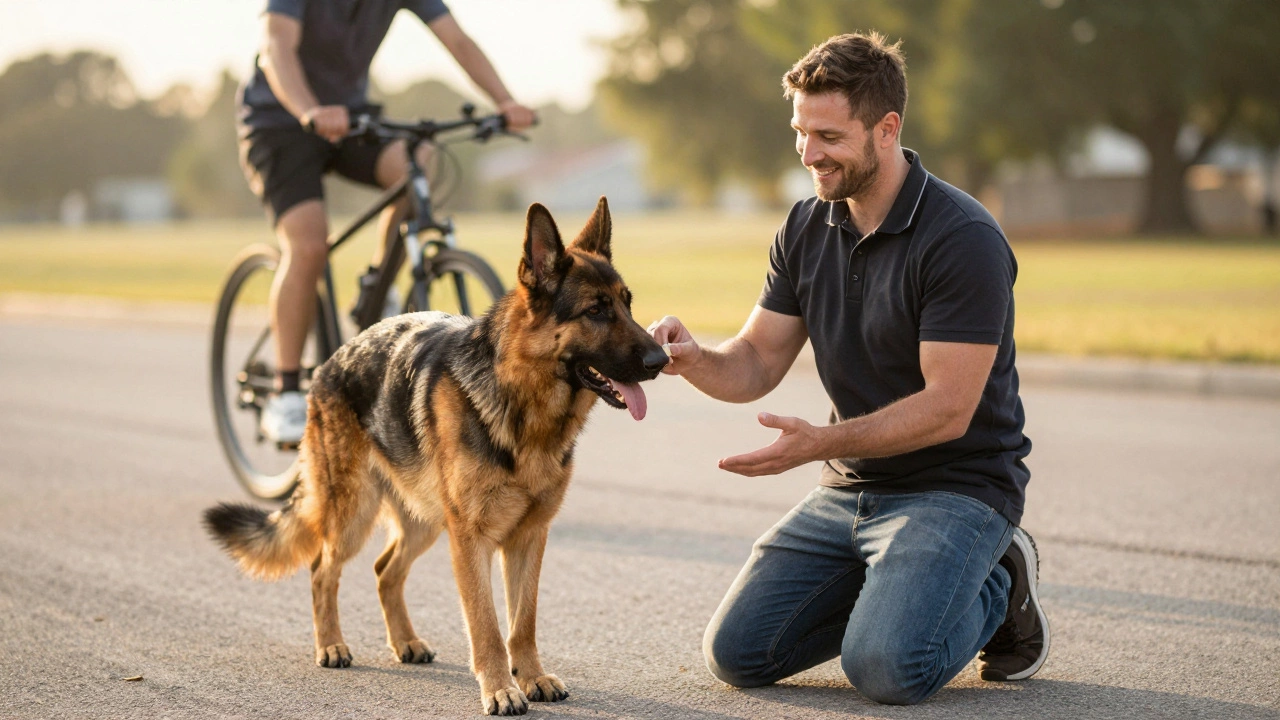
One client in Auckland had a German Shepherd who lunged at bikes. She tried a shock collar. It made him worse. She switched to a professional trainer who used desensitization and reward-based techniques. In eight weeks, the dog could walk calmly past cyclists. No shocks. No fear. Just a dog who learned a new way to respond.
When People Justify Shock Collars
You’ll hear reasons like: "My dog won’t listen any other way," or "It’s just a little zap," or "My neighbor uses one and their dog is perfect." But those are myths. Dogs don’t need pain to learn. They need clarity, consistency, and motivation.
There’s also the myth that shock collars are "necessary" for hunting or working dogs. But professional hunting trainers in Canada and the U.S. now use remote vibration collars or long-line training-not shocks. The American Kennel Club doesn’t endorse shock collars for any breed or purpose.
If your dog is out of control, it’s not because they’re "bad." It’s because they haven’t been taught how to behave in a way they understand. That’s not their fault. It’s a training gap. And gaps can be filled-with patience, not pain.
What to Do If You’ve Already Used a Shock Collar
If you’ve used a shock collar on your dog and now see signs of fear-cowering, tail-tucking, avoidance, or sudden aggression-you’re not alone. And it’s not too late to fix it.
Stop using the collar immediately. Then, find a certified force-free trainer. Look for someone with credentials like CPDT-KA or IAABC. Avoid trainers who say things like "dominance" or "alpha"-those are outdated and harmful ideas.
Rebuilding trust takes time. Start with short, positive sessions. Give treats for looking at you. Give treats for sitting calmly. Give treats for just breathing. Slowly, your dog will learn that you’re not a source of pain. You’re a source of safety.
One woman in Christchurch told me her dog, Luna, wouldn’t go near her for three months after the shock collar was used. She started giving Luna a treat every time she walked into the room-even if Luna didn’t come to her. After six weeks, Luna started wagging her tail. After three months, she slept on the bed again. It wasn’t magic. It was consistency. And kindness.
Final Thought: Dogs Don’t Need to Be Controlled. They Need to Be Understood.
A shock collar doesn’t teach a dog how to behave. It teaches them to be afraid. And fear doesn’t create obedience. It creates silence. And silence can hide deep wounds.
There’s a better way. One that builds trust. One that strengthens your bond. One that lets your dog be a dog-curious, playful, and safe. You don’t need to hurt your dog to love them. You just need to listen to them.