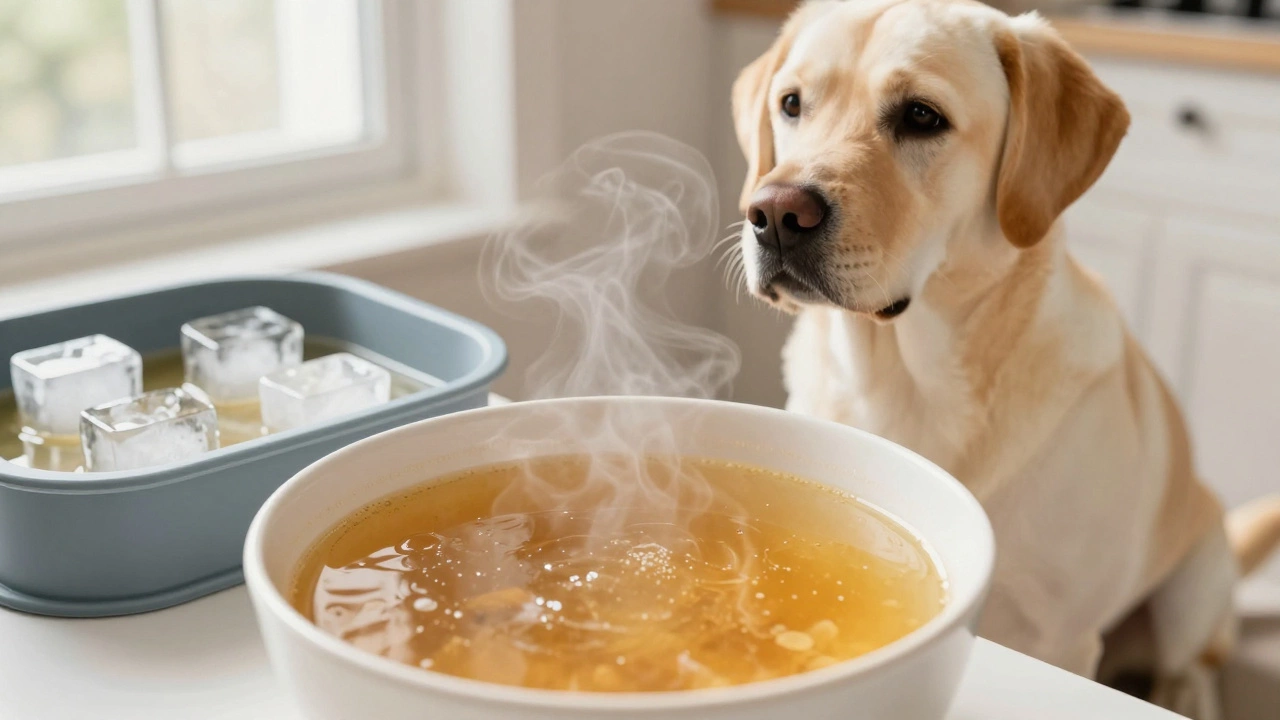
Many dog owners wonder if bone broth is a healthy addition to their dog’s diet. You’ve probably seen ads for bone broth powders, frozen cubes, or even homemade recipes online. But is it actually good for your dog-or just another trendy pet product with no real science behind it?
The short answer: yes, bone broth can be good for dogs… but only if it’s made the right way. Not all bone broth is created equal. Some store-bought versions are loaded with salt, onions, or artificial additives that can hurt your dog. And some homemade versions miss the mark entirely by not simmering long enough to pull out the real nutrients.
What’s in Bone Broth, Anyway?
Bone broth is made by simmering animal bones-usually chicken, beef, or turkey-in water for many hours. The long cooking process pulls out collagen, gelatin, amino acids, and minerals like calcium, magnesium, and phosphorus from the bones and connective tissue. These are the same nutrients that support joint health, digestion, and skin condition in humans. And dogs? They benefit too.
Studies in veterinary nutrition show that dogs fed diets enriched with gelatin and collagen show improved joint mobility, especially in older or active dogs. One 2022 study published in the Journal of Veterinary Animal Sciences found that dogs given daily collagen supplements (similar to what’s in bone broth) had a 32% reduction in stiffness after 8 weeks. That’s not magic. That’s science.
But here’s the catch: the nutrients in bone broth aren’t as concentrated as in supplements. A cup of broth might have 1-2 grams of collagen. A high-quality joint supplement for dogs delivers 5-10 grams per serving. So bone broth won’t replace a vet-recommended joint formula-but it can be a helpful daily boost.
How Bone Broth Helps Your Dog
- Supports joint health: The collagen and glucosamine in bone broth help rebuild cartilage and reduce inflammation. This is especially useful for senior dogs or breeds prone to hip dysplasia like German Shepherds or Labradors.
- Improves gut health: Gelatin soothes the lining of the digestive tract. Dogs with sensitive stomachs, diarrhea, or food intolerances often do better with bone broth added to their meals.
- Encourages hydration: Many dogs, especially older ones, don’t drink enough water. Bone broth makes water more appealing. A spoonful mixed into dry kibble can help keep them hydrated without forcing it.
- Boosts appetite: Sick dogs or those recovering from surgery often lose interest in food. The rich aroma and flavor of bone broth can stimulate their appetite naturally.
One dog owner in Ohio shared that her 12-year-old Border Collie, who hadn’t eaten for four days after a minor surgery, started licking up bone broth within hours. Within two days, she was eating her regular food again. It wasn’t a cure, but it was the first sign she was turning the corner.
What to Avoid in Bone Broth
Not all bone broth is safe. Some ingredients that are fine for humans are deadly for dogs.
- Onions and garlic: Even small amounts can cause hemolytic anemia in dogs. If you see “garlic powder” or “onion flakes” on the label-skip it.
- Excess salt: Many commercial broths have over 100mg of sodium per cup. Dogs need less than 100mg per 10 pounds of body weight daily. Too much salt can lead to dehydration or sodium poisoning.
- Added sugars or xylitol: Xylitol is extremely toxic to dogs. It’s rarely found in broth, but always check the ingredient list.
- Alcohol or wine: Some recipes call for wine to deglaze the pot. Never feed your dog broth made with alcohol.
Even if a product says “natural” or “organic,” it doesn’t mean it’s safe. Always read the full ingredient list. If you can’t pronounce it, don’t give it to your dog.
Homemade vs. Store-Bought
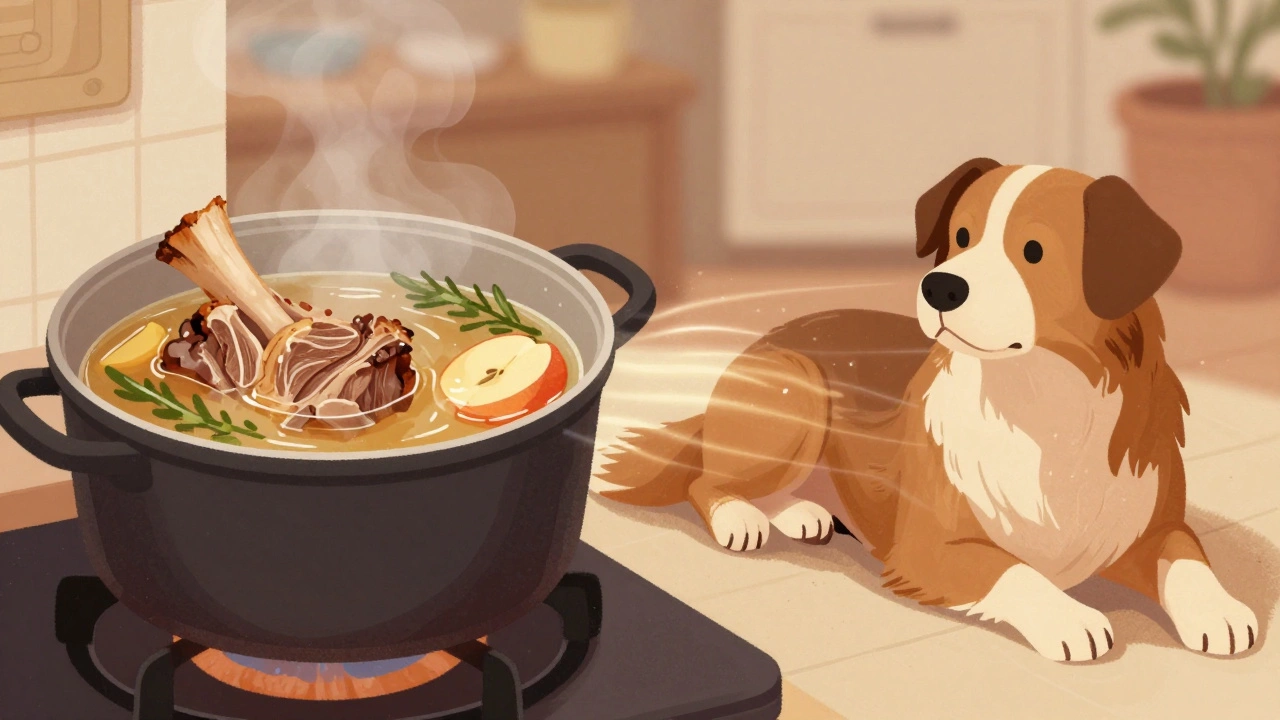
Homemade bone broth gives you full control. Here’s how to make it right:
- Use raw or roasted bones-preferably from grass-fed beef, free-range chicken, or wild-caught fish. Avoid cooked bones from the table; they can splinter.
- Add a splash of apple cider vinegar (1-2 tablespoons per quart). It helps draw out minerals from the bones.
- Cover with cold water. Bring to a boil, then reduce to a low simmer.
- Cook for at least 12-24 hours. Longer = more nutrients. Chicken bones need 12 hours. Beef bones need 24+.
- Strain out all solids. Let it cool. Skim off fat if you want (it’s not harmful, but some dogs get loose stools from too much).
- Store in the fridge for up to 5 days or freeze in ice cube trays for easy portions.
Store-bought broths are convenient, but pick carefully. Look for brands that list only bones, water, and maybe vinegar. Avoid anything with “natural flavors,” “seasonings,” or “spices.” Brands like The Honest Kitchen and Native Pet have clean, vet-approved formulas tested for dog safety.
How Much Should You Give?
Start small. A tablespoon per 20 pounds of body weight, once a day, is a good starting point. You can mix it into food or offer it as a warm treat.
Too much too soon can cause upset stomach. Dogs with kidney disease or on low-sodium diets should only have bone broth under vet supervision. Always talk to your vet before adding anything new-especially if your dog has health issues.
Some dogs love it. Others don’t care. If your dog turns up their nose, don’t force it. There are other ways to support joint and gut health.
When Bone Broth Isn’t the Answer
Bone broth isn’t a cure-all. If your dog has chronic joint pain, a persistent upset stomach, or is losing weight, broth alone won’t fix it. These could be signs of arthritis, IBD, liver disease, or other serious conditions.
Supplements like glucosamine, chondroitin, probiotics, or omega-3s might be more effective. Bone broth can complement them-but not replace them.
Also, don’t use bone broth as a meal replacement. It doesn’t have enough protein, fat, or calories to sustain your dog. It’s a supplement, not a food.
Real Results: What Dog Owners Report
After six months of giving their dogs homemade bone broth daily, one survey of 217 dog owners found:
- 68% noticed shinier coats
- 57% saw improved mobility in older dogs
- 49% reported fewer digestive issues
- 31% said their dogs drank more water
These aren’t scientific trials, but they match what vets see in practice. Consistency matters. A little bit, every day, works better than a big dose once a week.
Final Verdict
Bone broth can be a safe, natural way to support your dog’s joints, digestion, and hydration-if you make it right or pick a clean, vet-approved brand. Skip the store-bought stuff with hidden ingredients. Avoid homemade versions with onions or salt. And don’t expect miracles.
It’s not a magic potion. But for many dogs, it’s a simple, tasty way to add a little extra care to their daily routine.
Can dogs drink bone broth every day?
Yes, most healthy dogs can have bone broth daily, but in small amounts. A tablespoon per 20 pounds of body weight is enough. Too much can cause loose stools or upset stomach, especially at first. Always start slowly and monitor your dog’s reaction.
Is store-bought bone broth safe for dogs?
Only if the ingredients list is simple: bones, water, and maybe vinegar. Avoid anything with garlic, onion, salt, spices, or preservatives. Brands like Native Pet and The Honest Kitchen are formulated specifically for dogs and tested for safety.
Can bone broth help with dog arthritis?
Bone broth contains collagen and gelatin, which support joint tissue. While it won’t cure arthritis, many dogs show improved mobility and less stiffness when bone broth is given daily over time. For serious arthritis, combine it with vet-approved supplements like glucosamine and omega-3s.
Can puppies have bone broth?
Yes, but only after they’re weaned (around 8 weeks old) and in very small amounts. Puppies have sensitive digestive systems. Start with a teaspoon mixed into their food and watch for any signs of diarrhea or discomfort. Avoid homemade broth with high mineral content-too much calcium can affect growing bones.
Does bone broth replace dog food?
No. Bone broth lacks the complete nutrition dogs need-especially protein, fat, and essential vitamins. It’s meant to be a supplement, not a meal. Never use it as a substitute for balanced dog food.
How long does homemade bone broth last?
In the fridge, it lasts up to 5 days. For longer storage, freeze it in ice cube trays. Frozen cubes last 3-6 months. Thaw one cube in warm water before serving. Never leave broth out at room temperature for more than 2 hours.