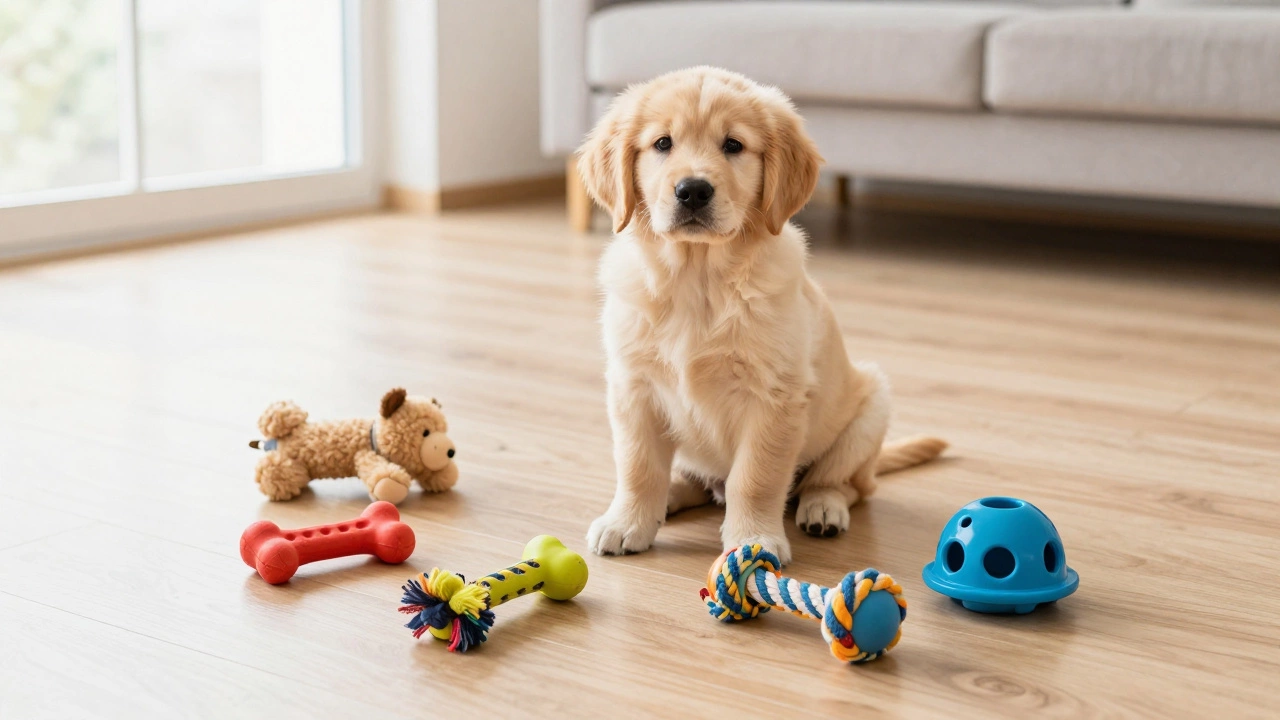
Puppy Toy Starter Kit Builder
Select Your Puppy's Toys
Choose from each category to build a balanced starter kit. Click on toys to add them to your kit.
Your Custom Puppy Starter Kit
Kit Analysis
Don't give your puppy all these toys at once! Keep 3-4 out at any time and rotate the rest every 3-7 days. This keeps toys feeling "new" and extends their lifespan significantly.
Imagine walking into a pet store with your brand-new puppy. The aisle is endless. Plush squeakers, rubber chew bones, rope knots, and interactive puzzles stare back at you. It’s overwhelming. You want to give your pup the best start, but buying twenty toys at once feels like overkill-and maybe even a mistake.
You don’t need a warehouse of gadgets. In fact, too many choices can confuse a young dog. So, how many toys should a new puppy actually start with? The sweet spot is usually between 5 and 7 high-quality toys. This number provides enough variety to keep them engaged without causing decision paralysis or resource guarding.
The Psychology of Choice: Why Less Is More
Dogs are creatures of habit, but puppies are also easily distracted. When you dump a bag of ten different toys on the floor, you aren't offering freedom; you're creating chaos. A puppy might pick one, ignore it for five minutes, then switch to another because the novelty wears off instantly. This rapid switching prevents deep, satisfying play sessions.
Think about your own life. If you had fifty books on your nightstand, would you read any of them deeply? Probably not. You’d skim covers and feel overwhelmed. Puppies work similarly. A curated selection helps them bond with specific items. They learn which toy is for chewing, which is for cuddling, and which is for fetching. This clarity builds confidence and reduces anxiety during playtime.
Furthermore, limiting the number of available toys makes each one more valuable. When a puppy knows that only three toys are "out" at any given time, they tend to engage more intensely with those items. This focused play is better for their mental stimulation than scattered, shallow interactions with a dozen half-interesting objects.
The Essential Toy Rotation System
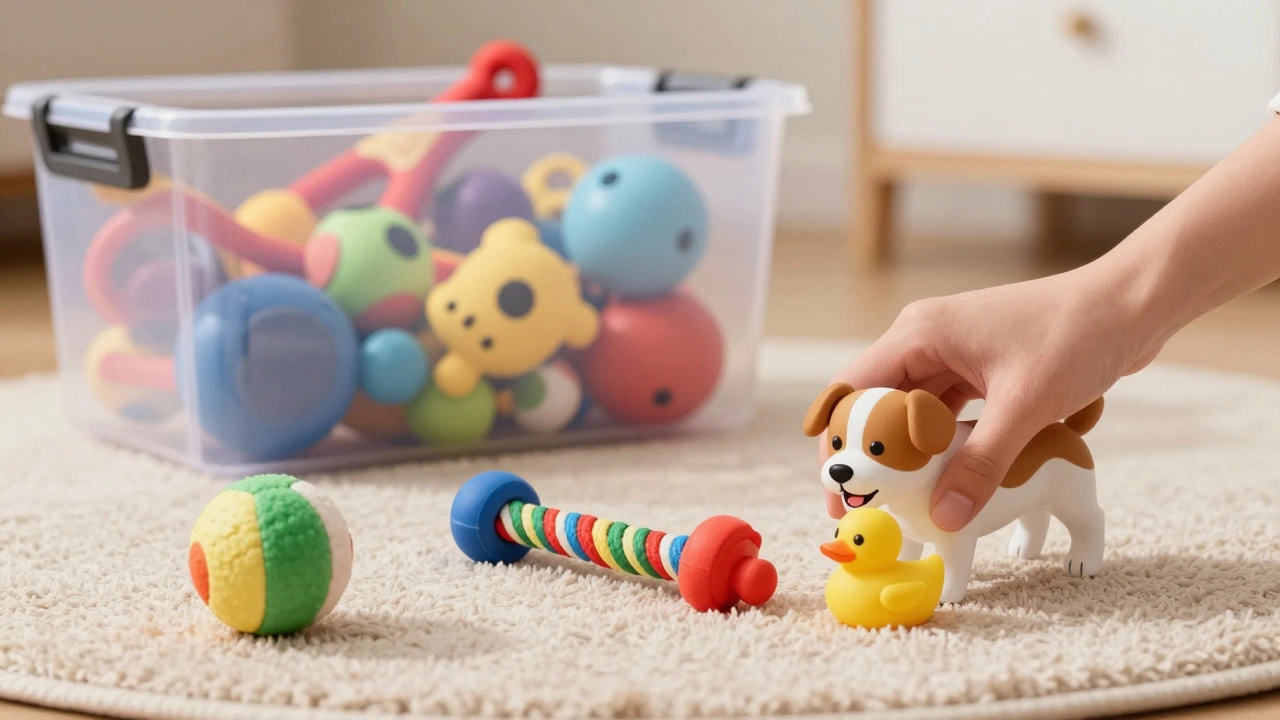
Here is where the magic happens. You buy seven toys, but you only put three or four out at a time. Keep the rest in a closet or a bin under the stairs. Every few days, swap them out. Take the current favorites away and bring out the stored ones.
To the puppy, these "old" toys suddenly look brand new. The smell has faded, the texture feels different after being stored, and the excitement of seeing a familiar object reappear triggers fresh interest. This simple trick extends the lifespan of your purchases significantly. Instead of destroying one plush toy in an hour, your puppy will cycle through their collection for months.
Rotation also helps you identify your puppy’s preferences. Does he love the squeak of the duck but ignore the rope? Do they prefer soft textures over hard rubber? By rotating, you gather data on what truly engages your dog. This insight saves you money later when you need to replace worn-out items. You won’t be guessing; you’ll know exactly what works.
| Factor | Toy Rotation (3-4 out) | All Toys Available (10+) |
|---|---|---|
| Engagement Level | High, focused play | Low, distracted switching |
| Resource Guarding Risk | Lower (clear ownership) | Higher (competition for space) |
| Toy Lifespan | Extended (months) | Shortened (days/weeks) |
| Mental Stimulation | Novelty effect resets interest | Boredom sets in quickly |
Curating Your First 5-7 Toys: The Mix Matters
Getting the right mix is just as important as the quantity. A puppy needs different tools for different jobs. Teething hurts, boredom kills, and separation anxiety is real. Your starter kit should address all three. Here is a breakdown of the types of toys you should include in your initial purchase.
- Two Durable Chew Toys: Puppies go through intense teething phases. They need something tough to gnaw on that won’t shatter into dangerous shards. Look for natural rubber or dense nylon. Avoid anything small enough to swallow whole. These toys soothe sore gums and redirect destructive chewing away from your furniture legs.
- One Soft Comfort Toy: Not every play session is high-energy. Some puppies need a security blanket equivalent. Choose a plush toy without plastic eyes or beads that could be ripped out. A soft toy helps them settle down for naps and provides comfort when they are alone.
- One Interactive Puzzle Feeder: Food is a powerful motivator. An interactive toy turns mealtime into brainwork. Even a simple Kong stuffed with peanut butter (xylitol-free!) counts. This type of toy tires a puppy out mentally, which often leads to longer periods of calm sleep afterward.
- One Fetch/Rope Toy: Social bonding happens through interaction. A rope toy allows you to tug gently, building trust and teaching impulse control. It’s also great for retrieving games if your puppy shows interest in chasing things.
- One Novelty Item: This could be a ball, a crinkle toy, or a textured ring. It adds variety to the routine. If your puppy ignores it now, it might become a favorite in two weeks. Keep it in the rotation stash for later.
Avoid starting with expensive electronic toys. Puppies have strong jaws and little regard for circuit boards. Save the battery-operated distractions for when they are older and gentler. Stick to simple, robust materials that can withstand enthusiastic mouthing.
Safety First: What to Avoid in the Early Days
Not all toys are created equal, especially for young dogs. Safety should dictate your choices more than marketing claims. A common mistake is buying toys based on size alone. Always check the manufacturer’s weight recommendations, but use your thumb rule: if any part of the toy fits inside your puppy’s mouth entirely, it’s a choking hazard.
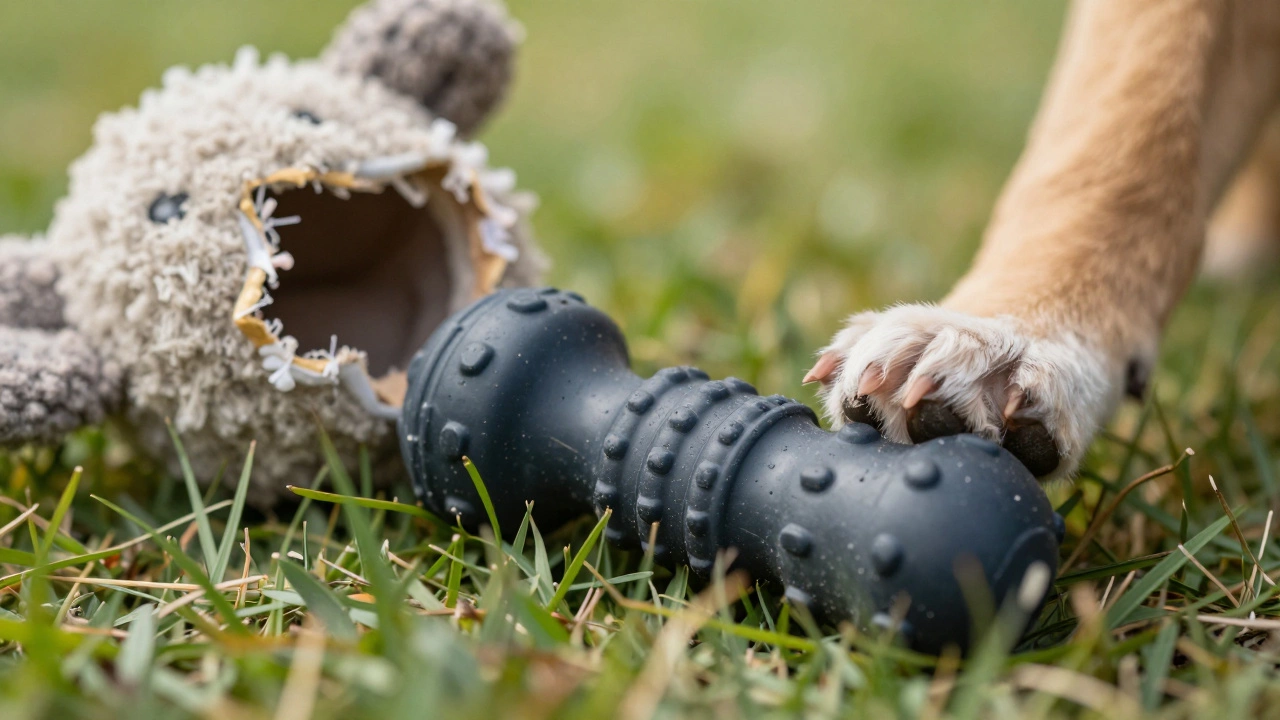
Plush toys with internal squeakers require supervision. Once a puppy learns how to rip the fabric open, they may ingest the stuffing or the plastic squeaker. Intestinal blockages are serious and expensive veterinary emergencies. If you choose plush toys, remove them immediately if seams begin to fray. Better yet, wash them regularly to maintain integrity and hygiene.
Also, watch out for toxic materials. Ensure your toys are made from non-toxic, BPA-free rubber. Cheaply manufactured toys from unknown brands may contain harmful chemicals. Stick to reputable brands that test their products for safety standards. In Auckland, where we value outdoor living, ensure toys are easy to clean since they will likely get muddy, grassy, and wet.
Signs You Have Too Many (or Too Few) Toys
How do you know if your current setup is working? Watch your puppy’s behavior. If they seem bored, ignoring their toys within minutes, they might need a change. Try swapping in a rotated toy. If they still lose interest, consider adding a new type of toy, such as a puzzle feeder, to increase mental challenge.
Conversely, if your puppy becomes possessive, growling or snapping when you try to take a toy away, you might have too many options cluttering their space. Resource guarding often stems from uncertainty about ownership. Simplify the environment. Reduce the number of accessible toys to two or three until the guarding behavior subsides. Then, slowly reintroduce others one by one, rewarding calm behavior.
If your puppy destroys everything within hours, you don’t necessarily need *more* toys-you need *tougher* toys. Upgrading the durability rather than increasing the quantity is the solution here. Invest in industrial-strength chews designed for aggressive chewers.
Scaling Up: When to Add More Toys
As your puppy grows into adolescence (around 6 months), their energy levels and jaw strength increase. This is the time to expand your collection. You might add larger fetch balls, more complex puzzle feeders, or durable tug ropes. However, the principle of rotation remains vital. Even adult dogs benefit from having a limited selection available at any one time.
Don’t fall into the trap of thinking more toys equals a happier dog. A happy dog comes from appropriate exercise, clear boundaries, and meaningful interaction. Toys are tools to facilitate these things, not substitutes for them. Your presence and engagement are far more valuable than a mountain of unused plastic.
Start small. Curate carefully. Rotate consistently. Your puppy will thank you with wagging tails and peaceful naps, and your wallet will appreciate the longevity of your purchases.
Can I give my puppy all their toys at once?
It is generally not recommended. Giving a puppy access to all their toys simultaneously can lead to distraction, reduced engagement, and increased risk of resource guarding. It is better to rotate toys, keeping 3-4 out at a time and storing the rest.
What is the best type of toy for a teething puppy?
Durable rubber chew toys, such as Kongs or similar brands, are excellent for teething puppies. They provide resistance that soothes sore gums and are less likely to break into small, swallowable pieces compared to softer plastics or plush materials.
How often should I rotate my puppy's toys?
Rotating toys every 3 to 7 days is effective. This timeframe allows the puppy to fully explore and potentially tire of the current toys, making the returned toys feel novel and exciting again when swapped back in.
Are plush toys safe for puppies?
Plush toys can be safe if supervised. Remove them immediately if seams fray or stuffing becomes visible. Avoid plush toys with plastic eyes, noses, or loud internal squeakers for aggressive chewers, as these pose choking hazards.
Why does my puppy ignore their toys?
Puppies may ignore toys due to boredom, lack of proper introduction, or having too many choices. Try playing with the toy yourself to show its fun factor, or rotate in a different type of toy to spark interest. Mental stimulation often requires active participation from the owner initially.