
Canine Prime Recommendation Checker
Your Dog's Information
Canine Prime Features
Key Ingredients: 500mg glucosamine, 400mg chondroitin, 300mg MSM, 150mg green-lipped mussel, 50mg turmeric
Does this match your needs?
Based on the article content, Canine Prime may be appropriate for dogs with mild issues but may not provide enough of certain ingredients for serious conditions.
Enter information above to see if Canine Prime is appropriate for your dog.
When you see ads for Canine Prime promising younger dogs, happier joints, and shinier coats with just one daily chew, it’s hard not to wonder: are vets actually behind this? The short answer? It depends. Some vets will say yes, others will roll their eyes. And here’s why.
What Is Canine Prime?
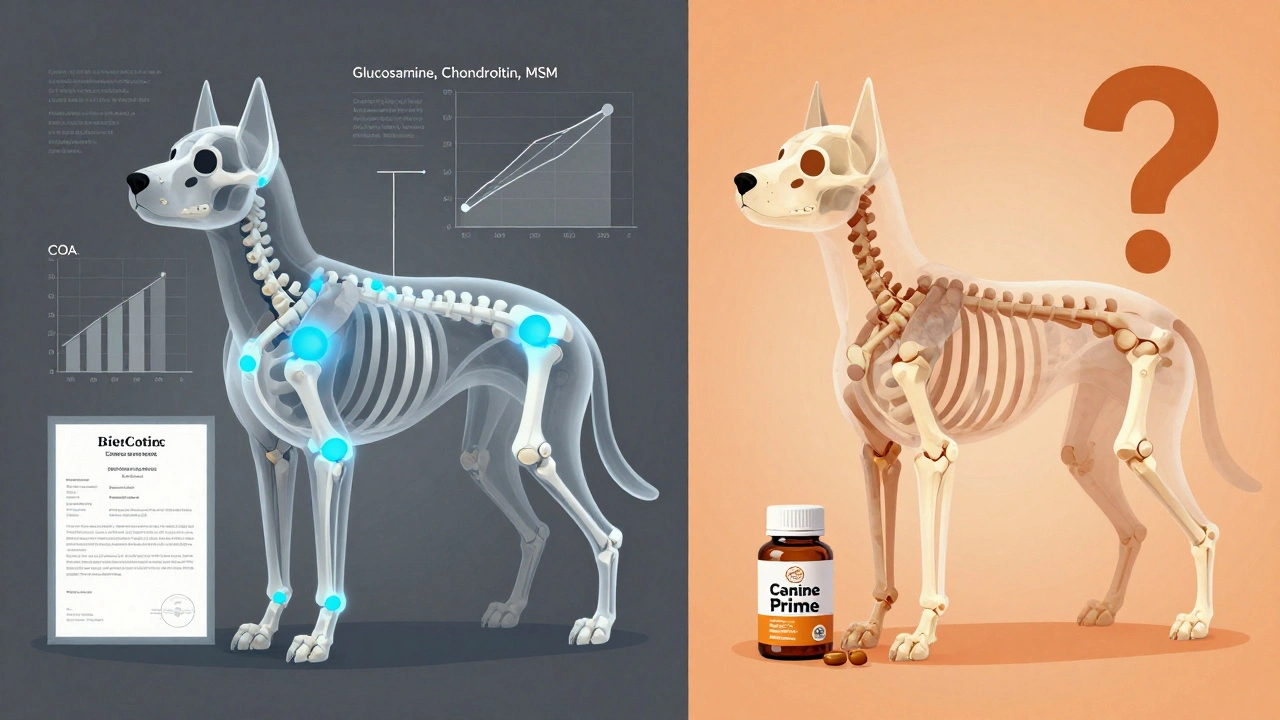
Canine Prime is a chewable supplement made for adult dogs, marketed as a full-spectrum joint and immune support formula. Its main ingredients include glucosamine, chondroitin, MSM, omega-3 fatty acids from fish oil, turmeric, and green-lipped mussel extract. The brand claims it’s formulated by veterinarians and tested for purity. Each chew contains 500mg of glucosamine, 400mg of chondroitin, 300mg of MSM, and 150mg of green-lipped mussel - numbers that match or exceed what’s found in many prescription joint supplements.
It’s not a drug. It’s not FDA-approved, because supplements aren’t regulated like medications. But it’s sold in vet clinics, online pet stores, and even some big-box retailers. That’s where confusion starts. Just because a vet sells it doesn’t mean they personally recommend it.
Why Some Vets Recommend It
There are real reasons why some veterinarians suggest Canine Prime - especially for older dogs or breeds prone to joint issues like Labradors, German Shepherds, and Golden Retrievers.
One vet in Wellington told me she’s seen dogs with moderate arthritis improve mobility after switching from a low-dose glucosamine product to Canine Prime. The higher concentration of active ingredients made a noticeable difference. The green-lipped mussel extract, which contains unique omega-3s like ETA, has actual peer-reviewed studies backing its anti-inflammatory effects in dogs. A 2021 study in the Journal of Veterinary Pharmacology and Therapeutics showed dogs on green-lipped mussel supplements had reduced lameness scores after 8 weeks.
Another reason? Convenience. Pet owners are busy. A single chew that combines joint support, omega-3s, and antioxidants is easier than giving five different pills. Vets know compliance matters. If a dog won’t take a powder mixed into food, a tasty chew might be the only way to get consistent dosing.
Why Other Vets Don’t Recommend It
But here’s the flip side. Many board-certified veterinary nutritionists won’t touch Canine Prime - and here’s why.
First, the ingredient list looks good on paper, but the actual bioavailability isn’t proven. Glucosamine and chondroitin have mixed results in clinical trials. Some studies show modest benefit; others show no difference from placebo. The dose in Canine Prime is high, but without third-party verification of absorption rates, it’s a gamble.
Second, the turmeric content is only 50mg per chew. That’s less than a quarter of what’s used in most studies showing anti-inflammatory effects in dogs. Turmeric needs piperine (black pepper extract) to be absorbed - and Canine Prime doesn’t include it. So that ingredient might as well be filler.
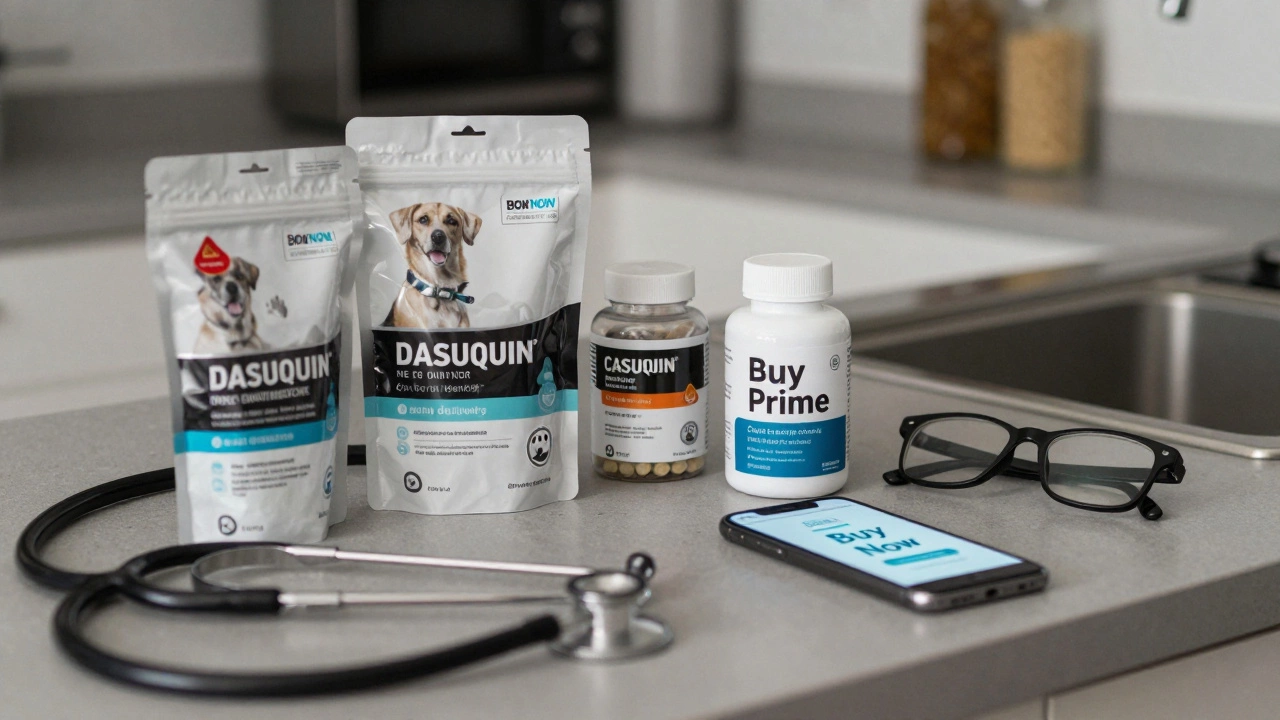
Third, the brand doesn’t publish full lab results. No certificate of analysis (COA) is available on their website. Reputable supplement brands - like Dasuquin or Cosequin - do. If you can’t see proof the product contains what it says, how can you trust it?
One Auckland vet I spoke with said he sees too many cases where owners spend $60 a month on Canine Prime while ignoring proven interventions: weight management, physical therapy, or prescription NSAIDs. He calls it ‘supplement shopping’ - spending money on hope instead of science.
What Vets Actually Recommend Instead
If you’re looking for joint support backed by vet consensus, here’s what most veterinary nutritionists suggest:
- Dasuquin - has glucosamine, chondroitin, ASU (avocado/soybean unsaponifiables), and is clinically tested. Used in over 80% of vet clinics in New Zealand.
- Cosequin - similar formula, slightly lower cost, widely available.
- Green-lipped mussel powders - like Lypo-Spheric or PetHonesty’s version - with COAs and proven dosing.
- Prescription diets - Hill’s j/d or Royal Canin Mobility Support - contain therapeutic levels of omega-3s and joint compounds.
These products have published clinical trials. They’re tested for consistency. And most importantly, they’re backed by veterinary schools and research institutions.
When Canine Prime Might Be Worth a Try
That doesn’t mean Canine Prime is useless. For a healthy, active 7-year-old Border Collie with no signs of arthritis, it might be fine as a preventive. If your dog refuses other supplements and you’ve ruled out serious joint disease, it’s not dangerous - as long as you’re not using it instead of vet care.
Here’s when it could make sense:
- Your dog has mild stiffness after naps but no limping.
- You’ve tried cheaper glucosamine with no results.
- You’ve ruled out underlying issues like hip dysplasia or thyroid problems with blood work.
- You’re okay paying more for convenience and taste.
But if your dog is limping, reluctant to jump, or showing signs of pain, stop the supplements and get an X-ray. No chewable will fix a torn ligament or severe arthritis.
Red Flags to Watch For
Before you buy, check these three things:
- No COA? Skip it. Reputable brands make lab results public.
- Claims like ‘cures arthritis’? That’s illegal. Supplements can’t claim to treat or cure disease.
- Price over $70/month? You’re paying for branding, not better ingredients. Dasuquin costs less per dose.
Also, watch for interactions. If your dog is on blood thinners, NSAIDs, or steroids, talk to your vet first. Omega-3s and turmeric can thin blood. Glucosamine might affect insulin sensitivity in diabetic dogs.
Bottom Line: Do Vets Recommend It?
Some do - mostly because it’s easier than fighting with a dog that won’t take pills. But most experienced veterinary nutritionists won’t put it on their official recommendation list. It’s not a scam, but it’s not a magic bullet either.
Canine Prime is a decent, high-dose supplement with some good ingredients - but it’s not the gold standard. If you want proven results, go with Dasuquin or a vet-formulated product with published data. If you want something tasty and convenient, and you’ve already ruled out medical issues, Canine Prime won’t hurt. Just don’t expect miracles.
And always - always - talk to your vet before starting any supplement. Not the pet store clerk. Not the Facebook group. Your vet.
Is Canine Prime safe for all dogs?
Canine Prime is generally safe for most adult dogs, but not for puppies under 12 months, pregnant dogs, or those with shellfish allergies (due to green-lipped mussel). Dogs on blood thinners or with diabetes should be monitored. Always check with your vet before starting.
How long does it take for Canine Prime to work?
Most dog owners report noticing subtle improvements in mobility after 4 to 6 weeks. For older dogs with arthritis, full effects may take 8 to 12 weeks. If you don’t see changes by then, it’s unlikely to help.
Can I give Canine Prime with other supplements?
You can, but be careful. Don’t stack it with other glucosamine, chondroitin, or omega-3 supplements unless directed by a vet. Too much can cause digestive upset or thin the blood. Always check ingredient overlaps.
Does Canine Prime help with itchy skin?
The omega-3s and turmeric may help reduce inflammation linked to mild allergies, but it’s not strong enough for severe skin conditions. If your dog is constantly scratching, it’s likely a food allergy, flea allergy, or environmental issue - not a supplement gap.
Where is Canine Prime made?
Canine Prime is manufactured in the United States in an FDA-registered facility. However, the ingredients are sourced globally - including green-lipped mussels from New Zealand. The company doesn’t disclose exact sourcing partners or testing labs.