Airline Pet Carrier Checker
Check if your pet carrier meets airline requirements for cabin travel. The tool verifies dimensions against standard airline rules for carriers that fit under the seat.
Enter your carrier dimensions to check compatibility with airline requirements.
Many pet owners wonder if they can bring their dog on their lap during a flight. The short answer? Almost never. Airlines don’t let dogs sit on your lap like a child. But there’s more to it than just a simple no.
Why airlines don’t allow dogs on laps
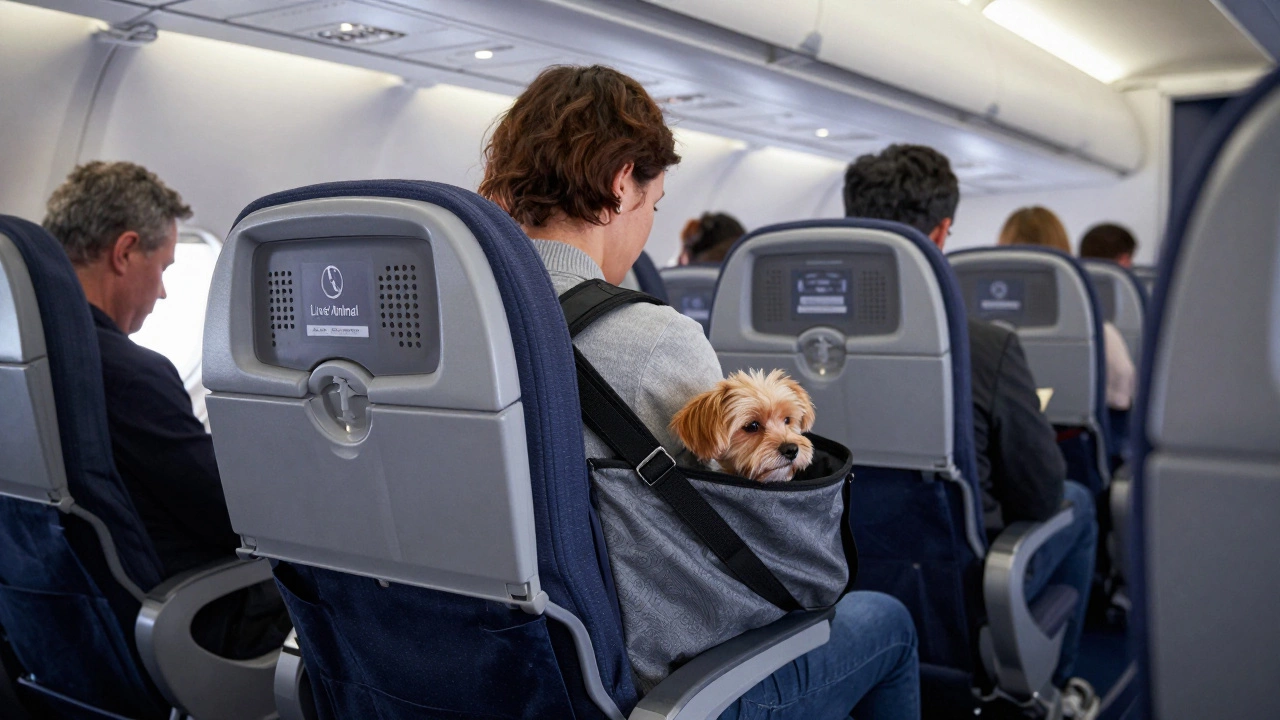
Dogs on laps are a safety risk. In turbulence, a dog can become a projectile. In an emergency evacuation, a loose animal can block aisles, delay exits, and put everyone at risk. The FAA and international aviation authorities require all pets to be secured during takeoff, landing, and anytime the seatbelt sign is on. That’s why airlines treat dogs like carry-on luggage - they need to be in an approved carrier under the seat in front of you.
Even tiny dogs, like Chihuahuas or Pomeranians, must stay in their carriers. There are no exceptions for size, breed, or how well-behaved your dog is. Flight crews aren’t allowed to make exceptions, even if you’re crying or your dog is sleeping quietly. It’s not about being mean - it’s about following federal safety rules.
What airlines actually allow for small dogs
If your dog weighs under 20 pounds (about 9 kg) and fits in an approved carrier, most U.S. and international airlines let you bring them into the cabin. The carrier must fit completely under the seat in front of you. No part of it can stick out into the aisle. Airlines like Delta, United, American, Alaska, and JetBlue all have this rule.
The carrier dimensions vary slightly by airline, but most require:
- Maximum height: 8.5 inches (22 cm)
- Maximum length: 18 inches (46 cm)
- Maximum width: 11 inches (28 cm)
Some airlines, like Southwest, allow slightly larger carriers if they fit under the seat. Always check your airline’s website before you book. Don’t assume your pet carrier from last year still qualifies - rules change often.
Costs and restrictions
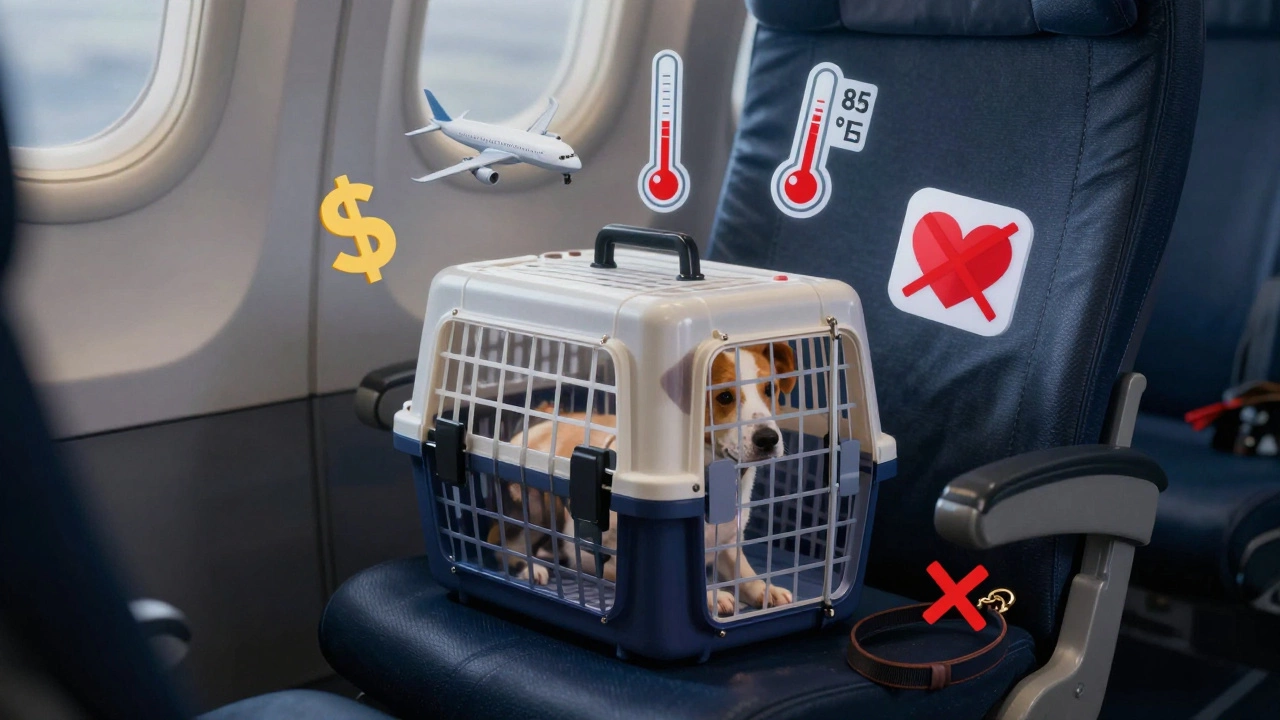
Flying with a dog in the cabin usually costs between $125 and $200 each way, depending on the airline and route. Some international flights charge more - up to $400 one way. You’ll pay this fee at check-in or when you book your ticket.
There are also limits on how many pets you can bring per flight. Most airlines allow only 2-3 pets per cabin. If you’re traveling with two dogs, you’ll need to book two seats - one for each pet. You can’t put two carriers under one seat.
Some airlines won’t let you fly with pets during extreme weather. In summer, many ban pet travel to places like Phoenix or Atlanta when temperatures hit 85°F (29°C) or higher. In winter, flights to places like Chicago or Minneapolis may be restricted if it’s below freezing. Always check the weather policy before booking.
What about emotional support animals?
Emotional support animals (ESAs) used to be a loophole. Back in 2020, the U.S. Department of Transportation changed the rules. Now, airlines are no longer required to let ESAs into the cabin for free. Some still allow them, but only if they meet the same rules as regular pets: carrier, weight limit, fee, and documentation.
Even if your dog helps with anxiety or depression, you can’t bring it out of the carrier during the flight. No pet is allowed to roam the cabin. If you’re caught trying to pass off your dog as an ESA without proper documentation, you could be fined or banned from flying with pets again.
International rules are stricter
If you’re flying outside the U.S., the rules get even tighter. The European Union, Australia, New Zealand, and Japan all require pets to travel as cargo if they’re not service animals. Even small dogs must go in the hold. There are very few exceptions.
For example, if you’re flying from Auckland to London, your dog can’t come into the cabin - no matter how small. The same goes for flights to Singapore, Hong Kong, or Dubai. These countries have strict biosecurity laws to protect their ecosystems from foreign animals and diseases.
Some airlines, like Air New Zealand, offer special pet travel services with climate-controlled cargo holds and real-time tracking. It’s not the same as having your dog beside you, but it’s safer and more regulated than trying to sneak them into the cabin.
What happens if you try to sneak your dog on your lap?
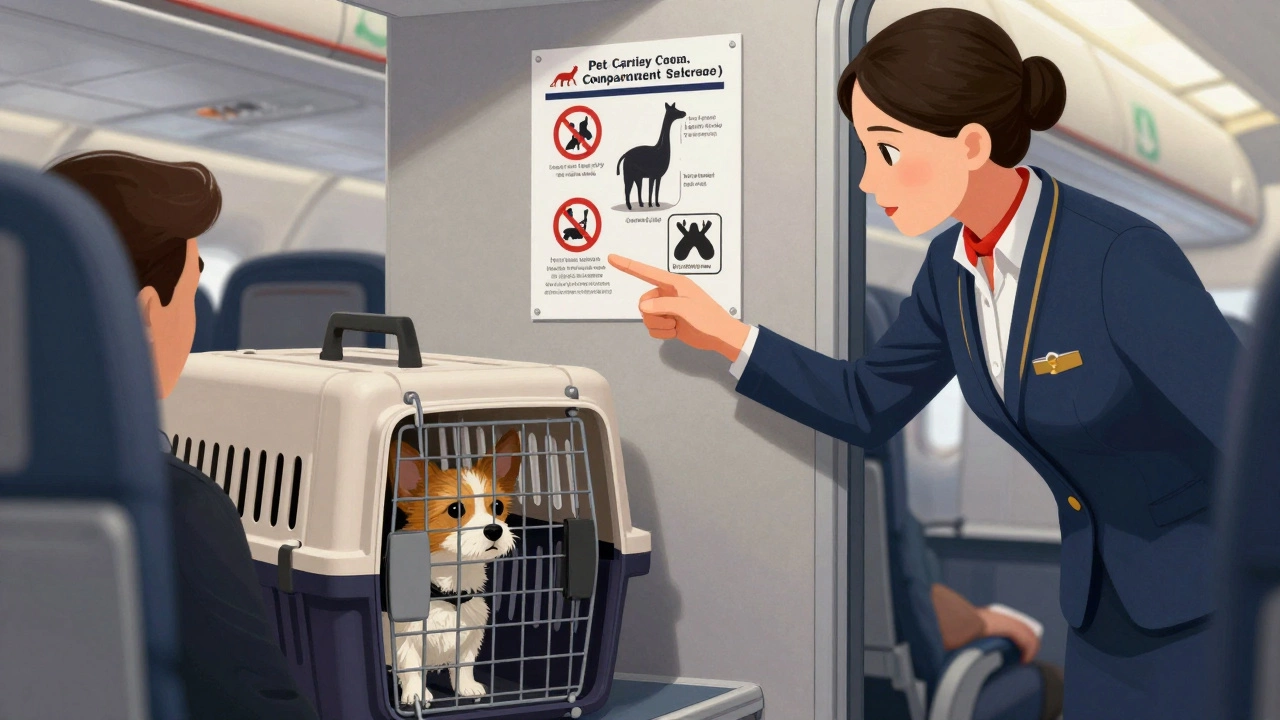
It sounds like a bad idea - and it is. Flight attendants check every carrier before takeoff. If your dog is out, they’ll ask you to put it back. If you refuse, they can deny you boarding. You might lose your ticket and your pet’s spot.
If you get caught mid-flight, you could face fines from the airline, a report to the FAA, or even a ban from flying with pets in the future. Airlines track repeat offenders. One bad experience can follow you for years.
And don’t think hiding your dog under a blanket or in a backpack will work. Most approved carriers have ventilation holes. Flight crews know the shape of a dog inside. They’ve seen it all.
How to prepare your dog for the flight
Even if your dog can’t sit on your lap, you can make the trip smoother. Start training weeks before your flight. Get your dog used to the carrier by leaving it out with treats inside. Let them nap in it. Play recordings of plane noise at low volume. Reward calm behavior.
On the day of the flight:
- Don’t feed your dog 4-6 hours before boarding - this reduces the chance of motion sickness.
- Use a leak-proof water bottle attached to the carrier.
- Put a familiar blanket or toy inside - something with your scent.
- Label the carrier clearly: your name, phone number, and "Live Animal" stickers.
- Arrive early. Check-in for pet travel takes extra time.
Some vets offer calming supplements or sedatives, but most airlines don’t allow sedated pets. Talk to your vet about safe options like melatonin or pheromone sprays that won’t interfere with your dog’s breathing.
Service dogs are different
Service dogs - trained to help people with disabilities - are allowed in the cabin without a carrier. They can sit at your feet or on your lap if they’re small enough. But they must be clearly identified with a harness or vest. You may be asked to show documentation proving the dog’s training.
Don’t confuse service dogs with emotional support animals. Service dogs are trained to perform specific tasks: guiding the blind, alerting to seizures, retrieving medication. Emotional support dogs are not trained for these tasks and don’t get the same access.
If you have a service dog, you still need to notify the airline ahead of time. Some airlines require 48 hours’ notice. Don’t wait until the airport to tell them.
Alternatives if your dog can’t fly with you
If your dog is too big, your airline doesn’t allow pets, or you can’t afford the fee, consider other options:
- Use a professional pet transport service - they handle paperwork, customs, and in-flight care.
- Board your dog at a reputable kennel or pet hotel near the airport.
- Ask a trusted friend or family member to watch your dog while you’re away.
- Delay your trip until you can bring your dog properly - many airlines offer pet-friendly discounts for repeat customers.
It’s hard to leave your dog behind, but flying them in cargo is safer than trying to break the rules. Reputable pet transport companies have better temperature control, vet checks, and tracking than most passengers realize.
Final tip: Book early
Pet spots on flights fill up fast - especially during holidays and summer. Don’t wait until the last minute. Book your pet’s ticket at the same time as yours. Some airlines let you reserve pet space online. Others require a phone call.
If you’re flying with a small dog, confirm your carrier size with the airline’s customer service. Take a photo of the carrier with a ruler next to it. Send it to them before you leave. That way, you won’t get turned away at the gate.
There’s no way around it: dogs can’t sit on your lap on a plane. But with the right prep, your dog can still fly with you - safely, legally, and with less stress than you think.
Can I bring my dog on my lap if it’s a tiny breed like a Chihuahua?
No. Even the smallest dogs must stay in an approved carrier under the seat. Airlines don’t make exceptions based on size or breed. This rule is enforced for safety reasons during turbulence and emergencies.
How much does it cost to fly with a dog in the cabin?
Most U.S. airlines charge between $125 and $200 each way. International flights can cost up to $400. Fees vary by airline, route, and season. Always check the airline’s website - prices change often.
Can I fly with two small dogs in one carrier?
No. Most airlines allow only one pet per carrier, and only one carrier per passenger. Even if both dogs are small, you’ll need two separate carriers and two seats. Some airlines don’t allow two pets on the same flight at all.
Are emotional support animals still allowed on planes?
Since 2020, U.S. airlines are no longer required to accept emotional support animals. Some still allow them, but only if they follow the same rules as regular pets: carrier, fee, and weight limits. You can’t bring them out of the carrier or expect special treatment.
What if my dog barks during the flight?
If your dog barks or shows signs of distress, flight attendants may ask you to move to a different seat or, in extreme cases, remove your pet from the cabin. To avoid this, train your dog ahead of time and use calming aids like pheromone sprays or a familiar blanket.
Can I bring my dog on a flight from New Zealand to Australia?
No. Australia and New Zealand have strict biosecurity laws. Even small dogs must travel as cargo with a full import permit, quarantine, and health checks. Cabin travel for pets is not allowed on these routes.
Do airlines provide water or food for pets during the flight?
No. You must provide water and food in the carrier. Use a leak-proof bottle or a small bowl attached to the carrier. Do not feed your dog right before the flight - this helps prevent motion sickness.
What if my dog needs to use the bathroom during a long flight?
There’s no way for dogs to relieve themselves during a flight. Most short-haul flights last under 4 hours - most dogs can hold it that long if you don’t feed them beforehand. For longer trips, consider cargo transport with scheduled stops or break flights.