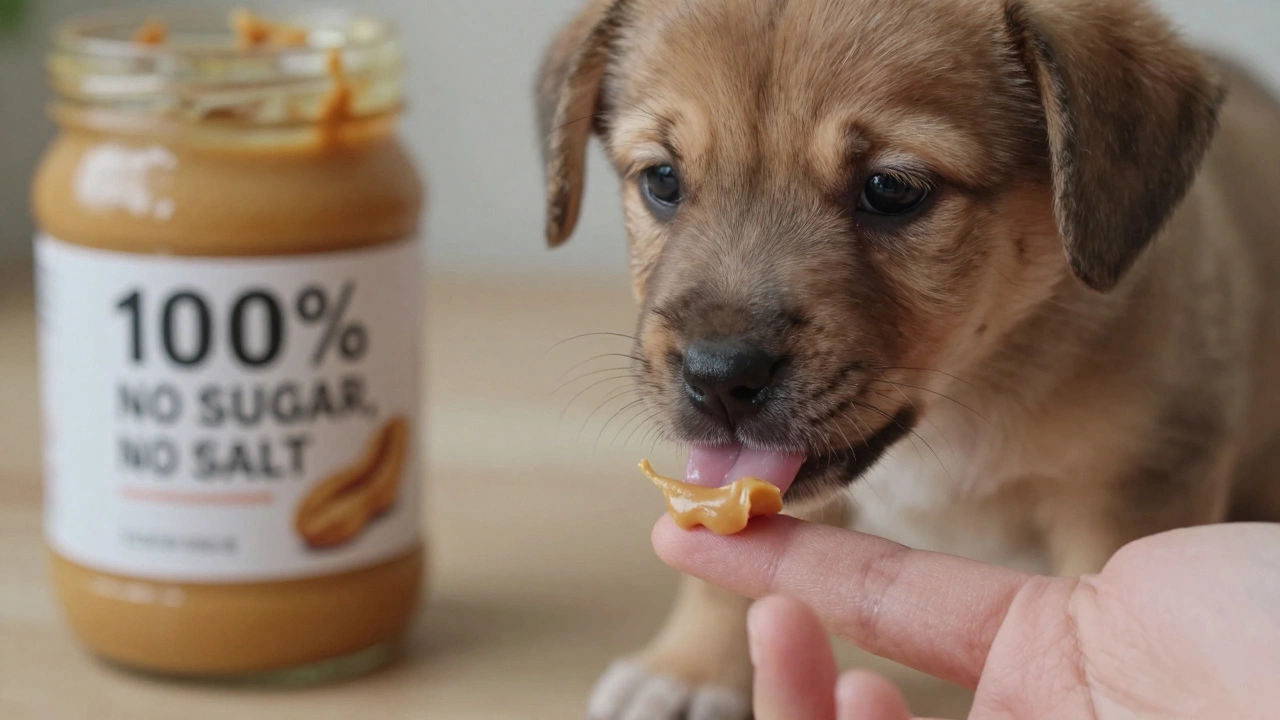
Many new puppy owners wonder if peanut butter is a safe treat for their furry little ones. The short answer? Yes-but only if you pick the right kind and give it in the right amount. Not all peanut butter is created equal, and some brands contain ingredients that can be deadly to puppies. This isn’t just a myth or old wives’ tale. It’s a real risk that has sent puppies to the vet more times than most owners realize.
Why Peanut Butter Can Be Dangerous for Puppies
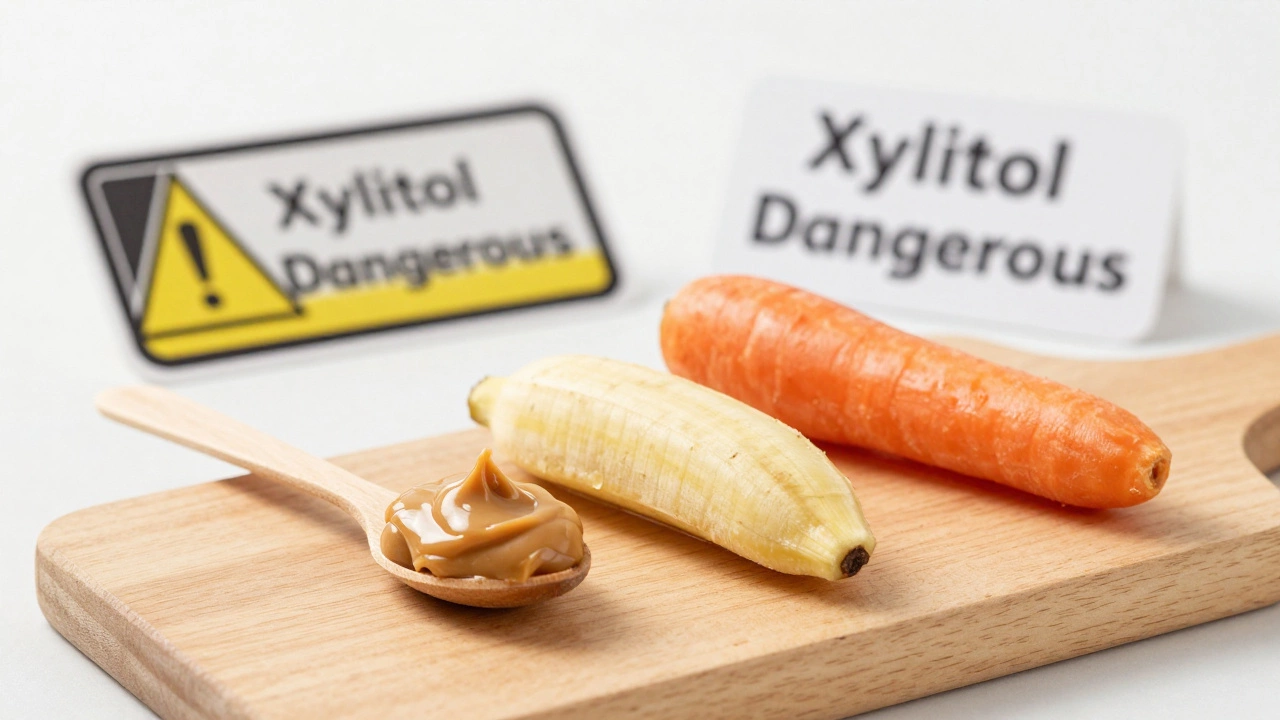
The biggest danger isn’t the peanut butter itself-it’s what’s mixed into it. Xylitol, an artificial sweetener used in many sugar-free products, is extremely toxic to dogs. Just 0.1 gram per kilogram of body weight can cause a dangerous drop in blood sugar. For a small puppy weighing 5 kg, that’s less than a teaspoon of xylitol-containing peanut butter. Symptoms like vomiting, loss of coordination, seizures, or even liver failure can show up within 30 minutes. And because puppies are smaller and more sensitive, they’re at higher risk.
Even without xylitol, some peanut butters are loaded with added sugar, salt, and hydrogenated oils. These aren’t poison, but they’re not good for growing puppies either. Too much salt can lead to dehydration or sodium ion poisoning. Too much sugar increases the risk of obesity and dental problems down the line. Puppies don’t need empty calories-they need balanced nutrition to grow strong.
How to Choose Safe Peanut Butter for Puppies
Not all peanut butter is off-limits. You can find safe options if you know what to look for. Stick to brands with just two ingredients: peanuts and maybe a pinch of salt. Look for labels that say “100% peanuts” or “no added sugar or salt.” Avoid anything labeled “reduced fat,” “low sodium,” or “natural sweetener”-those are red flags for hidden xylitol.
Some trusted brands in New Zealand that meet these criteria include Go Nuts Co. (100% peanuts), Barry’s Peanut Butter (no sugar, no salt), and Smuckers Natural (check the label carefully-only the natural version without added sweeteners). Always read the ingredient list yourself. Don’t trust marketing claims like “healthy” or “dog-friendly” unless you’ve verified the ingredients.
How Much Peanut Butter Can a Puppy Have?
Even the safest peanut butter should be given in tiny amounts. As a general rule, limit it to half a teaspoon for puppies under 10 kg, and one teaspoon for those between 10-20 kg. That’s about the size of a pea or a small marble. Give it no more than once or twice a week. Think of it like a dessert-not a daily snack.
Why so little? Puppies have small stomachs and high energy needs. Filling them with high-fat treats means they’re less likely to eat their balanced puppy food, which contains the vitamins, minerals, and protein they need to grow properly. Overfeeding peanut butter can also lead to pancreatitis, a painful inflammation of the pancreas caused by too much fat. Signs include vomiting, diarrhea, loss of appetite, and a hunched back. If your puppy shows any of these after eating peanut butter, call your vet immediately.
Safe Ways to Use Peanut Butter as a Treat
Peanut butter isn’t just a snack-it’s a tool. Many puppy owners use it to make training more fun or to help with anxiety. Here are a few smart ways to use it:
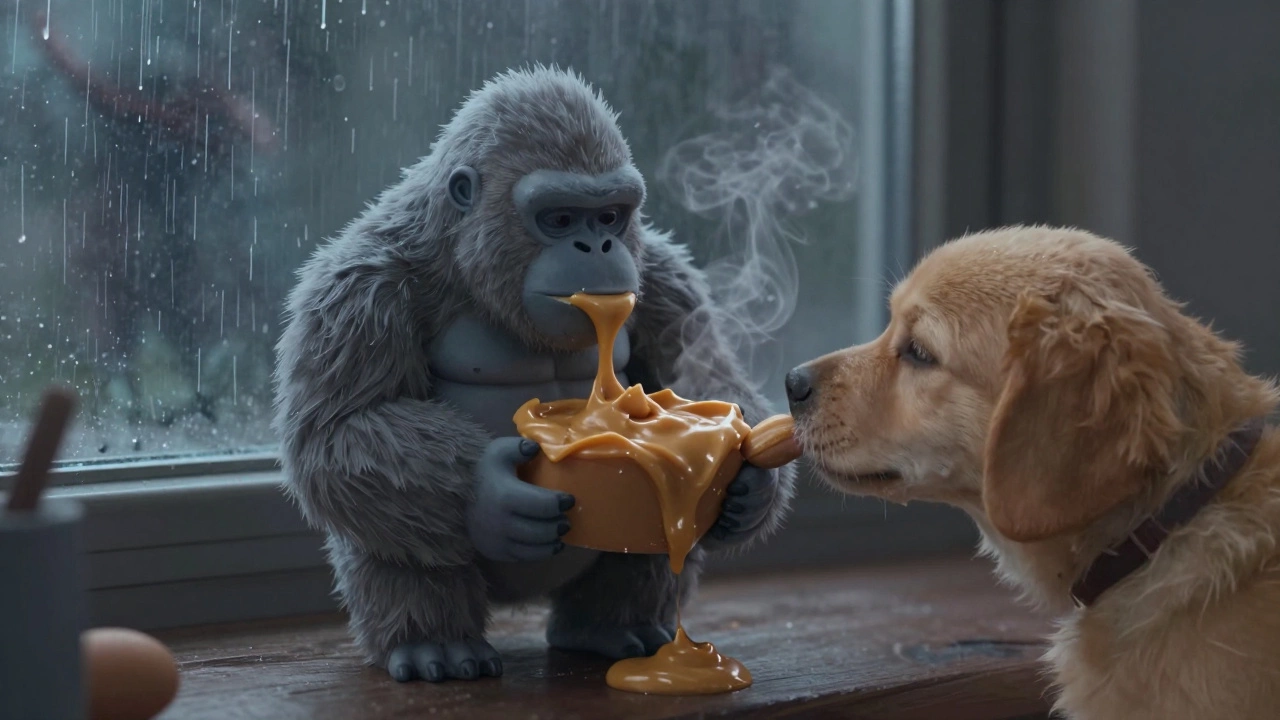
- Fill a rubber chew toy like a KONG with a small amount of peanut butter and freeze it. This gives your puppy something to lick slowly, which calms them down during storms or when left alone.
- Dab a tiny bit on your finger and let your puppy lick it off while you brush their teeth. It makes dental care less stressful.
- Use it as a reward during short training sessions. One lick counts as a treat. Don’t use it for long sessions-it’s too rich.
Never use peanut butter to hide pills unless you’re sure your puppy will swallow them. Some dogs will lick the outside and spit out the medicine. It’s better to ask your vet for a pill pocket designed for puppies.
What to Do If Your Puppy Eats Something Unsafe
If you catch your puppy eating peanut butter that contains xylitol, don’t wait for symptoms. Call your vet or the Animal Poison Control Center right away-even if they seem fine. Time matters. If it’s outside regular hours, head to the nearest emergency clinic. Bring the jar or packaging with you so the vet can check the ingredients.
Don’t try to make your puppy vomit at home. Some methods can cause more harm. Let the professionals handle it. The sooner they act, the better the chance of a full recovery.
Alternatives to Peanut Butter for Puppies
If you’re nervous about peanut butter-or your puppy has a nut allergy-there are plenty of safe, tasty alternatives:
- Plain, unsweetened yogurt (check for xylitol!)-great for frozen treats
- Mashed banana-naturally sweet and easy to digest
- Carrot sticks-crunchy, low-calorie, and good for teeth
- Commercial puppy-safe treats from brands like Hill’s Science Diet or Royal Canin
- Plain cooked chicken or turkey (no seasoning)
These options give your puppy the same excitement without the risks. And they’re often better for long-term health.
When to Skip Peanut Butter Altogether
Some puppies should never have peanut butter:
- Puppies under 8 weeks old-their digestive systems aren’t ready for anything beyond mom’s milk
- Puppies with known food allergies or skin issues-peanuts are a common allergen
- Puppies with pancreatitis or obesity-high fat makes it worse
- Puppies on prescription diets-some foods interact with peanut butter
If you’re unsure, talk to your vet before giving any new treat. A quick check-up can save you from a costly emergency later.
Remember, treats should make up no more than 10% of your puppy’s daily calories. The rest should come from balanced puppy food. Peanut butter can be a fun, occasional reward-but it’s not a nutritional necessity. Your puppy doesn’t need it to be happy. But with the right choice and the right amount, it can be a safe little joy.
Can puppies have peanut butter every day?
No, puppies should not have peanut butter every day. Even the safest kind is high in fat and calories. Giving it daily can lead to weight gain, digestive upset, or even pancreatitis. Limit it to once or twice a week as a special treat, and keep portions small-half a teaspoon for small puppies, one teaspoon for larger ones.
Is crunchy peanut butter safe for puppies?
Crunchy peanut butter is safe only if it has no added sugar, salt, or xylitol. But the chunks can be a choking hazard for small puppies, especially under 6 months old. For young pups, smooth peanut butter is always the safer choice. Once they’re older and chew well, crunchy is fine in small amounts.
What brands of peanut butter are safe for puppies?
Look for brands with only one or two ingredients: peanuts and maybe salt. Safe options include Go Nuts Co. (100% peanuts), Barry’s Peanut Butter (no sugar, no salt), and Smuckers Natural (double-check the label). Avoid any that list xylitol, high fructose corn syrup, or hydrogenated oils. Always read the ingredient list-even if the jar says "natural" or "organic."
Can peanut butter cause allergies in puppies?
Yes, peanuts are one of the more common food allergens in dogs. Signs include itchy skin, ear infections, vomiting, diarrhea, or swelling around the face. If your puppy shows any of these after eating peanut butter, stop giving it and talk to your vet. A simple elimination diet can confirm if peanuts are the trigger.
What should I do if my puppy ate peanut butter with xylitol?
Call your vet or an emergency animal clinic immediately. Do not wait for symptoms. Xylitol poisoning can be fatal within hours. Bring the peanut butter jar with you so the vet knows exactly what was ingested. Time is critical-the sooner treatment starts, the better the outcome.