
You’ve got a 25-pound dog. You’re planning a trip. And now you’re staring at your phone wondering: Can I fly with a 25 lb dog? The answer isn’t a simple yes or no. It depends on the airline, the route, the type of crate, and even the time of year. But here’s the truth-most airlines will let you fly with a 25-pound dog. The real question is: how will you fly with them, and what will it cost you?
Is your dog too big for the cabin?
Most airlines allow dogs in the cabin only if they fit under the seat in an approved carrier. The size limit isn’t about weight-it’s about dimensions. A 25-pound dog is usually too big for cabin travel unless it’s a small breed like a Shih Tzu or a Cocker Spaniel with a compact frame. Most carriers for dogs over 20 pounds exceed the typical under-seat dimensions: 17 inches long, 10 inches wide, and 9 inches high. Even if your dog weighs exactly 25 pounds, if the carrier sticks out past the seat in front of you, you won’t be allowed on board.Some airlines, like JetBlue and Southwest, are a little more flexible with carrier size if the dog is calm and the flight isn’t full. But don’t count on it. If your dog is a Labrador mix, a Beagle, or even a medium-sized terrier, chances are you’ll need to check them as cargo.
What happens when your dog flies as cargo?
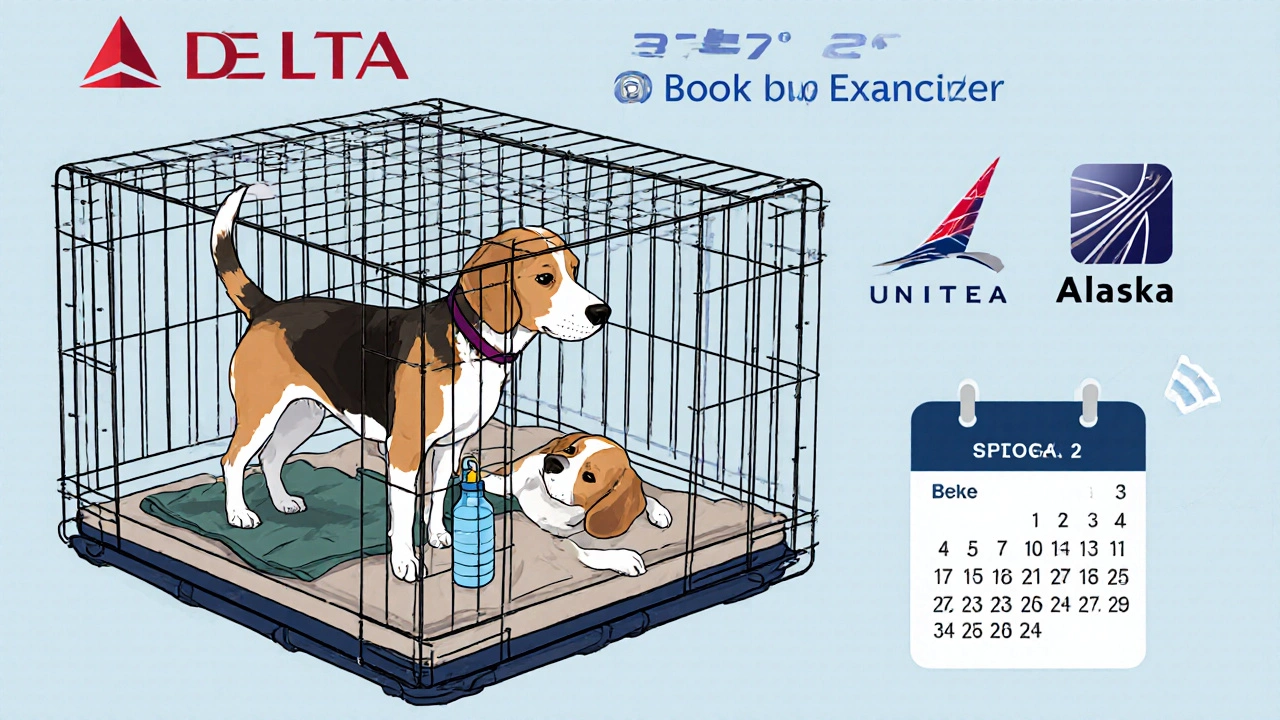
Flying a 25-pound dog as cargo is common-and safe-if you do it right. Airlines like Delta, United, American, and Alaska all have pet cargo programs. Your dog will travel in a climate-controlled, pressurized hold, separate from luggage. The crate must be IATA-compliant: sturdy, ventilated on all four sides, and big enough for your dog to stand, turn around, and lie down comfortably.Here’s what you need to know about cargo travel:
- Your dog must be at least 8 weeks old and weaned.
- Most airlines require a health certificate from a vet issued within 10 days of travel.
- You’ll need to book cargo space in advance-spots fill up fast, especially during holidays.
- Some airlines won’t fly pets during extreme temperatures (above 85°F or below 45°F), so summer and winter flights can be tricky.
For a 25-pound dog, expect to pay between $200 and $500 for cargo, depending on the route. Domestic U.S. flights usually cost $300-$400. International routes, like from New York to Auckland, can hit $800 or more. That includes the crate, documentation, and handling fees.
What’s the best crate for a 25-pound dog?
Not all pet crates are created equal. Airlines don’t accept plastic storage bins or soft-sided carriers for cargo. You need a hard-sided, airline-approved crate. Look for one labeled “IATA compliant.”For a 25-pound dog, you’ll likely need a size 300 or 400 crate. Here’s a quick guide:
| Brand | Model | Interior Dimensions (L x W x H) | Weight Capacity |
|---|---|---|---|
| MidWest Homes | iCrate | 30" x 21" x 23" | 40 lb |
| Sherpa | Standard Carrier | 28" x 20" x 21" | 30 lb |
| Petmate | Ultra | 31" x 21" x 23" | 45 lb |
Measure your dog from nose to tail and from floor to shoulder. Add 2-4 inches to each dimension. That’s your minimum crate size. A crate that’s too small stresses your dog. One that’s too big can be dangerous during turbulence.
How to prepare your dog for the flight
Flying is stressful-even for calm dogs. Here’s how to make it smoother:- Start crate training at least 4-6 weeks before your trip. Feed meals inside the crate. Leave the door open. Make it a safe space.
- Don’t sedate your dog. The FAA and most airlines ban tranquilizers because they interfere with breathing at altitude.
- Use a water bottle attached to the crate door. No food 4-6 hours before the flight to avoid nausea.
- Label the crate clearly: your name, phone number, destination, and "Live Animal" stickers.
- Take your dog for a long walk right before check-in. A tired dog is a calmer dog.
Some owners put a familiar-smelling blanket or t-shirt inside the crate. That helps. But don’t put toys or chew bones-they can become choking hazards if the crate shifts.
International flights? It’s more complicated
If you’re flying from the U.S. to New Zealand, Australia, or the EU, you’re dealing with strict quarantine and health rules. New Zealand, for example, requires:- A microchip (ISO 11784/11785 standard)
- Two rabies vaccines spaced at least 30 days apart
- A blood test to confirm rabies antibody levels (must be done at least 3 months before entry)
- A 10-day quarantine upon arrival
The whole process takes 6-8 months to complete. And yes, even a 25-pound dog needs all of this. There are no shortcuts. Skip the paperwork, and your dog won’t get off the plane.
Some countries, like Canada and Mexico, are much simpler. But always check the official government pet import site-not the airline’s. Airlines don’t set the rules; governments do.
What airlines allow 25 lb dogs?
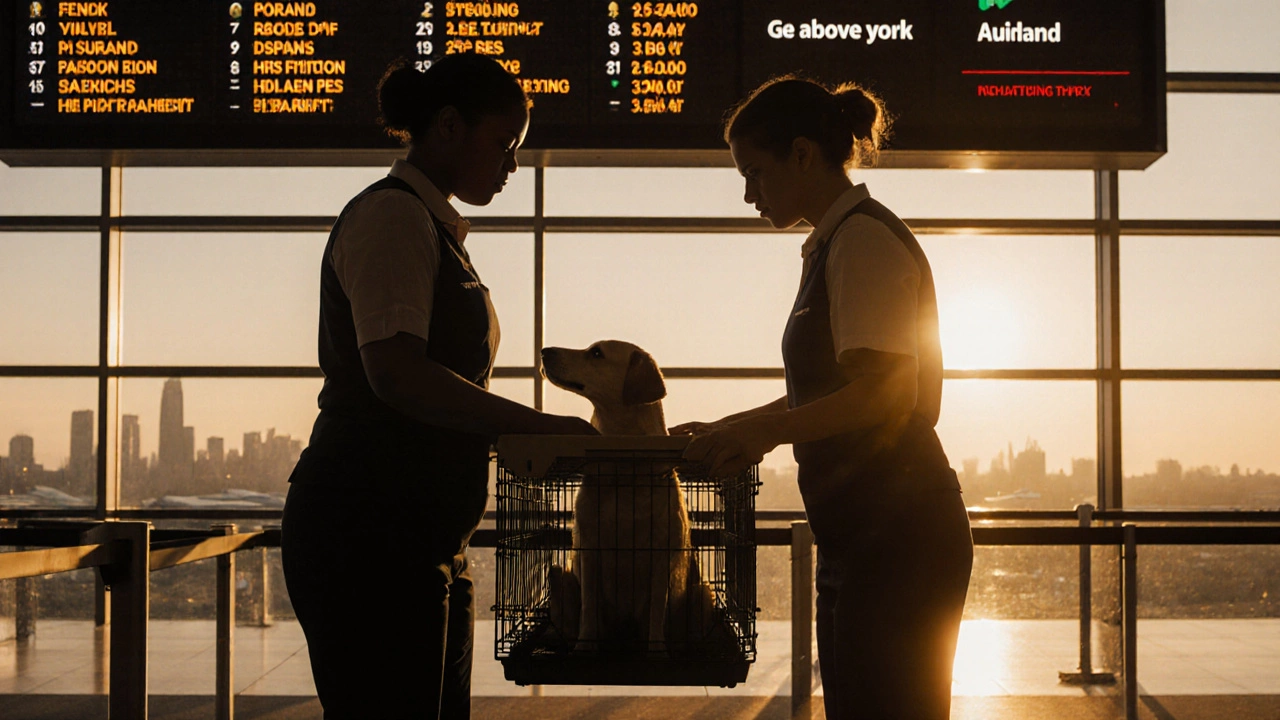
Most major U.S. carriers allow 25-pound dogs in cargo. Here’s a quick snapshot:- Delta: PetSafe program. No breed restrictions except snub-nosed dogs in summer.
- United: PetCargo. Requires advance booking. No pets on flights over 8 hours in summer.
- American: Pet Transport. Allows 25-pound dogs. No live animal transport on holidays.
- Alaska: Pet travel is free for service animals. Cargo pets cost $100-$250 domestically.
- Southwest: Only cabin pets allowed. 25-pound dogs don’t qualify.
- JetBlue: Only cabin pets. Max 20 lb total (dog + carrier).
Bottom line: If you want to fly with a 25-pound dog, avoid Southwest and JetBlue. Pick Delta, United, or Alaska for the best cargo options.
What if your dog is just over 25 pounds?
A dog weighing 27 pounds? 28? 30? Airlines usually don’t have a hard cutoff at 25. They care about the crate size and whether it fits the hold. But some airlines use 25 pounds as a soft guideline for cabin eligibility. If your dog is 26 pounds, you might still be able to fly them in the cabin if the carrier fits under the seat. But if you’re pushing 30 pounds, you’re almost certainly going cargo.Always call the airline’s pet department directly. Don’t rely on their website. Agents can tell you what’s possible on your exact flight date.
Is flying with a 25 lb dog worth it?
It’s expensive. It’s stressful. It’s a lot of paperwork. But if you’re moving, reuniting with family, or taking your dog on a long-term trip, it’s doable. Thousands of dogs this size fly every year without incident.Plan early. Book cargo space months ahead. Get the vet paperwork done on time. Train your dog to love their crate. And remember: your dog doesn’t care about the cost or the rules. They just want to be with you. Do the prep work, and you’ll both arrive safely.
Can I fly with a 25 lb dog in the cabin?
Almost always no. Most airlines require the carrier to fit under the seat, and a 25-pound dog’s crate is too large for that. Only small breeds under 20 pounds total (dog + carrier) qualify for cabin travel. If your dog is 25 pounds, you’ll need to check them as cargo.
How much does it cost to fly a 25 lb dog?
Domestic U.S. flights cost $300-$400 for cargo. International flights can be $600-$1,000, depending on the destination. This includes the crate, health certificate, and handling fees. Airlines like Alaska charge less-around $100-$250 domestically. Always confirm pricing directly with the airline.
What size crate do I need for a 25 lb dog?
Look for a size 300 or 400 IATA-compliant crate. Interior dimensions should be at least 28 inches long, 20 inches wide, and 21 inches high. Measure your dog from nose to tail and shoulder to floor, then add 2-4 inches to each. The crate must let your dog stand, turn, and lie down comfortably.
Can I sedate my dog for the flight?
No. The FAA and most airlines ban sedatives because they can interfere with breathing at high altitudes. Instead, crate-train your dog ahead of time, tire them out before the flight, and use calming pheromone sprays (like Adaptil) on their bedding. Never give any medication without vet approval.
Which airlines are best for flying a 25 lb dog?
Delta, United, American, and Alaska Airlines have the most reliable pet cargo services. Avoid Southwest and JetBlue-they only allow cabin pets, and 25-pound dogs don’t qualify. Always book cargo space well in advance, especially during holidays.