Puppy Potty Training Schedule Calculator
Your Puppy's Schedule
Your Puppy's Daily Schedule
Remember
Puppies need to go every 2-3 hours. Adjust schedule based on your puppy's individual needs. Use a consistent cue word like "go potty" every time you take them out. Reward immediately after they go outside!
Can an 8-week-old puppy be potty trained? Yes-and the sooner you start, the easier it will be. Many people think puppies need to be older before they can learn where to go, but that’s not true. At eight weeks, your puppy’s bladder and brain are developing fast. They can hold it for about 2-3 hours, and they’re already picking up patterns from you. This is the perfect time to lay the foundation for lifelong bathroom habits.
Why Start Now?
An 8-week-old puppy isn’t just a tiny ball of fur-they’re a learning machine. Their bodies are growing, their senses are sharpening, and they’re starting to understand cause and effect. If you wait until they’re 12 or 16 weeks, you’re already playing catch-up. By eight weeks, they’ve likely left their littermates and are in a new home. That’s a big change. A consistent potty routine gives them stability.
Think about it: a puppy can’t tell you they need to go. They don’t bark or whine the way adults do. Instead, they sniff, circle, squat, or suddenly freeze. If you miss those cues, they’ll go where they stand. That’s not disobedience-it’s biology. Starting early means you teach them the right place before bad habits stick.
How Often Do They Need to Go?
At eight weeks, a puppy needs to go outside every 2 to 3 hours during the day. That includes:
- Right after waking up
- After eating or drinking
- After playing or excitement
- Before bedtime
- Every 2-3 hours while awake
At night, they might sleep for 5-6 hours without needing to go, but don’t count on it. Most 8-week-olds still need one middle-of-the-night break. Set an alarm if you have to. Skipping a potty trip means accidents-and that’s how indoor potty habits form.
Step-by-Step Potty Training Routine
Here’s what actually works:
- Pick a spot. Always take them to the same outdoor area. Grass is ideal. Avoid concrete or gravel at first-they’re harder to smell and recognize.
- Use a cue word. Say something simple like “go potty” or “do your business” every time you take them out. Say it calmly, not loudly. They’ll start connecting the word with the action.
- Wait patiently. Give them 5-10 minutes. Don’t rush them. If they don’t go, bring them back inside and try again in 30 minutes. No scolding. No yelling.
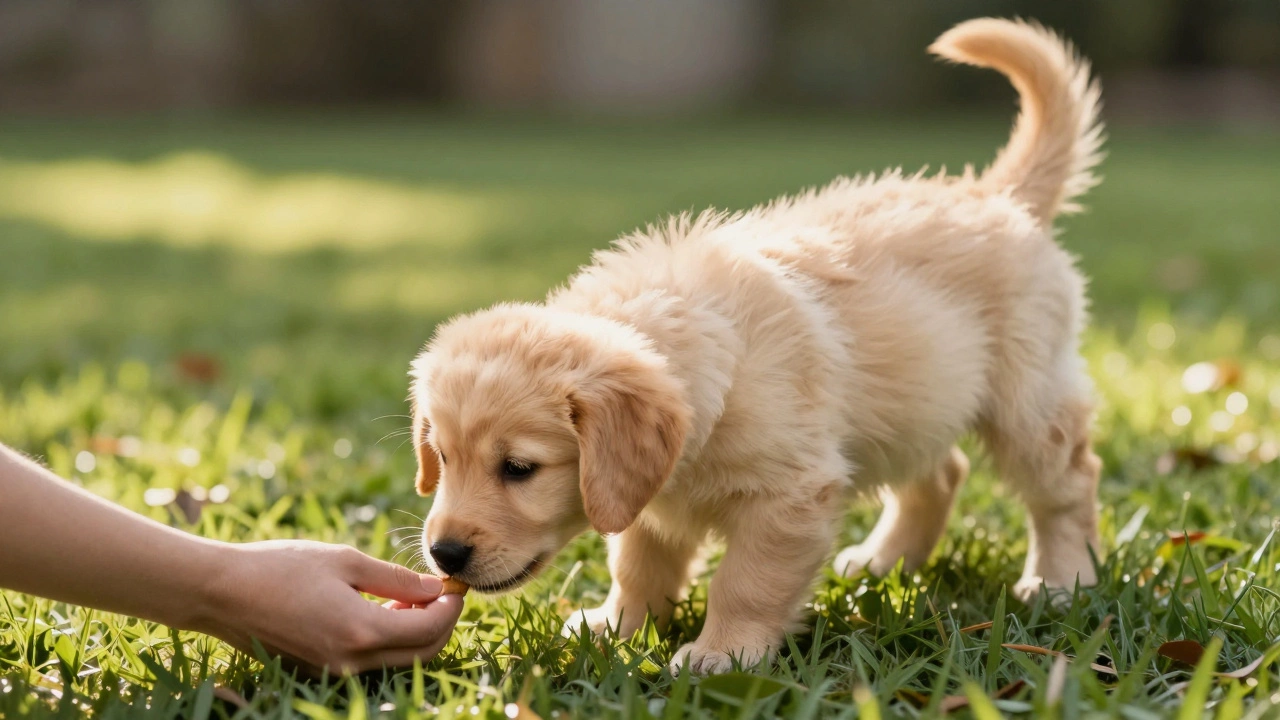
- Reward immediately. The second they finish, give them a small treat and praise them. Not 10 minutes later. Not after they’ve played. Right then. This is the moment their brain links action with reward.
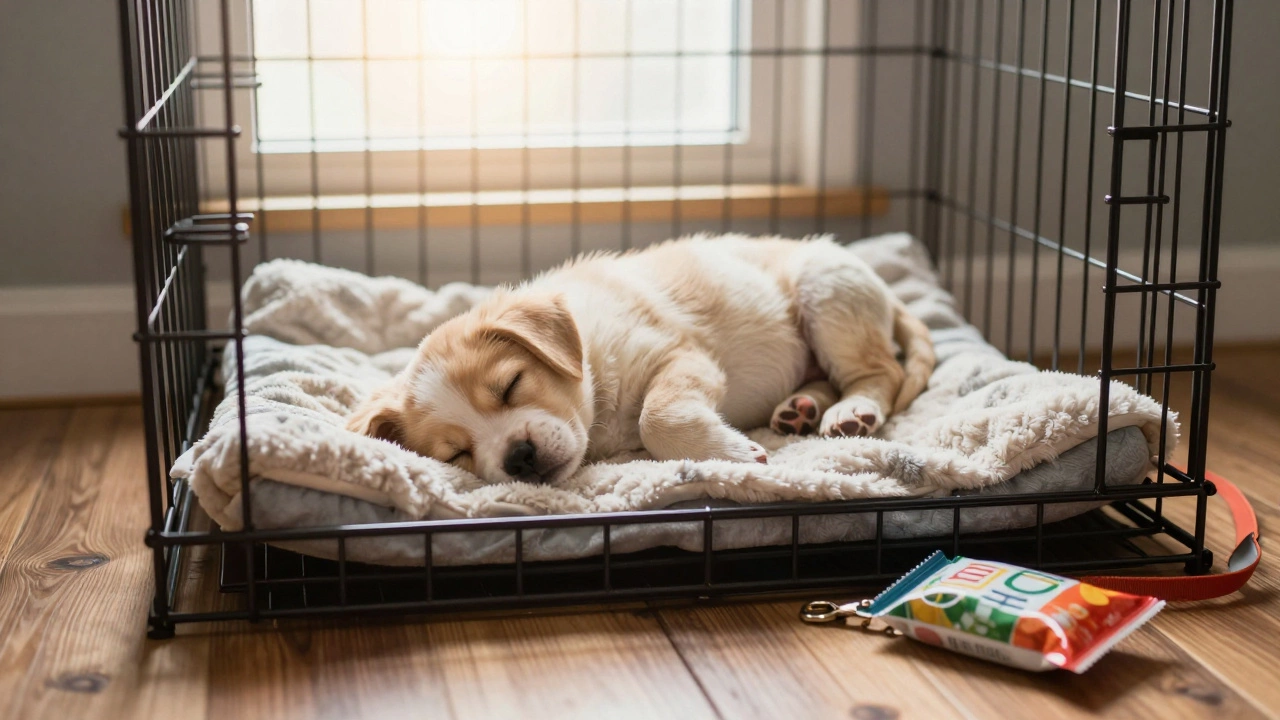
- Supervise indoors. Keep them in a small area-like a crate, playpen, or gated room. If they’re free in the house, accidents will happen. You can’t watch them 24/7, so limit their space.
What Not to Do
Some advice you hear is outdated-or flat wrong.
- Don’t rub their nose in accidents. That doesn’t teach them anything. It just scares them. Puppies don’t understand guilt. They don’t know you’re mad about yesterday’s mess.
- Don’t use pee pads as a long-term fix. They might help temporarily, but they teach the puppy it’s okay to go indoors. You’re training them to go on a rug, not outside.
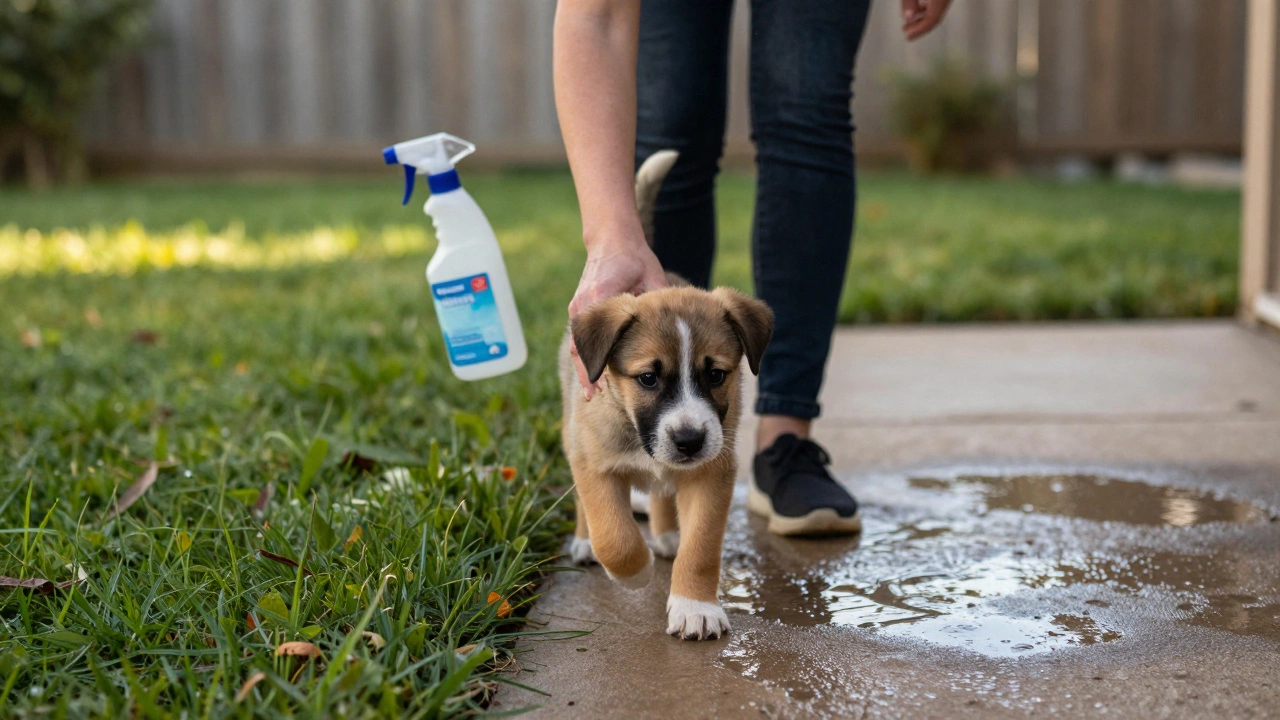
- Don’t punish accidents. If you find a puddle, clean it up with an enzymatic cleaner. Then, go back to the routine. Yelling or hitting just makes them afraid of you-and more likely to hide when they need to go.
Signs They Need to Go
Learn your puppy’s signals. They’re subtle but consistent:
- Sudden sniffing around the floor
- Stopping play and pacing
- Whining or barking near the door
- Squatting or circling
- Running to a corner or hiding
These aren’t tricks. They’re biology. If you catch them in the act, gently pick them up and carry them outside. Don’t shout. Just move fast. The goal is to get them to the right spot before they go.
What About Crates?
Crates are your secret weapon. Dogs naturally avoid soiling their sleeping space. A crate that’s just big enough for them to stand, turn, and lie down encourages control. Too big, and they’ll use one corner as a bathroom. Too small, and it’s stressful.
Use the crate at night and during naps. Let them out every 2-3 hours. Never use the crate as punishment. Make it cozy with a soft blanket. Feed them meals inside. Soon, they’ll see it as their safe space-not a jail.
How Long Until They’re Fully Trained?
Don’t expect perfection. Most puppies take 4-6 months to be fully reliable. At eight weeks, you’re building the habit-not finishing the job. Some accidents will happen. That’s normal. Stay calm. Stick to the schedule. Celebrate the wins. If you’re consistent, you’ll see progress within 2-3 weeks.
By 12 weeks, most puppies can hold it for 4-5 hours. By 16 weeks, they’re usually reliable during the day. Nighttime control comes later. Patience is the real training tool.
What If They Keep Having Accidents?
If accidents keep happening after 2-3 weeks of consistent effort, check three things:
- Are you taking them out often enough? Maybe you’re giving them 4 hours between trips. Try every 2.
- Are you cleaning accidents properly? Regular cleaners don’t remove the smell. Use an enzymatic cleaner (like Nature’s Miracle or a DIY vinegar-water mix) to erase the scent completely.
- Are they sick? Frequent urination, straining, or blood in urine could mean a UTI. Take them to the vet if you’re unsure.
Most accidents aren’t defiance. They’re either timing, cleaning, or health issues. Fix those, and the problem fades.
Final Thought: It’s About Trust, Not Control
Potty training isn’t about forcing a puppy to obey. It’s about teaching them how to communicate with you. Every time you take them out on time, reward them, and stay calm after accidents-you’re building trust. They learn: If I need to go, I can count on you to help me.
That’s more than house training. That’s the start of a strong bond.