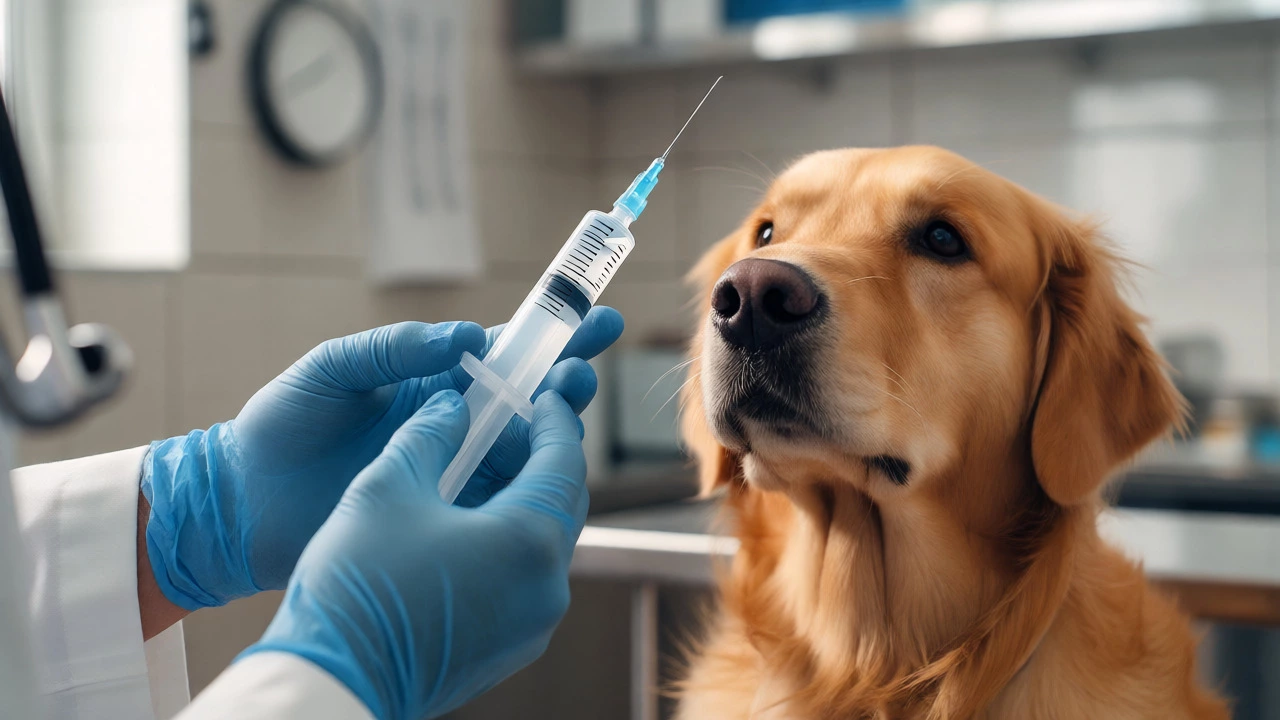
Dog Vaccine Risk & Recommendation Checker
Select your dog's lifestyle factors below to see which parts of the 7-in-1 protocol are essential for them.
You’re standing in your vet’s waiting room, clipboard in hand, staring at a list of diseases that sound like they belong in a horror movie. Distemper. Parvo. Lepto. Then you see it: the 7-in-1 vaccine. It sounds efficient, right? One shot, seven problems solved. But what exactly are those seven? And do you actually need all of them for your dog?
Here’s the thing: not every dog needs the same protection. A city pup who never leaves the pavement has different risks than a farm dog rolling in muddy creeks. This guide breaks down the 7-in-1 combo, separates the must-haves from the maybe-laters, and helps you talk to your vet without feeling overwhelmed.
The Quick Rundown: What You Need to Know
- It’s a combination shot: The "7" refers to seven distinct pathogens protected against in one injection (or two).
- Core vs. Non-Core: Four of these diseases are considered "core" (essential for all dogs), while three are "non-core" (based on lifestyle risk).
- Leptospirosis is the wildcard: Many standard vaccines include only 4 or 5 components. The 7-in-1 specifically adds broader Lepto coverage.
- Kennel Cough is tricky: While often bundled into marketing terms as part of a "combo," true Bordetella protection is frequently given intranasally or orally, separate from the injectable core.
- Schedule matters: Puppies need boosters every 3-4 weeks until 16 weeks old. Adults usually switch to every 1-3 years depending on the component.
Decoding the Number 7: Which Diseases Are We Talking About?
When vets mention a 7-in-1, they are usually referring to a modified live virus (MLV) combination that covers the major viral killers plus a few bacterial threats. However, veterinary standards vary by region. In New Zealand and much of Europe, the standard "core" combo is often DHPPi (Distemper, Hepatitis, Parainfluenza, Parvovirus). To get to "7," we add Leptospirosis (often 2 strains) and sometimes Bordetella or Coronavirus.
Let’s look at the typical composition of a comprehensive 7-in-1 protocol:
| Disease | Type | Transmission | Risk Level | Notes |
|---|---|---|---|---|
| Canine Distemper | Viral | Airborne droplets, contact | High (Fatal) | Core. Affects nervous system. |
| Canine Parvovirus | Viral | Fecal-oral, soil | High (Fatal) | Core. Survives in environment for months. |
| Adenovirus Type 1 & 2 | Viral | Contact with urine/blood | Moderate | Type 1 causes hepatitis; Type 2 links to respiratory issues. |
| Parainfluenza | Viral | Airborne | Moderate | Often combined with Adeno for "Kennel Cough" prevention. |
| Leptospirosis (Serovar Icterohaemorrhagiae) | Bacterial | Urine of wildlife (rats, possums) | High (Zoonotic) | Can infect humans. Common in urban/wild areas. |
| Leptospirosis (Serovar Canicola) | Bacterial | Dog-to-dog urine | Moderate | Older strain, less common now but still included. |
| Bordetella Bronchiseptica* | Bacterial | Airborne, close contact | Variable | *Often given separately (intranasal/oral) for better immunity. |
Notice the asterisk on Bordetella. Most injectable "7-in-1" shots don’t actually contain Bordetella because injectable versions offer weaker protection compared to the nasal spray. So, when a clinic offers a "7-in-1 package," they might mean an injectable 5-in-1 plus a separate nasal Bordetella. Always ask for the breakdown.
Why Your Vet Might Recommend the Full Seven
If you live in Auckland, where possums and rats roam freely even in suburban backyards, Leptospirosis is a real threat. It’s not just about your dog getting sick; it’s zoonotic, meaning it can jump to humans through infected urine. If your dog drinks from puddles, hikes in bush trails, or lives near farms, skipping Lepto is a gamble.
Then there’s the social aspect. Does your dog go to daycare? Boarding kennels? Dog parks? That’s where Parainfluenza and Bordetella thrive. These aren’t always fatal, but they cause nasty coughing fits that can last weeks and lead to secondary pneumonia. For a puppy whose immune system is still developing, preventing this stress is worth the extra needle.
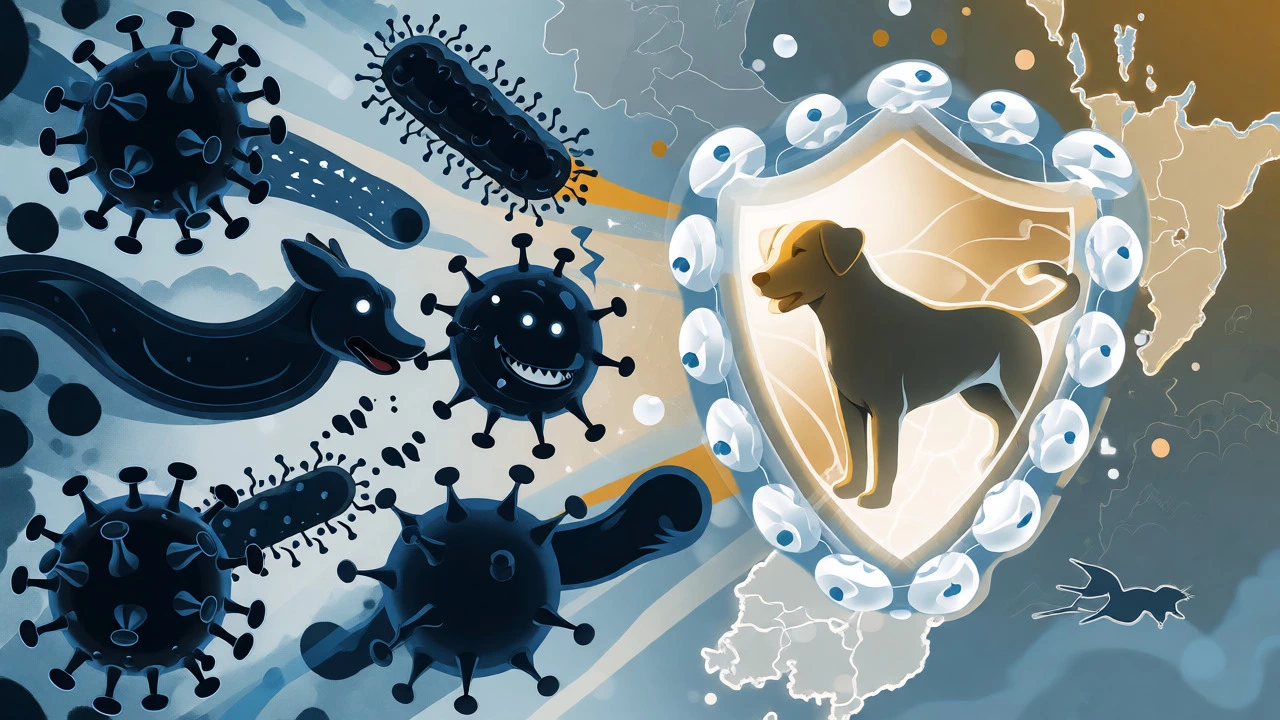
Is the 7-in-1 Too Much for My Puppy?
This is the most common worry. "Isn't giving seven antigens at once overwhelming?" The short answer: no. Modern immunology shows that puppies’ immune systems are robust enough to handle multiple antigens simultaneously. In fact, spacing them out too far apart can leave gaps in protection during critical developmental windows.
However, reaction rates do exist. Some breeds, particularly young German Shepherds, Rottweilers, and Golden Retrievers, may have higher sensitivity to certain vaccines. If your puppy vomits, gets hives, or becomes lethargic for more than 24 hours post-vax, tell your vet. They might split the next dose into two visits-one for the viral core, one for the bacterial/non-core components.
The Core vs. Non-Core Debate
Not all seven diseases carry equal weight globally. The World Small Animal Veterinary Association (WSAVA) guidelines classify vaccines into "Core" and "Non-Core." Understanding this helps you decide if you’re paying for unnecessary protection.
- Core Vaccines (Must-Have): Distemper, Parvovirus, Adenovirus (Hepatitis), and Rabies (where applicable). These protect against severe, widespread, or zoonotic diseases. Every dog needs these, regardless of location.
- Non-Core Vaccines (Lifestyle-Based): Leptospirosis, Bordetella, Lyme Disease, and Canine Influenza. These depend entirely on where you live and how your dog spends their time.
In New Zealand, Rabies isn’t endemic, so it’s rarely vaccinated against unless traveling. But Lepto is highly recommended due to local wildlife reservoirs. So, for many Kiwi owners, the "7-in-1" is effectively a customized shield tailored to local environmental risks rather than a global standard.
How Often Do You Actually Need It?
Gone are the days of annual boosters for everything. Current science suggests that immunity lasts longer than previously thought.
Puppy Schedule
- 6-8 Weeks: First DHPPi + Lepto (if high risk).
- 10-12 Weeks: Second DHPPi + Lepto.
- 14-16 Weeks: Final DHPPi + Lepto. This is crucial because maternal antibodies can interfere with earlier shots.
- 12-16 Months: Booster shot to confirm immunity took hold.
Adult Schedule
- Distemper/Parvo/Adeno: Every 3 years is often sufficient after the initial series.
- Leptospirosis: Usually annually, as immunity wanes faster and exposure risk remains constant.
- Bordetella: Annually or biannually, especially if using boarding facilities.
Ask your vet about titer testing. Instead of blindly boosting every year, a blood test can measure antibody levels. If they’re high, you might skip the booster. It saves money and reduces potential side effects.

Side Effects: What to Watch For
Most dogs feel fine within an hour. Maybe they’re a bit sleepy. That’s normal. But keep an eye out for:
- Immediate reactions (within minutes): Facial swelling, hives, vomiting, collapse. This is anaphylaxis-rare but serious. Vets keep epinephrine on hand for this reason.
- Delayed reactions (days later): Limping, fever, loss of appetite. Rarely, some dogs develop autoimmune issues triggered by vaccination, though this is debated in veterinary circles.
If your dog has had a bad reaction before, consider pre-medicating with antihistamines (as directed by your vet) or splitting the vaccines into separate appointments spaced two weeks apart.
Myths vs. Facts
Myth: Indoor dogs don’t need vaccines.
Fact: Parvovirus can hitch a ride on your shoes. Lepto comes from rat urine in your garage. Indoor status doesn’t eliminate risk.
Myth: More vaccines are always better.
Fact: Over-vaccinating can stress the immune system. Following WSAVA guidelines prevents unnecessary shots while maintaining safety.
Myth: Natural immunity is safer.
Fact: Surviving Distemper or Parvo is traumatic and expensive. Prevention via vaccination is statistically safer and kinder than treatment.
Final Thoughts: Tailoring the Shield
The "7-in-1" isn’t a magic bullet-it’s a menu. You don’t order everything on the menu just because it’s available. Talk to your vet about your specific lifestyle. Do you hike? Lepto is non-negotiable. Do you board your dog? Bordetella is essential. Do you live in a remote area with low wildlife density? Maybe you can stick to the core four.
Stay proactive. Keep records. Ask questions. Your dog’s health is a partnership between you and your veterinary team.
Does the 7-in-1 vaccine include Rabies?
Usually, no. In countries like New Zealand where Rabies is absent, the 7-in-1 typically covers Distemper, Parvovirus, Adenovirus, Parainfluenza, and two strains of Leptospirosis. Rabies is often added as a separate shot in countries where it is endemic or required by law.
Is the 7-in-1 vaccine safe for senior dogs?
Generally, yes. Senior dogs with compromised immune systems should consult their vet. Modified Live Virus (MLV) vaccines are potent; some vets prefer killed-virus alternatives for older or ill dogs to reduce stress on the body. Titer testing is also a good option for seniors to avoid unnecessary boosts.
Why is Leptospirosis included in some vaccines but not others?
Leptospirosis was historically less common in urban pets, so it wasn't in basic core vaccines. However, as wildlife (rats, possums, foxes) adapt to cities, Lepto cases have risen. It's also zoonotic (can infect humans), making it increasingly important for pet owners in suburban and rural areas.
Can my dog get sick from the vaccine itself?
Modified Live Virus vaccines contain weakened pathogens. While rare, a healthy dog might experience mild symptoms resembling the disease (e.g., slight fever or congestion) for 1-2 days. True infection from the vaccine is extremely uncommon in modern formulations.
How much does the 7-in-1 vaccine cost?
Costs vary widely by clinic and region. In NZ, expect to pay between $60-$120 NZD per visit, which often includes the exam fee. Packages for puppies covering the full series will be higher upfront but ensure complete protection.