Canine Posture & Bed Comfort Assessor
Use this tool to assess if your dog's standing habits indicate a need for better sleep support. Select the options below that best describe your dog.
Dog Profile
Assessment Results
Fill out the form on the left and click "Assess" to see recommendations for your dog's posture and bed comfort.
Recommended Bed Type:
Key Action Items:
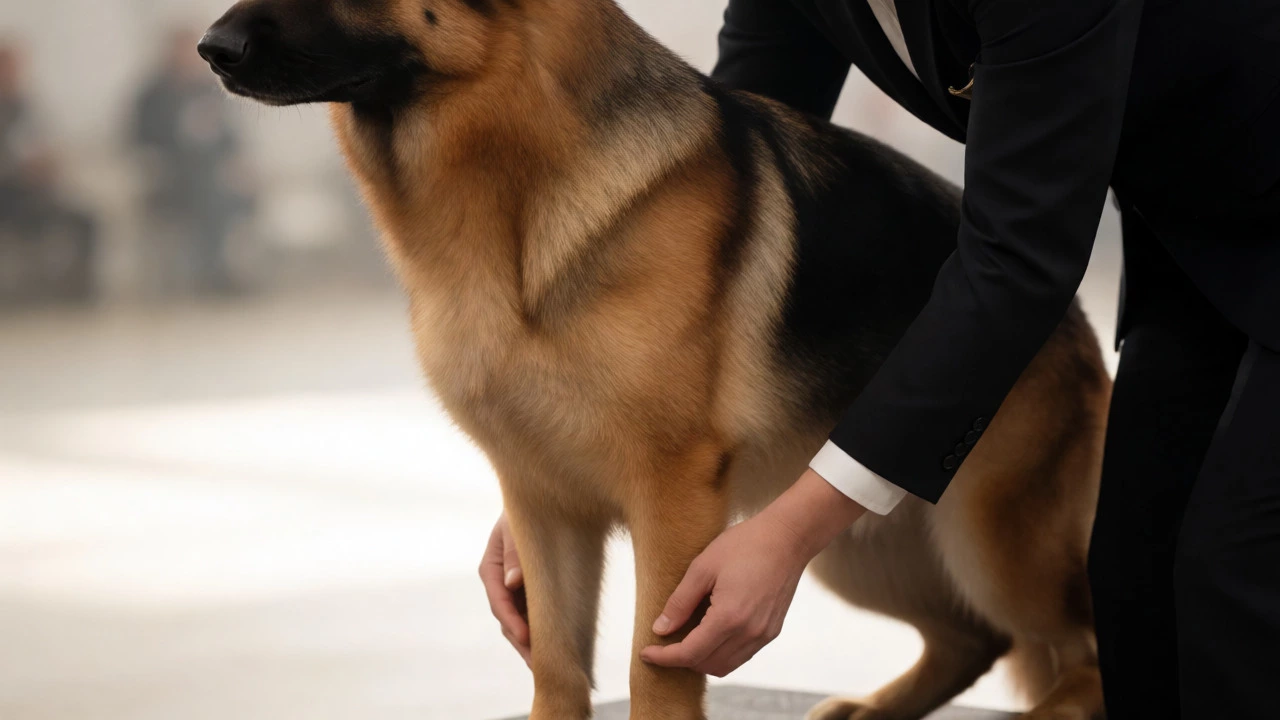
You’ve probably seen it at a dog show or maybe even in your living room. The dog stands perfectly still, legs straight, head up, looking like a statue carved from muscle and fur. This isn’t just the dog being well-behaved; it’s dog stacking, a specific stance where a handler positions a dog’s limbs to highlight its physical structure and breed standards. While this term usually rings bells for professional handlers and breeders, understanding what stacking actually means can change how you look at your pet’s daily comfort, especially when they’re resting on their dog bed.
Why does a relaxed pup suddenly tense up into a rigid pose? Is it pain? Is it training? Or is it something else entirely? If you are confused by your dog’s odd standing habits or wondering if their current sleeping spot supports their natural posture, you’re in the right place. We’re going to break down exactly what stacking is, why dogs do it (or have it done to them), and how proper support-whether from a pro stacker or a high-quality orthopedic mattress-affects your dog’s long-term health.
The Anatomy of a Stack: More Than Just Standing
At its core, stacking is a manipulation of canine posture to present the animal in its best possible light. In the show ring, a "stack" isn't natural. Dogs rarely stand with their front legs perfectly perpendicular to the ground and their rear legs angled back for balance unless they are working or hunting. Handlers use subtle touches on the muzzle, chest, and hindquarters to shift weight distribution. This creates a silhouette that judges can evaluate against the breed standard.
Think of it like a model posing for a photograph. The dog isn’t necessarily comfortable; they are cooperating to show off their angles. A correct stack highlights:
- Angulation: The bend in the knees and hocks.
- Topline: The straightness of the back from neck to tail.
- Proportion: How the height compares to length.
But here is the catch: outside the ring, we don’t want our dogs permanently stacked. We want them relaxed. However, knowing what a "good stack" looks like helps you spot structural issues at home. If your dog struggles to stand evenly, or if one leg seems to bear more weight than the others when they rise from a nap, it might not be bad manners-it could be a hint about joint health.
Voluntary vs. Forced Stacking: Reading Your Dog’s Body Language
Not all stacks are created equal. There is a massive difference between a trained show dog holding a pose and a household pet freezing in place. Voluntary stacking occurs when a dog naturally assumes a balanced, alert position because they feel confident and physically capable. You might see this when a Greyhound spots a squirrel or when a German Shepherd waits patiently for a command. Their muscles are engaged but not strained.
On the flip side, forced stacking happens when external pressure-either from a human hand or pain avoidance-locks the joints in place. If your dog stands rigidly after waking up, refusing to move for several seconds, they might be experiencing stiffness. This is common in older dogs or those with early signs of arthritis. They aren’t showing off; they are trying to find a position that doesn’t hurt.
| Type | Context | Physical Signs | Action Required |
|---|---|---|---|
| Show Stack | Competition/Training | Tense muscles, focused eyes, held by handler | None (Professional skill) |
| Alert Stack | Hunting/Play | Weight forward, ears perked, tail still | Observe (Natural instinct) |
| Pain Stack | Daily Life | Stiff legs, slow movement, reluctance to lie down | Vet Check / Better Bedding |
How Dog Beds Influence Posture and Recovery
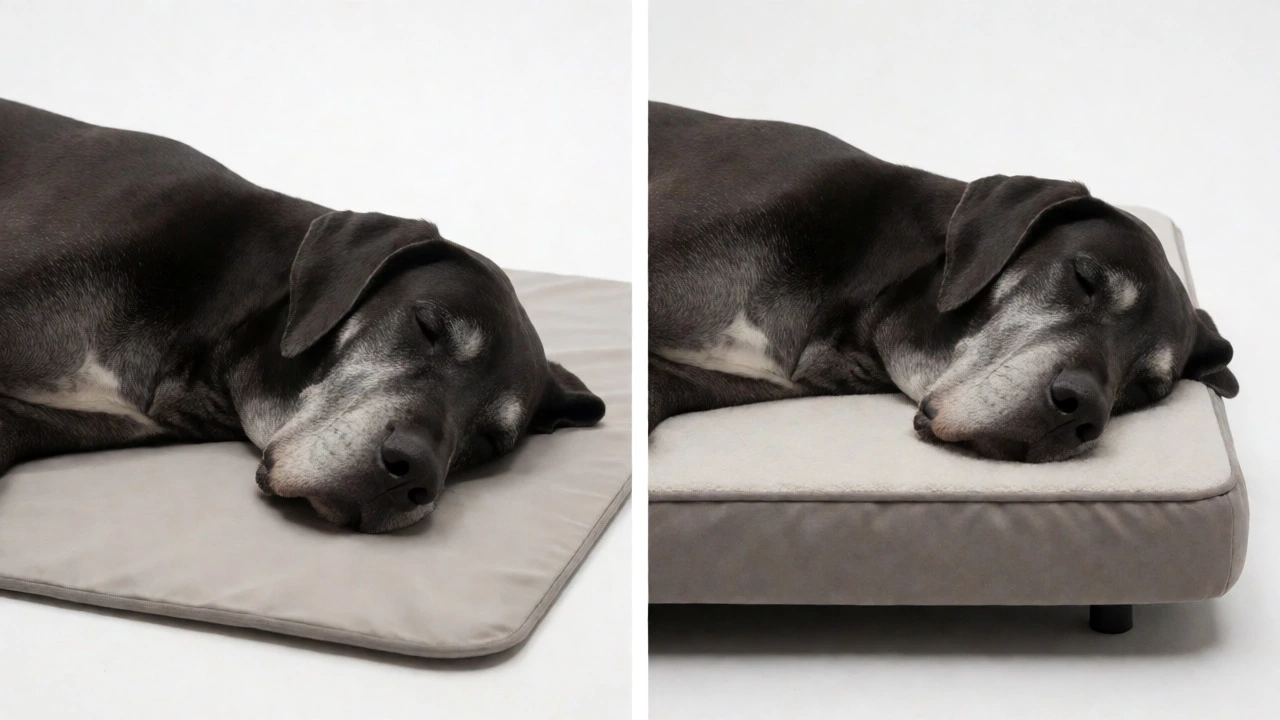
This is where the concept of stacking intersects with your choice of dog bed. When a dog sleeps, their muscles relax completely. If the surface beneath them is too soft, their spine sags. If it’s too hard, pressure points build up on the hips and elbows. Over time, poor sleep surfaces can lead to micro-injuries that make standing up painful, forcing the dog into unnatural postures-or "pain stacks"-when they wake up.
An orthopedic dog bed uses high-density memory foam to distribute weight evenly. Unlike cheap polyester fill that flattens out within months, orthopedic foam maintains its shape and provides consistent support. This allows the dog’s joints to rest in a neutral alignment. When joints are aligned during sleep, the dog wakes up with less stiffness. They don’t need to "stack" themselves painfully to get moving; they can rise smoothly.
Consider the materials. Polyurethane foam is common but breaks down quickly. Memory foam adapts to body heat, contouring to the dog’s unique shape. For large breeds like Great Danes or Mastiffs, whose joints carry significant load, this distinction is critical. A study often cited in veterinary rehabilitation suggests that consistent use of supportive bedding can reduce recovery time from minor soft tissue injuries. It’s not magic, but it’s mechanics.

Breed Standards and Structural Vulnerabilities
Some breeds are genetically predisposed to needing better support because of how they were bred to "stack." Take the German Shepherd. Historically, breeding trends favored an exaggerated slope to the back (roached back) to enhance the appearance of rear angulation in the show ring. While this makes for a dramatic stack, it places extra stress on the hip joints. Similarly, Basset Hounds and other chondrodystrophic breeds have short legs and heavy bodies, putting immense pressure on their spines.
If you own a breed known for structural quirks, your dog’s ability to maintain a healthy posture depends heavily on their environment. You can’t change their genetics, but you can control their sleep surface. Look for beds with these attributes:
- Elevated Edges: Provide neck support, preventing the head from dropping too low.
- Non-Slip Base: Prevents the bed from sliding when the dog jumps on or off, reducing strain on stabilizing muscles.
- Waterproof Liner: Protects the foam from accidents, which can degrade support over time.
DIY Stacking Checks at Home
You don’t need to be a judge to assess your dog’s structure. You can perform a simple "home stack" check once a month. Here is how to do it without causing stress:
- Wait for a calm moment: Don’t do this right after playtime. Choose a quiet afternoon.
- Stand the dog on a non-slip surface: A yoga mat works great. Hard tile can be slippery and cause the dog to spread their legs, skewing the results.
- Gently adjust the legs: Use one hand to steady the chest and the other to lightly guide the front paw so it is directly under the shoulder. Do the same for the rear, ensuring the hock is aligned with the knee.
- Observe the reaction: Does the dog hold the pose easily? Do they lean away from your touch? Do they try to sit immediately?
If your dog leans heavily on one side or refuses to keep their rear leg extended, note it. Compare this observation to how they behave on their bed. If they sink deeply into a sagging mattress every night, their morning stiffness might be linked to poor overnight support rather than age alone.
Choosing the Right Support: Beyond the Price Tag
When shopping for a new bed, ignore the cute shapes and focus on the specs. Density matters more than thickness. A 4-inch bed made of low-density foam will fail faster than a 3-inch bed made of high-density viscoelastic foam. Ask yourself: Does my dog chew? Then you need a ripstop cover. Does my dog shed? Removable, machine-washable covers are non-negotiable.
Also, consider the location of the bed. Placing it near a drafty window or on cold concrete floors negates the benefits of thermal-regulating foam. Dogs lose heat through their paws and belly. A raised cot-style bed promotes airflow, which is great for hot climates like Auckland summers, but might lack the cushioning needed for arthritic joints. For most adult dogs, a hybrid approach works best: a supportive orthopedic base placed on a rug or carpet for insulation.
Frequently Asked Questions
Is dog stacking harmful to puppies?
Generally, no, provided it is done gently and briefly. Puppies have flexible joints and growing bones. Professional handlers avoid excessive stacking in very young puppies to prevent stress on growth plates. At home, brief moments of checking posture are fine, but never force a puppy into a pose they cannot maintain comfortably.
How often should I replace my dog's orthopedic bed?
High-quality memory foam typically retains its supportive properties for 3 to 5 years. However, if you notice the bed has permanent indentations where your dog sleeps, or if your dog seems stiffer upon waking than usual, it’s time for a replacement. Regularly rotating the bed can also help extend its lifespan.
Can stacking help diagnose arthritis?
While stacking itself doesn't diagnose arthritis, observing how a dog holds a stack can reveal symptoms. Arthritic dogs often hesitate to extend their rear legs fully or shift their weight forward to relieve pressure on the hips. If your dog consistently avoids a balanced stance, consult a veterinarian for imaging and assessment.
Do all dogs need orthopedic beds?
Not necessarily. Young, healthy, active dogs with good muscle tone may prefer firmer surfaces or elevated cots. Orthopedic beds are most beneficial for senior dogs, large breeds, or those with existing joint conditions. However, providing a supportive surface is generally a good preventive measure for any dog that spends significant time resting.
What is the difference between a stack and a free-stack?
A traditional stack involves the handler manually positioning each limb. A free-stack (or gaiting) involves the dog walking slowly past the judge to demonstrate movement and natural posture. Free-stacking is becoming more popular in some registries as it reduces handling stress and shows the dog’s true functional movement rather than a static pose.