Canine Affection Decoder
Select the behaviors you observe in your dog right now. The tool will analyze their signals to tell you how they feel.
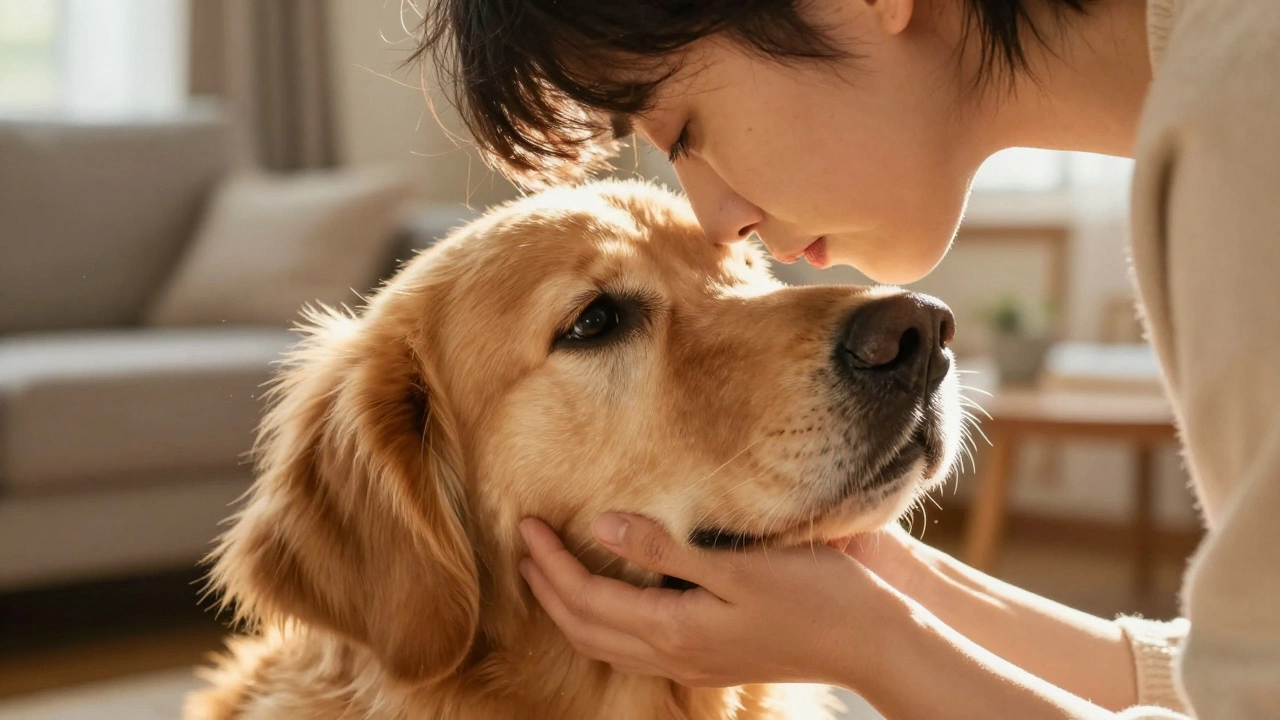
You lean in, press your lips to his soft fur, and he leans back. It feels like a hug returned. But have you ever stopped to wonder what is actually happening inside that furry head of yours? When you kiss your dog, does he think, 'Oh, this human loves me'? Or is he just confused by the sudden invasion of personal space?
Understanding canine affection isn't just about satisfying curiosity; it's about building a stronger bond with your best friend. Dogs don't process love the same way humans do. They lack the abstract concept of romantic or familial kissing as an expression of deep emotional connection. Instead, they rely on scent, touch, and tone. If you want to know if your dog truly enjoys your kisses, you need to look past the surface and read the subtle signals of dog body language.
The Science Behind the Snout: How Dogs Process Touch
To understand what your dog thinks, we first need to look at how they experience the world. Humans are visual creatures; dogs are olfactory ones. A kiss involves close proximity, breath, and physical contact. For a dog, this triggers a complex mix of sensory inputs.
Research into oxytocin, often called the 'love hormone,' shows that when dogs and humans gaze into each other's eyes or engage in positive physical contact, both parties experience a spike in oxytocin levels. This is the same biological mechanism that bonds mothers and infants. So, while your dog might not understand the cultural significance of a kiss, his brain likely registers the closeness as a positive, bonding event-provided he feels safe and comfortable.
However, context matters immensely. A quick peck on the forehead during a calm cuddle session is very different from grabbing a dog by the muzzle to force a kiss. The former releases feel-good chemicals; the latter can trigger stress responses involving cortisol. If your dog tenses up or looks away, he’s not thinking about love; he’s calculating the fastest escape route.
Decoding the Signals: Is He Enjoying It?
Dogs communicate constantly, but their vocabulary is physical, not verbal. When you kiss him, watch his whole body, not just his face. Here is what to look for to determine if he thinks your kiss is a compliment or a nuisance.
| Body Part | Positive Signal (He Likes It) | Negative Signal (He Doesn't) |
|---|---|---|
| Eyes | Soft gaze, slow blinking, relaxed eyelids | Averted gaze, 'whale eye' (showing whites), hard stare |
| Mouth | Slightly open, relaxed jaw, gentle lip licking (calming) | Tucked lips, tense jaw, excessive panting without heat |
| Ears | Relaxed, natural position, slightly back | Pinned flat against head, rigidly forward |
| Body | Leaning into you, loose wiggles, relaxed posture | Stiffening, turning head away, trying to move backward |
| Tail | Gentle wagging, low-level sway | Stiff high wag, tucked between legs, rapid thumping |
If you see the negative signals, stop immediately. Your dog isn't being rude; he's telling you he has reached his threshold for tolerance. Ignoring these cues can lead to behavioral issues down the line, including defensive biting.
Why Some Dogs Love Kisses and Others Hate Them
Not all dogs are created equal when it comes to affection. Several factors influence whether your pup will welcome a smooch or flinch away.
- Breed Tendencies: Breeds developed for close human cooperation, such as Labrador Retrievers, Golden Retrievers, and Cavalier King Charles Spaniels, often have higher thresholds for physical contact. Working breeds or independent types, like Huskies or Shiba Inus, may be more reserved.
- Early Socialization: Puppies exposed to gentle handling, face touching, and varied environments during their critical socialization window (3 to 14 weeks) are generally more tolerant of human intimacy later in life.
- Individual Personality: Just like humans, some dogs are extroverts who crave attention, while others are introverts who prefer quiet companionship. An introverted dog might enjoy sitting next to you but find direct facial contact overwhelming.
- Past Experiences: A dog who has been handled roughly by children or strangers may associate hands near the face with fear rather than affection.
It is crucial to respect these individual differences. Forcing affection on a dog who dislikes it damages trust. Trust is the foundation of any healthy human-animal bond.
How to Earn the Right to Kiss Your Dog
If your dog currently tolerates your kisses but doesn't seem thrilled, you can work on changing his association through positive reinforcement. This process requires patience and consistency.
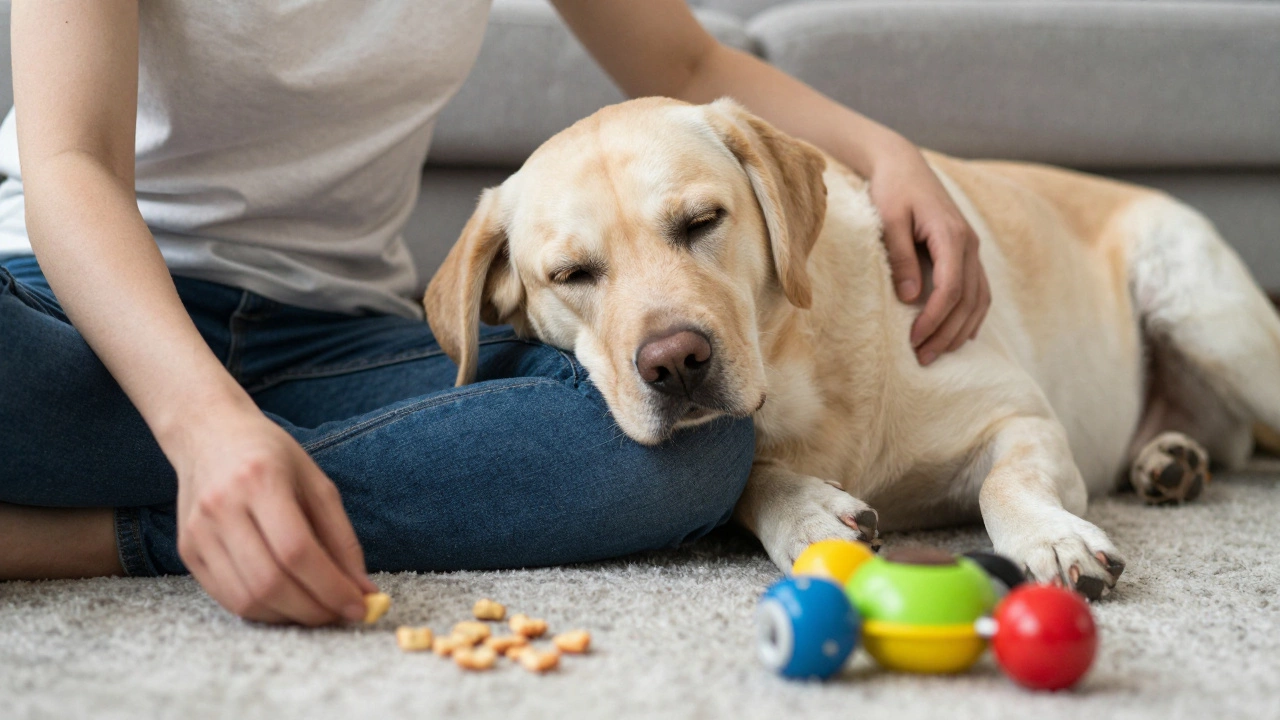
- Start Small: Begin by offering treats when you are simply sitting near him. Gradually move closer until you are touching his shoulder, then his neck. Reward calm behavior at each step.
- Respect Boundaries: Let him initiate contact. If he nudges your hand or rests his chin on your knee, reward that moment. This teaches him that interaction is on his terms.
- Use High-Value Rewards: Use something he really loves, like small pieces of chicken or cheese, to create a strong positive association with your face being near his.
- Watch for Consent: Before leaning in for a kiss, pause. If he stays still or leans in, go ahead. If he moves away, let him go. This builds consent-based interactions.
- Keep It Brief: Start with a quick, light touch. Long, lingering kisses can feel suffocating to a dog. Over time, you can extend the duration if he remains relaxed.
This method aligns with modern force-free training principles, which emphasize choice and reward over dominance or coercion.
Alternative Ways to Show Affection
If your dog isn't a fan of kisses, don't worry. There are plenty of other ways to express love that dogs naturally understand and appreciate. These methods often strengthen your bond more effectively because they speak his language.
- Gentle Petting: Most dogs enjoy being scratched behind the ears, under the chin, or along the chest. Avoid patting the top of the head, which can be perceived as threatening.
- Playtime: Engaging in fetch, tug-of-war, or puzzle games provides mental stimulation and reinforces your role as a fun, reliable companion.
- Calm Presence: Simply sitting quietly together, perhaps reading a book while he rests nearby, offers security and comfort. This is known as 'parallel play' or passive companionship.
- Treats and Food: Sharing meals or giving occasional treats is a powerful social gesture in dog culture. It signifies trust and resource sharing.
- Slow Blinking: Try looking at your dog softly and slowly closing and opening your eyes. Many dogs will return the blink, which is a sign of trust and relaxation in canine communication.
By offering these alternatives, you show respect for his preferences while still nurturing your relationship. A happy, confident dog is one who feels understood, not one who is forced to perform affection.
Common Misconceptions About Dog Behavior
Pop culture often anthropomorphizes dogs, leading to misunderstandings about their emotions. Let's clear up a few myths.
Myth: Licking means love.
While licking can be a sign of affection, it also serves other purposes. Dogs lick to taste salt, clean wounds, seek food, or appease dominant figures. Context determines the meaning. If your dog licks your face after eating, he might just want more food.
Myth: Tail wagging always means happiness.
A wagging tail indicates arousal, not necessarily joy. A stiff, high wag can signal aggression or tension. A low, slow wag might indicate uncertainty. Always look at the rest of the body for clarity.
Myth: Dogs hold grudges.
Dogs live in the present. If your dog seems upset after you scold him, he is likely reacting to your tone and body language in that moment, not ruminating on past events. Forgiveness is immediate once the tension dissipates.
Building a Lasting Bond
Ultimately, what your dog thinks when you kiss him depends on the history of your relationship. If you have built a foundation of trust, respect, and positive experiences, he will likely view your kiss as a harmless, even pleasant, quirk of his human. If that foundation is shaky, he may view it as an intrusion.
The goal isn't to make every dog love kisses. The goal is to understand your unique companion. By paying attention to his body language, respecting his boundaries, and communicating in ways he understands, you create a deeper, more authentic connection. That connection is far more valuable than any single gesture of affection.
So, the next time you lean in for a kiss, take a second to check in with him. Is he leaning in too? Is his body loose? If yes, enjoy the moment. If no, try a scratch behind the ear instead. He’ll thank you for it, in his own special way.
Do dogs understand kisses as a sign of love?
Not in the human sense. Dogs do not have the cultural context to understand kissing as a romantic or familial gesture. However, they can learn to associate it with positive feelings, attention, and safety through conditioning and bonding. If your dog is relaxed and seeks out the interaction, he likely views it as a positive social cue.
Why does my dog lick me after I kiss him?
Licking is a multifaceted behavior. It can be a response to the salty taste of your skin, a way to solicit more attention, or a calming signal to de-escalate potential tension. In many cases, it is a reciprocal gesture of affection, similar to how puppies lick their mother's mouths to stimulate regurgitation of food.
Is it bad to kiss my dog on the mouth?
From a hygiene perspective, it is generally discouraged due to the bacteria present in a dog's mouth, such as Pasteurella or Capnocytophaga, which can cause infections in humans, especially those with compromised immune systems. From a behavioral standpoint, many dogs find face-to-face contact intimidating. It is safer and more respectful to kiss the top of the head or cheek.
How can I tell if my dog is stressed by my affection?
Look for signs of anxiety such as yawning, lip licking, turning the head away, avoiding eye contact, or stiffening the body. If your dog tries to move away or hides, he is clearly uncomfortable. Respect these signals and give him space. Forcing affection increases stress and damages trust.
Can I train my dog to enjoy kisses?
Yes, using positive reinforcement techniques. Start by rewarding calm behavior when you are near, then gradually introduce light touches. Always use high-value treats to create a positive association. Go at your dog's pace, and never force the interaction. If he consistently shows signs of stress, accept that he may never enjoy kisses, and find other ways to bond.