Puppy Sleeping Arrangement Advisor
Fill out the form to get a personalized sleeping arrangement recommendation for your puppy.
You’re exhausted. It’s 3 AM. The tiny bundle of fur on your bed just let out a yelp that could wake the dead. Do you pick them up? Do you ignore them? Or do you wish they were sleeping somewhere else entirely? This is the nightly dilemma every new dog owner faces. The question isn’t just about comfort; it’s about building a foundation for a well-behaved adult dog.
There is no single "right" answer that works for every breed or every household. However, there are clear pros and cons to sharing your bedroom space with a puppy. Most veterinarians and certified trainers agree that for the first few weeks, proximity helps with housebreaking and bonding. But long-term habits start forming fast. If you want a dog that can stay home alone without destroying your couch, where they sleep matters more than you think.
The Case for Keeping Them Close
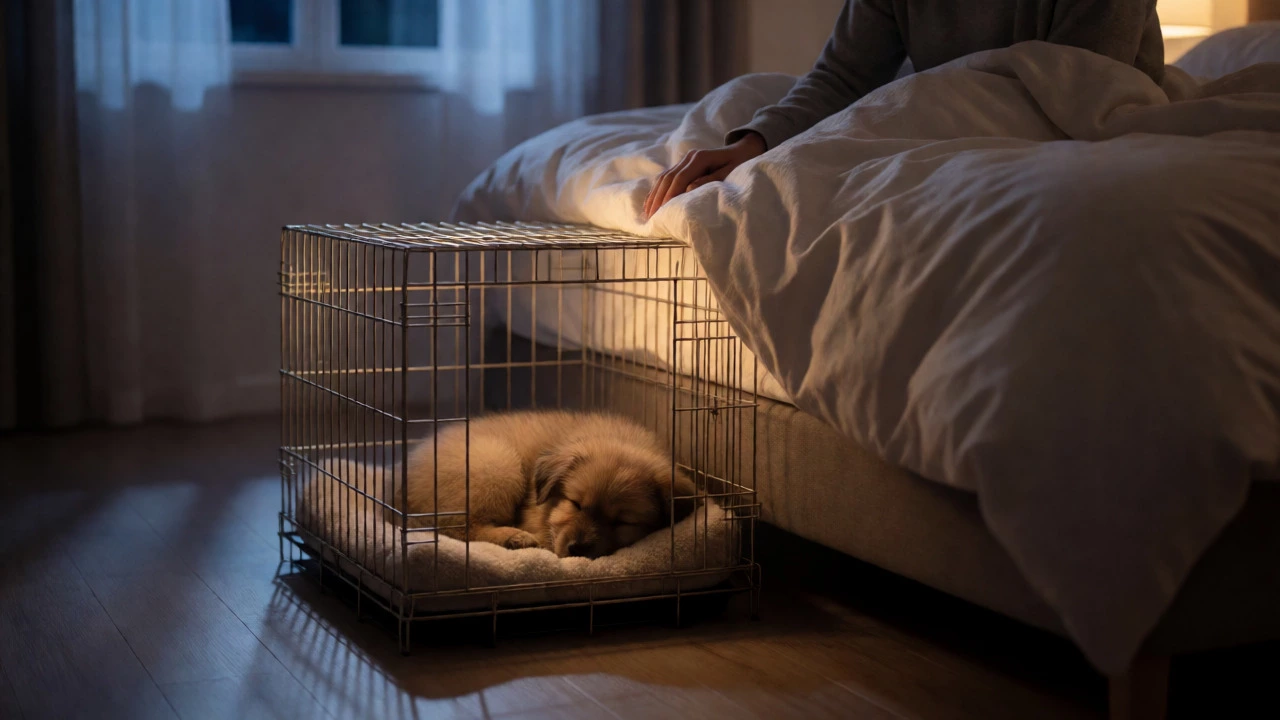
Let’s be honest: puppies are babies. They leave their littermates and mother abruptly, often before they’ve fully learned how to self-soothe. Sleeping in the same room provides immediate reassurance. When a puppy hears your breathing or feels your presence nearby, their stress levels drop significantly. This calm state makes it easier for them to fall asleep rather than whining until someone comes running.
Housebreaking is another major factor. Puppies have small bladders. A ten-week-old pup might only hold it for three hours. If they are in a separate room down the hall, you might miss the subtle signs that they need to go out-the sniffing, the circling, the whimpering. Having the crate in your bedroom allows you to hear these cues instantly. You can take them out quickly, reward them, and put them back to sleep. This consistency prevents accidents on your carpet and speeds up the potty training process dramatically.
Bonding also accelerates when you share space. Dogs are pack animals by nature. In the wild, the pack sleeps together for safety and warmth. By allowing your puppy into your bedroom (even if just in a crate next to the bed), you reinforce that you are part of their core group. This trust translates into better obedience later on. They learn that you are their source of security, not just their food dispenser.
The Risks of Co-Sleeping Too Early
While the benefits are real, so are the pitfalls. The biggest risk is creating dependency. If a puppy learns that crying equals attention, they will cry every single night for years. We’ve seen owners who started with a crate in the bedroom, then moved the crate to the living room at six months, only to find the dog screaming because they didn’t know how to sleep alone. Transitioning too late makes separation harder.
Another issue is hygiene and health. Puppies don’t always have perfect bladder control. Accidents happen. If your puppy has an accident in the bedroom, you’re dealing with cleanup in a space where you spend eight hours a day. Plus, fleas, ticks, or parasites can transfer more easily between humans and pets in close quarters. Regular grooming and vet check-ups mitigate this, but it’s still a consideration for allergy sufferers.
Then there’s the disruption to your own sleep. Puppies move. They dream. They twitch and kick. If you’re a light sleeper, having a puppy in the room might leave you feeling groggy during the day. And if you allow them on the bed, you risk developing bad habits. A twenty-pound puppy seems harmless now, but a fifty-pound adult dog taking up half your mattress is a different story. Once a dog gets used to the bed, getting them off it requires consistent training that many owners aren’t prepared for.

Crate Training vs. Bed Sharing: What Works Best?
This is where most confusion lies. People often conflate "sleeping in the same room" with "sleeping in the same bed." These are two very different things. Crate training is widely recommended by experts like those from the American Kennel Club because it taps into a dog’s natural den instinct. Dogs prefer clean, enclosed spaces. A properly sized crate becomes their safe haven, not a prison.
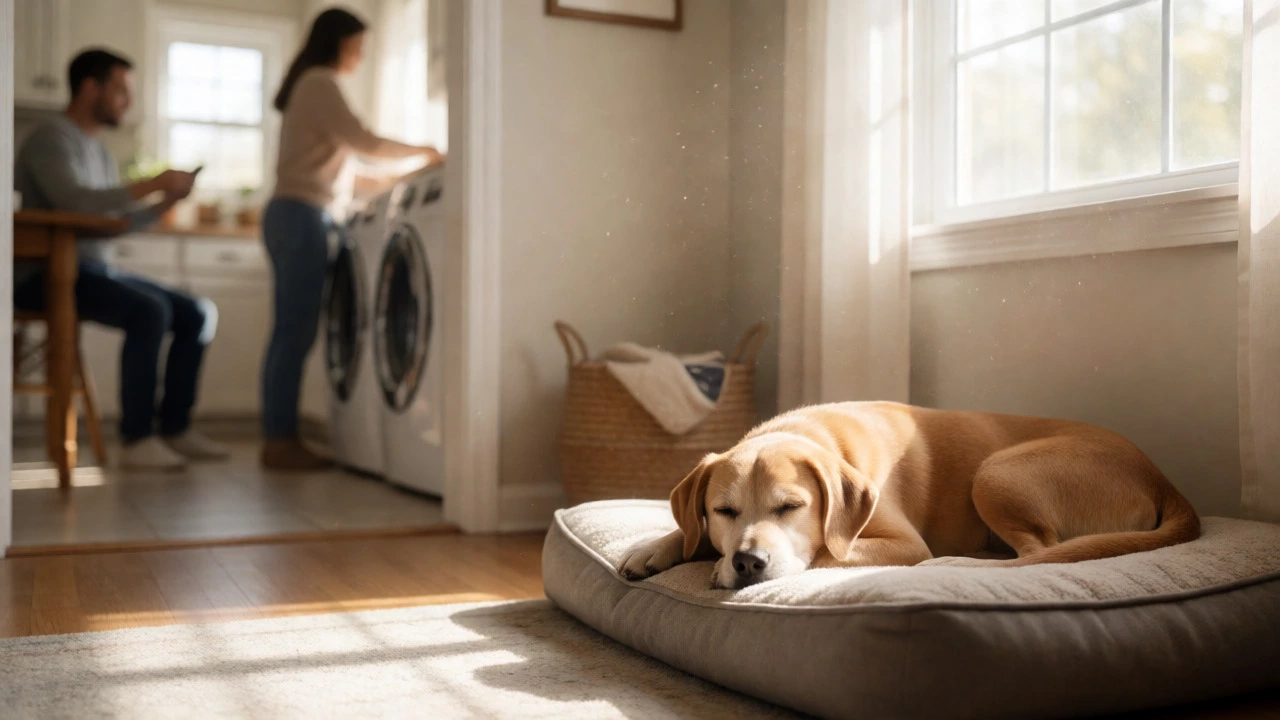
Placing the crate in your bedroom gives you the best of both worlds. The puppy feels secure knowing you are near, but they learn to settle in their own space. This setup makes future transitions easier. When the puppy is older-usually around four to six months-you can gradually move the crate farther away, eventually relocating it to a permanent spot like the laundry room or a corner of the living room. Because they already know how to sleep independently, the move is less traumatic.
| Arrangement | Pros | Cons | Best For |
|---|---|---|---|
| Crate in Bedroom | Easier potty training, builds independence, reduces nighttime accidents. | Puppy may whine initially; takes up floor space. | Most puppies, especially those prone to anxiety. |
| Dog Bed in Bedroom | Comfortable, easy access for cuddles, good for older puppies. | Harder to contain accidents; may encourage jumping on human bed. | Puppies who are past the chewing phase. |
| On Human Bed | Maximum bonding, warmth, immediate comfort. | Hygiene issues, potential dominance/confusion, hard to break habit. | Small breeds with allergies to cold floors; experienced owners. |
| Separate Room | Better human sleep quality, enforces early independence. | High risk of separation anxiety; difficult housebreaking. | Older dogs or very confident puppy breeds. |
How to Transition Out of Your Bedroom
If you decide to keep your puppy in the room initially, plan the exit strategy from day one. Don’t wait until the dog is an adult to teach them they can’t be in the bedroom. Start moving the crate slowly. After the first month, shift the crate a few feet away from the bed each week. Eventually, move it to the doorway, then outside the door.
Use positive reinforcement during this transition. When the puppy settles quietly in the new location, toss a treat through the door. If they whine, wait for a moment of silence before responding. Never punish them for crying, as this increases anxiety. Consistency is key. If you let them in the room one night because they cried, and keep them out the next, you confuse them. Pick a rule and stick to it.
Consider using white noise or a ticking clock timer in the crate. These sounds mimic the heartbeat of their mother and littermates, helping them relax. Some owners use a shirt worn under their arms overnight in the crate. The scent of their human provides comfort without requiring physical presence.
Special Considerations for Different Breeds
Not all puppies are created equal. Toy breeds like Chihuahuas or Yorkies have smaller bladders and higher metabolic rates. They may need more frequent nighttime bathroom breaks, making bedroom proximity almost essential for the first several months. Conversely, larger breeds like Labradors or Golden Retrievers grow quickly and become strong enough to chew through crates if left alone too early. Their size also means they need more space, which might make a bedroom feel crowded.
Brachycephalic breeds (flat-faced dogs like Bulldogs) often snore loudly or have breathing difficulties. While this doesn’t affect their ability to sleep in your room, it might affect yours. If you’re a light sleeper, consider earplugs or placing their crate slightly further from the bed to minimize disturbance.
Signs Your Puppy Is Ready to Move Out
How do you know when it’s time to stop sharing the bedroom? Look for these indicators:
- Bladder Control: Your puppy can sleep through the night (6-8 hours) without needing a bathroom break.
- Calm Settling: They fall asleep within 10 minutes of being placed in the crate without whining.
- No Destructive Behavior: They don’t try to escape the crate or chew the bars when left alone briefly.
- Confidence: They seem relaxed and happy when separated from you during the day.
If you see these signs, usually around four to five months of age, you can begin the gradual move to a different room. Remember, this isn’t a punishment. It’s a graduation to greater independence.
Is it cruel to leave a puppy in another room at night?
No, it is not cruel if done correctly. Puppies need to learn independence. Leaving them in a separate room with a comfortable crate, water, and toys teaches them that being alone is safe. However, for very young puppies (under 12 weeks), they may need more frequent checks for bathroom needs, which is why the bedroom is often preferred initially.
What if my puppy cries all night in the crate?
First, ensure they don’t need to go to the bathroom. If they are settled, avoid rushing in immediately at the first squeak, as this rewards the crying. Wait for a brief pause in the noise before checking on them calmly. Use a command like "quiet" and reward silence. Over time, they will learn that crying does not bring you over, but quietness does.
Can I let my puppy sleep on my bed instead of a crate?
You can, but be aware of the consequences. Bed-sharing can lead to possessiveness or difficulty establishing boundaries. It also makes housebreaking harder since you won’t hear them waking up to eliminate. If you choose bed-sharing, be prepared to train them to get on and off the bed on command and to respect your personal space.
At what age should I move my puppy out of my bedroom?
Most experts suggest starting the transition between four and six months of age. By this time, most puppies have better bladder control and understand basic commands. Gradually move the crate closer to the door, then outside the door, over a period of two to three weeks to prevent anxiety.
Does sleeping in the same room help with separation anxiety?
It can help reduce initial anxiety by providing security. However, if the puppy becomes overly dependent on your presence to fall asleep, it might worsen separation anxiety in the long run. The goal is to use the proximity to build confidence, then gradually increase distance so the puppy learns to self-soothe.