Puppy Freedom Readiness Calculator
Select the milestones your puppy has consistently achieved (for at least 2 weeks) without supervision.
Ready to Calculate
Check off milestones and enter your puppy's age to see their readiness score.
Bringing a puppy home is one of those moments that feels like pure magic until you turn your back for thirty seconds. Suddenly, the tiny ball of fur has vanished into another room, chewed through a baseboard, or found a way to eat something it absolutely should not have. The question on every new owner's mind is simple but loaded with anxiety: Should I let my puppy roam the house freely, or keep them contained?
The short answer is no. Not yet. And probably not ever in the traditional sense of "free run" access to every corner of your home without supervision. While it might seem cruel to restrict such an energetic creature, giving a young dog unrestricted access to your entire living space is a recipe for disaster-for both your property and your dog’s mental well-being.
The Myth of "Free Run" Freedom
We often confuse physical freedom with happiness. We imagine our dogs are happiest when they can sprint from the kitchen to the bedroom at will. But for a young dog under six months old, total freedom is rarely freedom at all. It is usually chaos.
Puppies lack impulse control. Their brains are still developing the neural pathways required to understand boundaries. If you let a three-month-old Labrador roam free, you aren't giving them liberty; you are giving them permission to make mistakes. And because they learn by doing, those mistakes become habits. A puppy who learns that chewing shoes is fun because no one stopped them will continue chewing shoes long after they have outgrown the teething phase.
Furthermore, constant movement prevents rest. Puppies need between 18 and 20 hours of sleep a day to support their rapid growth. In a large, open environment, they are constantly stimulated by sights, sounds, and smells. This leads to overtiredness, which manifests as hyperactivity, whining, and destructive behavior. Paradoxically, restricting their space helps them calm down and get the rest they desperately need.
Safety First: The Hazards of Unsupervised Access
Beyond behavioral issues, there is the matter of physical safety. Homes are filled with hazards that adult dogs might ignore or avoid, but curious puppies will investigate with their mouths.
- Electrical cords: These are the number one danger. Puppies explore textures, and wires feel like chew toys. A single bite can cause severe burns or electrocution.
- Toxic plants: Many common houseplants, like lilies or pothos, are toxic to dogs. A roaming puppy can easily knock over a pot and nibble on the leaves.
- Small objects: Coins, rubber bands, children's toys, and socks can be swallowed, leading to intestinal blockages that require emergency surgery.
- Cleaning supplies: Chemicals stored under sinks or in low cabinets are within reach of a determined sniffer.
Even if you think your home is perfectly safe, accidents happen. A door left ajar, a trash can tipped over, or a slip on a hardwood floor can lead to injury. Containment isn't about punishment; it's about creating a controlled environment where the only things available to the puppy are safe and appropriate.
The Power of Management: Baby Gates and Playpens
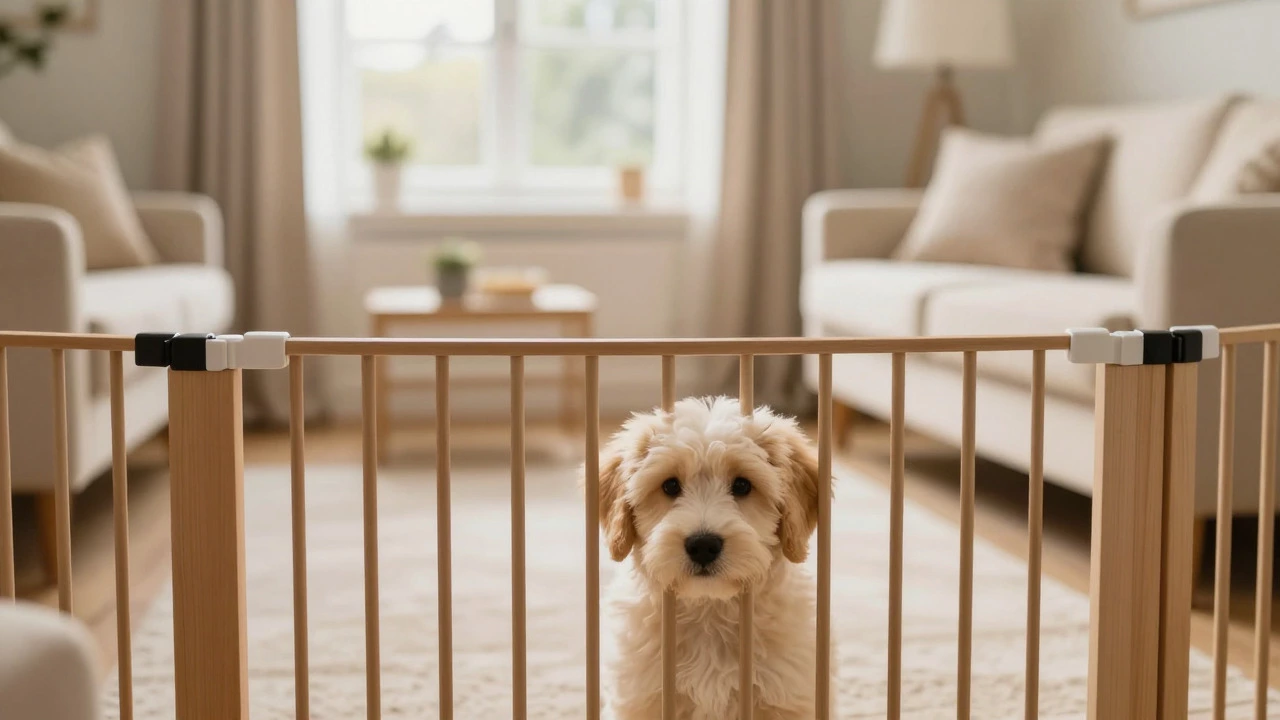
If crates feel too confining for your lifestyle, you don't have to choose between total confinement and total freedom. The middle ground is managed access. This involves using tools like baby gates, exercise pens (x-pens), and tethers to create safe zones.
A baby gate allows your puppy to see and hear what is happening in the rest of the house while keeping them safely contained in one area. This reduces separation anxiety because they aren't isolated in a dark closet, but it also prevents them from running amok. You can set up a "puppy zone" in the living room or kitchen-a high-traffic area where they can be part of the family action but remain supervised.
An exercise pen offers even more space than a crate. It gives your puppy room to stretch, play with toys, and nap, but keeps them away from hazards. When you are cooking, working, or simply need a moment to breathe, you can close the gate and know exactly where your dog is and what they are doing.
Crate Training: A Tool, Not a Prison
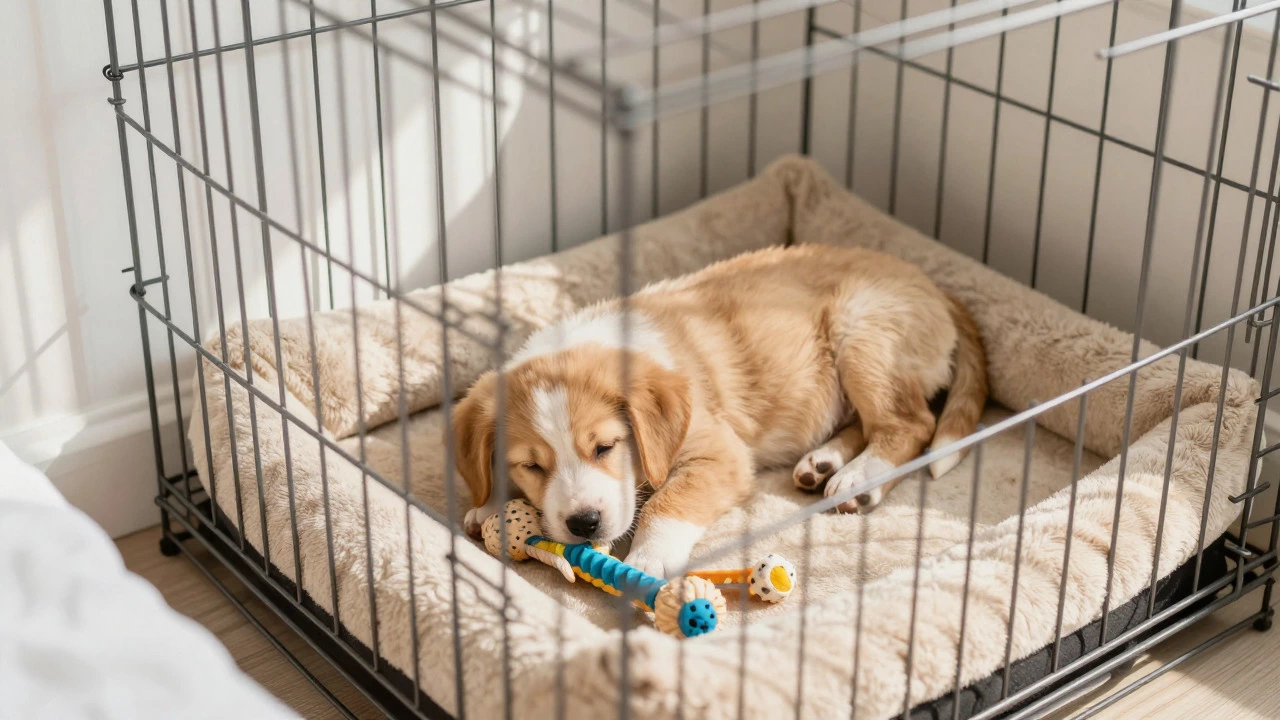
Despite the negative connotations some people attach to them, crates are essential tools for responsible puppy ownership. Dogs are den animals by nature. They instinctively seek out small, enclosed spaces to sleep and feel secure. A properly introduced crate becomes a safe haven, not a jail cell.
The key is correct introduction. Never use the crate as punishment. Instead, associate it with positive experiences. Feed your puppy inside the crate. Toss treats in there during the day. Leave the door open so they can come and go as they please. Gradually increase the time they spend inside with the door closed, starting with just a few minutes while you are right next to them.
Crate training aids significantly in housebreaking. Dogs naturally avoid soiling their sleeping area. By limiting their space to a size where they must hold it until taken outside, you teach bladder control much faster than if they had access to a whole room where they could pee in one corner and sleep in another.
| Method | Pros | Cons | Best For |
|---|---|---|---|
| Crate | Instinctual comfort, aids housebreaking, easy travel | Limited space, requires proper sizing | Naps, nighttime, unsupervised periods |
| Baby Gate | Visual connection, larger area, easy installation | Requires sturdy mounting, limited mobility | Daytime containment in main living areas |
| Exercise Pen | Flexible layout, portable, good for play | Takes up floor space, can tip if not anchored | Playtime, socialization sessions |
| Tether | Keeps puppy close, prevents wandering | Can cause frustration if used too long | Supervised activities like cooking or cleaning |
When Can a Puppy Have Free Roam?
So, does this mean your dog will never enjoy the luxury of running free? Not necessarily. Most dogs eventually earn "house privileges," but this is a reward for maturity, not a right granted by age alone.
There is no fixed timeline. Some highly trainable breeds like Border Collies may earn partial free roam by six months. Others, like Hounds or Terriers, might take a year or more. The criteria for earning freedom include:
- Housebroken reliability: No accidents indoors for several weeks.
- Chewing appropriateness: Only chews designated toys, not furniture or shoes.
- Impulse control: Listens to basic commands like "leave it" and "come."
- Calmness: Can settle down when told, rather than zooming around endlessly.
Even then, "free roam" often comes with conditions. Many owners allow free access to the living room and hallway but keep bedrooms or offices gated off. Or they allow free roam only when someone is home to supervise. True 24/7 unsupervised access to the entire house is rare and risky for most dogs.
Mental Stimulation: Keeping Them Busy in Small Spaces
A common concern is that containment will bore the puppy. Boredom leads to destruction, so how do we prevent it? The answer lies in mental stimulation. A tired dog is a good dog, and mental fatigue is just as important as physical exercise.
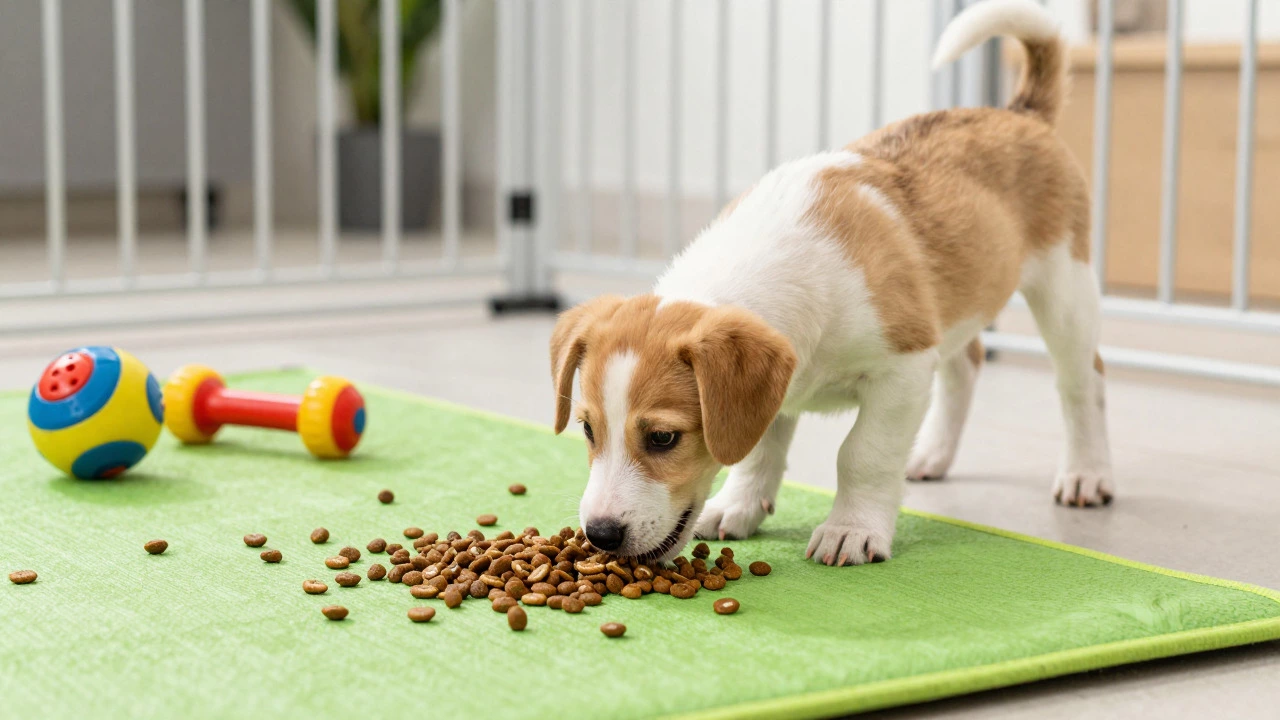
In a confined space, you can engage your puppy with puzzle toys, frozen Kongs, and sniffing games. Scatter feeding-tossing kibble into grass or onto a snuffle mat-encourages natural foraging behaviors. Rotate toys weekly to keep novelty high. If your puppy is mentally engaged, they are less likely to develop bad habits out of boredom.
Short, frequent training sessions also help. Five minutes of practicing "sit," "down," or "touch" burns brain power effectively. This turns containment time into bonding time, reinforcing your role as a leader and teacher.
Creating a Positive Environment
Ultimately, the goal is to raise a confident, well-adjusted adult dog. Restricting movement initially sets them up for success. It prevents failures, reduces stress, and builds trust. When your puppy knows the rules, they relax. They stop worrying about whether they did something wrong because they were never given the chance to do anything wrong.
As your puppy grows, you can gradually expand their territory. Start with one room, then add another as they demonstrate responsibility. This phased approach teaches them that freedom is earned through good behavior, making the transition smoother for everyone involved.
At what age can a puppy start having free roam?
Most puppies are ready to begin earning free-roam privileges between 6 to 12 months of age, depending on their individual maturity and training progress. However, many dogs never receive full, unsupervised access to every room. It is best to introduce freedom gradually, starting with one supervised room, and expanding only after the puppy demonstrates consistent housebreaking and impulse control.
Is it cruel to crate a puppy?
No, crate training is not cruel when done correctly. Dogs are den animals and naturally seek enclosed spaces for safety. A crate provides a secure resting place and aids in housebreaking. Cruelty occurs only if the crate is used as punishment, is too small, or if the puppy is confined for excessive periods without breaks for exercise and bathroom needs.
How do I puppy-proof my home for free roam?
To puppy-proof your home, remove or secure electrical cords, store toxic plants out of reach, pick up small objects like coins and socks, and lock away cleaning supplies. Use baby gates to block off dangerous areas like stairs or kitchens. Regularly inspect your home from a puppy's eye level to identify new hazards as they grow and become more agile.
What should I do if my puppy destroys things when left alone?
Destruction usually stems from boredom, anxiety, or teething. Increase mental stimulation with puzzle toys and sniffing games. Ensure your puppy gets enough physical exercise before being left alone. Consider using a crate or exercise pen to limit access to destructible items until they learn to settle calmly. If anxiety persists, consult a professional trainer or veterinarian.
Can I let my puppy roam at night?
It is generally recommended to keep puppies contained at night, either in a crate or a small gated area near your bed. This helps with housebreaking by preventing accidents in hidden corners and provides a sense of security. As the puppy matures and stays dry through the night, you can gradually move their sleeping area further away, but containment remains safer for hygiene and peace of mind.