Puppy Crate Decision Helper
Answer the questions below to get personalized advice on how to handle your sleeping puppy.
Recommended Action
You’re sitting on the couch, watching your puppy a young domestic dog typically under one year old who requires intensive socialization and house-training drift off to sleep mid-play. He’s curled up on the rug, paws twitching, completely out cold. Your instinct screams at you to pick him up and tuck him into his crate an enclosed space used for safety, transport, and house-training that mimics a den. But do you? Or do you let him sleep where he lies?
This is one of the most common dilemmas for new owners. It feels wrong to wake a sleeping baby, but it also feels wrong to let them sleep in the "wrong" place. The answer isn't a simple yes or no; it depends entirely on why he fell asleep there and what stage of training he’s in. Let’s break down exactly how to handle this without undoing weeks of hard work.
The Golden Rule: Location Matters More Than Time
Before you lift a single paw, look at where he is. If your puppy has fallen asleep in his designated sleeping area the specific zone within the home or crate assigned for rest, leave him alone. Waking him up just to move him to another spot in the same room creates confusion. Dogs associate their bed with comfort. If you constantly interrupt his rest cycles by moving him, you teach him that sleep is unstable.
However, if he has crashed on the living room floor, the kitchen tiles, or worse, inside his water bowl, you need to intervene. Here is the critical distinction: Is he tired, or is he avoiding the crate?
- Tired: He played hard, ate well, and physically ran out of energy. This usually happens after long walks or intense zoomies.
- Avoidance: He looks alert when you approach, sighs dramatically, or refuses to follow you to the crate. This is behavioral, not physical exhaustion.
Scenario 1: He Is Genuinely Exhausted
If your puppy has been playing vigorously for an hour and suddenly drops, he is likely experiencing a energy crash a sudden drop in blood sugar or mental fatigue common in growing puppies. Puppies have limited stamina. A three-month-old Labradoodle might only stay awake for 45 minutes before needing a nap.
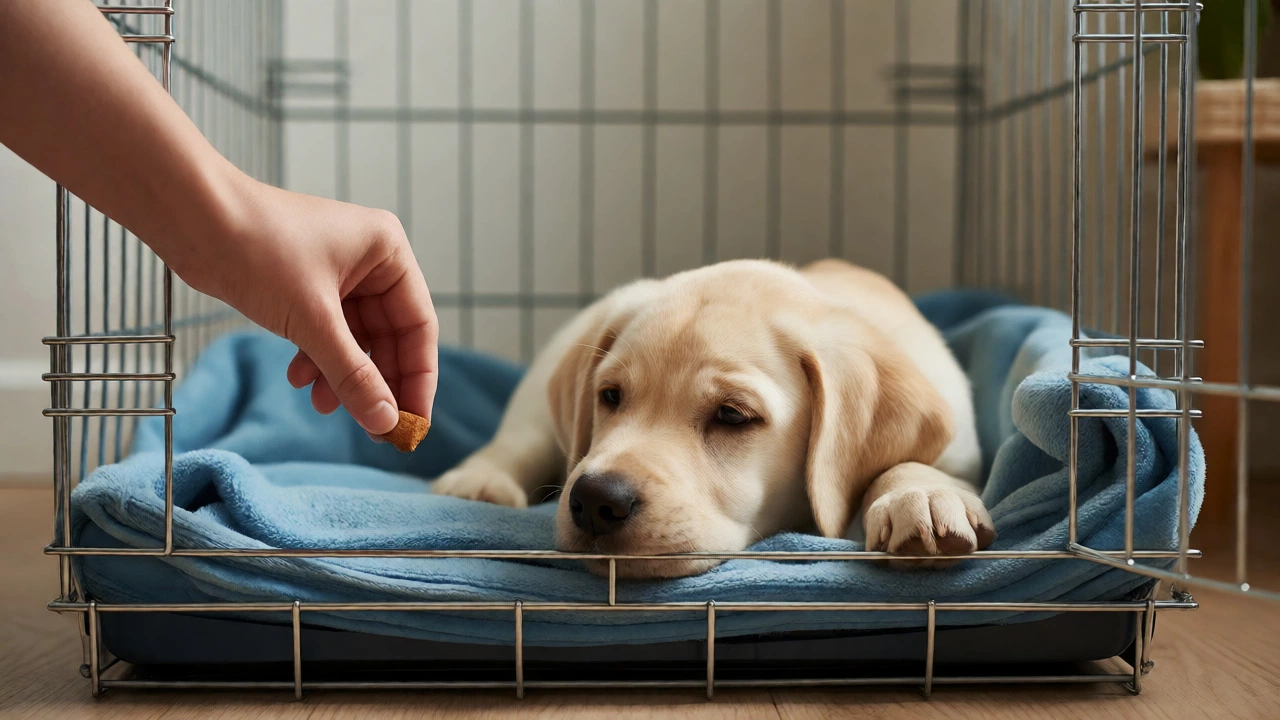
In this case, gently carry him to his crate. Do not shake him. Do not speak loudly. Use a soft, low voice. Say his name once, softly. If he stirs slightly, encourage him with a treat placed directly in front of the crate door. Once he steps in, close the door quietly. You are teaching him that even when he’s too tired to think, his body belongs in his safe space. This reinforces the habit without requiring conscious effort from him.
| Puppy State | Action | Reasoning |
|---|---|---|
| Deep Sleep (Unresponsive) | Carry gently to crate | Reinforces location association; prevents bad habits forming elsewhere. |
| Drowsy (Eyes open, wobbly) | Lure with treat to crate | Encourages voluntary movement; builds positive crate association. |
| Awake but Refusing | Do not force; wait 5 mins | Forcing creates negative anxiety; waiting allows natural fatigue to take over. |
| Sleeping in Crate Already | Leave alone | Respects sleep cycle; avoids unnecessary disturbance. |
Scenario 2: He Is Avoiding the Crate
This is trickier. If your puppy falls asleep on the rug while you are watching TV, and you know he’s had enough exercise, he might be using sleep as an excuse to stay out of the crate. This is especially common during the fear period a developmental stage around 8-10 weeks where puppies become cautious of new environments.
If you pick him up every time he pretends to sleep, you reward avoidance. Instead, try the "boring floor" technique. Ignore him. Sit nearby reading a book or checking your phone. Do not make eye contact. Do not offer toys. When he realizes that staying on the floor offers zero entertainment, he will often stand up and wander toward you-or better yet, toward his crate-looking for direction. That is your cue. Lure him in with a high-value treat like boiled chicken or cheese.
Never drag a reluctant puppy into the crate by his collar. This triggers the opposition reflex, where dogs pull against pressure. You want him to choose the crate, even if you have to nudge that choice along.
The Age Factor: Why Younger Puppies Need More Help
Your approach should shift as your dog grows. At eight weeks, a puppy’s bladder control is minimal. They cannot hold their urine for more than two hours. If they fall asleep on the floor, they risk having an accident in their sleep, which sets back house training the process of teaching a dog to eliminate outside rather than indoors significantly.
Therefore, for puppies under four months, err on the side of caution. Move them to the crate even if they are deeply asleep. The risk of a wet rug outweighs the minor disruption to their sleep. Once your puppy is over six months old and can reliably hold their bladder for four to five hours, you can be more flexible. Older puppies understand the concept of "bedtime" better and can self-regulate more effectively.
Common Mistakes Owners Make
Many owners accidentally sabotage their crate training by being too inconsistent. Here are the pitfalls to avoid:
- Using the crate as punishment: If you throw him in because he chewed your shoe, he associates the crate with negativity. If he then falls asleep on the floor to escape it, forcing him back in confirms his fear.
- Over-stimulating before sleep: Playing tug-of-war right before bedtime keeps adrenaline high. If he crashes on the floor, it’s often because he’s overtired, not relaxed. A calm wind-down period of 15 minutes helps prevent these chaotic crashes.
- Leaving the door open: If the crate door is always open, some puppies will use it as a hideout but not a sleeper. Ensure the crate is large enough for him to stand and turn, but small enough that he doesn’t use one corner for sleeping and the other for eliminating.
How to Transition From Floor to Crate Smoothly
If you find yourself constantly carrying a heavy, dead-weight puppy to the crate, you need a system change. Carrying a 20kg growing pup every night is exhausting. Here is a step-by-step method to fix this:
- Establish a Cue: Pick a phrase like "Bedtime" or "Go to bed." Use it consistently.
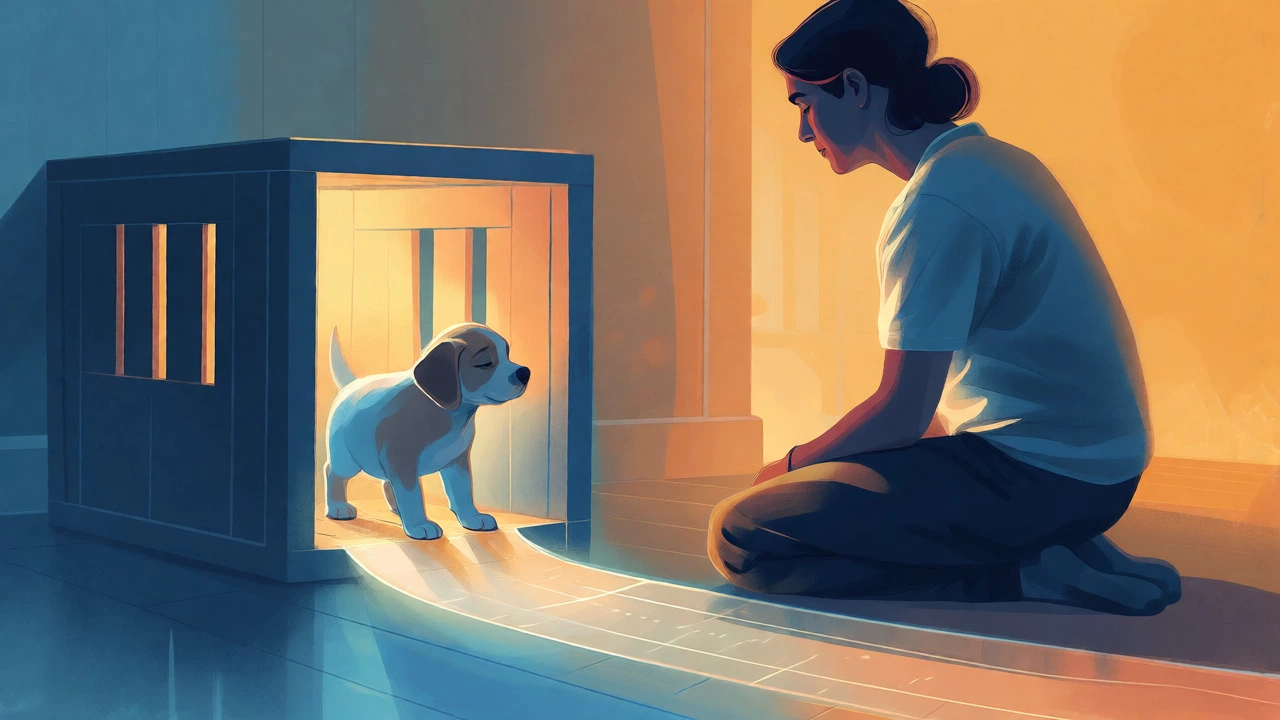
- The Treat Trail: Place three treats leading from where he is lying to the crate entrance. Then place one inside. Let him sniff and follow the trail himself.
- The Settle Command: Once he is in, say "Settle" and toss a long-lasting chew toy (like a frozen Kong) into the crate. This keeps him occupied and calm.
- Ignore Whining: If he whines initially, ignore it unless he needs to go to the bathroom. Responding to whining teaches him that noise gets attention.
By making the transition active rather than passive, you reduce the physical burden on you and increase his confidence in the crate.
What About Naps During the Day?
Nap rules differ slightly from nighttime rules. During the day, you are supervising your puppy. If he falls asleep on the sofa while you are working, you can leave him there for short periods (under 30 minutes). However, if he sleeps for longer, move him to the crate. Extended daytime naps outside the crate can disrupt his nighttime schedule. Dogs operate on circadian rhythms. Too much unstructured daytime sleep leads to "zoomies" at 2 AM.
Keep a log of his sleep times for the first week. Note when he wakes up and when he goes to sleep. You’ll likely notice a pattern. Most puppies need 18-20 hours of sleep per day. If he’s getting less, he’s overtired. If he’s getting more but still acting hyper, he might be bored, not energetic.
Health Check: When Sleepiness Is a Warning Sign
While occasional crashing is normal, sudden lethargy can indicate health issues. If your puppy falls asleep immediately after eating, or seems unusually weak when you try to move him to the crate, check for signs of hypoglycemia low blood sugar, particularly dangerous in toy breeds like Chihuahuas or Yorkies.
Rub a tiny amount of honey or Karo syrup on his gums. If he perks up quickly, he needed sugar. If he remains limp, vomits, or has diarrhea, call your vet immediately. In Auckland, our climate is mild, but temperature fluctuations can affect young pups. Ensure his crate is draft-free but not overheated. Overheating can cause excessive drowsiness that mimics deep sleep.
Final Thoughts on Building Trust
The goal of crate training isn’t to lock your dog away. It’s to give him a sanctuary. When you decide whether to move a sleeping puppy, ask yourself: "Does this action build trust or break it?"
Moving him gently builds trust because it shows you care about his safety and hygiene. Forcing him angrily breaks trust. Leaving him in unsafe places (like near electrical cords) breaks trust. Find the balance. Be consistent, be kind, and remember that this phase passes quickly. Soon, your puppy will trot to his crate voluntarily, lie down, and close his eyes, knowing it’s the best place in the world.
Should I wake my puppy if he sleeps past his usual feeding time?
Yes, especially for very young puppies (under 12 weeks). Missing a meal can lead to low blood sugar. Gently rouse him with a soft voice or a light touch on the shoulder. Offer food immediately upon waking. Do not let him skip meals regularly, as this disrupts growth and energy levels.
My puppy cries when I put him in the crate while he's sleepy. What do I do?
This is common. It’s called "protest crying." First, ensure he doesn’t need to pee. If he does, take him out, then return him to the crate. If he doesn’t, ignore the crying. Do not yell or enter the crate. Wait until he stops crying for at least 5 seconds before opening the door or giving praise. Consistency is key; if you give in, he learns that crying works.
Can I leave my puppy in the crate all day while I’m at work?
No. Puppies cannot hold their bladders for more than their age in months plus one hour (up to 4-5 hours max). An 8-week-old puppy needs a break every 2-3 hours. Leaving them crated for 8+ hours causes distress and accidents. Consider hiring a dog walker or using a playpen area with a pee pad if you are gone for long periods.
Why does my puppy sleep so much compared to adult dogs?
Puppies grow rapidly. Their bodies require massive amounts of energy for bone and muscle development. Sleep releases growth hormones. While adult dogs sleep 12-14 hours, puppies often need 18-20 hours. This is biologically necessary. Don’t worry unless he seems lethargic when awake.
Is it okay if my puppy sleeps in my bed instead of his crate?
It depends on your goals. If you want independence and easier house training, stick to the crate. Sleeping in your bed can create separation anxiety and make future transitions difficult. If you choose bed-sleeping, establish clear boundaries now, as changing habits later is harder. Many trainers recommend starting with the crate next to your bed, then gradually moving it away.