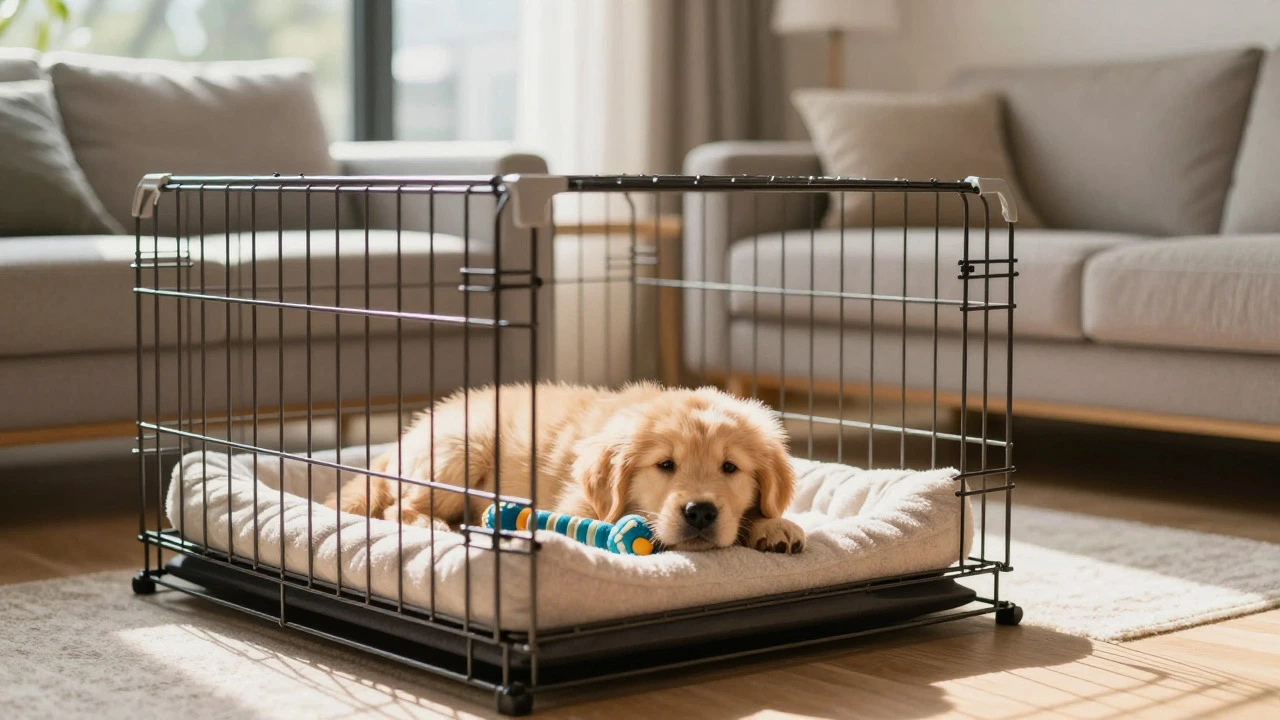
Puppy Crating Time Calculator
Imagine coming home from a long day at work to find your brand-new puppy has chewed through the baseboard near the front door. It’s frustrating, expensive, and honestly, a bit heartbreaking. Now imagine the alternative: you walk in, and your pup is resting calmly in their cozy crate, wagging their tail when they see you. Which scenario sounds more appealing? The difference usually comes down to one controversial topic: puppy crating.
Many new owners feel guilty about putting a dog in a cage. It feels restrictive. But if done correctly, crating isn’t punishment-it’s protection. Puppies are like toddlers; they explore with their mouths and lack impulse control. Without boundaries, they can hurt themselves or destroy your home. The question isn’t just whether you *should* crate your puppy during the day, but how to do it so the crate becomes a safe haven rather than a prison.
Why Crating Matters for Puppy Safety
Crate training is the process of acclimating a dog to a confined space that serves as their personal den. In the wild, dogs seek out enclosed spaces to sleep because it protects them from predators and the elements. Your puppy still carries this instinct. When you introduce a crate early, you’re tapping into that natural desire for security.
The primary reason to use a crate during the day is safety. Let’s say you have to step away for an hour to run errands. If your puppy is loose in the house, what happens? They might eat something toxic off the floor, get tangled in electrical cords, or develop a habit of chewing furniture legs. A crate limits their environment to a safe zone where nothing can harm them.
It also aids in housebreaking. Dogs naturally avoid soiling their sleeping area. By confining them to a space slightly larger than their body, you encourage them to hold it until you take them outside. This biological trick makes potty training significantly faster and less stressful for both you and the dog.
How Long Can a Puppy Stay Crated?
This is the most common question, and the answer depends entirely on age. You cannot expect a young puppy to hold their bladder all day. Here is a general rule of thumb based on developmental stages:
- 8-10 weeks old: Maximum 1-2 hours. Their bladders are tiny, and they need frequent breaks.
- 11-14 weeks old: Maximum 3 hours. They are starting to gain some control but still need regular relief.
- 15-16 weeks old: Maximum 4 hours. At this stage, they can handle longer stretches, especially if asleep.
- 4+ months old: Gradually increase time, aiming for 6-8 hours maximum by adulthood.
If you work full-time and are gone for eight hours, crating alone is rarely enough for a young puppy. You’ll need a strategy that involves a midday break. Options include hiring a dog walker, asking a neighbor to let the puppy out, or using a baby-gated playpen area once the puppy is fully house-trained and trusted not to chew dangerous items.
Setting Up the Perfect Crate Environment
The way you set up the crate changes everything. If it looks like a jail cell, your puppy will hate it. If it looks like a VIP suite, they’ll beg to go in. Start with the right size. A crate that is too big allows the puppy to use one corner as a bathroom and the other as a bed, defeating the purpose of housebreaking. Use a divider panel if you bought a large crate that grows with the dog.
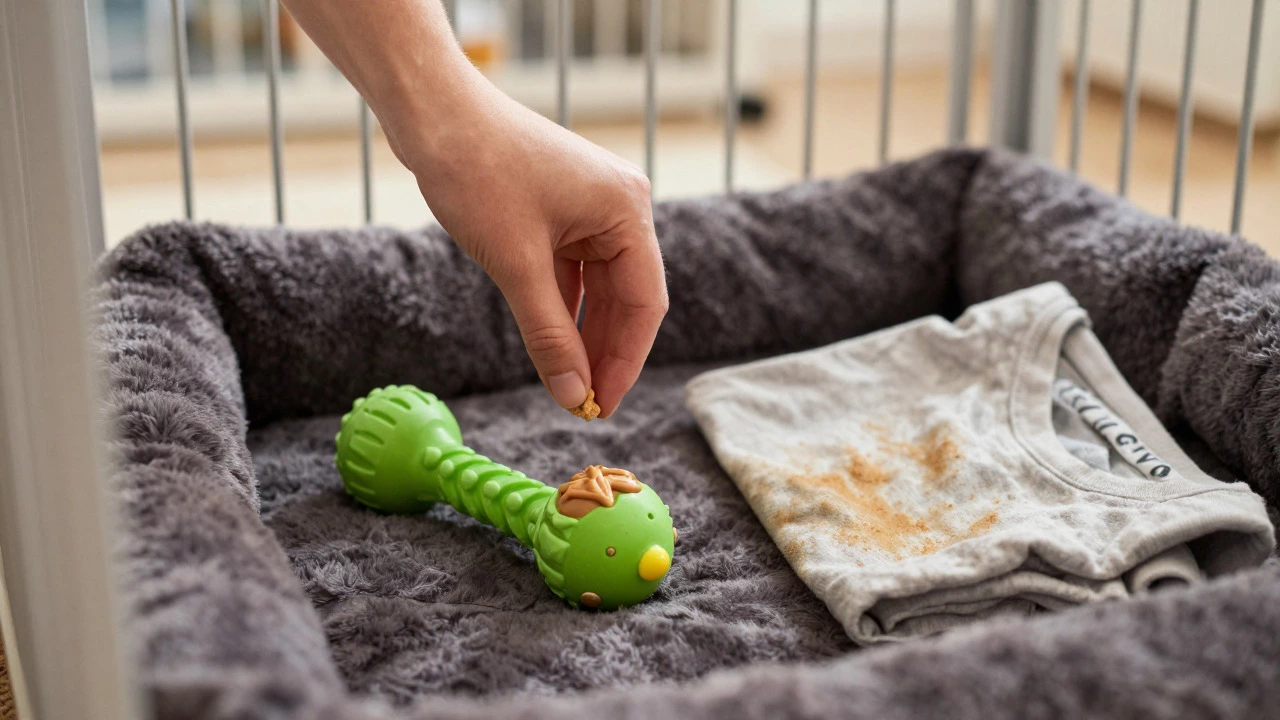
Inside, place comfortable bedding-orthopedic foam is great for joint health, even in puppies. Add a durable chew toy stuffed with treats, like a Kong filled with peanut butter (ensure it’s xylitol-free). This creates a positive association: crate equals fun stuff.
Location matters too. Don’t isolate the puppy in the garage or basement. Keep the crate in a high-traffic area of your home, like the living room or bedroom. Puppies are social animals; being near you reduces anxiety. As they mature, you can move the crate to a quieter spot if needed.
Step-by-Step: Introducing the Crate Positively
Rushing the process leads to fear. Take your time over several days or weeks.
- Leave the door open: Place the crate in a common area with the door secured open. Toss treats near it, then inside it. Let the puppy come and go as they please.
- Feed meals inside: Place their food bowl at the back of the crate. Gradually move the bowl further back each meal until they are eating entirely inside.
- Close the door briefly: After a meal, close the door for a few seconds, then open it and let them out. Slowly increase the duration to minutes, then ten minutes.
- Add distance: Leave the room for short periods while the crate door is closed. Return before they start whining. This teaches them that being alone in the crate is temporary and safe.
- Increase duration: Once they are calm for 30 minutes, try leaving for an hour. Build up gradually to your typical work schedule.
Never use the crate as punishment. If you scold a puppy and then put them in the crate, they will associate the confinement with anger. The crate should always be a neutral or positive space.
Signs Your Puppy Is Stressed vs. Comfortable
You need to read your puppy’s body language. A comfortable puppy will lie down, relax their muscles, and perhaps chew quietly on a toy. They might sigh contentedly. These are good signs.
On the flip side, stress signals include excessive panting, drooling, pacing back and forth, or frantic scratching at the door. Occasional whining is normal, especially when first learning to settle. However, if the whining escalates to barking or crying for more than five minutes after you’ve ignored initial pleas, check on them. Sometimes they just need to pee. Other times, they may be overheated or anxious.
| Behavior | Positive Association | Negative Association |
|---|---|---|
| Entering Crate | Walks in willingly or follows treat lure | Hesitates, backs away, or hides |
| Vocalization | Silent or soft sighs | Continuous barking, howling, or screaming |
| Body Language | Lying down, relaxed jaw | Pacing, wide eyes, tucked tail |
| Exit Behavior | Stays in crate until released or waits patiently | Bites bars, scratches frantically, soil accidents |
Alternatives to Full-Day Crating
If your job requires you to be away for nine hours, a standard crate might not be the best solution for a young puppy. Consider these alternatives:
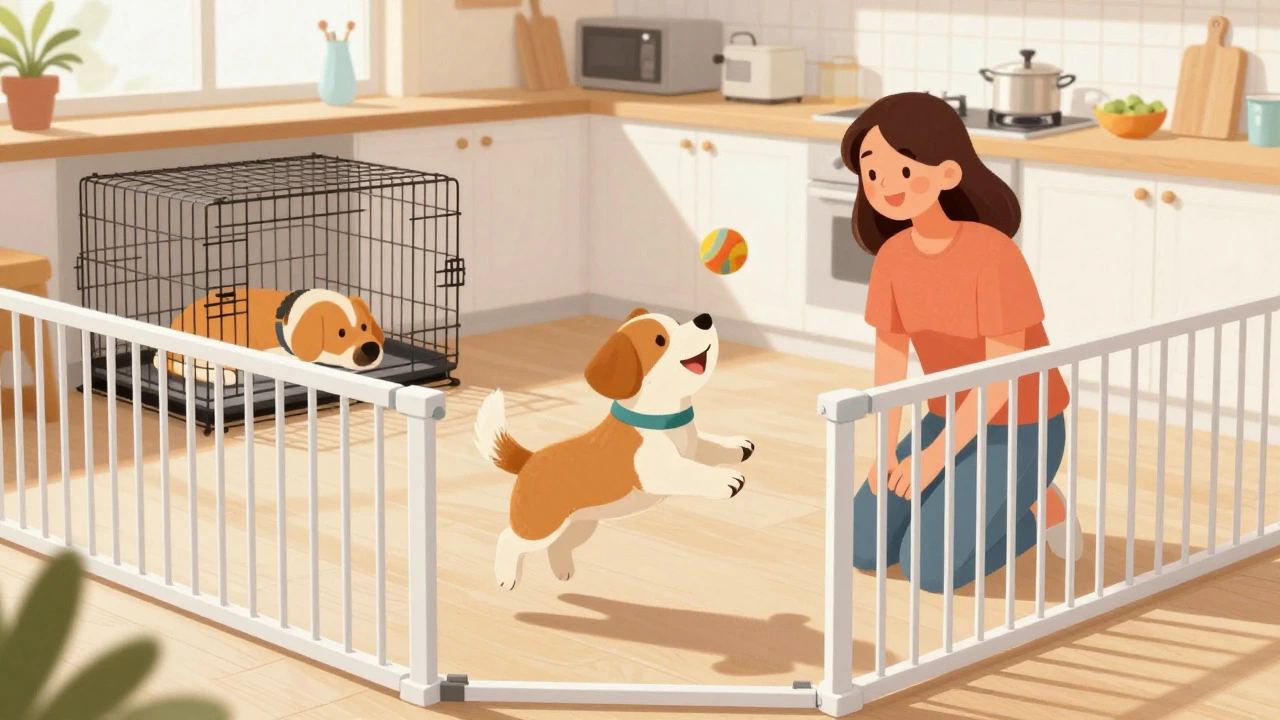
- Exercise Pens (X-Pens): These create a larger play area. You can attach a crate to one side for naps and leave the rest open for movement. Ensure the area is puppy-proofed.
- Baby Gates: Section off a single room, like a kitchen or mudroom, where there are no hazards. Remove shoes, socks, and small objects.
- Smart Cameras: Devices like Furbo allow you to watch your puppy remotely and even toss treats. This helps you gauge if they are settling or panicking.
- Doggy Daycare: For social breeds, daycare provides exercise and interaction. It’s more expensive but solves the loneliness problem.
As your puppy matures and proves they are house-trained and non-destructive, you can transition from crating to free-roaming access. This is a privilege earned through trust, not a right given immediately.
Common Mistakes to Avoid
New owners often make errors that sabotage crate training. One major mistake is letting the puppy out while they are still whining. If you release them only when they scream, you teach them that screaming opens the door. Wait for a moment of silence, even if brief, before opening the latch.
Another error is making a huge fuss when returning home. If you spend ten minutes cooing and playing every time you exit the crate, the puppy learns that leaving the crate triggers a party. Instead, keep exits boring. Open the door, take them straight outside to pee, and then resume your day. This prevents separation anxiety.
Also, don’t forget exercise. A tired puppy is a good puppy. Before crating for the day, engage in a vigorous play session or a long walk. Mental stimulation through puzzle toys also helps burn energy. A bored puppy will find ways to entertain themselves, often involving your drywall.
Is it cruel to crate a puppy during the day?
No, it is not cruel if done correctly. Crating mimics a den environment, which provides security. Cruelty occurs when a puppy is left crated for too long without bathroom breaks, exercise, or social interaction. Following age-appropriate time limits ensures the puppy’s physical and mental well-being.
How do I stop my puppy from peeing in the crate?
Ensure the crate is the correct size-just big enough to stand, turn around, and lie down. If it’s too big, use a divider. Take the puppy out immediately upon waking and after meals. Clean any accidents with enzymatic cleaner to remove the scent. Consistency is key; never punish after the fact.
Can I leave my puppy in the crate overnight?
Yes, most puppies can sleep through the night in a crate by 12 weeks of age. Place the crate next to your bed initially so they hear you. If they whine, wait a few minutes to see if they settle. If not, take them out quietly to pee, then return them to the crate without playing.