Cat Feeding Schedule Calculator
Enter your cat's details below to determine the recommended number of meals per day and approximate calorie needs.
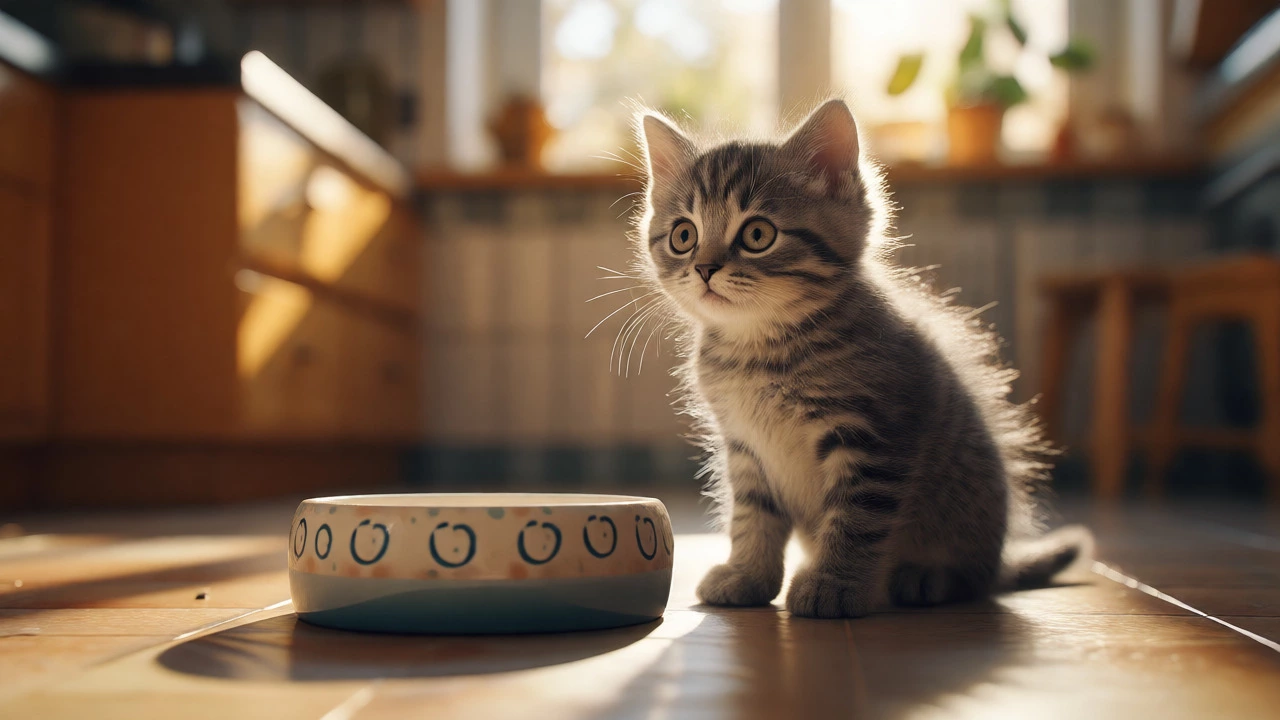
You pour the kibble into the bowl, walk away, and ten minutes later your cat is screaming as if they haven't eaten in weeks. Or maybe you're the opposite: you leave food out all day, only to watch your cat gain weight while acting like they're starving. The confusion about how many times a day should I feed my cat isn't just about convenience-it's about biology, behavior, and long-term health.
There is no single magic number that works for every feline. A six-week-old kitten needs to eat far more frequently than a seven-year-old indoor tabby. But there are clear guidelines based on age, lifestyle, and health status that can help you stop guessing and start feeding with confidence.
Key Takeaways
- Kittens (0-6 months): Need to eat 3-4 times daily due to high energy demands and small stomachs.
- Young Adults (6-12 months): Transition to 2-3 meals per day.
- Adult Cats (1-7 years): Two structured meals per day is the gold standard for most healthy cats.
- Senior Cats (7+ years): May need smaller, more frequent meals if digestion slows or appetite drops.
- Free Feeding: Works for some but risks obesity; use puzzle feeders to control intake.
The Biological Clock of Your Cat
To understand feeding schedules, you have to look at where cats came from. Domestic cats (Felis catus) are descendants of wildcats that hunted small prey multiple times a day. They didn't gorge on one giant meal like a lion might; they ate five to ten tiny snacks throughout the daylight hours. Their digestive systems are designed for this pattern-small amounts, frequently.
This evolutionary background explains why many cats prefer grazing. However, modern house life changes things. You aren't hunting mice every four hours. You are buying pre-packaged food. This disconnect between biological instinct and modern convenience is where most feeding problems start. If you feed once a day, you force a predator adapted to grazing into a binge-eating pattern, which can lead to vomiting, bloating, and weight gain.
Feeding by Life Stage: From Kitten to Senior
Your cat's nutritional needs shift dramatically as they grow. What works for a growing kitten will make an adult cat fat, and what sustains an adult may not be enough for a senior with kidney issues.
| Life Stage | Age Range | Frequency | Reasoning |
|---|---|---|---|
| Newborn/Kitten | 0-4 Weeks | Nursing/Every 2-4 Hours | Stomach size is tiny; rapid growth requires constant fuel. |
| Young Kitten | 4 Weeks-6 Months | 3-4 Meals Daily | High metabolic rate; transitioning from milk to solid food. |
| Adolescent | 6-12 Months | 2-3 Meals Daily | Growth slows slightly; metabolism begins to stabilize. |
| Adult | 1-7 Years | 2 Meals Daily | Maintenance phase; prevents overeating and aids monitoring. |
| Senior | 7+ Years | 2-3 Small Meals Daily | Digestion may slow; smaller portions reduce strain on organs. |
Kittens: The High-Energy Machines
If you've ever tried to get a kitten to wait for dinner, you know it's impossible. Kittens burn calories faster than adults relative to their body weight. Their stomachs are also physically small-they literally cannot hold enough food in one sitting to last twelve hours. For kittens under six months, splitting their daily calorie allowance into three or four meals is non-negotiable. Skipping a meal here doesn't just mean a grumpy cat; it can lead to hypoglycemia (low blood sugar), which is dangerous for young animals.
Adult Cats: Finding the Sweet Spot
Once your cat hits adulthood, usually around one year old, their growth plates close, and their energy needs drop. This is where most owners switch to two meals a day. Why two? It aligns with human schedules (morning and evening) and allows you to monitor appetite changes. If your cat suddenly refuses breakfast, you notice immediately. If you free-feed, you might miss early signs of illness until the cat has already lost significant weight.
Some vets argue for three meals for active adults, especially if they are prone to hairballs or have sensitive stomachs. Smaller, more frequent meals can ease digestion. But for the average indoor cat, twice daily is practical and effective.
Seniors: Adjusting for Aging Bodies
Cats don't just "slow down" when they get old; their internal machinery wears out. Kidney disease, dental pain, and arthritis can change how they eat. An arthritic cat might struggle to reach a high bowl quickly, or a cat with sore teeth might take longer to chew. Offering smaller, softer meals more frequently can help them get the nutrients they need without the stress of finishing a large portion in one go.
Scheduled Meals vs. Free Feeding: Which Is Better?
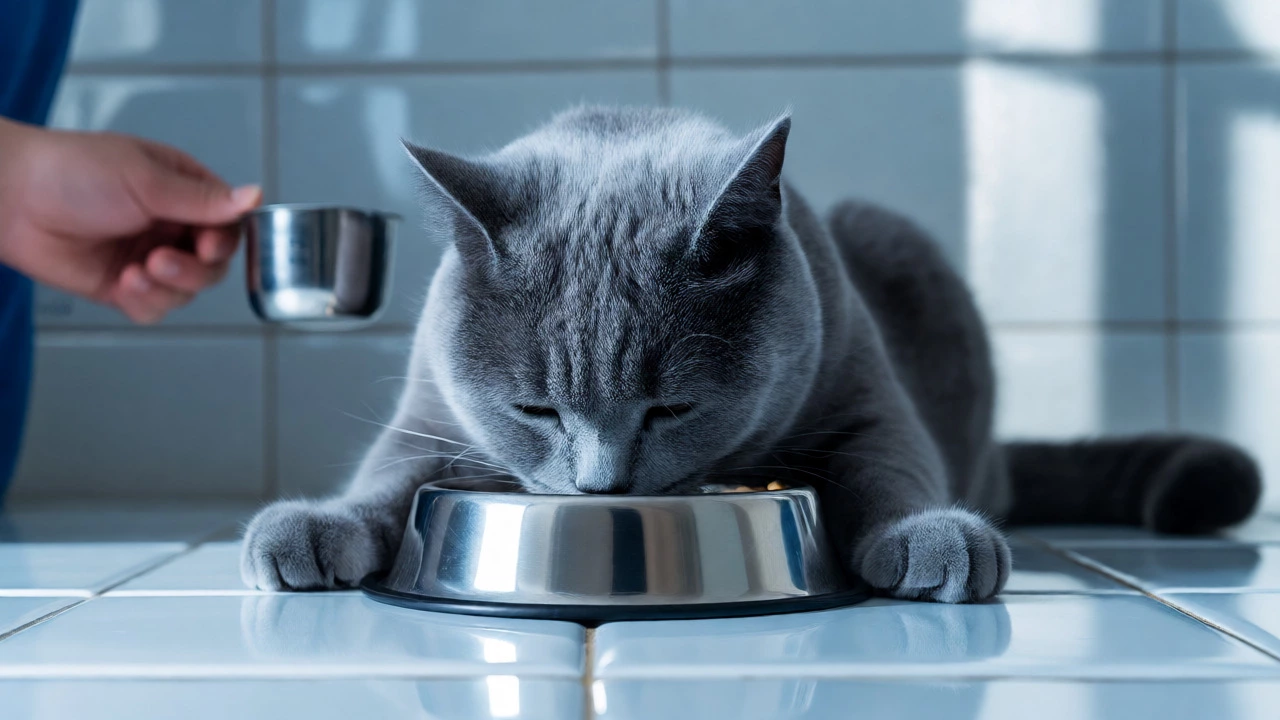
This is the biggest debate in cat care. Free feeding means leaving dry food out all day so the cat eats whenever they want. Scheduled feeding means putting out specific portions at set times.
Free Feeding Pros: It mimics natural grazing behavior. It reduces anxiety for cats who like to nibble. It’s convenient for owners with irregular work hours.
Free Feeding Cons: It’s the fastest route to obesity. Studies show that free-fed cats consume more calories than needed because they eat out of boredom, not hunger. It also makes it hard to spot health issues. If your cat stops eating, you won't know until the bowl is full after three days.
Scheduled Feeding Pros: You control exactly how much they eat. You bond with your cat during mealtime. You detect appetite loss instantly.
Scheduled Feeding Cons: Can cause "food aggression" if you have multiple cats. Requires you to be home or use automatic feeders. Some cats become demanding if fed at inconsistent times.
Here is a simple heuristic: If your cat is an ideal weight and self-regulates well, free feeding might be fine. If your cat is overweight, or if you have multiple cats competing for food, scheduled meals are safer. If you choose free feeding, measure the total daily amount and put it all out at once. Do not top up the bowl. When it's empty, it's empty.
Wet vs. Dry Food: Does It Change the Schedule?
Yes, it does. Wet food spoils quickly. You cannot leave wet food out for eight hours unless you want bacteria to multiply. Therefore, wet food almost always requires scheduled feeding. If you mix wet and dry, many owners give wet food twice a day (breakfast and dinner) and leave a measured amount of dry food for daytime snacking. This hybrid approach gives the hydration benefits of wet food and the dental scraping (minor, but present) of dry kibble.
Remember that water intake is crucial for cats. In the wild, cats got moisture from prey. Today, dry food contains only about 10% water, whereas wet food is 70-80%. If you feed primarily dry food, ensuring your cat drinks enough water becomes even more critical. Frequent, small meals can sometimes encourage drinking, as cats often drink after eating.
Troubleshooting Common Feeding Problems
Even with a perfect schedule, things go wrong. Here are the most common scenarios and how to fix them.
The Dawn Chorus
Your cat wakes you up at 5 AM screaming for food. This is classic conditioned behavior. If you feed them immediately upon waking, they learn that noise equals breakfast. To break this, shift their feeding time gradually. Move dinner later and breakfast earlier, or use an automatic feeder that dispenses food at 6:30 AM instead of 5:00 AM. This teaches them that the machine, not you, controls the food supply.
The Multi-Cat Household
If one cat is a bully and the other is shy, free feeding fails. The dominant cat guards the bowls. Solution: Separate feeding stations. Put bowls in different rooms. Use microchip-enabled feeders that only open for the correct cat. This ensures each cat gets their proper portion without stress.
The Picky Eater
If your cat turns up their nose at dinner, do not leave the food out for twenty-four hours. Remove it after twenty minutes. Offer it again at the next scheduled meal. Leaving food out too long makes it stale and unappealing. Also, check for dental pain. If an older cat starts dropping food or chewing on one side, see a vet before changing their diet.
Calculating Portion Sizes
Knowing *when* to feed is half the battle. Knowing *how much* is the other half. Overfeeding is epidemic in pets. Check the back of your food bag for guidelines, but treat them as estimates. Every cat's metabolism is different.
A good rule of thumb for maintenance calories is roughly 20 calories per pound of body weight for an inactive indoor cat, and up to 30 calories per pound for an active one. So, a 10-pound indoor cat needs about 200 calories a day. Split that across two meals, and you’re looking at 100 calories per meal. Weigh your food using a kitchen scale. Measuring cups are inaccurate because kibble density varies wildly between brands.
Final Thoughts on Routine
Cats thrive on routine. Unlike dogs, who might forgive a missed walk, cats rely on predictability for security. Once you decide on a schedule-whether it's two meals, three meals, or free feeding-stick to it. Changes in timing can cause stress-induced gastrointestinal upset. If you travel, ensure someone knows the exact times and amounts. Consistency is kindness.
Start with two meals a day for adult cats. Monitor their waistline. If they are gaining weight, cut the portion, not the frequency. If they seem hungry, add a low-calorie treat or a puzzle feeder to extend the eating time. Listen to your cat, but trust the science.
Is it okay to feed my cat only once a day?
While some cats can survive on one meal a day, it is generally not recommended. Large single meals can stretch the stomach, leading to regurgitation (vomiting undigested food shortly after eating). It also causes larger spikes in insulin levels, which can be problematic for diabetic-prone cats. Two smaller meals are physiologically better for most domestic cats.
Should I wake my cat up to feed them?
No. Let your cat sleep. Waking them disrupts their rest cycle. Instead, adjust your own schedule or use an automatic feeder. If your cat wakes you up, ignore the demand for food strictly. If you respond, you reinforce the behavior. Wait until they settle down before getting up to prepare their meal.
How do I know if my cat is actually hungry?
True hunger looks like focused interest in food preparation sounds (opening cans, shaking bags) and eager consumption. Boredom eating looks like wandering to the bowl, sniffing, taking a few bites, and walking away. If your cat is begging constantly but still gaining weight, they are likely bored or seeking attention, not calories.
What if my cat vomits after eating?
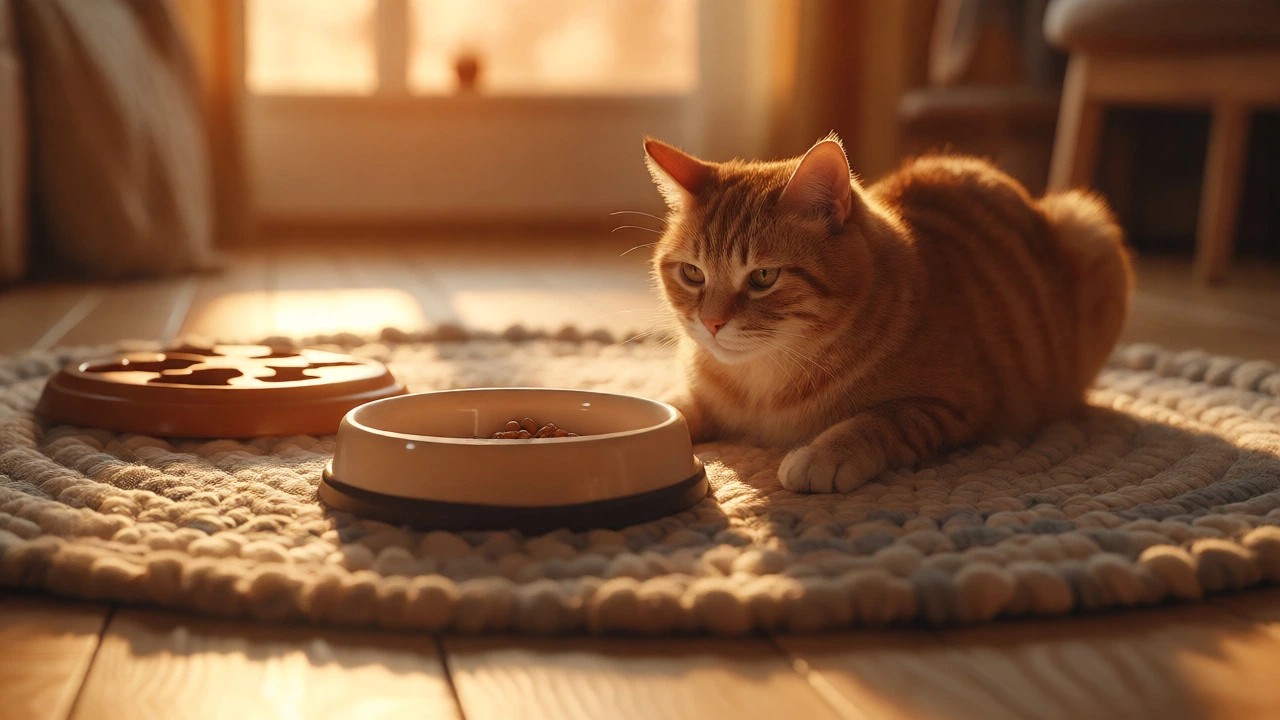
If they vomit within 15-30 minutes of eating, it is likely regurgitation caused by eating too fast. Try using a slow-feeder bowl or spreading the food out on a flat plate. If vomiting occurs hours later or contains bile/yellow fluid, it could indicate an empty stomach issue (bilious vomiting syndrome). Feeding smaller, more frequent meals often helps resolve this.
Do senior cats need special feeding schedules?
Often, yes. Older cats may have reduced kidney function or dental issues. Smaller, more frequent meals are easier to digest and less taxing on the kidneys. If a senior cat loses interest in food, try warming the food slightly to enhance aroma, or switch to a softer texture. Always consult a vet if appetite changes abruptly.