Emergency Cat Food Checker
Select a food from the list below or type it in to see if it's safe for your cat during a shortage.
Select a food to check its status.
Food Name
Hydration Reminder
Switching to dry human foods (like cooked meat) reduces water intake significantly compared to wet commercial food. Always add warm water to shredded meat or ensure fresh water is available to prevent dehydration.
You’re standing in the kitchen, staring into an empty cupboard. The bag of kibble is gone, and the nearest pet store is closed until morning. Your cat is weaving between your legs, meowing with that specific pitch that means "I am starving." Don’t panic. While you shouldn’t make a habit of it, there are plenty of safe, human-grade foods you can use as a temporary bridge until you get back to their regular cat food.
Cats are obligate carnivores, which means their bodies are built to process meat, not plants. They need high protein, specific amino acids like taurine, and certain vitamins they can’t synthesize on their own. If you feed them pasta or bread, they’ll eat it, but they won’t thrive. In fact, too much filler can lead to digestive upset. So, what actually works? Let’s break down the safest options, what to avoid, and how long you can keep this up without rushing to the vet.
The Gold Standard: Plain Cooked Meat
If you have any plain, unseasoned meat in your fridge, you’re in luck. This is the closest thing to what a cat would eat in the wild (minus the bones and fur). But there are strict rules here. No garlic, no onion, no salt, and absolutely no sauces. These ingredients are toxic to cats.
Other meats work too, provided they follow the same "plain" rule:
- Turkey: Similar to chicken, lean turkey is excellent. Avoid processed deli turkey, which is loaded with sodium and preservatives like nitrates.
- Lean Beef: Choose a cut with minimal marbling. Fat can cause pancreatitis in some cats if introduced suddenly. Cook it thoroughly to kill any bacteria.
- Lamb: Great for cats with sensitivities to other proteins, but it’s fattier. Use sparingly.
How much should you serve? For an average 10-pound (4.5 kg) indoor cat, aim for about 3-4 ounces (85-115 grams) of cooked meat per day, split into two meals. This roughly matches the caloric intake of a standard serving of wet cat food.
Pantry Heroes: Canned Fish and Eggs
What if you don’t have fresh meat? Check your pantry. Canned goods are often overlooked but can be lifesavers in a pinch.
But wait-why not just feed tuna forever? Because canned tuna doesn’t have the balanced nutrients a cat needs long-term. It’s also high in mercury if fed too frequently. Think of it as a snack, not a staple.
Eggs are another fantastic option. They’re cheap, easy to cook, and packed with protein.
- Scrambled Eggs: Cook them fully in a non-stick pan without butter or oil. No milk, no cheese, no salt. Just eggs.
- Boiled Eggs: Hard-boil an egg, peel it, and mash it up. Cats love the texture, and it’s gentle on their stomachs.
A single large egg contains about 6 grams of protein, which covers a significant portion of a cat’s daily requirement. One egg is usually enough for one meal for a medium-sized cat.
Foods to Absolutely Avoid
In your desperation, you might be tempted to offer whatever is nearby. Resist the urge. Some common human foods are actively dangerous to cats.
| Food Item | Status | Reason |
|---|---|---|
| Onions & Garlic | Unsafe | Causes oxidative damage to red blood cells, leading to anemia. |
| Milk & Dairy | Use Caution | Most adult cats are lactose intolerant; causes diarrhea and gas. |
| Raisins & Grapes | Unsafe | Can cause acute kidney failure, even in small amounts. |
| Dog Food | Not Ideal | Lacks taurine and arachidonic acid; long-term feeding leads to heart issues. |
| Bread & Pasta | Filler Only | Empty calories; offers no nutritional benefit for carnivores. |
Notice dog food is listed as "not ideal." Many owners wonder, "Can I feed my cat dog food?" Technically, yes, a cat can survive on it for a few days. But dog food is formulated for omnivores. It lacks taurine, an amino acid critical for a cat’s heart health and vision. If you feed your cat dog food for more than a week, you risk dilated cardiomyopathy. So, if you have both pets, stick to the chicken and eggs.
Hydration Matters More Than You Think
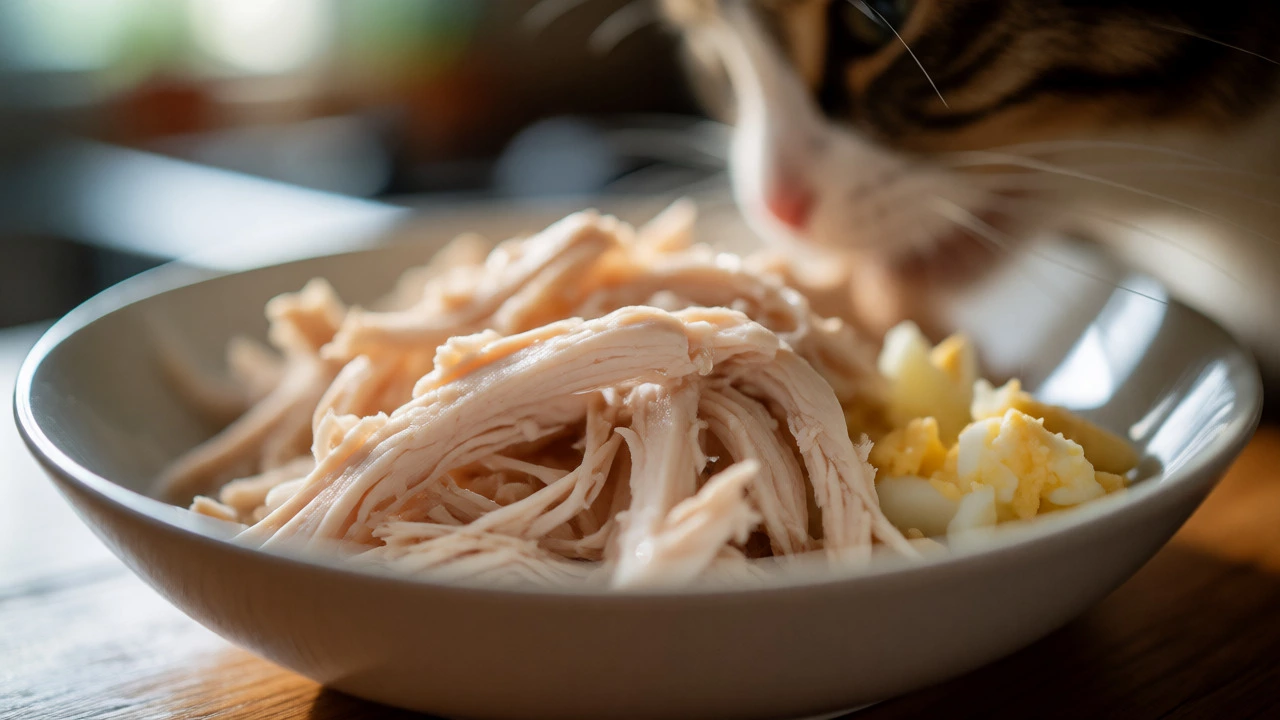
When switching from wet commercial food to dry human food (like cooked chicken), your cat’s water intake becomes critical. Wet cat food is typically 70-80% water. Cooked chicken is much drier. Dehydration can hit fast, especially in older cats or those with underlying kidney issues.
To combat this:
- Add warm water to the shredded meat to create a broth-like consistency.
- Ensure fresh water bowls are available everywhere your cat frequents.
- Consider adding a splash of low-sodium chicken broth (ensure no onions or garlic in the ingredients list) to encourage drinking.
Watch your cat’s litter box habits. If urine clumps become smaller or harder, or if they’re urinating less frequently, they might be dehydrated. This is a red flag that requires immediate attention.
Supplementing for Balance
If you find yourself stuck in this emergency loop for more than three days, you need to think about micronutrients. Commercial cat food is fortified with vitamins A, D, E, and B-complex, plus minerals like calcium and phosphorus. Home-cooked meals lack these.
For a short-term fix, you can sprinkle a tiny amount of a multivitamin powder designed for cats over their food. Don’t guess the dosage-check the label. Alternatively, a small amount of liver (chicken or beef) once every few days can provide Vitamin A and iron. However, too much liver can cause Vitamin A toxicity, so moderation is key. One teaspoon of cooked liver is plenty.
Calcium is another gap. Meat is high in phosphorus but low in calcium. Without balance, this can affect bone health. In a true emergency, this isn’t an immediate crisis, but it’s why you shouldn’t stay on home-cooked diets indefinitely without veterinary guidance.
Transitioning Back to Regular Food
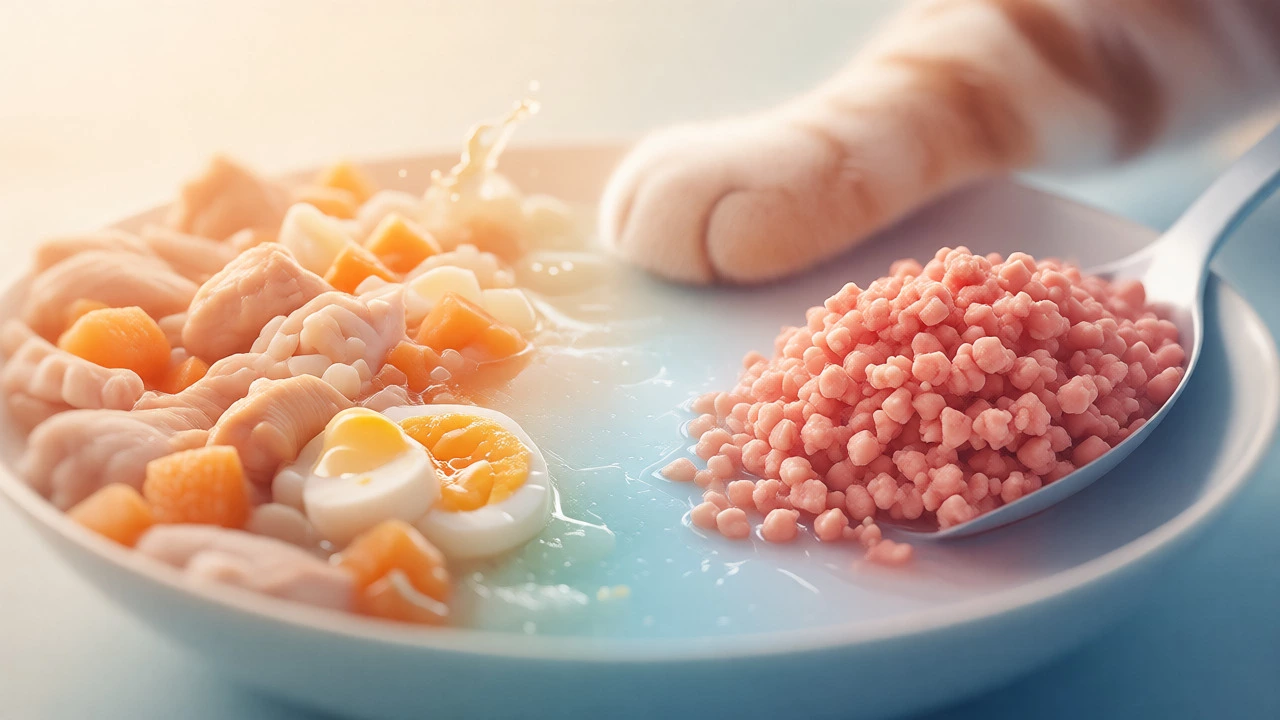
Once you’ve restocked your cat food, don’t switch back abruptly. Cats have sensitive digestive systems. Sudden changes can trigger vomiting or loose stools.
Follow a gradual transition plan:
- Day 1-2: Mix 75% emergency food with 25% new cat food.
- Day 3-4: Go 50/50.
- Day 5-6: 25% emergency food, 75% new cat food.
- Day 7: Full return to regular diet.
This gives their gut bacteria time to adjust. If you notice any signs of distress-vomiting, refusal to eat, lethargy-slow down the transition or consult your vet.
When to Call the Vet
Most healthy cats will handle a few days of emergency food just fine. But some situations require professional help:
- Kittens: They have higher metabolic rates and lower fat reserves. They need frequent, nutrient-dense meals. Consult a vet immediately if you run out of kitten formula.
- Chronic Conditions: Cats with diabetes, kidney disease, or allergies need precise dietary control. Deviating from their prescribed diet can destabilize their condition.
- Refusal to Eat: If your cat hasn’t eaten anything for 24 hours, call your vet. Hepatic lipidosis (fatty liver disease) can develop rapidly in cats who stop eating.
Remember, while we can improvise, our goal is always to restore the balanced nutrition they rely on. Keep a backup supply of their favorite brand next time. Your future self-and your cat’s patience-will thank you.
Can I feed my cat scrambled eggs every day?
While eggs are nutritious, feeding them exclusively every day isn't recommended long-term because they lack certain essential nutrients like taurine and adequate calcium. As a short-term emergency measure (up to a week), they are safe. For daily feeding, rotate with other proteins or add a feline-specific vitamin supplement to ensure nutritional balance.
Is it okay to give my cat milk instead of water?
No, most adult cats are lactose intolerant. Drinking milk can cause severe diarrhea, gas, and abdominal pain. Always provide fresh water. If you want to give a treat, try a small amount of lactose-free cat milk specifically formulated for felines, but never replace water with cow's milk.
How long can a cat go without proper cat food?
A healthy adult cat can survive on simple human foods like cooked chicken or eggs for up to a week without serious health consequences. However, kittens, senior cats, or those with medical conditions may struggle after 24-48 hours. Prolonged reliance on unbalanced diets risks malnutrition and specific deficiencies like taurine deficiency.
Can I feed my cat dog food in an emergency?
Yes, for a few days. Dog food is not toxic to cats, but it is not nutritionally complete for them. It lacks taurine and arachidonic acid, which are vital for cat heart and eye health. Feeding dog food for more than a week regularly can lead to serious health issues, so it is strictly a short-term solution.
What vegetables are safe for cats?
Cats are obligate carnivores and don't need vegetables, but some are safe in small amounts. Steamed pumpkin (plain, no spices) can help with digestion and constipation. Green beans are also safe and low-calorie. Avoid onions, garlic, chives, leeks, and tomatoes, as these are toxic or potentially harmful to cats.