Canine Supplement Needs Checker
Not sure which supplements are necessary? Answer these questions to get a personalized recommendation list.
Personalized Recommendations
You’re walking down the pet aisle, staring at a wall of colorful bottles promising shinier coats, happier joints, and longer lives. Your dog looks at you with those big, trusting eyes, and suddenly you feel guilty if you don’t buy something. But do they actually need them? The short answer is: it depends entirely on what’s already in their bowl and how old your dog is.
Most healthy adult dogs eating high-quality commercial food get everything they need from their kibble or wet food. However, life isn’t always perfect. Maybe your senior lab has stiff hips, your puppy has a sensitive stomach, or you’ve switched to a raw diet that might be missing key nutrients. That’s where dog supplements come in. They aren’t magic pills, but when used correctly, they can bridge nutritional gaps and improve quality of life significantly. Let’s break down exactly which ones matter, which are a waste of money, and how to pick the right one without getting ripped off.
The Myth of the "One Size Fits All" Bowl
Here’s the thing about commercial dog food: it’s regulated. In New Zealand and Australia, standards like AAFCO (Association of American Feed Control Officials) guidelines ensure that premium brands meet minimum nutritional requirements. If you feed your dog a complete and balanced diet from a reputable brand, adding random vitamins might actually cause more harm than good. Too much Vitamin A, for example, can lead to bone issues in large breeds.
So, when should you consider adding something extra? Think of supplements as targeted tools, not general maintenance. You wouldn’t take iron pills if you weren’t anemic, right? Same logic applies here. Look for specific signs:
- Aging joints: Is your dog struggling to jump into the car or climb stairs?
- Dull coat or skin issues: Are there excessive shedding or dry patches despite regular grooming?
- Digestive upset: Does your dog have loose stools or gas after meals?
- Dietary restrictions: Are you feeding a home-cooked or raw diet that lacks variety?
If none of these apply, save your money. If one does, read on.
Joint Support: Glucosamine vs. Chondroitin vs. MSM
This is the most common reason owners reach for supplements. As dogs age, cartilage wears down, leading to osteoarthritis. You’ve probably heard of Glucosamine, a natural compound found in joint fluid. It helps build cartilage and reduce inflammation. But does it work? Studies show mixed results, but many vets report positive outcomes in mild to moderate arthritis cases.
However, glucosamine rarely works alone. It’s almost always paired with Chondroitin, which blocks enzymes that destroy cartilage, and MSM (methylsulfonylmethane), which reduces pain and swelling. This trio is the gold standard for joint health.
| Supplement | Primary Function | Best For | Time to See Results |
|---|---|---|---|
| Glucosamine Sulfate | Cartilage repair and lubrication | Early-stage arthritis, active seniors | 4-8 weeks |
| Chondroitin Sulfate | Prevents cartilage breakdown | Moderate arthritis, combined with Glucosamine | 4-8 weeks |
| MSM | Pain relief and anti-inflammatory | Pain management alongside structural support | 2-4 weeks |
| Green-Lipped Mussel | Natural source of Omega-3s and glycosaminoglycans | Sensitive stomachs, natural alternative | 6-10 weeks |
Pro tip: Look for products that list the exact milligram dosage per serving. Many cheap brands under-dose to make the bottle last longer. For a 30kg dog, you typically want around 500mg of glucosamine daily. Check the label, not just the marketing fluff.
Omega-3 Fatty Acids: The Skin and Coat Hero
If your dog scratches constantly or has a dull, flaky coat, Omega-3 fatty acids are likely your best friend. Specifically, EPA (eicosapentaenoic acid) and DHA (docosahexaenoic acid). These fats reduce inflammation throughout the body, which helps with allergies, skin conditions, and even cognitive function in older dogs.
Where do you get them? Fish oil is the classic choice. But not all fish oils are created equal. Cheap ones can oxidize quickly, turning rancid and potentially causing digestive upset. Store your fish oil in the fridge once opened. Alternatively, krill oil is gaining popularity because it’s more stable and contains astaxanthin, a powerful antioxidant.
How much do you need? A general rule of thumb is 75mg of combined EPA/DHA per kilogram of body weight for therapeutic effects. For a 10kg dog, that’s 750mg. Start low to avoid diarrhea, then ramp up over a week.

Gut Health: Probiotics and Prebiotics Explained
Your dog’s gut microbiome plays a huge role in immunity and digestion. Antibiotics, stress, or sudden diet changes can wipe out beneficial bacteria. Enter probiotics-live beneficial bacteria-and prebiotics-fiber that feeds those bacteria.
Not all probiotics survive the journey through stomach acid. Look for strains like Lactobacillus acidophilus or Bifidobacterium animalis, which are studied specifically for dogs. Some products use spore-forming bacteria (like Bacillus coagulans) that are tougher and survive heat and acid better.
When should you use them?
- During and after antibiotic courses (wait 2 hours between antibiotics and probiotics).
- When switching dog food brands.
- If your dog has chronic soft stools.
Don’t expect overnight miracles. Gut flora takes time to rebalance. Give it two weeks before deciding if it’s working.
The Raw Diet Gap: Why Multivitamins Matter Here
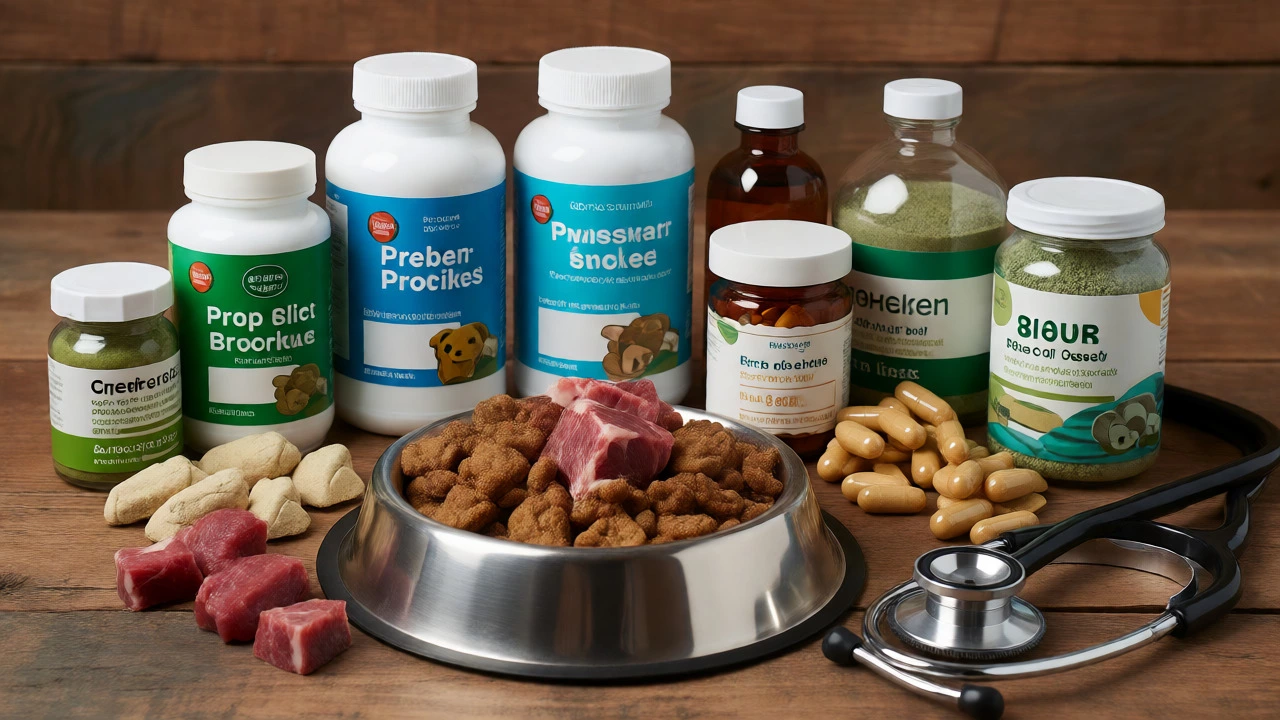
Feeding raw? Great! But raw diets are notoriously tricky to balance. Without careful formulation, they often lack calcium, iodine, and certain B-vitamins. Feeding muscle meat alone doesn’t cut it; you need organ meats, bones, and veggies in precise ratios.
If you’re not using a pre-balanced raw mix, a multivitamin/mineral supplement designed for homemade diets is non-negotiable. Calcium-phosphorus imbalance is a real risk in growing puppies on raw diets, leading to skeletal deformities. Always consult a vet nutritionist if you’re unsure about your recipe.
What About CBD and Herbal Calming Aids?
These are trendy, but evidence is still emerging. CBD oil interacts with the endocannabinoid system and may help with anxiety and pain. However, regulations vary by country, and product quality varies wildly. Ensure it’s THC-free and third-party tested.
For calming, herbs like valerian root or chamomile have mild sedative effects. They won’t cure severe separation anxiety, but they can take the edge off during fireworks or thunderstorms. Treat them as supportive aids, not cures.
How to Choose Quality Supplements
The supplement industry is loosely regulated. A label saying "natural" means nothing legally. Here’s your checklist before buying:
- Third-Party Testing: Look for seals from NSF International or USP. This verifies the contents match the label.
- Vet Recommended Brands: Companies like Nutramax, Dasuquin, or Fortiflora invest in clinical studies.
- Ingredient List: Avoid fillers like corn syrup or artificial colors. The first ingredient should be the active one.
- Form Matters: Chewables are easier to administer than powders, but powders allow for precise dosing adjustments. Capsules can be hidden in treats.
Remember, more expensive doesn’t always mean better, but extremely cheap usually cuts corners on purity.
Consult Your Vet First
Before you drop $50 on a bottle of chews, talk to your vet. Why? Because some supplements interact with medications. For instance, high doses of Omega-3s can thin the blood, which matters if your dog is on anticoagulants. Or if your dog has kidney disease, extra protein or phosphorus in supplements could worsen their condition.
Bring a photo of the label to your appointment. Ask: "Is this safe for my dog’s specific health profile?" Most vets will appreciate the proactive approach rather than guessing.
Can I give human supplements to my dog?
Sometimes, but with caution. Human fish oil capsules are often okay if they are pure and free of additives like xylitol (which is toxic to dogs) or chocolate flavoring. However, human multivitamins often contain iron levels that are too high for dogs, or ingredients like grape seed extract which can be problematic. Always check with your vet before substituting human products.
How long until I see results from dog supplements?
It varies by type. Digestive aids like probiotics might show effects in 3-7 days. Joint supplements typically require 4-8 weeks to build up in the system and show noticeable improvement in mobility. Skin and coat improvements from Omega-3s usually appear after 6-12 weeks, as new hair grows in healthier.
Are there side effects to giving my dog supplements?
Yes. Over-supplementation is real. Excess Vitamin D can cause toxicity. High doses of Omega-3s can lead to loose stools or bad breath. Some dogs may have allergic reactions to specific ingredients like chicken-based chews or shellfish-derived glucosamine. Always introduce one new supplement at a time so you can identify any adverse reactions.
Do senior dogs need different supplements than puppies?
Absolutely. Puppies need supplements focused on growth, such as DHA for brain development and proper calcium/phosphorus ratios for bone structure. Senior dogs benefit more from joint support (glucosamine/chondroitin), cognitive boosters (antioxidants), and easy-to-digest proteins. Their needs shift from building tissue to maintaining it.
Is Green-Lipped Mussel better than Glucosamine?
They work differently. Glucosamine is a building block for cartilage. Green-Lipped Mussel is a whole-food source containing glucosamine, chondroitin, and unique anti-inflammatory lipids. Some dogs tolerate mussel better than synthetic glucosamine, especially those with shellfish allergies (check with your vet, as GLM is a shellfish). It’s often considered a more potent anti-inflammatory option.