Dog Grooming Stress Level Checker
Observe your dog during grooming or a mock session. Select the behaviors you see below to determine their current stress level.
Please select behaviors from the left to see results.
Level: Unknown
Note: If you observe whale eye (whites showing) combined with pinned ears, this is a major red flag for potential aggression. Stop handling immediately.
Dogs do not cry emotional tears. Wet eyes are usually due to reflex tearing from shampoo/water or breed-specific anatomy.
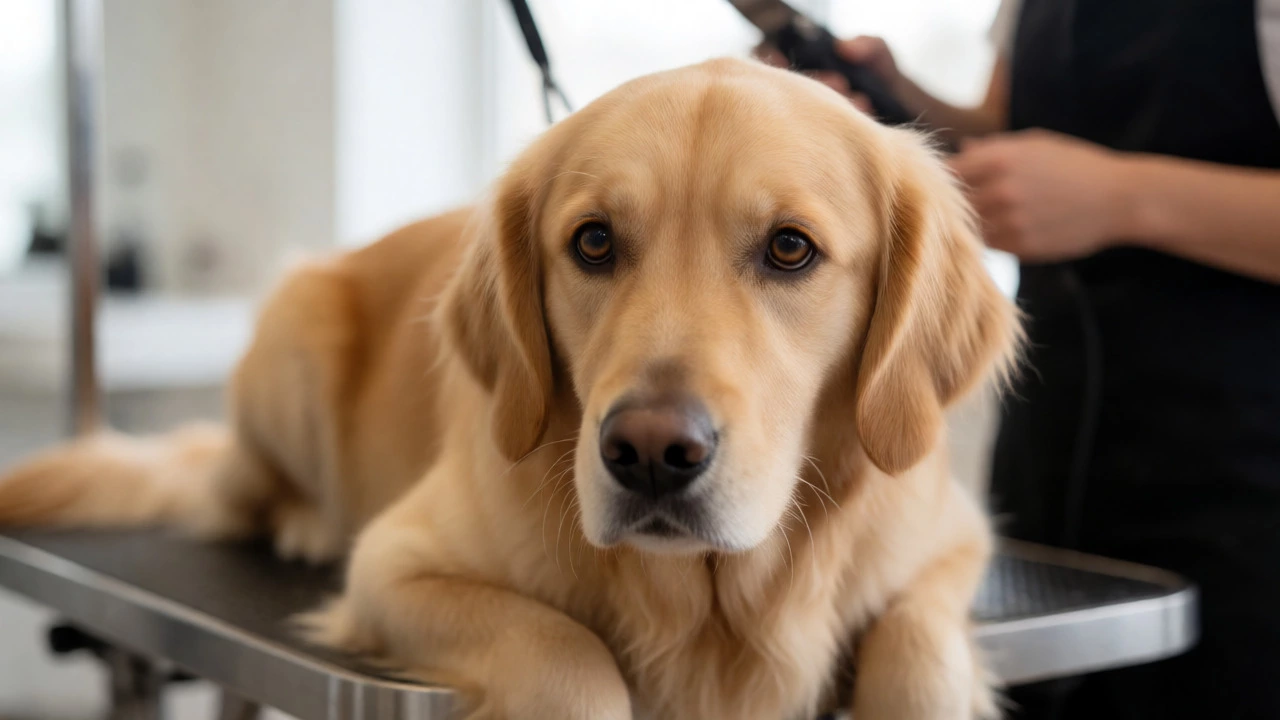
You’re standing in the salon, watching your golden retriever whimper as the groomer lifts a paw. Is he crying? Or is he just dramatic? It’s a question that haunts many pet owners after leaving their furry friends at the shop. The short answer: dogs do not produce emotional tears like humans do. They don’t cry because they are sad or hurt in the way we understand it. However, they absolutely vocalize distress, pain, or anxiety during grooming sessions. What you hear is usually whining, yelping, or growling, which can sound remarkably like crying to an empathetic owner.
The Anatomy of Dog Tears vs. Human Crying
To understand why your dog might seem to be "crying," we need to look at biology. Humans have lacrimal glands that produce two types of tears: basal tears for lubrication and reflex tears for irritation. We also have emotional tears triggered by sadness or joy. Dogs only have the first two types. Their lacrimal glands keep their eyes moist and wash away debris, but they lack the neural pathway to shed tears due to emotion.
If you see wetness around your dog’s eyes during grooming, it’s likely one of three things:
- Reflex tearing: Irritation from shampoo, water, or fur dust getting into the eyes.
- Breed-specific issues: Breeds with shallow eye sockets (like Pugs) or blocked tear ducts often have chronic tear staining.
- Pain response: Physical discomfort can cause watery eyes, similar to how a human might squint when something hurts.
So, when your dog makes that high-pitched noise, it’s not a tearful plea for mercy. It’s a vocal signal. And understanding that signal is key to making grooming less stressful.
Why Do Dogs Vocalize During Grooming?
Grooming involves handling parts of a dog’s body they may not trust strangers to touch. For many dogs, this triggers a fight-or-flight response. Here are the most common reasons for those "cries":
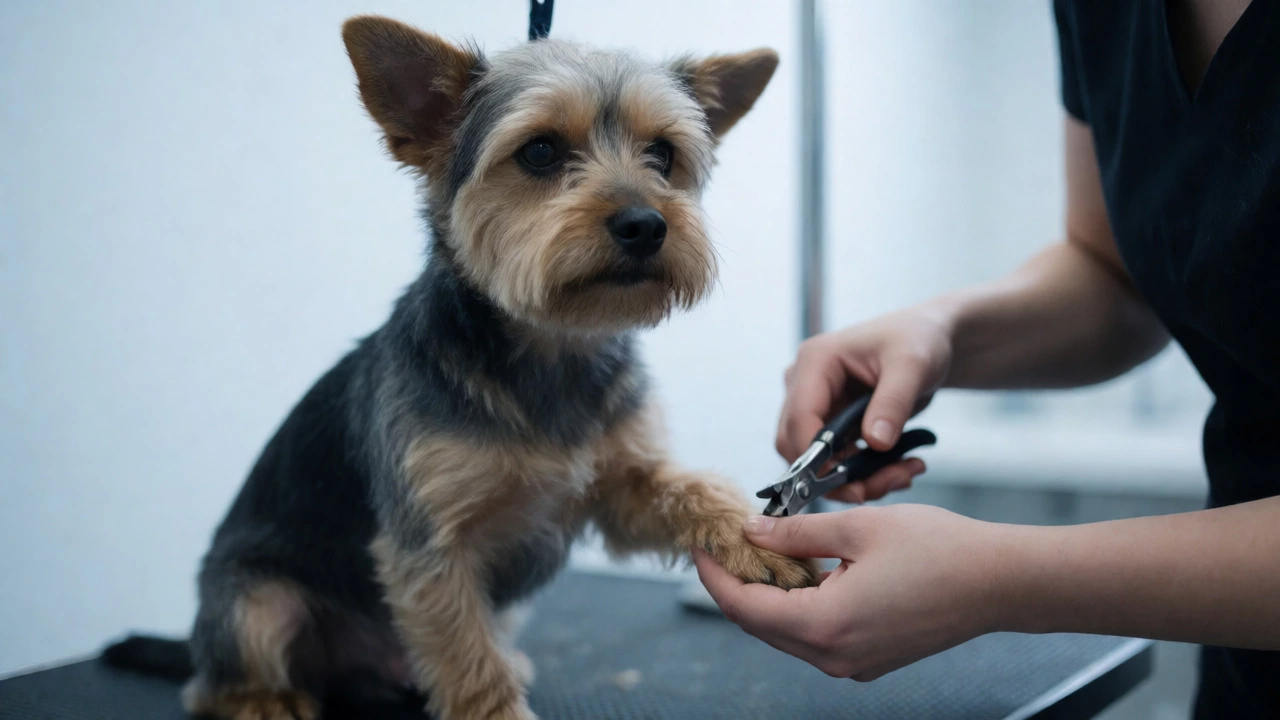
Fear and Anxiety: This is the big one. If a dog was bitten by clippers before, or had a bad experience with nail trimming, they anticipate pain. The sound of the dryer alone can send some dogs into panic mode. Whining here is a request: "Please stop, I’m scared."
Pain: Matted fur pulls on the skin. Cutting nails too short hits the quick. Brushing over sensitive skin causes sting. A sharp yelp usually indicates immediate physical pain. Unlike fear-based whining, which is continuous, pain yelps are sudden and sharp.
Sensitivity: Some dogs are simply more tactile-sensitive than others. Touching their paws, ears, or tail might feel overwhelming. This isn’t necessarily pain, but rather sensory overload. Think of it like having someone scratch your back when you’re already itchy-it feels intense.
How to Tell if Your Dog is Truly Distressed
Vocalization is just one part of the puzzle. You need to read the whole body language profile. A dog that is merely being stubborn will act differently than one who is terrified.
| Behavioral Cue | Mild Discomfort | High Anxiety/Fear | Pain Response |
|---|---|---|---|
| Vocalization | Occasional sigh or low grumble | Continuous whining, barking, or screaming | Sharp, sudden yelp or snap |
| Tail Position | Neutral or slightly lowered | Tucked between legs or rigidly still | Stiff or tucked tightly |
| Ears | Relaxed or swiveling | Pinned flat against head | Pinned or shaking |
| Muscle Tone | Loose, willing to lean | Tense, trembling, trying to pull away | Freezing up or flinching |
| Eye Contact | Soft gaze, blinking | Avoidant, wide-eyed (whale eye) | Hard stare or dilated pupils |
If you notice whale eye-where the whites of the eyes show while the dog looks away-that’s a major red flag. It means the dog is uncomfortable and potentially nearing their limit. Ignoring these signs can lead to defensive aggression, where a bite becomes more likely than a bark.
Strategies to Reduce Grooming Stress
You don’t have to accept suffering as part of the process. With the right approach, most dogs can learn to tolerate, or even enjoy, grooming. Start by desensitizing your dog at home before they ever step foot in a salon.
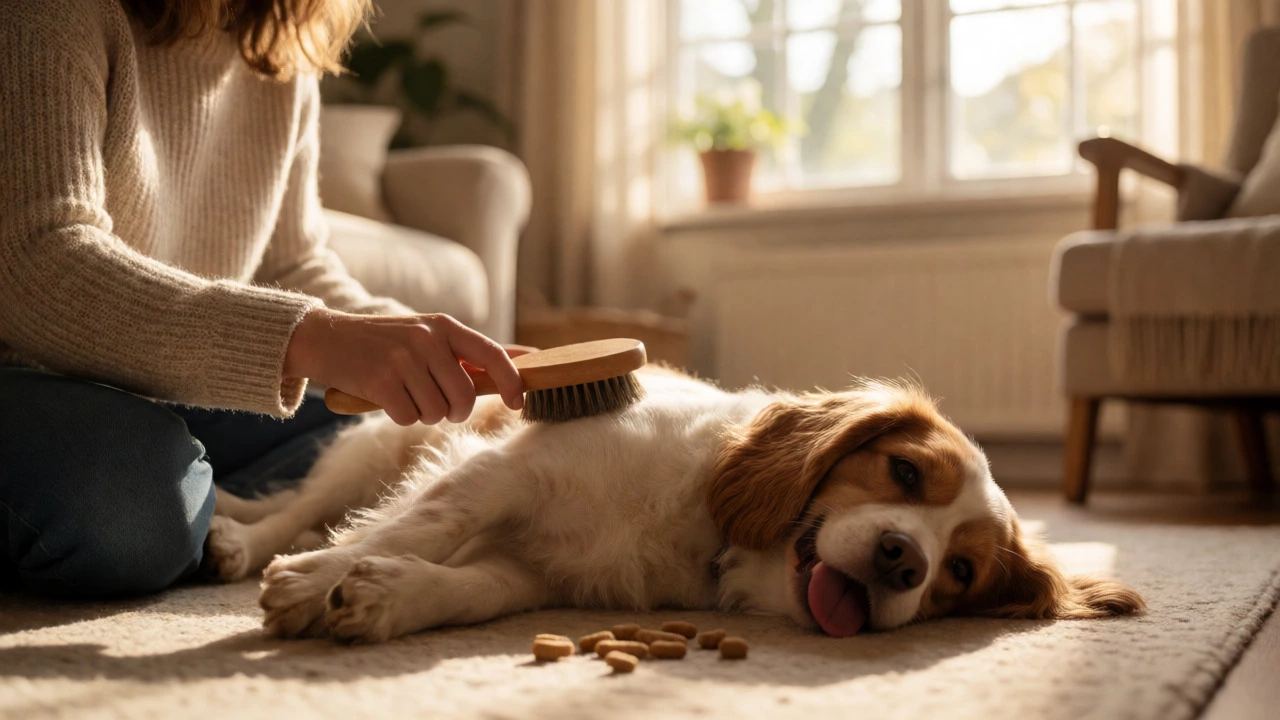
1. Positive Association Training: Pair grooming tools with high-value treats. Show the brush, give a treat. Pick up the clippers, turn them on for one second, give a treat. Do this daily for a week. The goal is to change the emotional response from "scary tool" to "treat dispenser."
2. Choose the Right Groomer: Not all groomers use force-free methods. Ask about their policies on muzzles and sedatives. A good groomer will take breaks, let the dog sniff equipment, and never rush. If a groomer pins your dog down without warning, find another professional.
3. Manage Expectations for Matting: If your dog has severe mats, cutting them out is painful. Mats pull on the skin, so removing them hurts. Communicate this to your groomer. Sometimes, shaving the coat short is kinder than trying to comb out knots that have been there for months.
4. Home Maintenance: The best way to prevent crying at the salon is to brush your dog at home regularly. Even five minutes a day prevents mats from forming. When the coat is clean and tangle-free, grooming becomes a spa treatment rather than a surgery.
When to See a Vet
Sometimes, what looks like behavioral resistance is actually medical. If your dog suddenly starts crying during grooming when they used to be fine, check for health issues.
- Arthritis: Older dogs may struggle to stand on tables or lift their legs. Pain in joints makes holding positions difficult.
- Skin Infections: Hot spots, yeast infections, or allergies make skin tender. Any touch feels like burning.
- Dental Issues: Bad breath or tooth pain can make muzzle handling unpleasant.
- Ear Infections: Cleaning ears is standard, but if they’re infected, it hurts. Watch for head shaking or discharge.
If you suspect pain, schedule a vet visit before the next appointment. Treating the underlying condition often solves the "crying" problem entirely.
Final Thoughts: Empathy Over Force
Your dog isn’t trying to manipulate you. They aren’t acting out. They are communicating. Whether it’s fear, pain, or simple sensitivity, that vocalization is their way of saying, "This is hard for me." By listening to that message-and adjusting your approach-you build trust. A relaxed dog gets a better haircut, stays safer, and leaves the salon happier. Next time you hear that whine, pause. Assess the situation. Maybe it’s time for a break, a treat, or a different groomer. Your dog will thank you, probably with a lick, not a tear.
Do dogs cry when they are sad?
No, dogs do not shed emotional tears when they are sad. While they feel emotions like grief or separation anxiety, their lacrimal glands only produce tears for eye lubrication or irritation. Sadness is expressed through body language, such as drooping ears, lowered tail, and lethargy, not wet eyes.
Why does my dog shake during grooming?
Shaking is a clear sign of acute stress or fear. It indicates the dog is overwhelmed by the environment, sounds, or handling. It can also be a physiological response to cold air from dryers or nervous energy. If shaking persists, the session should be paused to allow the dog to calm down.
Is it normal for dogs to bleed during nail trimming?
Minor bleeding can happen if the 'quick' (the blood vessel inside the nail) is cut. This is common in dogs with dark nails where the quick isn't visible. It causes sharp pain and temporary bleeding. Styptic powder stops it quickly. Frequent bleeding suggests the trimmer needs more practice or should use a grinder instead.
How can I calm my dog before grooming?
Exercise your dog thoroughly before the appointment to burn off anxious energy. Bring their favorite blanket or toy for scent familiarity. Use pheromone sprays like Adaptil in the carrier. Arrive early to let them acclimate to the salon smells and sounds without rushing.
Should I sedate my dog for grooming?
Sedation should be a last resort, typically reserved for extremely aggressive or medically compromised dogs. Sedated dogs cannot communicate pain, which increases injury risk. Always consult a veterinarian before using any sedative. Many dogs respond better to behavior modification and gentle handling techniques.