Dog Gear Recommender
Answer the questions below to find out what veterinarians recommend for your specific dog.
Recommended Primary Gear
Harness
Because...
Additional Advice
You’re standing in the pet aisle, staring at a wall of nylon and mesh, wondering which one won’t hurt your dog’s throat. It’s a common dilemma. One friend says collars are traditional and simple; another swears by harnesses because they heard collars cause tracheal collapse. So, who is right? And more importantly, what do veterinarians actually recommend?
The short answer isn't "one size fits all." Veterinarians generally recommend harnesses for most dogs, especially those who pull or have respiratory issues. However, collars remain useful for specific tasks like ID tags or quick control during training. The choice depends entirely on your dog's anatomy, behavior, and health history.
Why Vets Lean Toward Harnesses for Walking
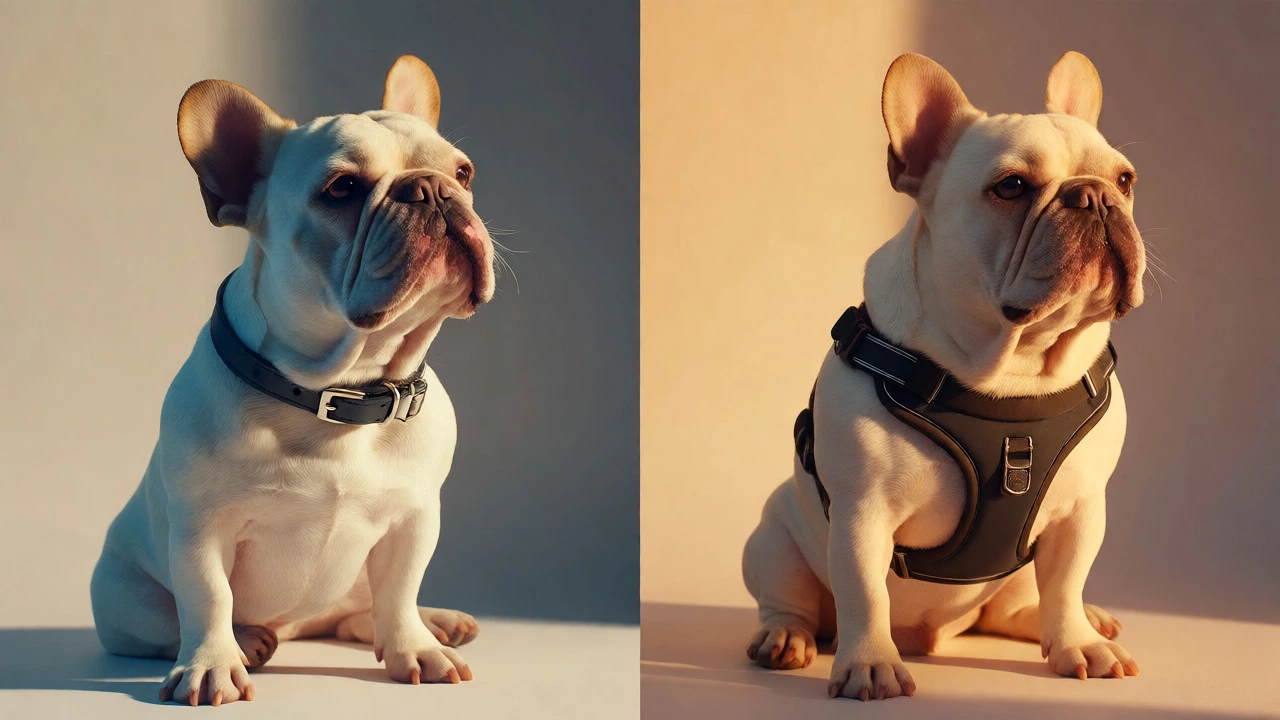
If you ask a veterinarian about daily walks, they will likely point you toward a well-fitted harness. The primary reason is physics. When a dog pulls against a standard flat collar, that force concentrates on a small area of the neck. This puts pressure on the trachea (windpipe), the esophagus, and the cervical spine. For a small breed like a Chihuahua or a brachycephalic (flat-faced) breed like a French Bulldog, this can lead to coughing, gagging, or long-term damage.
A harness distributes that pulling force across the chest and shoulders. These are larger muscle groups better equipped to handle tension. According to data from the American Veterinary Medical Association, neck injuries are significantly reduced when pressure is moved away from the trachea. If your dog lunges after squirrels, a harness protects their airway while keeping them secure.
The Hidden Risks of Collar-Only Walking
It’s not just about discomfort. Chronic pressure on the neck can contribute to serious conditions. In small breeds, it can exacerbate tracheal collapse, a condition where the windpipe narrows and makes breathing difficult. In older dogs, it can aggravate existing arthritis in the cervical spine. There is also evidence linking high neck pressure to increased intraocular pressure, which is a risk factor for glaucoma in predisposed breeds.
Think of it this way: if you had to carry a heavy backpack, would you prefer straps over your shoulders or a tight band around your throat? Your dog feels the same difference. Using a collar as the primary attachment point for a leash invites avoidable strain.
When a Collar Is Still the Right Choice
This doesn’t mean collars are obsolete. Vets still recommend them for specific purposes. First, identification. A collar is the easiest place to hang an ID tag with your phone number. If your dog escapes, a passerby can read the tag without needing a scanner. Second, quick handling. During vet visits or grooming, a handler might use a slip lead or a martingale collar for precise, temporary control. Third, certain training scenarios. Some trainers use head halters or front-clip harnesses, but a flat collar remains useful for teaching loose-leash walking cues without adding bulk.
However, even when using a collar, many vets suggest a "dual attachment" method: attach the leash to a harness for support, and keep a collar on solely for ID tags. This gives you safety and identification without the risk of neck injury.
Anatomy Matters: Breed-Specific Recommendations
Your dog’s body type dictates the best gear. Here is how vets typically categorize recommendations based on breed characteristics:
| Dog Type | Recommended Gear | Vet Reasoning |
|---|---|---|
| Brachycephalic Breeds (e.g., Pugs, Bulldogs) | Harness | Flat faces make breathing hard; neck pressure worsens airway obstruction. |
| Small Toy Breeds (e.g., Yorkies, Chihuahuas) | Harness | Fragile tracheas are prone to collapse under collar pressure. |
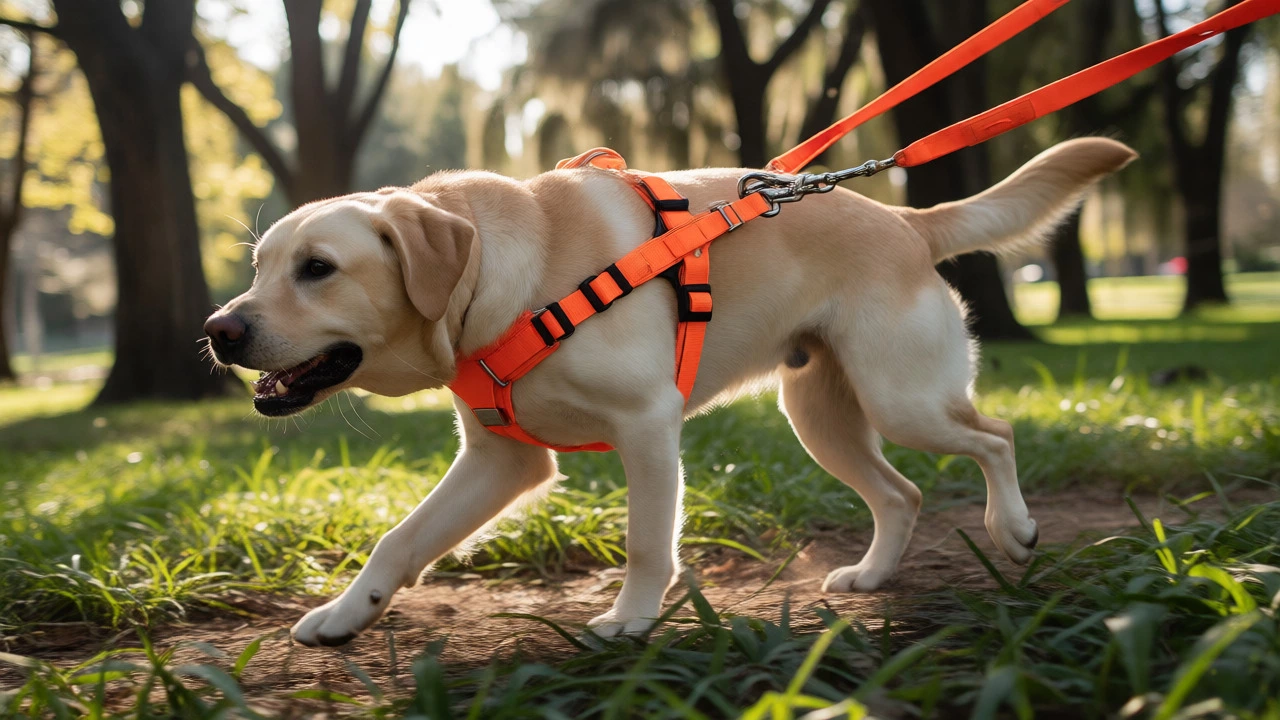
| Strong Pullers (e.g., Huskies, Labs) | Front-Clip Harness | Reduces pulling force and prevents shoulder/neck strain. |
| Calm Walkers (e.g., Greyhounds, Bernese) | Martingale Collar | Prevents slipping off narrow heads without choking. |
| Puppies | Lightweight Harness | Protects developing bones and joints during growth spurts. |
Notice the nuance here. Even for calm walkers, a martingale collar is often preferred over a flat buckle collar because it tightens slightly only when needed, preventing escape without choking. But for anything involving active movement or pulling, the harness wins.
How to Fit a Harness Correctly
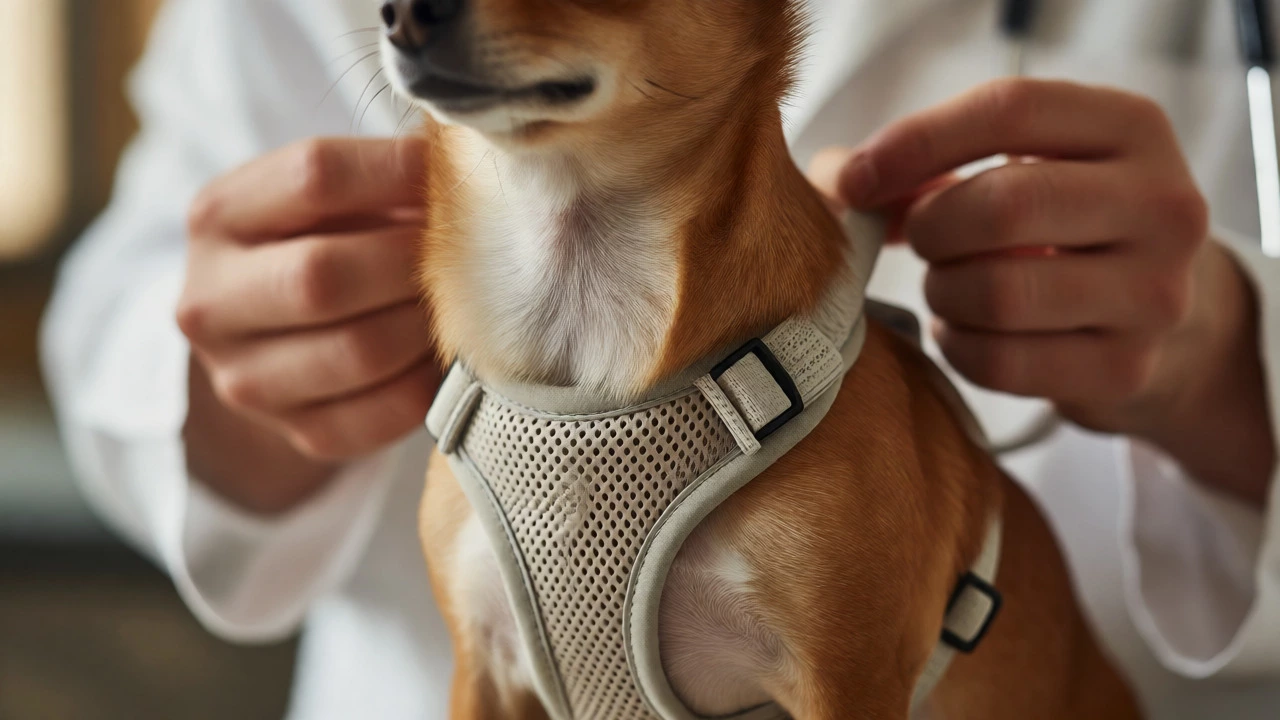
A bad harness fit is worse than no harness. If it’s too loose, your dog can back out of it. If it’s too tight, it rubs their armpits raw. Vets emphasize two key checks:
- The Two-Finger Rule: You should be able to slide two fingers comfortably between the strap and your dog’s skin. If you can’t, it’s too tight. If you can fit four, it’s too loose.
- The Armpit Check: Ensure the front strap sits behind the armpits, not on top of them. Rubbing here causes painful sores that take weeks to heal.
Also, consider the material. Nylon is durable and easy to clean, which is great for muddy days. Mesh is breathable, ideal for hot climates. Avoid cheap plastic buckles on strong dogs; they can snap unexpectedly.
The Role of Training and Behavior
Gear doesn’t fix behavior, but it can manage it. If your dog pulls violently, a front-clip harness (where the leash attaches to the chest) gently turns them sideways when they lunge. This discourages pulling without pain. Vets often recommend this over prong or choke collars, which rely on discomfort to correct behavior. Modern veterinary behaviorists argue that positive reinforcement combined with a front-clip harness yields faster, stress-free results.
Conversely, if you are working on heel commands, a flat collar might provide clearer feedback for subtle corrections. Just remember: never jerk the leash attached to a collar. Use gentle pressure and release.
Special Considerations: Neck Issues and Skin Sensitivity
If your dog has been diagnosed with intervertebral disc disease (IVDD), especially in breeds like Dachshunds, a harness is non-negotiable. Any pressure on the neck can trigger a herniated disc, leading to paralysis. Similarly, dogs with sensitive skin or allergies may react to leather or certain dyes in collars. Hypoallergenic materials like silicone-coated nylon or cotton-lined harnesses can prevent contact dermatitis.
Always monitor your dog after switching gear. Watch for redness, hair loss, or excessive scratching. If you see these signs, wash the gear immediately and consult your vet about alternative materials.
Practical Checklist for Choosing Your Gear
Before you buy, run through this mental checklist derived from veterinary advice:
- Does my dog pull? Yes → Front-clip harness. No → Martingale collar or back-clip harness.
- Is my dog a small toy breed? Yes → Lightweight harness.
- Does my dog have breathing issues? Yes → Harness only. Never a flat collar for walks.
- Do I need ID tags? Yes → Add a lightweight collar for tags, even if using a harness.
- Is my dog a puppy? Yes → Adjustable harness to accommodate growth.
Remember, the goal is comfort and safety. If your dog coughs or gags when you put on a collar, switch to a harness immediately. Don’t wait for a diagnosis to change habits.
Is it okay to walk my dog with both a collar and a harness?
Yes, this is often recommended. Many vets suggest using a harness for the leash attachment to protect the neck, while keeping a lightweight collar on just to hold ID tags. This ensures safety during walks and visibility if the dog gets lost.
Why does my dog cough when wearing a collar?
Coughing usually indicates pressure on the trachea. This is common in small breeds or dogs with pre-existing respiratory issues. Switching to a harness removes pressure from the windpipe and often resolves the coughing immediately.
Are martingale collars safer than flat collars?
For dogs with narrow heads (like Greyhounds), yes. A martingale tightens only enough to prevent escape without choking, unlike a flat collar which can slip off or require tightening to a dangerous degree. However, for general walking, a harness is still preferred for neck protection.
Can a harness cause chafing?
Yes, if it fits poorly. Look for padded straps and ensure the harness doesn't rub the armpits. Regularly check for redness or hair loss. Proper fitting and quality materials minimize this risk.
Which is better for puppies, collar or harness?
A lightweight harness is generally better for puppies. Their bones and joints are still developing, and pulling on a collar can strain their neck. A harness supports their growing body safely during learning walks.