Dog Collar Selector Tool
Answer these questions to find the safest collar type for your dog.
Why this choice?
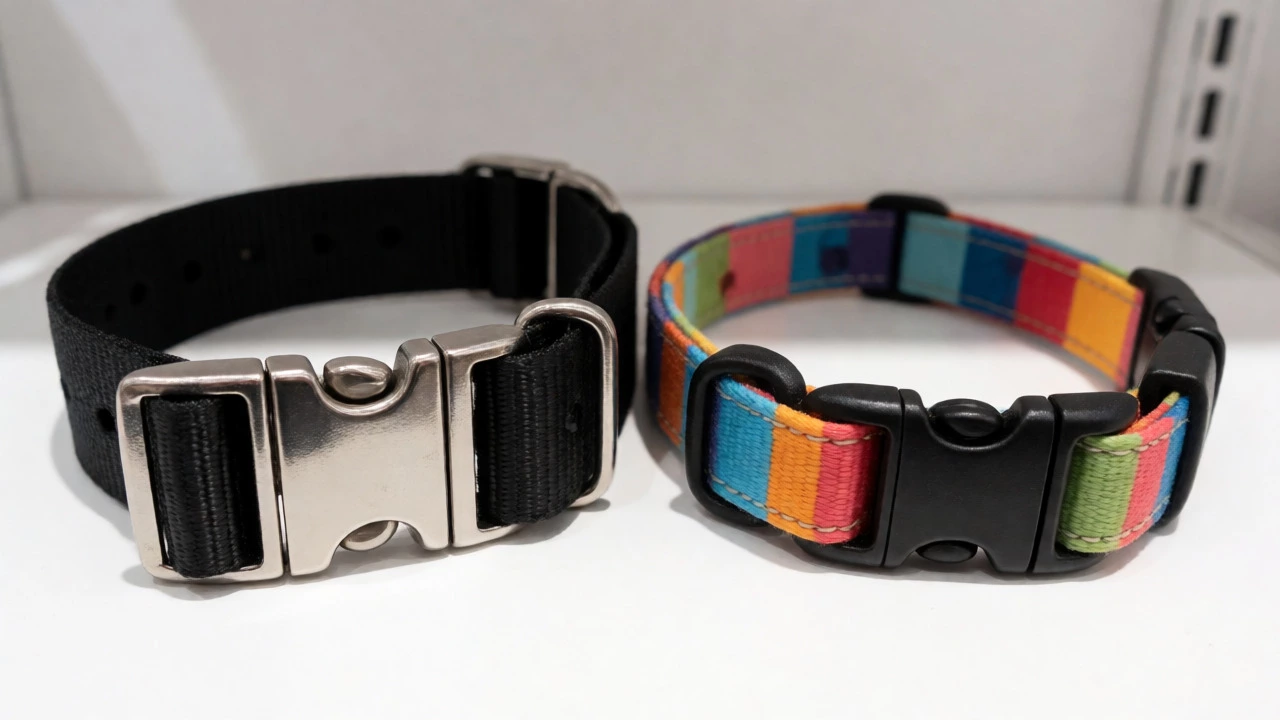
You’re standing at the pet store aisle, holding two collars that look identical until you flip them over. One has a sturdy metal buckle; the other snaps shut with a plastic click. It seems like a trivial choice, right? Wrong. This tiny hardware difference determines whether your dog stays safe during a sudden lunge or slips out of their collar mid-walk. I’ve seen too many owners choose based on price or color, only to regret it when their escape-artist Houdini dog pops the snap and bolts into traffic.
The truth is, neither option is universally "better." It depends entirely on your dog’s size, strength, behavior, and how often you take the collar off. Buckle collars are the gold standard for control and durability. Snap collars (often called quick-release) win on convenience. But if you pick the wrong one for your specific situation, you’re gambling with your pet’s safety. Let’s break down exactly which one belongs on your dog’s neck.
Understanding the Hardware: What Actually Happens?
To make the right call, you need to know what you’re dealing with mechanically. These aren’t just different styles; they function on completely different principles of physics and material science.
A buckle dog collar uses a traditional pin-and-hole system, similar to a human belt. You thread the strap through a metal frame and secure it with a prong that fits into a pre-punched hole. This creates a fixed loop around the dog’s neck. Once fastened, it doesn’t open unless you manually unthread it. The materials are usually heavy-duty nylon, leather, or biothane, paired with stainless steel or brass hardware. Because there are no moving parts that can fatigue easily, these collars are built to last years under tension.
In contrast, a snap dog collar, also known as a quick-release collar, relies on a spring-loaded mechanism. You push two sides together, and a latch clicks into place. To remove it, you squeeze the release tab, and the collar springs open. While convenient, this mechanism introduces failure points. Plastic snaps degrade over time due to UV exposure and temperature changes. Metal snaps are stronger but can still fail under extreme lateral force, such as when a large dog pulls hard against a leash attached to a poorly fitted collar.
The Case for Buckle Collars: Control and Security
If you have a medium-to-large breed, a puppy learning to walk on a leash, or any dog with a history of pulling, a buckle collar is non-negotiable. Here’s why professionals prefer them:
- Unbreakable Loop: When a dog lunges, the force distributes across the entire collar circumference. A buckle collar won’t accidentally pop open because the pin holds the strap firmly in place.
- Precision Fit: With multiple holes, you can adjust the fit by millimeters. This is critical for preventing "collar slip," where a dog backs out of a loose collar. You want it snug enough that you can fit two fingers underneath, but tight enough that they can’t wriggle free.
- Durability: Stainless steel buckles don’t rust or crack. If you have a dog that chews their collar or rolls in mud daily, a buckle collar survives abuse that would shatter a plastic snap.
However, buckle collars have a downside: inconvenience. Taking them on and off takes ten seconds instead of two. If you change collars frequently-say, swapping between a flat collar and a harness for training-you’ll find yourself fiddling with pins more than you’d like.
The Case for Snap Collars: Convenience and Safety Breakaways
Snap collars shine in specific scenarios where speed matters more than raw tensile strength. They are ideal for small breeds, indoor dogs, or situations where you need to remove the collar quickly.
Consider the safety breakaway feature. Some snap collars are designed to release under pressure. If your cat gets tangled in a fence (yes, cats use these too), the collar snaps open before strangulation occurs. For dogs, this feature is less common but exists. However, most standard dog snap collars do not break away automatically; they require manual squeezing to open. Do not confuse a "quick-release" snap with a "breakaway" collar unless the packaging explicitly states it releases under load.
Pros of snap collars include:
- Speed: Great for dogs who wear ID tags indoors and rarely go outside unsupervised.
- Comfort: No metal buckle digging into the fur. This is helpful for long-haired breeds where a buckle might mat hair or cause friction burns.
- Lightweight: Plastic snaps add negligible weight, which is preferable for toy breeds like Chihuahuas or Yorkshire Terriers.
The major risk? Accidental opening. If the snap mechanism is worn out or low-quality, a strong pull can pop it open. I’ve tested cheap plastic snaps on a 50-pound Labrador mix; after three months of daily walks, the plastic became brittle and cracked during a minor tug-of-war game. That’s a recipe for a lost dog.
Material Matters: Nylon, Leather, and Biothane
The closure type is only half the equation. The strap material interacts with the hardware to determine overall performance. Here’s how common materials pair with each closure type:
| Material | Best Paired With | Durability Rating | Best For |
|---|---|---|---|
| Nylon Webbing | Buckle | High | Active dogs, puppies, all-day wear |
| Leather | Buckle | Medium-High | Formal events, sensitive skin, style |
| Biothane | Snap or Buckle | Very High | Swimmers, muddy dogs, easy cleaning |
| Fabric/Cotton | Snap | Low-Medium | Indoor use, decorative, short-term |
Nylon is the workhorse. It’s tough, affordable, and pairs perfectly with a metal buckle. If you buy a nylon collar with a plastic snap, inspect the snap regularly. Nylon doesn’t stretch much, so a poor fit will rub rather than give.
Leather softens over time, molding to the dog’s neck shape. It looks great but requires maintenance. A leather collar with a buckle is a lifetime investment if conditioned properly. Avoid leather with snaps unless it’s high-end equestrian-grade hardware; cheap snaps on leather belts often fail.
Biothane is a synthetic webbing coated in polyurethane. It’s waterproof, odor-resistant, and wipes clean instantly. It’s excellent for dogs who swim or roll in dirt. Biothane works well with both closures, but its slick surface means a snap must be high-quality to prevent slipping open during vigorous play.
Decision Matrix: Which One Fits Your Dog?
Still unsure? Use this simple decision tree to narrow it down. Be honest about your dog’s behavior, not just their breed.
- Does your dog pull on the leash?
- Yes → Choose Buckle. Snaps can fail under sustained pressure.
- No → Proceed to question 2.
- Is your dog an escape artist?
- Yes → Choose Buckle. Ensure it fits tightly (two-finger rule).
- No → Proceed to question 3.
- Do you need to remove the collar multiple times a day?
- Yes (e.g., switching between harness/collar) → Choose Snap.
- No (leave on 24/7) → Choose Buckle for maximum security.
- Is your dog under 15 pounds?
- Yes → Snap is acceptable if the quality is high. Weight isn’t enough to stress the hardware.
- No → Buckle is safer regardless of behavior.
Common Mistakes to Avoid
Even with the right collar type, users often sabotage their own success. Here are the pitfalls I see most often:
Relying on a snap for a puller. Many owners think, "My dog is calm today, so the snap held." Then one squirrel appears, and the snap pops. Never trust a snap for leash walking unless it’s a heavy-duty metal model specifically rated for large breeds, and even then, test it first.
Ignoring the fit. A buckle collar that is too loose is dangerous. Dogs can back out of loose collars, especially sighthounds like Greyhounds. Conversely, a tight collar causes tracheal damage. Check the fit weekly. Puppies grow fast; a collar that fit last month might be choking them now.
Using a breakaway collar for walks. As mentioned, breakaway collars are designed to release under pressure. If you attach a leash to a breakaway snap collar and your dog lunges, the collar might snap open unexpectedly. Only use breakaways for ID tags when the dog is supervised or indoors.
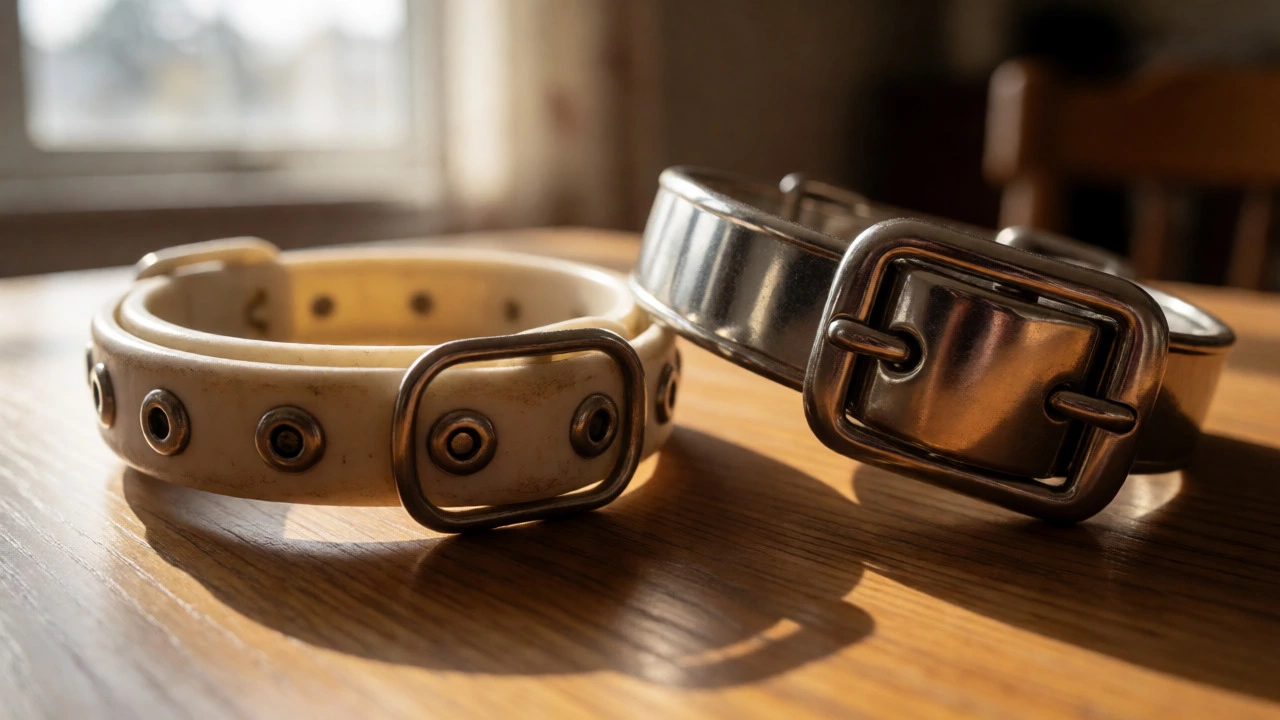
Neglecting hardware inspection. Plastic becomes brittle. Metal corrodes. Every month, check your collar’s closure. Wiggle the snap; does it feel loose? Look at the buckle pin; is it bent? Replace the collar immediately if you see cracks or deformation. Don’t wait for it to fail during a walk.
Pro Tips for Longevity and Comfort
Want to get the most out of your choice? Follow these expert adjustments:
- Rotate collars. Have two collars: one for walks (buckle, durable) and one for home (snap, comfortable). This reduces wear on the walking collar and gives the dog’s neck a break from constant pressure.
- Add padding. If you stick with a buckle collar but your dog has a thin coat, consider adding a fleece sleeve or choosing a padded model. This prevents "collar rash" from friction.
- Test the snap. Before putting a new snap collar on your dog, operate it 50 times. Does it click securely every time? Does it require excessive force to close? If it feels flimsy, return it.
- Check for sharp edges. Cheap buckles often have rough casting marks that cut into the dog’s fur. Run your finger along the inside edge of the buckle. If it snags your skin, it will irritate your dog.
Ultimately, the "best" collar is the one that stays on your dog safely without causing discomfort. For 90% of dog owners, a high-quality nylon buckle collar is the safest, most versatile default. Save the snap collars for small, gentle pets or indoor-only use. By matching the hardware to your dog’s actual lifestyle-not just their cute photo op-you ensure both safety and sanity on every walk.
Are snap collars safe for large dogs?
Generally, no. Most plastic snap collars cannot withstand the force generated by a large dog pulling on a leash. Metal snap collars exist, but they are heavier and still prone to accidental release compared to buckles. For dogs over 25 pounds, a buckle collar is strongly recommended for outdoor activities.
Can a dog slip out of a buckle collar?
Yes, if it is fitted incorrectly. If the collar is too loose, dogs-especially those with narrow heads like Greyhounds or Whippets-can back out of it. Always follow the "two-finger rule": you should be able to slide two fingers comfortably between the collar and the dog's neck, but no more.
What is the difference between a quick-release and a breakaway collar?
A quick-release (snap) collar requires human intervention to open; you must squeeze the tabs. A breakaway collar is designed to pop open automatically under a specific amount of pressure (usually 8-10 lbs) to prevent strangulation. Breakaway collars are essential for cats but risky for leashed dogs unless you intend for them to detach during a panic.
How often should I replace my dog's collar?
Inspect it monthly. Replace it immediately if you see fraying fabric, cracked plastic, bent metal, or stretched holes. Even if it looks fine, high-use collars typically last 1-2 years. Low-use indoor collars may last longer, but always prioritize integrity over aesthetics.
Is leather better than nylon for dog collars?
Leather is softer and more stylish but requires conditioning and isn't waterproof. Nylon is tougher, cheaper, and easier to clean. For active dogs or those who get wet, nylon or biothane is superior. Leather is best for calm, indoor-oriented dogs or formal occasions.