Puppy Training Toy Selector
Why this works:
Safety Tip:
Bringing home an 8-week-old puppy is a young dog that has just been separated from its mother and littermates, marking the beginning of its independent life with a new family feels like winning the lottery. They are tiny, soft, and endlessly curious. But amidst the cuddles, you might have noticed something: they don’t listen. Or do they? The short answer to whether these little bundles of energy are trainable is a resounding yes. In fact, waiting until they are older could mean missing the most critical window for shaping their behavior.
However, "training" at this age doesn't look like the polished obedience routines you see in dog shows. It isn't about forcing them to sit for five minutes straight. It is about building a foundation of trust, communication, and habit. If you approach it correctly, you aren't just teaching commands; you are wiring their brain to view you as a reliable guide in a confusing world.
The Science Behind Early Learning
To understand why you should start now, we need to look at how a puppy's brain develops. At eight weeks, a puppy is in what experts call the primary socialization period. This phase lasts until about 14 to 16 weeks of age. During this time, their brains are incredibly plastic, meaning they absorb information rapidly and form lasting impressions.
Think of their mind like wet cement. Whatever experiences they have-positive or negative-set quickly. If a puppy learns that the vacuum cleaner is a monster, that fear can become hardwired. Conversely, if they learn that your voice means good things happen, that bond becomes unshakeable. This is why Socialization is the process of exposing a puppy to various people, animals, environments, and sounds in a positive way to prevent fear and aggression later in life is arguably more important than teaching "sit" or "stay" right now.
Research from veterinary behaviorists suggests that dogs who undergo structured socialization before 16 weeks are significantly less likely to develop anxiety-related behaviors as adults. You aren't just teaching tricks; you are preventing future behavioral issues that often lead to dogs being surrendered to shelters.
What Can You Actually Teach Right Now?
While your puppy won't be competing in agility trials anytime soon, there are specific skills that are highly effective to introduce at eight weeks. These focus on impulse control, communication, and routine.
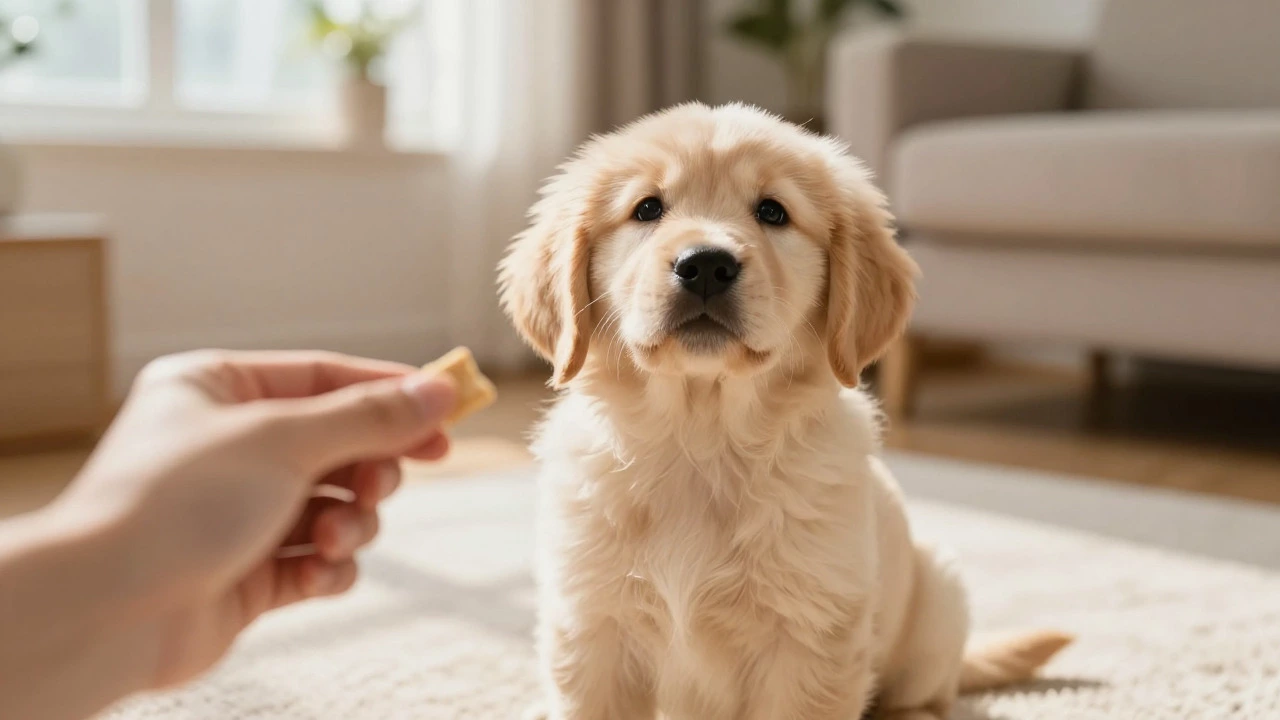
- Name Recognition: Every time you say their name, reward them. This builds the association that hearing their name leads to attention and treats.
- Crate Training: Teaching them that their crate is a safe den helps with house training and gives them a secure space when overwhelmed.
- Basic Impulse Control: Simple exercises like "wait" at doorways or before meals teach them to pause rather than rush.
- Handling: Gently touching their paws, ears, and mouth prepares them for grooming and vet visits later.
Keep sessions incredibly short. An 8-week-old puppy has an attention span measured in seconds, not minutes. Three to five minute sessions, repeated several times a day, are far more effective than one long session that frustrates both of you.
Using Puppy Toys as Training Tools
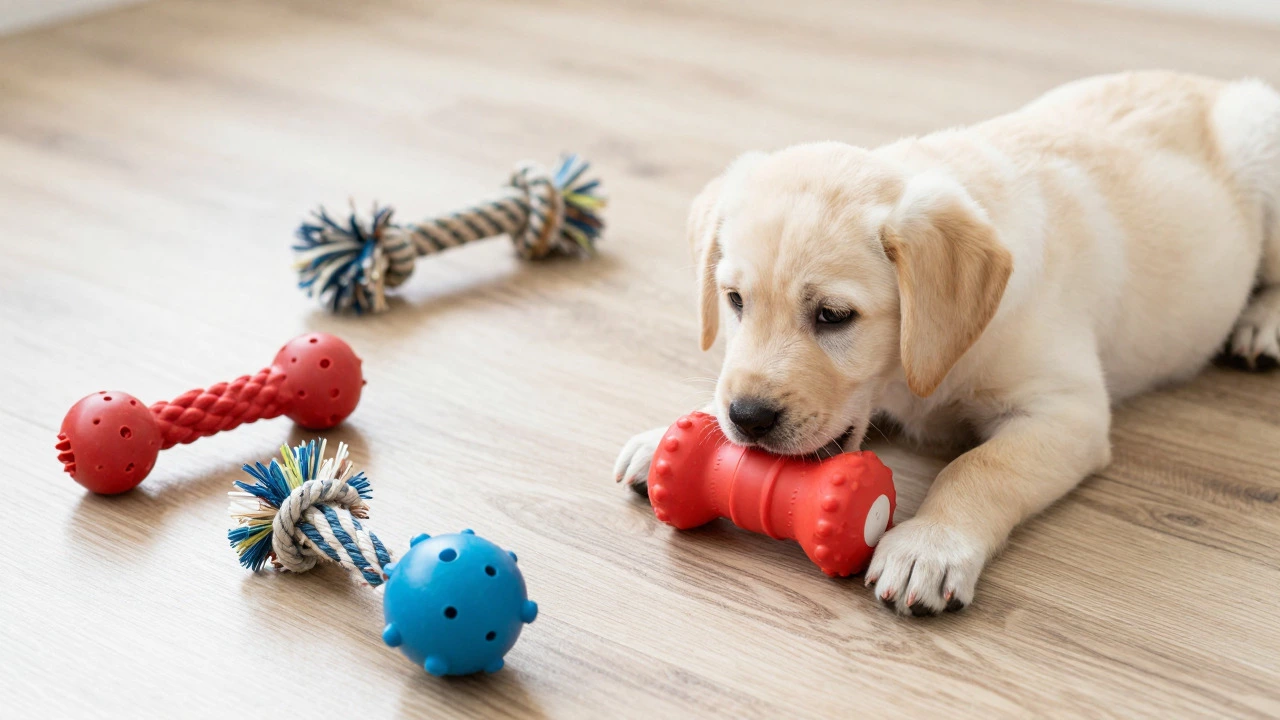
You might wonder where Puppy Toys fit into all this. They aren't just for keeping your floors intact; they are powerful training aids. At this age, puppies are teething, which causes discomfort. Redirecting their chewing instinct onto appropriate items is a crucial part of training.
When you offer a toy, you are teaching your puppy what is acceptable to chew. Use high-value toys during training sessions to mark success. For example, if you are working on "leave it," having a favorite toy ready allows you to trade the forbidden object for a permitted one, reinforcing the behavior positively.
| Toy Type | Training Benefit | Safety Consideration |
|---|---|---|
| Rubber Chew Toys | Relieves teething pain; durable for solo play | Must be soft enough for baby teeth; avoid small breakable parts |
| Plush Squeaky Toys | Encourages prey drive; great for recall games | Supervise closely; remove if stuffing is exposed to prevent ingestion |
| Puzzle Feeders | Mental stimulation; teaches problem-solving | Choose beginner-level puzzles; ensure no sharp edges |
| Rope Toys | Bonding through tug-of-war; teaches "drop it" | Check for fraying strings; supervise to prevent swallowing fibers |
Avoid toys that are too hard, as they can damage developing teeth. Also, steer clear of anything with small detachable parts that could be swallowed. The goal is to create positive associations with objects, so always choose toys that are safe and engaging.
House Training: The First Big Challenge
For many owners, house training is the first real test of patience. The good news is that 8-week-old puppies are biologically wired to avoid soiling their sleeping area. This instinct is your best friend.
Success comes from consistency and supervision. Keep your puppy on a tight schedule. Take them out immediately after waking up, after eating, and after playing. When they eliminate outside, celebrate wildly with treats and praise. This creates a strong link between the action and the reward.
If accidents happen indoors-and they will-don't punish the puppy. They won't connect the punishment with the accident that happened minutes ago. Instead, clean the area thoroughly with an enzymatic cleaner to remove the scent markers that encourage repeat offenses. Punishment only breeds fear, while consistency breeds habits.
Socialization: Building Confidence
Socialization is about exposure. Your puppy needs to meet different types of people-men with hats, children, elderly individuals, and other vaccinated dogs. They also need to experience various surfaces like grass, tile, gravel, and metal grates.
Remember, quality matters more than quantity. A single scary encounter can undo weeks of progress. Always let the puppy approach new stimuli at their own pace. If they seem hesitant, back off and try again later. The goal is to create neutral or positive associations, not to force bravery.
Enrolling in a puppy kindergarten class once they have received their initial vaccinations is an excellent way to facilitate controlled socialization. These classes provide a structured environment where puppies learn bite inhibition and appropriate play behavior from their peers.
Common Mistakes to Avoid
Even well-meaning owners can make errors that hinder training progress. One common mistake is expecting too much too soon. Puppies are babies. They get tired, hungry, and overwhelmed easily. Watch for signs of stress, such as yawning, lip licking, or turning away, and end the session before they reach that point.
Another pitfall is inconsistency. If "off the couch" means "get down" sometimes and "you're fine" other times, your puppy will never learn the rule. Decide on your household rules early and stick to them. Everyone in the family needs to be on the same page.
Finally, don't neglect rest. Puppies sleep up to 18 hours a day. Overtired puppies become nippy, hyperactive, and difficult to train. Ensure they have plenty of quiet time in their crate or pen between activities.
Next Steps for New Puppy Parents
Start small. Pick one command, like "sit," and practice it daily. Introduce a variety of toys to keep their mind engaged. Begin socializing by taking them to quiet parks or inviting friends over. Most importantly, enjoy this fleeting stage. These early weeks set the tone for the next 10 to 15 years of your relationship. With patience, positivity, and the right tools, your 8-week-old puppy will grow into a confident, well-mannered companion.
How long should training sessions be for an 8-week-old puppy?
Keep sessions very short, ideally 3 to 5 minutes. Puppies at this age have extremely limited attention spans. Multiple short sessions throughout the day are more effective than one long session, which can lead to frustration and disengagement.
Can I take my 8-week-old puppy to public places for socialization?
It depends on vaccination status. Generally, it's safer to wait until after the second round of vaccines (around 12 weeks) before visiting high-risk areas like dog parks. However, you can socialize by carrying your puppy in a front carrier to observe busy streets, meeting vaccinated adult dogs in private yards, or inviting calm guests to your home.
Is it too early to start house training?
No, it is the perfect time. Eight-week-old puppies are just beginning to develop bladder control. Establishing a routine of frequent outdoor trips immediately after eating, sleeping, and playing helps them learn where and when it is appropriate to eliminate.
What type of treats are best for training puppies?
Use small, soft, and high-value treats that are easy to chew and swallow quickly. Examples include small pieces of boiled chicken, commercial puppy training treats, or bits of cheese. The treat should be motivating enough to capture their attention but small enough to avoid filling them up during training sessions.
Should I use a clicker for training an 8-week-old puppy?
Yes, clicker training can be very effective. The click provides a precise marker for the exact moment the puppy performs the desired behavior. To start, simply click and immediately give a treat without asking for any behavior, repeating this until the puppy associates the sound with a reward.